Transdermal Fentanyl: How It Works, Risks, and What You Need to Know
When you hear transdermal fentanyl, a prescription opioid patch that delivers pain medication through the skin over time. Also known as fentanyl patch, it’s not your average pain reliever—it’s built for steady, long-term control of severe pain, not quick fixes. Unlike pills that spike and drop in your system, this patch releases fentanyl slowly, keeping levels steady for up to 72 hours. That’s why doctors use it for people with chronic pain from cancer, severe arthritis, or after major surgery—when other meds just don’t cut it.
But here’s the catch: fentanyl, a synthetic opioid 50 to 100 times stronger than morphine, doesn’t play nice with mistakes. A single wrong application—like using a heating pad over the patch, cutting it, or applying it to broken skin—can send too much drug into your bloodstream fast. That’s how overdoses happen, even in people who’ve used it for years. And because it’s absorbed through the skin, it’s easy to underestimate how potent it is. People think, ‘It’s just a patch,’ but one patch can contain enough fentanyl to kill someone who’s never taken opioids before.
That’s why opioid pain relief, a category of drugs that bind to brain receptors to reduce pain signals like transdermal fentanyl requires strict oversight. It’s not for acute pain, not for beginners, and not for anyone with a history of substance misuse. Doctors check your history, start with the lowest dose possible, and watch for side effects like dizziness, constipation, or slowed breathing. If you’re on it, you need to know the signs of overdose—extreme sleepiness, pinpoint pupils, or trouble breathing—and have naloxone on hand.
And it’s not just about the drug itself. The drug delivery system, the method by which medication enters the body, in this case through the skin matters just as much. The patch must stick well, stay at room temperature, and not be exposed to heat. Hot showers, saunas, or even lying on a heating blanket can boost absorption dangerously. You can’t just slap it on and forget it—you have to treat it like a precision tool.
What you’ll find in the articles below isn’t a list of ads or generic warnings. It’s real talk from people who’ve used these patches, doctors who manage them, and researchers who’ve studied the risks. You’ll see how fentanyl interacts with other meds, why some people get addicted even when following instructions, and what alternatives exist when the patch stops working or becomes too risky. There’s no sugarcoating here—this is powerful stuff, and knowing how to use it safely isn’t optional. It’s life-or-death.
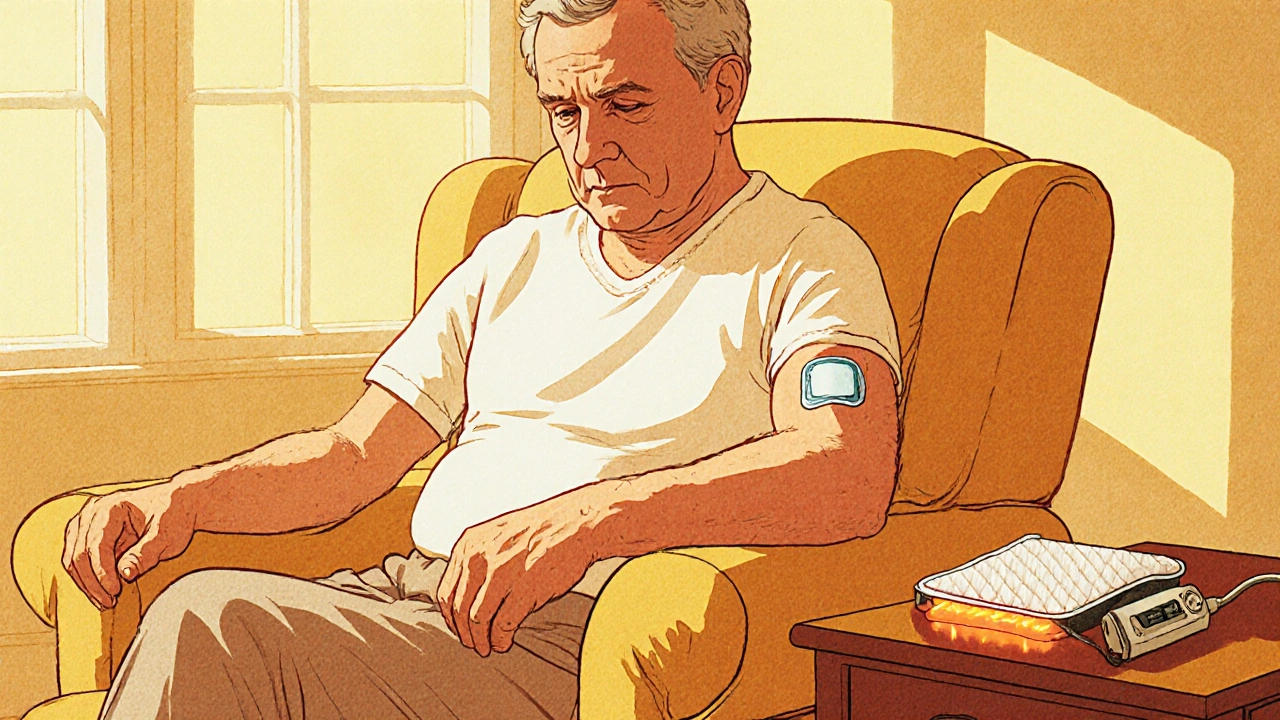
Heat Risks with Fentanyl Patches: How Heat Boosts Absorption and Increases Overdose Danger
Learn how heat boosts fentanyl patch absorption, the overdose risk it creates, and practical steps to stay safe. Real cases, science, and clear safety tips guide patients and caregivers.
view more