Fentanyl Patch Heat Exposure Calculator
Heat Exposure Calculator
Risk Assessment
Estimated Absorption Increase:
Risk Level:
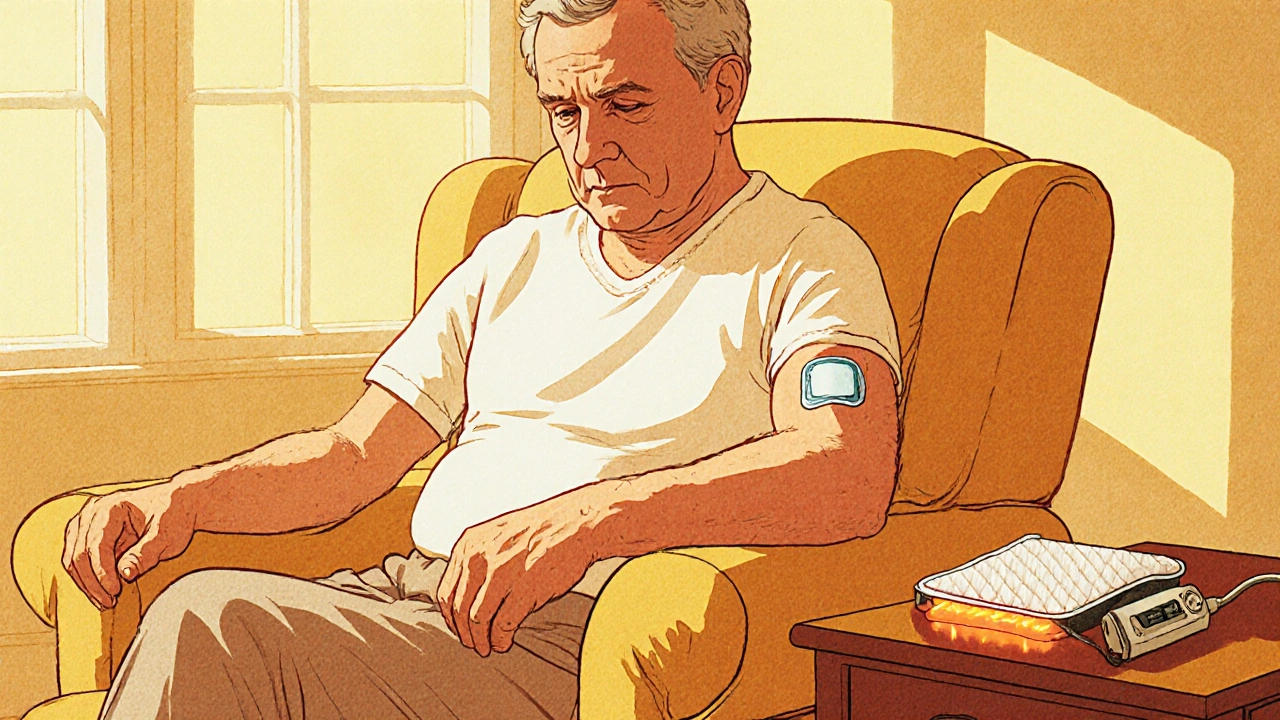
When using fentanyl patches are transdermal opioid delivery systems that release fentanyl continuously over several days, most patients assume the dose stays steady until the patch is removed. The reality is that external heat can turn a stable delivery into a rapid‑release scenario, raising serum levels enough to cause serious respiratory depression or even death. This article breaks down why heat matters, what the evidence says, and how you can keep the risk of a fentanyl patch overdose as low as possible.
Key Takeaways
- Heat raises fentanyl absorption by up to 33% at 40 °C (104 °F) and can triple peak levels during short‑term heating.
- Common heat sources-heating pads, hot showers, saunas, and even fever-are all risk factors.
- Symptoms of excess fentanyl include shallow breathing, extreme drowsiness, and pinpoint pupils; call emergency services immediately.
- Never place a patch on skin that will be exposed to warmth; keep it under a cool, dry shirt.
- Inform every caregiver or health professional that you are using a fentanyl patch.
How Fentanyl Patches Work
The patch forms a drug depot in the stratum corneum. Fentanyl diffuses through microscopic pores, enters capillaries, and binds to plasma proteins about 84% of the time. Delivery rates are engineered to stay constant-often 25 µg/h for a standard Duragesic® patch-maintaining therapeutic blood concentrations for roughly 72 hours.
Duragesic is the brand name most clinicians prescribe for chronic cancer‑related pain and follows the same kinetic profile.
Why Heat Changes Absorption
Heat does two things at once: it widens blood vessels in the dermis, and it makes the skin’s lipid matrix more fluid. Both effects speed up the movement of fentanyl from the patch into the bloodstream. Studies published in Pain Medicine showed a three‑fold rise in Cmax when a controlled‑heat patch raised skin temperature to 41 °C for four hours.
Even a modest rise in core body temperature-like a fever of 38.5 °C-has been modeled to increase serum fentanyl by about 20‑30% because peripheral circulation is enhanced.
Pharmacokinetic models from the FDA label predict a 33% rise when skin temperature reaches 40 °C, a level easily hit by a heating pad set on low or a hot bath.
Real‑World Cases of Heat‑Induced Overdose
Three documented incidents illustrate the danger:
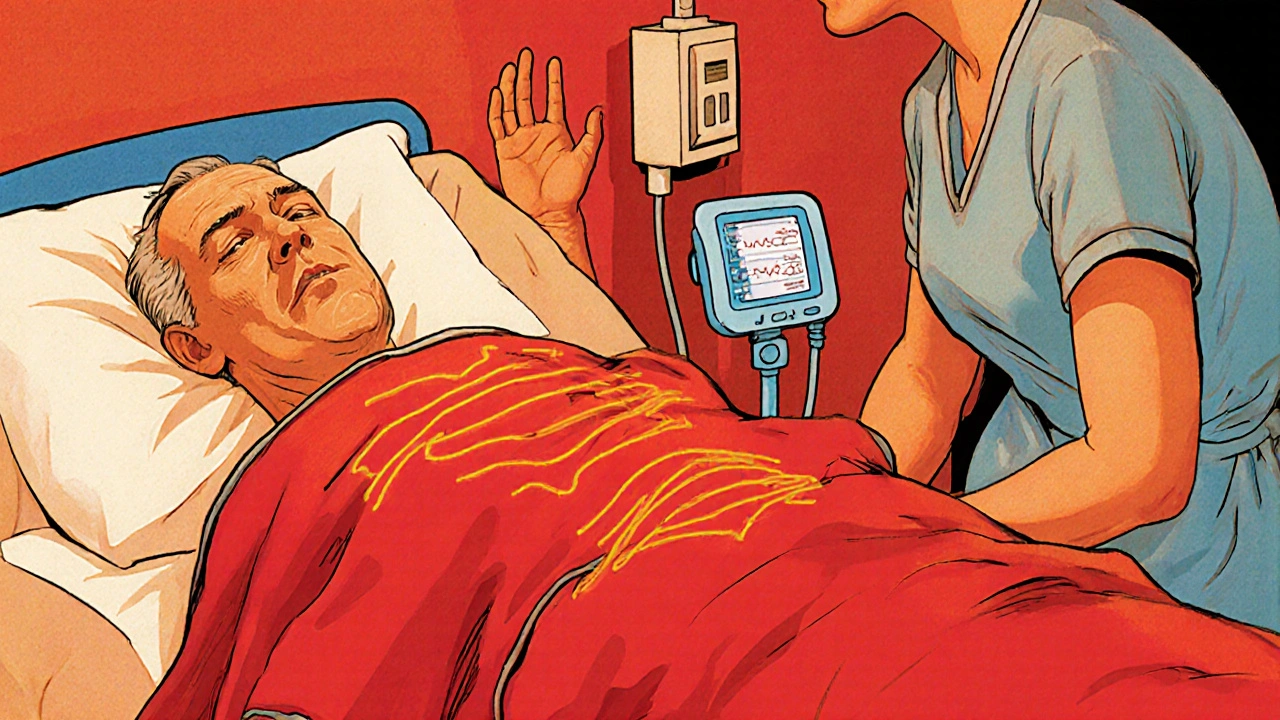
- A cancer patient used an electric heating pad while sleeping; respiratory rate fell to 4 breaths per minute within an hour.
- A surgical patient’s warming blanket stayed on for the entire operation, leading to profound sedation that required naloxone.
- An otherwise healthy individual exercised vigorously in a hot gym, causing a sudden spike in fentanyl levels and a near‑fatal collapse.
All three cases were reported in The Medical Letter Issue 1318, a peer‑reviewed safety bulletin, underscoring that the risk is not theoretical.
Practical Tips to Stay Safe
Healthcare providers should give patients a checklist. Below is a simple version you can keep on a fridge:
- Avoid heating pads, electric blankets, saunas, hot tubs, and tanning lamps.
- Do not wear the patch under tight, insulated clothing for long periods.
- Take lukewarm showers; avoid baths hotter than 38 °C.
- If you develop a fever (≥38 °C), call your prescriber before the patch is changed.
- Tell any dentist or surgeon that you are wearing a fentanyl patch before any procedure.
Remember that the patch continues to release drug for several hours after removal, so never swap it out while you are still warm from a bath or exercise.
What to Do If Overdose Is Suspected
Time is critical. Follow these steps:
- Call emergency services (999 in the UK) and say “possible opioid overdose”.
- Check breathing; if < 10 breaths per minute, begin rescue breaths.
- If trained, administer naloxone (available as a nasal spray or auto‑injector).
- Remove the patch if it is still attached, but don’t touch the adhesive with bare hands-use gloves.
- Stay with the person until help arrives; monitor pulse and consciousness.
Hospitals will often give a continuous infusion of naloxone and monitor the patient’s respiratory function for at least 24 hours because fentanyl can linger in tissue.
Comparison: Normal vs Heated Conditions
| Condition | Average Cmax (ng/mL) | Peak Time (hours) | Relative Increase |
|---|---|---|---|
| Room temperature (≈22 °C) | 0.8 | 24‑48 | 1× (baseline) |
| Localized heating (41 °C for 4 h) | 2.3 | 12‑24 | ≈3× |
| Core fever 40 °C | 1.1 | 24‑48 | ≈33% ↑ |
The numbers come from the 2000 Pain Medicine crossover study and FDA pharmacokinetic models. Even a modest rise pushes the drug into a potentially toxic window for patients who are already opioid‑tolerant.
Frequently Asked Questions
Can a mild fever really increase fentanyl levels?
Yes. Modeling shows a 33% rise in serum concentration when body temperature reaches 40 °C. The increase is due to heightened skin blood flow, which speeds drug uptake.
Are all heat sources equally dangerous?
Direct, sustained heat-like heating pads, electric blankets, or saunas-poses the highest risk. Even short exposures, such as a hot shower lasting more than 15 minutes, can raise absorption enough to cause symptom changes.
What should I tell my dentist before a procedure?
Inform them you have a fentanyl patch, the dosage, and when it was applied. Ask whether a temporary patch removal is needed or if additional monitoring is recommended.
Do CYP3A4 inhibitors affect the heat risk?
Yes. Drugs like ketoconazole or erythromycin slow fentanyl metabolism, so any heat‑driven increase can be magnified, making overdose more likely.
Is it safe to use a patch while exercising outdoors on a hot day?
Avoid it. Physical exertion raises core temperature and skin perfusion, both of which mimic the effect of external heat and can push fentanyl levels into a dangerous range.
Staying aware of how temperature interacts with transdermal opioids turns a potentially lethal surprise into a preventable safety issue. By keeping patches away from heat, monitoring any fever, and sharing your medication status with all caregivers, you dramatically lower the chance of an accidental overdose.

Abby W
October 24, 2025 AT 19:18Whoa, heat can turn a slow‑release patch into a rocket 🚀!
Lisa Woodcock
October 26, 2025 AT 20:18That’s a good reminder to keep patches under a light shirt and away from blankets or hot tubs – a simple habit that can save lives.
Sarah Keller
October 28, 2025 AT 22:18Think about it: the skin is basically a semi‑permeable membrane, and when you raise its temperature you increase kinetic energy, which lets fentanyl molecules hop through faster. The vasodilation that comes with heat also opens up capillaries, creating a larger gradient for the drug to move into the bloodstream. Studies have shown a three‑fold spike in Cmax when the patch area sits at about 41 °C for a few hours, which is not an exotic lab condition – it’s what an electric heating pad does on low setting. Even a mild fever nudges the skin’s perfusion up, meaning the drug that would normally drip at 25 µg/h suddenly surges. The danger is compounded when patients are already opioid‑tolerant; their respiratory drive is already blunted, so any extra fentanyl can tip the balance into depression. Real‑world cases illustrate the point: a cancer patient fell asleep with a heating pad and his breathing dropped to four breaths per minute. A surgical patient’s warming blanket caused enough absorption that naloxone was needed intra‑operatively. And a healthy gym‑goer who pushed a hard cardio session in a hot room experienced a near‑fatal collapse because his core temperature spiked. The pharmacokinetic models predict a 33 % rise at 40 °C – that translates to roughly a 0.26 ng/mL increase in serum fentanyl, enough to push some patients over the toxic threshold. It’s also worth noting drug‑drug interactions; CYP3A4 inhibitors like ketoconazole will slow metabolism, so any heat‑induced increase is magnified. From a practical standpoint, the safest approach is to make a checklist: no heating pads, no saunas, lukewarm showers, and keep the patch on a cool, dry part of the torso. If a fever develops, call your prescriber before the next patch change. Finally, educate every caregiver – dentists, surgeons, home nurses – that a fentanyl patch is on board, because even the operating room warming blanket can become a hidden hazard.
Veronica Appleton
October 31, 2025 AT 00:18Quick tip: after you take a shower, pat the skin dry before checking the patch – don’t just leave it wet, the moisture plus residual heat can act like a mini‑heater.
the sagar
November 2, 2025 AT 02:18All this heat scare is just big pharma trying to keep us dependent on their meds.
Grace Silver
November 4, 2025 AT 04:18While I respect the data, it’s also crucial to keep calm and not panic – use common sense, keep patches cool, and stay in touch with your doctor.
Clinton Papenfus
November 6, 2025 AT 06:18Dear community, let us all remember the importance of vigilance in medication safety; adherence to temperature guidelines materially reduces risk and fosters wellbeing.
Zaria Williams
November 8, 2025 AT 08:18lol u guys think a warm shower is gonna kill u? just don’t be dumb and leave a heater on 24/7
Melanie Vargas
November 10, 2025 AT 10:18Stay safe, everyone! 🌟 Remember, a cool patch is a happy patch 😊