
Antiviral Medication Cost Calculator
Compare Your Treatment Costs
Calculate estimated costs for Valtrex (valacyclovir), Acyclovir, or Famciclovir based on your treatment duration. Use this tool to see how different medications compare in cost.
Valtrex (generic name Valacyclovir) is a prescription antiviral medication approved by the FDA. It is converted in the body to acyclovir, which blocks the DNA replication of herpes viruses, reducing the severity and duration of outbreaks.
If you’re weighing Valtrex against other options, you’re not alone - many patients ask whether a cheaper generic or a different brand will work just as well.
Valacyclovir’s popularity stems from its once‑or‑twice‑daily dosing, but the market also offers older drugs like acyclovir and famciclovir. All three treat the same viruses-mainly the Herpes Simplex Virus (HSV) and the Varicella Zoster Virus (VZV). Knowing the differences helps you pick a regimen that fits your lifestyle and budget.
Key Takeaways
- Valtrex (valacyclovir) provides the most convenient dosing but is often pricier than acyclovir.
- Acyclovir is the cheapest option; it works well for mild to moderate outbreaks but requires more frequent dosing.
- Famciclovir sits between the two in cost and dosing frequency, making it a solid middle‑ground choice.
- All three drugs share similar safety profiles; kidney function and drug interactions are the main concerns.
- Insurance coverage in 2025 frequently favors generic acyclovir, but some plans still cover valacyclovir at a reduced co‑pay.
How Valacyclovir Works
Valacyclovir is a prodrug, meaning it’s inactive until the liver converts it into acyclovir. Once active, acyclovir mimics the building blocks of viral DNA, causing the viral polymerase to stall. This stops the virus from multiplying, which shortens the outbreak and eases symptoms like pain, itching, and fluid‑filled blisters.
Top Alternatives
Acyclovir has been on the market since the early 1980s. It’s the original nucleoside analogue that valacyclovir converts into. Because it’s older, generic versions are widely available and often cost less than $5 for a typical 7‑day course.
Famciclovir is another prodrug, similar to valacyclovir but converted into penciclovir instead of acyclovir. It offers twice‑daily dosing for most indications and is approved for shingles, genital herpes, and cold‑sore prevention.
Generic antiviral drugs cover both acyclovir and famciclovir in various formulations (tablet, cream, suspension). Their efficacy matches the brand‑name versions when taken as prescribed.
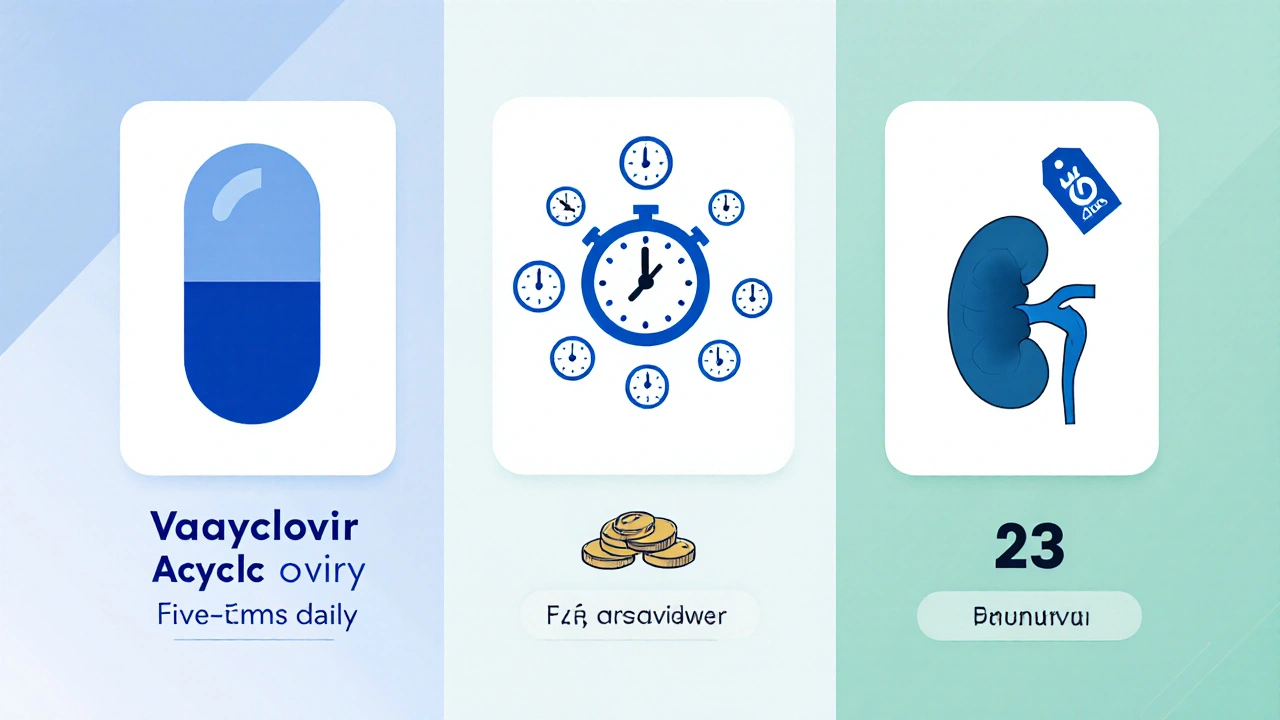
Side‑by‑Side Comparison
| Attribute | Valtrex (Valacyclovir) | Acyclovir | Famciclovir |
|---|---|---|---|
| Prodrug to | Acyclovir | Active compound | Penciclovir |
| Typical adult dose for genital herpes | 1g twice daily for 10days | 400mg five times daily for 10days | 250mg three times daily for 10days |
| FDA approval year | 1995 | 1982 | 1994 |
| Average 2025 retail price (30‑day supply) | $120‑$150 | $5‑$10 | $55‑$70 |
| Key side effects | Headache, nausea, renal irritation | GI upset, rash, rare kidney issues | Fatigue, dizziness, mild headache |
| Convenient dosing | Twice daily (or once for suppression) | Five times daily | Three times daily |
Deciding Factors
Pick the drug that aligns with three practical questions:
- How often can I remember to take a pill? If you struggle with multiple daily doses, Valtrex’s twice‑daily schedule or once‑daily suppression is a win.
- What does my insurance cover? Many 2025 plans list generic acyclovir as a Tier1 drug, making it the cheapest out‑of‑pocket. Famciclovir may sit in Tier2, with moderate co‑pay.
- Do I have kidney concerns? All three are excreted renally. Valacyclovir needs dose adjustments for reduced kidney function, while acyclovir requires careful monitoring at high doses.
Side Effects & Safety
Overall, the safety profiles are similar because they all end up as nucleoside analogues in the body. The most common complaints are mild stomach upset and headache. Rare but serious events include kidney toxicity and blood count changes, typically seen in patients with pre‑existing renal issues or those taking high‑dose IV forms.
Pregnant women should discuss options with their doctor; valacyclovir is classified as CategoryB, meaning animal studies show no risk, but human data are limited. Acyclovir shares the same classification.

Cost & Insurance Tips for 2025
Here’s a quick look at where you can save:
- Shop pharmacy discount cards. Programs like GoodRx often list acyclovir for under $5, while valacyclovir can drop to $80 with a card.
- Ask for a 90‑day supply. Many insurers approve a three‑month prescription, cutting per‑tablet cost by up to 30%.
- Consider manufacturer coupons. The brand‑owner of Valtrex still offers a free‑coupon for uninsured patients, covering up to one month.
- Check for generic equivalents. Generic valacyclovir entered the market in early 2024 and now costs about $70 for a 30‑day course.
Frequently Asked Questions
Frequently Asked Questions
Can I switch from Valtrex to acyclovir midway through treatment?
Yes, doctors often transition patients to acyclovir if cost becomes an issue. The efficacy remains comparable, but you’ll need to increase dosing frequency.
Is famciclovir better for shingles than Valtrex?
Clinical trials show famciclovir and valacyclovir have similar outcomes for shingles. The choice often comes down to dosing convenience and insurance coverage.
What should I do if I miss a dose of Valtrex?
Take the missed dose as soon as you remember, unless it’s almost time for the next one. Then skip the missed dose-don’t double up.
Are there any food restrictions with acyclovir?
Acyclovir can be taken with or without food. Some people find taking it with meals reduces stomach upset.
How do I know which antiviral is right for my cold sores?
If you need a quick, short‑term course, acyclovir or valacyclovir both work. Valacyclovir’s twice‑daily schedule may be easier for busy people.
Next Steps
Talk to your healthcare provider about your outbreak frequency, kidney health, and insurance plan. Bring this comparison sheet to the appointment; it makes the conversation concrete. If cost is the main driver, ask for a generic prescription or a 90‑day supply. Finally, keep a list of any side effects you notice-reporting them early helps your doctor fine‑tune the regimen.

Suzanne Podany
October 12, 2025 AT 08:20Hey folks, if you’re trying to figure out whether Valtrex is worth it compared to its cousins, the calculator below is a solid place to start. It breaks down the daily dosage, the typical price per pill, and even adds a rough estimate for a full treatment course. Keep in mind regional pricing can shift, so adjust the numbers if you know a better local rate. The tool also lets you toggle between acyclovir and famciclovir, which is handy when you’re weighing side‑effect profiles. Hope this makes budgeting your antiviral therapy a little less stressful.
Sunil Kamle
October 12, 2025 AT 23:36Dear reader, one might assume that an interactive cost calculator holds the panacea for all fiscal dilemmas associated with antiviral therapy. In reality, the variance in wholesale pricing renders such tools merely decorative. Nevertheless, should you feel compelled to input arbitrary numbers, the script will dutifully return a figure of questionable relevance. One could argue that this exercise mirrors the futility of attempting to quantify the value of health itself. Kindly accept this modest observation with the utmost decorum.
Steve Helsel
October 13, 2025 AT 14:53Well, that's a lot of fluff for a calculator that could've been a single line in a pharmacy brochure.
Steve Moody
October 14, 2025 AT 06:10Indeed, the comparative analysis between valacyclovir, acyclovir, and famciclovir is, without doubt, a quintessential exemplification of pharmacoeconomic discourse; however, one must not overlook the nuanced pharmacokinetic disparities that belie mere cost considerations; furthermore, the dosage regimens, bioavailability coefficients, and half‑life differentials warrant meticulous scrutiny, lest the reader be misled by superficial price tags; I trust this elucidation satisfies the scholarly appetite of our community.
Adrian Hernandez
October 14, 2025 AT 21:26It never ceases to amaze me how the pharmaceutical giants push these overpriced antivirals while hiding the simple fact that most of the time the virus runs its course on its own; the whole calculator feels like a marketing gimmick designed to extract more cash from vulnerable patients; I’m skeptical of any data that isn’t ripped straight from a corporate press release; the cost‑benefit argument is a smokescreen, and anyone who buys into it is playing right into their hands; keep your eyes open, don’t let them monetize every cold sore.
Geneva Lyra
October 15, 2025 AT 12:43i quite agree with your point but it s also important to recognise that the calcualtor can help some peopel budget better when insurancce doesnt cover the medcation.
Moritz Bender
October 16, 2025 AT 04:00From a virological standpoint, valacyclovir is a prodrug of acyclovir, offering superior oral bioavailability (≈55% vs. 15% for acyclovir), which translates to less frequent dosing and consequently higher patient adherence 😊. Acyclovir, while less bioavailable, remains a cost‑effective option for immunocompetent hosts with mild outbreaks. Famciclovir, the prodrug of penciclovir, bridges the gap with intermediate bioavailability and a longer intracellular half‑life, making it suitable for recurrent genital herpes. When you feed the calculator with accurate dosage durations, you’ll see these pharmacodynamic nuances reflected in the total cost. In practice, clinicians often weigh these pharmacokinetic profiles against patient-specific factors such as renal function and prior drug tolerance.
Nicole Hernandez
October 16, 2025 AT 19:16While the cost calculator provides a quantitative framework, it is equally vital to consider the qualitative aspects of each antiviral-namely, side‑effect tolerability and dosing convenience. Valacyclovir’s once‑daily regimen often leads to better compliance compared to the multiple daily doses required for acyclovir. Conversely, famciclovir may be preferred in patients who experience gastrointestinal upset with other agents. By integrating these clinical considerations with the financial outputs, healthcare providers can tailor therapy to both the patient’s budget and lifestyle. Ultimately, an informed decision balances economics with therapeutic efficacy.
florence tobiag
October 17, 2025 AT 10:33-Really?-The premise that a simple spreadsheet can capture the complexities of antiviral pharmacology is, frankly, an oversimplification; while cost is undeniably a factor, to suggest it should dominate therapeutic choice ignores the multifaceted nature of patient care; moreover, the calculator fails to account for variables such as insurance copays, regional price fluctuations, and the hidden costs of adverse events; therefore, treating it as a definitive guide is, at best, misguided.
Terry Washington
October 18, 2025 AT 01:50Listen up, because the healthcare system has been peddling these antiviral “miracles” for far too long without any real accountability. First, the premise that valacyclovir is somehow superior merely because of its higher price is an affront to basic economic logic. Second, the pharmacodynamics of acyclovir, when administered correctly, achieve viral suppression that is clinically indistinguishable from its more expensive counterpart. Third, the hidden costs-renal toxicity, resistance development, and the psychological toll of chronic medication-are conveniently omitted from any simplistic cost calculator. Fourth, the pharmaceutical lobby has ensured that marketing dollars drown out honest comparative research. Fifth, physicians who uncritically endorse the most costly drug are complicit in this profit‑driven charade. Sixth, patients deserve transparent data that includes quality‑adjusted life years, not just a dollar figure. Seventh, the calculator’s algorithm assumes uniform adherence, a fantasy in real‑world settings. Eighth, insurance formularies manipulate pricing structures to favor higher‑margin products. Ninth, the ethical implications of inflating drug costs for marginal benefit cannot be ignored. Tenth, the data supporting famciclovir’s purported advantages remain thin and often industry‑sponsored. Eleventh, embracing a single “best” drug stifles personalized medicine, which should be the holy grail of treatment. Twelfth, the very notion that a spreadsheet can replace nuanced clinical judgment is patently absurd. Thirteenth, we must demand peer‑reviewed, independent cost‑effectiveness analyses before making policy decisions. Fourteenth, the public health impact of cost barriers leads to under‑treatment and increased viral transmission. Fifteenth, until we dismantle this glossy veneer of “choice” and expose the underlying economics, patients will continue to be the ones paying the price-both literally and metaphorically.
Claire Smith
October 18, 2025 AT 17:06This calculator adds little value beyond what a quick Google search already provides.
Émilie Maurice
October 19, 2025 AT 08:23While your point is noted, the statement suffers from factual inaccuracy; the calculator indeed aggregates price data rather than inventing it, and its purpose is to aid budgeting, not replace professional advice.
Joshua Logronio
October 19, 2025 AT 23:40Hey guys, just wanted to say the tool is pretty cool and i think it could help a lot of peopel figure out what they can afford. If you have any tips or want to share your experiences, feel free to chime in!
Nicholas Blackburn
October 20, 2025 AT 14:56Don't be fooled by the shiny interface-this so‑called calculator masks the reality that most patients are being overcharged for marginal gains; the data is cherry‑picked, the assumptions are flawed, and the whole thing is a ruse to keep profits high; stop trusting these superficial tools without demanding rigorous, peer‑reviewed analyses.
Dave Barnes
October 21, 2025 AT 06:13Now, if we contemplate the epistemological underpinnings of a cost calculator, we might ask whether quantifying health in dollars truly captures the essence of therapeutic value; perhaps the answer lies not in numbers but in the lived experience of the patient, a notion that resists reduction to mere arithmetic.