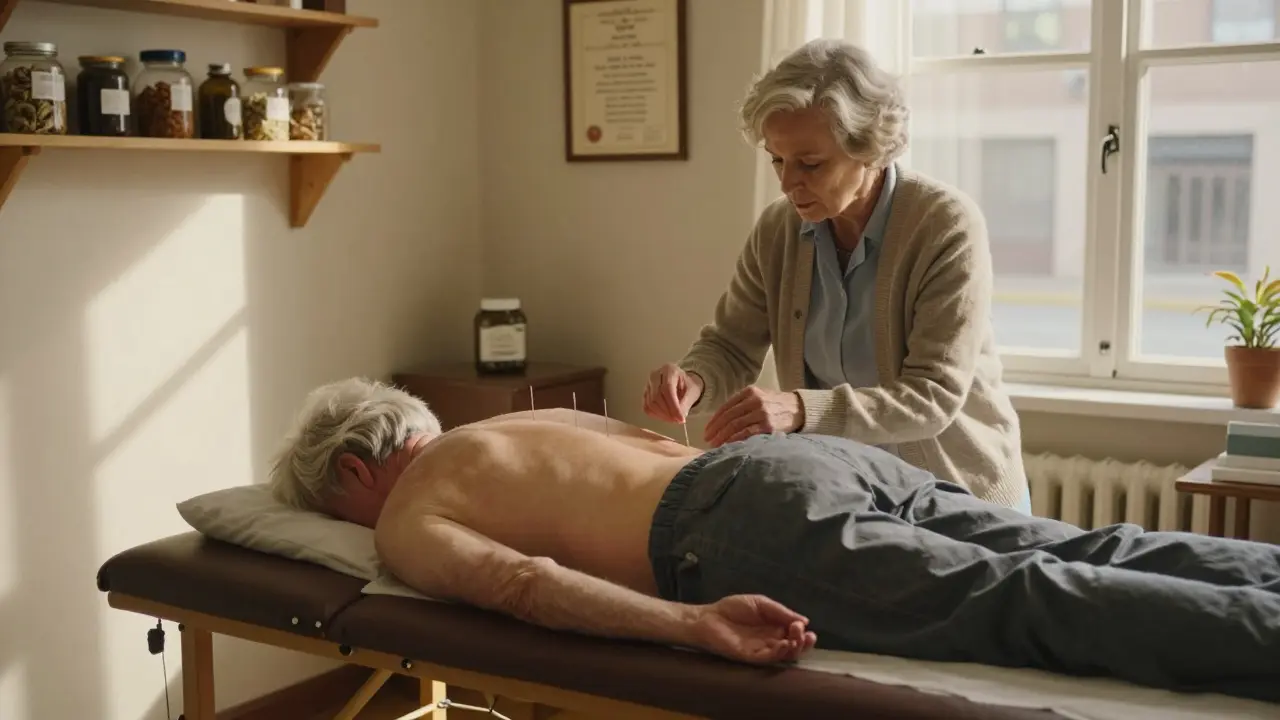
When you’ve been living with chronic pain for months-or years-it’s not just your body that’s tired. Your mind is exhausted too. You’ve tried painkillers, physical therapy, even cortisone shots. But the relief is short-lived, or the side effects are worse than the pain. That’s where acupuncture comes in. Not as a miracle cure, but as a real, research-backed option that’s been helping people for thousands of years-and now, modern medicine is catching up.
How Acupuncture Actually Works for Pain
Acupuncture isn’t magic. It’s not even mysticism, despite what you might see in movies. At its core, it’s a technique: thin, sterile needles are inserted into specific spots on the body. These points, called acupoints, have been mapped for over 2,000 years in traditional Chinese medicine. But today, we understand them differently. Modern studies show acupuncture triggers real biological responses. It stimulates nerves under the skin, sending signals to the brain that activate the body’s natural painkillers-like endorphins and serotonin. It also reduces inflammation in affected tissues and can calm overactive pain pathways in the spinal cord and brain. This isn’t just theory. A 2018 meta-analysis of nearly 21,000 patients found acupuncture produced clinically meaningful pain relief that lasted at least a year after treatment ended. The needles themselves are tiny-thinner than a human hair-and most people feel only a slight pinch, if anything at all. Once inserted, they’re left in place for 15 to 30 minutes. Some practitioners add gentle electrical stimulation, which research suggests may boost the effect, especially for nerve-related pain.What Conditions Does Acupuncture Help Best?
Not all pain responds the same way. Acupuncture doesn’t fix everything-but it shines in specific areas where drugs often fall short.- Chronic low back pain: This is the most studied condition. Multiple large trials show acupuncture reduces pain and improves function better than no treatment at all-and just as well as NSAIDs like ibuprofen, without the stomach damage.
- Knee osteoarthritis: Over 85% of osteoarthritis studies in major reviews focused on knee pain. Results consistently show reduced pain and improved mobility after 8-12 sessions. Many patients report being able to walk farther or climb stairs without pain.
- Tension headaches and migraines: A 2016 Cochrane review found acupuncture reduced headache frequency by half in chronic sufferers. Some patients cut their use of pain meds by 75% after a full course.
- Neck pain: Similar to back pain, acupuncture outperforms no treatment and matches drug therapy in effectiveness, with fewer side effects.
Real Evidence: What the Studies Say
The biggest criticism of acupuncture has always been: “Is it just a placebo?” That’s why scientists designed sham trials-using needles that don’t pierce the skin, or sticking them in random spots. These are the gold standard. And here’s what they found:- Compared to no treatment, acupuncture reduced pain by an average of 0.55 standard deviations for back pain, 0.57 for knee OA, and 0.42 for headaches.
- Compared to sham acupuncture, the difference was smaller-about 0.23 for back pain-but still statistically significant. That means acupuncture does more than just make people feel better because they believe in it.
- A 2012 analysis of 29 high-quality trials with over 17,000 patients concluded: “Acupuncture is effective for chronic pain and is a reasonable referral option.”

How Safe Is It?
Safety is where acupuncture really stands out. Serious side effects? Extremely rare. A 2017 review of over 22,000 patients found serious complications occurred in less than 0.05% of treatments. That’s fewer than one in every 2,000 sessions. Most side effects are mild: a little bruising, temporary soreness, or feeling lightheaded. Compare that to NSAIDs. Every year in the U.S., about 103,000 people are hospitalized for stomach bleeding or ulcers caused by ibuprofen or naproxen. Acupuncture doesn’t do that. No liver damage. No addiction risk. No grogginess. Needles are single-use, sterile, and regulated by the FDA as medical devices. Licensed practitioners follow strict hygiene rules. In the U.S., most states require certification through the NCCAOM, which means at least 1,800 hours of training.What About Cost and Access?
Cost is the biggest barrier. A single session runs $60 to $120, depending on where you live. Most people need 6 to 12 sessions to see real results-that’s $400 to $1,200 upfront. Insurance coverage is spotty: only 56% of private plans in the U.S. cover acupuncture for pain as of 2022. But here’s the twist: it often pays for itself. A 2021 study in Medical Care found that for chronic low back pain, acupuncture saved patients $1,873 over 12 months compared to standard care. Why? Fewer doctor visits, less medication, fewer missed workdays. Medicare started covering acupuncture for chronic low back pain in 2020-and now over 12 million beneficiaries can access it. Veterans Health Administration offers it in 64% of its facilities. More hospitals are adding it to pain clinics. Why? Because it works-and because opioids are killing people. In 2022, 47,000 Americans died from opioid overdoses. Acupuncture offers a safe alternative.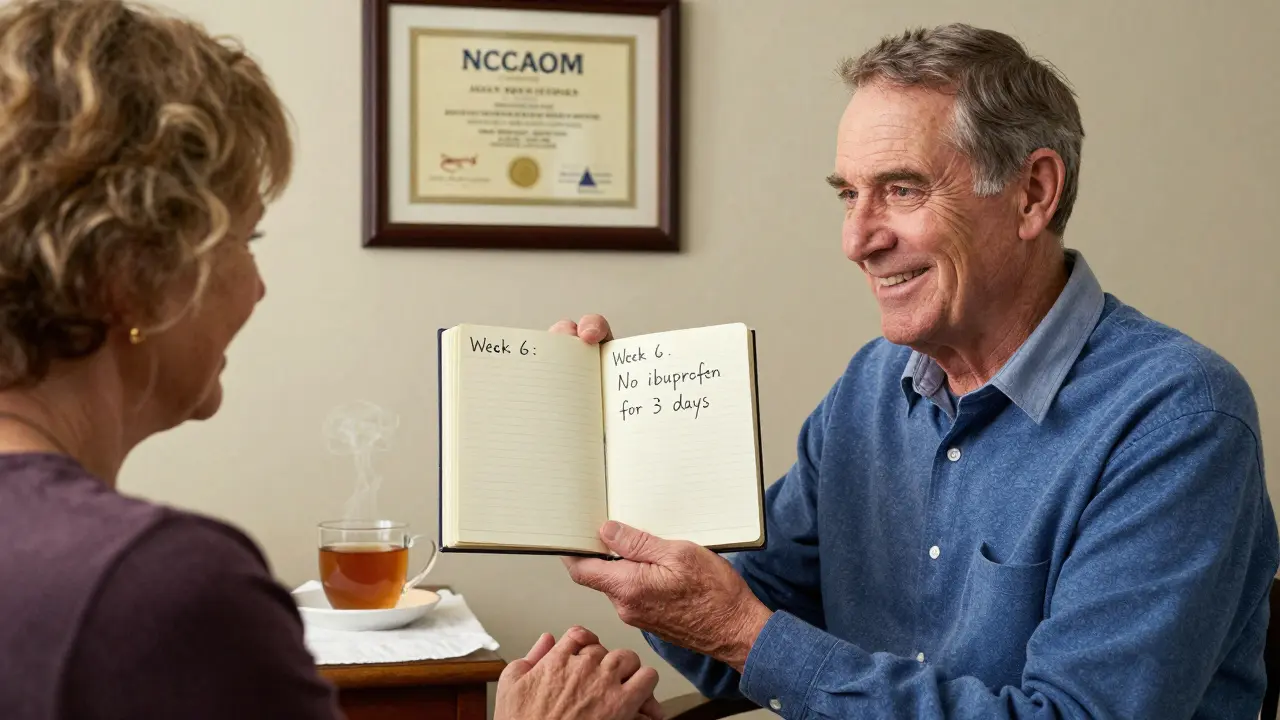
What Patients Actually Say
Real stories matter. On Reddit’s r/acupuncture, 78% of 1,243 threads in 2023 were positive. Common themes: “Immediate relief for tension headaches,” “I stopped taking ibuprofen,” “I can sleep through the night now.” One Healthgrades review said: “After 10 sessions for chronic back pain, I cut my pain meds by 75%. It’s been 8 months and I’m still holding onto that.” But it’s not perfect. Negative reviews often mention: “Too expensive,” “Didn’t work for me,” “Practitioner didn’t know what they were doing.” That last one is key. Skill matters. A poorly trained practitioner can’t deliver results.How to Get Started
If you’re considering acupuncture:- Find a licensed provider. Check for NCCAOM certification in the U.S., or equivalent in your country. Look for someone who works in a clinic, not a spa.
- Be clear about your goal. Are you trying to reduce meds? Move better? Sleep more? Tell them.
- Expect to commit. One session won’t fix years of pain. Most people need 6 to 8 sessions over 6 to 8 weeks.
- Track your progress. Keep a simple pain log: rate your pain 1-10 each day. You’ll start seeing patterns by session 6.
- Ask about maintenance. Once you feel better, you might need a session every 4 to 8 weeks to stay on track.
The Bigger Picture
Acupuncture isn’t a replacement for all medicine. It’s not going to fix a broken bone or cure cancer. But in the world of chronic pain-where drugs often fail or harm-acupuncture fills a critical gap. It’s part of a new model: multimodal pain care. The CDC now recommends combining physical therapy, exercise, psychological support, and non-drug options like acupuncture. That’s the future. And it’s working. More doctors are referring patients. More insurers are covering it. More hospitals are offering it. The U.S. acupuncture market is projected to hit $8 billion by 2030-not because it’s trendy, but because it delivers real, measurable results. You don’t have to believe in energy channels to benefit from acupuncture. You just have to believe in science-and in the idea that sometimes, the oldest solutions are the most effective.Does acupuncture hurt?
Most people feel little to no pain. The needles are extremely thin-thinner than a strand of hair-and insertion is quick. You might feel a slight pinch or a dull ache when the needle reaches the right spot, but it’s usually mild and brief. Many patients even fall asleep during treatment.
How long until I feel results?
It varies. Some people feel better after one session, especially for acute tension headaches. For chronic pain like back or knee issues, most patients notice improvement by the sixth session. The benefits build over time, and the most lasting results come after a full course of 6 to 12 treatments.
Is acupuncture covered by insurance?
It depends. Medicare covers acupuncture for chronic low back pain. Many private insurers cover it too, but only if it’s for specific conditions and provided by a licensed practitioner. About 56% of U.S. private plans included acupuncture coverage in 2022. Always check with your insurer before starting treatment.
Can acupuncture replace my pain meds?
It can help reduce your reliance on them-especially NSAIDs or opioids-but it’s not always a full replacement. Many patients use acupuncture alongside other treatments to lower their dose and minimize side effects. Always talk to your doctor before stopping any medication.
Are there any risks?
Serious risks are extremely rare when performed by a licensed professional. Minor side effects like bruising, soreness, or feeling tired after a session can happen. Avoid acupuncture if you have a bleeding disorder or are on blood thinners unless cleared by your doctor. Always make sure needles are sterile and single-use.
Why does sham acupuncture sometimes work almost as well?
The placebo effect is real-and powerful in pain management. But studies show real acupuncture consistently performs better than sham, even if the difference is small. That suggests acupuncture has real biological effects beyond expectation. The combination of ritual, touch, and physiological response likely contributes to its overall benefit.

anjar maike
February 4, 2026 AT 04:17Sam Salameh
February 4, 2026 AT 22:39Cullen Bausman
February 5, 2026 AT 15:30Cole Streeper
February 7, 2026 AT 12:16divya shetty
February 9, 2026 AT 02:37Nancy Maneely
February 10, 2026 AT 22:07Phoebe Norman
February 11, 2026 AT 17:15Albert Lua
February 13, 2026 AT 17:08Matthew Morales
February 14, 2026 AT 18:45Lisa Scott
February 16, 2026 AT 18:39