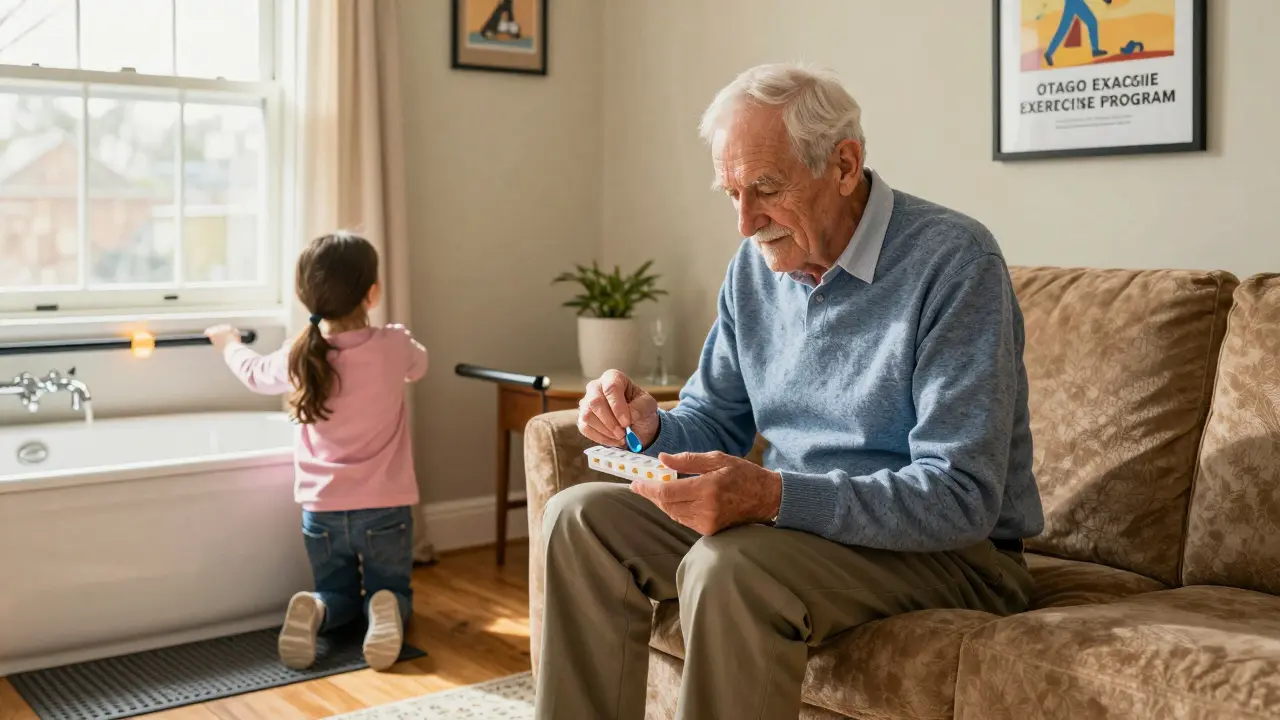
When a senior falls, the fear isn't just about a bruise or a broken hip-it's about what happens next. If they're on blood thinners to prevent stroke, a single fall can turn into a life-threatening bleed. But here's the hard truth: not taking anticoagulants because you're scared of falling might be far more dangerous.
Why Seniors Need Anticoagulants
About 9 out of every 100 adults over 65 have atrial fibrillation, an irregular heartbeat that lets blood pool and clot in the heart. Those clots can travel to the brain and cause a stroke. The risk isn't small. At age 50-59, annual stroke risk is 1.5%. By 80-89, it jumps to 23.5%. That's more than 1 in 4 people in that age group having a stroke each year if nothing is done. Warfarin, the old-school blood thinner, cuts stroke risk by two-thirds. But newer drugs-called DOACs (direct oral anticoagulants)-like apixaban, rivaroxaban, dabigatran, and edoxaban, do just as well or better. They don’t need regular blood tests like warfarin. They’re easier to manage. And for seniors, they’re often safer. The data doesn’t lie. The BAFTA trial looked at 212 patients over 80 with atrial fibrillation. Half got warfarin or another anticoagulant. The other half got aspirin. Over a year, the anticoagulant group had 52% fewer strokes. And there wasn’t a spike in serious bleeding. Same story in other big studies: RE-LY, ARISTOTLE, ROCKET-AF. Even in people over 85, anticoagulants still prevent more strokes than they cause bleeds.The Fall Risk Myth
Clinicians hear it all the time: “My dad fell last month. He can’t be on blood thinners.” But here’s what the science says: fall risk alone should not stop anticoagulation. A 2023 article in the Journal of Hospital Medicine labeled stopping anticoagulants because of falls as “Things We Do for No Reason.” Why? Because the math doesn’t add up. Yes, a fall on blood thinners can cause a brain bleed. But the chance of a stroke from untreated atrial fibrillation is higher. In fact, studies show elderly patients are more likely to suffer a stroke than a fatal fall. Minnesota hospital data found that 90% of fall-related deaths involved people over 85 or those on anticoagulants. That sounds scary-but it’s not a reason to stop treatment. It’s a reason to prevent falls. The problem isn’t the drug. It’s the combination of frailty, poor balance, dim lighting, or loose rugs. The American College of Cardiology, American Heart Association, and Heart Rhythm Society all say age alone is not a reason to avoid anticoagulants. In fact, the older you are, the more you stand to gain. A 2015 study of 819 people aged 85-89 and 386 over 90 showed the oldest patients had the greatest net benefit. They prevented more strokes than bleeds.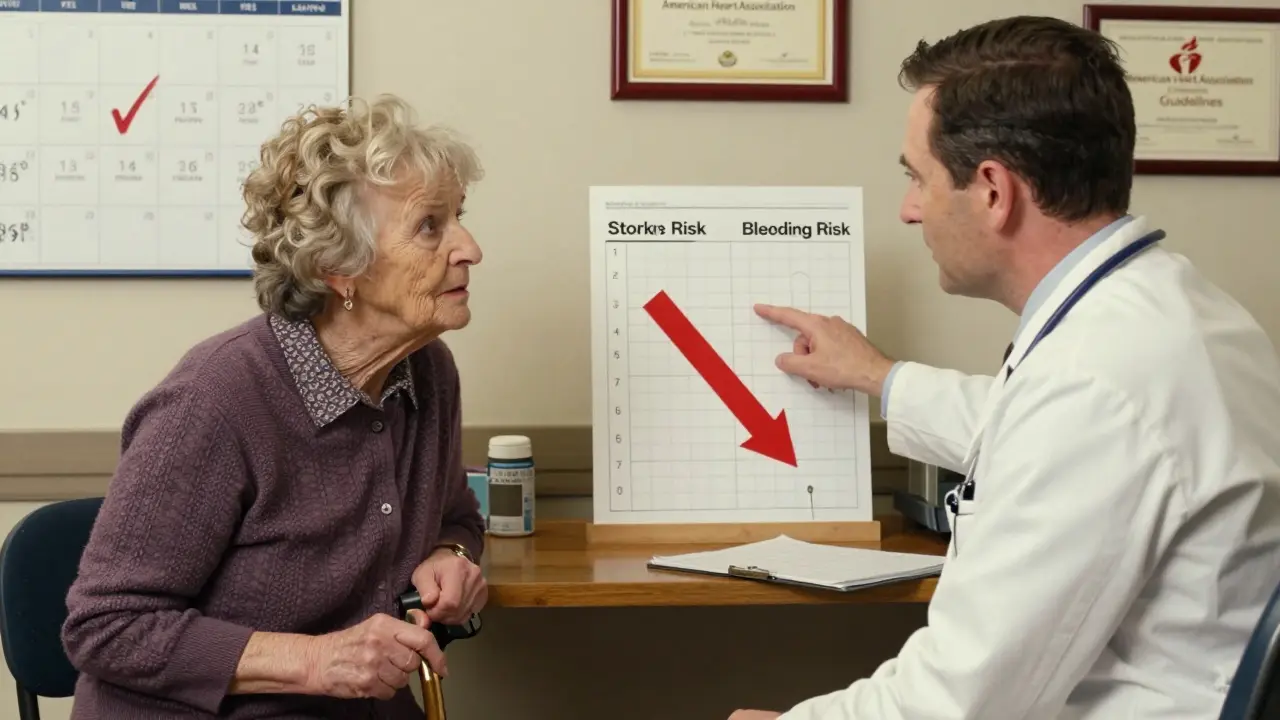
DOACs vs. Warfarin: What’s Best for Seniors?
Not all anticoagulants are the same. Here’s how they compare in real-world use:| Drug | Dose | Stroke Risk Reduction | Major Bleeding Risk | Key Advantages | Key Limitations |
|---|---|---|---|---|---|
| Warfarin | Adjustable (INR 2-3) | ~64% reduction | High (especially intracranial) | Reversible with vitamin K, fresh plasma | Needs frequent blood tests; interacts with food and other drugs |
| Apixaban (Eliquis) | 5mg twice daily | 21% lower than warfarin | 31% lower in patients ≥75 | Lower bleeding risk; no routine monitoring | Renal clearance (27%); needs dose adjustment if kidney function drops |
| Rivaroxaban (Xarelto) | 20mg once daily | Non-inferior to warfarin | 34% lower intracranial hemorrhage | Once-daily dosing | 33% renal clearance; higher GI bleed risk |
| Dabigatran (Pradaxa) | 150mg twice daily | 88% reduction vs. placebo | Similar to warfarin | Highly effective; has reversal agent (idarucizumab) | 80% renal clearance; can cause stomach upset |
| Edoxaban (Savaysa) | 60mg once daily | Comparable to warfarin | 8.5% absolute reduction vs. warfarin | Lower bleeding risk | 50% renal clearance; not ideal for severe kidney disease |
Apixaban stands out for seniors. In the ARISTOTLE trial, people over 75 had 31% less major bleeding than those on warfarin. It’s also the most forgiving if kidney function dips slightly. That’s why many doctors now start with apixaban for patients over 80.
When to Be Cautious
No drug is perfect. DOACs have limits. Most are cleared through the kidneys. As people age, kidney function declines. A creatinine clearance below 50 mL/min means dose adjustments are needed. Dabigatran and edoxaban are especially sensitive. If kidney function isn’t checked every 6-12 months, you’re flying blind. Reversing bleeding used to be a nightmare. Warfarin could be reversed with vitamin K or plasma. DOACs? Not so easy. But since 2015, we’ve had reversal agents: idarucizumab for dabigatran, andexanet alfa for apixaban, rivaroxaban, and edoxaban. These aren’t magic bullets-they don’t work instantly-but they’ve changed the game. Emergency rooms can now act faster. Still, some doctors hesitate. A 2021 survey found 68% of primary care doctors would withhold anticoagulation from an 85-year-old with two falls in a year-even if their stroke risk score (CHA2DS2-VASc) was 4, meaning high risk. That’s outdated thinking. The guidelines are clear: fall history is not a contraindication.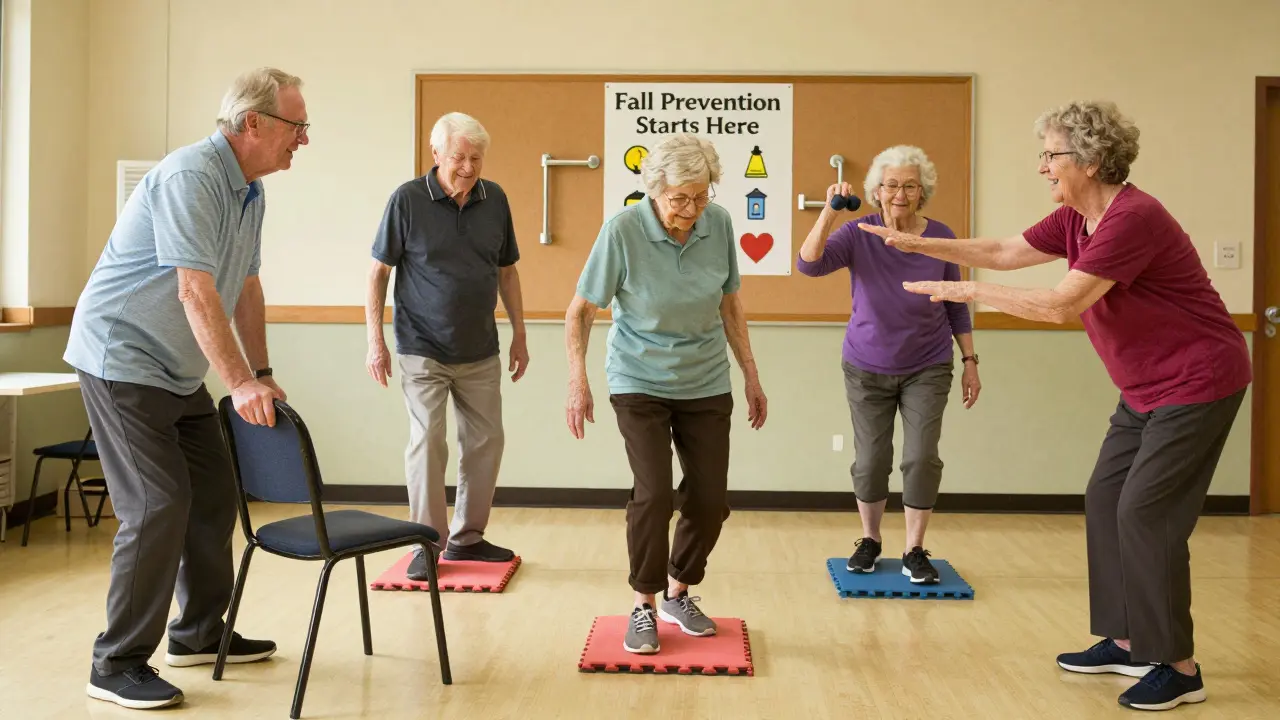
What to Do Instead
Don’t stop the anticoagulant. Fix the fall risk. The Minnesota Hospitals fall prevention protocol gives four practical steps:- Use the Morse Fall Scale or similar tool to assess balance, vision, medications, and home safety.
- Review all meds. Cut out sleeping pills, anxiety drugs, painkillers, or antihistamines that make people dizzy.
- Modify the home. Add grab bars, remove throw rugs, install nightlights, use non-slip mats in the shower.
- Start the Otago Exercise Program. It’s a simple, home-based strength and balance routine. Studies show it cuts falls by 35% in seniors.
Warfarin needs monthly blood tests. DOACs? Just check kidney function every 6-12 months. That’s it. No more complex monitoring. No more INR targets. Just consistent, simple care.
The Bottom Line
For seniors with atrial fibrillation, the choice isn’t between bleeding and not bleeding. It’s between stroke and bleeding. And stroke is far more likely. The evidence is overwhelming: anticoagulants save lives in the elderly. For every 100 octogenarians treated for one year, 24 strokes are prevented. Only 3 major bleeds occur. That’s a net gain of 21 serious events avoided. If your loved one has atrial fibrillation and a history of falls, don’t stop their blood thinner. Talk to their doctor about:- Switching to apixaban if they’re on warfarin or another DOAC
- Checking kidney function every 6-12 months
- Getting a home safety assessment
- Starting a balance and strength program
Don’t let fear of falling stop them from living. The goal isn’t to avoid all risk. It’s to manage the bigger one.
Should seniors stop anticoagulants after a fall?
No. A single fall, even with injury, is not a reason to stop anticoagulants in someone with atrial fibrillation. The risk of stroke without treatment far outweighs the risk of bleeding from a fall. Instead of stopping medication, focus on preventing future falls through home safety, medication review, and balance exercises.
Which anticoagulant is safest for elderly patients?
Apixaban (Eliquis) is generally considered the safest for seniors, especially those over 75. It has the lowest rate of major bleeding compared to other DOACs and warfarin. It’s also less dependent on kidney function than dabigatran or edoxaban, making it more reliable as kidney function declines with age.
Do DOACs require blood tests like warfarin?
No. Unlike warfarin, which requires monthly INR blood tests to adjust the dose, DOACs (apixaban, rivaroxaban, dabigatran, edoxaban) have fixed dosing. You don’t need routine blood monitoring. However, kidney function should be checked every 6-12 months, especially in seniors, since most DOACs are cleared through the kidneys.
Can you reverse bleeding from DOACs?
Yes. Specific reversal agents exist: idarucizumab for dabigatran and andexanet alfa for apixaban, rivaroxaban, and edoxaban. These are available in hospitals and can stop bleeding in emergencies. While not as fast-acting as vitamin K for warfarin, they’ve dramatically improved outcomes for seniors who experience major bleeds.
Why are anticoagulants underused in older adults?
Many doctors and families fear bleeding after falls, even though evidence shows stroke prevention benefits outweigh risks. A 2021 survey found 68% of primary care physicians would withhold anticoagulants from an 85-year-old with two falls, despite high stroke risk. This gap between guidelines and practice leads to underuse-only 48% of patients over 85 receive appropriate treatment, compared to 72% of those aged 65-74.


Christina VanOsdol
February 26, 2026 AT 17:10Okay but like… I just watched my grandma fall *again* last week. She’s on apixaban. I thought I was gonna lose her. 😭 But then I read this and realized… we were doing it backwards. We should’ve fixed the rug, not the med. 🙌
Joanna Reyes
February 26, 2026 AT 18:12I’ve been a geriatric nurse for 22 years, and I can’t tell you how many times I’ve seen families stop anticoagulants after one fall - and then the stroke happens six weeks later. The data here is rock solid. Apixaban is the gold standard for seniors. Lower bleeding risk, less monitoring, and it’s forgiving if kidney function dips a little. The real villain isn’t the drug - it’s the outdated fear. We need to stop treating seniors like fragile porcelain and start treating them like people who deserve to live without fear of stroke. Also - Otago program? Game changer. My unit started it last year. Falls dropped 40%. Simple. Free. Effective.
Stephen Archbold
February 28, 2026 AT 01:58Man I’m so glad someone finally said this out loud. My pops was on warfarin, had a lil tumble, doc said ‘maybe we should stop?’ I was like NOPE. We switched to apixaban, got grab bars, tossed the throw rugs, and now he’s doing tai chi in the backyard. 😎 Kidney check every 6 months? Easy. No more INR pokes? YES. Also - that 24 strokes vs 3 bleeds stat? That’s the whole damn argument right there. Stop being scared. Start being smart.
Nerina Devi
February 28, 2026 AT 18:20In India, we see this all the time - elderly patients stopped from anticoagulants because of ‘fall risk.’ But we don’t have the same access to home safety assessments or rehab programs. The real issue isn’t the medication - it’s the lack of support systems. We need to fix the environment, not the patient. And yes, apixaban is the best choice - especially since it doesn’t need daily timing like warfarin. In rural areas, consistency matters more than anything.
Dinesh Dawn
March 2, 2026 AT 11:43My uncle had two falls in three months. We almost stopped his meds. Then we talked to his cardiologist. She said, ‘If you’re more scared of the bleeding than the stroke, you’re missing the point.’ We did the home safety stuff, switched him to apixaban, and now he walks with a cane and doesn’t fall. Just goes to the park. Life’s better. No regrets.
Vanessa Drummond
March 4, 2026 AT 02:45Ugh. I hate when doctors say ‘you’re too old’ or ‘you fell too much.’ My mom is 86. She fell. Broke her wrist. Still on apixaban. And guess what? She’s still alive. And she’s still watching her soap operas. Meanwhile, the guy next door? Stopped his meds. Had a stroke. Now he’s in a nursing home. Don’t be that person. #ApixabanSavesLives
Nick Hamby
March 4, 2026 AT 05:32There’s a deeper philosophical question here: Are we treating aging as a condition to be managed - or as a natural process to be honored? Anticoagulants aren’t about extending life at all costs. They’re about preserving autonomy. A stroke robs a person of their voice, their memories, their dignity. A bleed, even a serious one, can be reversed. The goal isn’t to avoid death - it’s to avoid irreversibility. That’s why apixaban, with its reversibility profile and lower bleeding risk, isn’t just clinically superior - it’s ethically aligned with what we owe our elders: the chance to live meaningfully, even if imperfectly.
kirti juneja
March 5, 2026 AT 13:20OMG this is so spot on. My auntie was told to stop her blood thinner after a ‘little slip’ - she’s 88. We switched her to apixaban, got her a walker, and now she’s dancing at Diwali. 🪔💃 I told the doc: ‘You don’t stop the medicine because life gets bumpy. You make life smoother.’ Also - Otago program? My mom does it every morning. She says it’s like yoga but with more sass. And guess what? She hasn’t fallen since. 🙌
Haley Gumm
March 5, 2026 AT 18:42Just saying - if your doc says ‘don’t take it because she fell,’ ask them if they’d say the same thing to a 30-year-old with a seizure disorder. Probably not. So why treat seniors like they’re disposable? This isn’t medicine. It’s ageism with a stethoscope.
Gabrielle Conroy
March 7, 2026 AT 02:59Apixaban for the win! 🎉 My 84-year-old dad switched from warfarin last year. No more monthly pokes. No more cabbage restrictions. No more ‘INR is 1.8, come back next week.’ Just one pill, twice a day. Kidney check once a year. And he hasn’t fallen since we added nightlights and removed the rug by the toilet. 🙌 Also - the reversal agents? Mind blown. We had a scare last month - he hit his head. ER gave him andexanet. He was fine by morning. Thank you, science.
Spenser Bickett
March 8, 2026 AT 13:10So let me get this straight… we’re supposed to trust a pill to prevent a stroke… but not trust a person to not fall? Wow. What a brilliant strategy. Next they’ll tell us to give diabetics insulin… but not let them walk on sidewalks. 😂
Christopher Wiedenhaupt
March 8, 2026 AT 17:45While the data presented is compelling and largely consistent with current clinical guidelines, it is essential to acknowledge that real-world adherence and polypharmacy in elderly populations introduce confounding variables. For instance, while DOACs reduce bleeding risk relative to warfarin, their efficacy may diminish in patients with multimorbidity or poor medication compliance. Furthermore, the cost and accessibility of reversal agents in non-urban settings remain significant barriers to equitable care. Therefore, while apixaban is often optimal, individualized risk-benefit analysis remains paramount.
Nandini Wagh
March 10, 2026 AT 16:05Yeah right. My neighbor’s husband died from a brain bleed after a fall. They were on apixaban. So now what? You just say ‘oh well, stroke would’ve been worse’? That’s cold. And you know what? He was a good man. He didn’t deserve to die because someone thought math was more important than love.