Antidepressant Withdrawal Risk Calculator
Medication Information
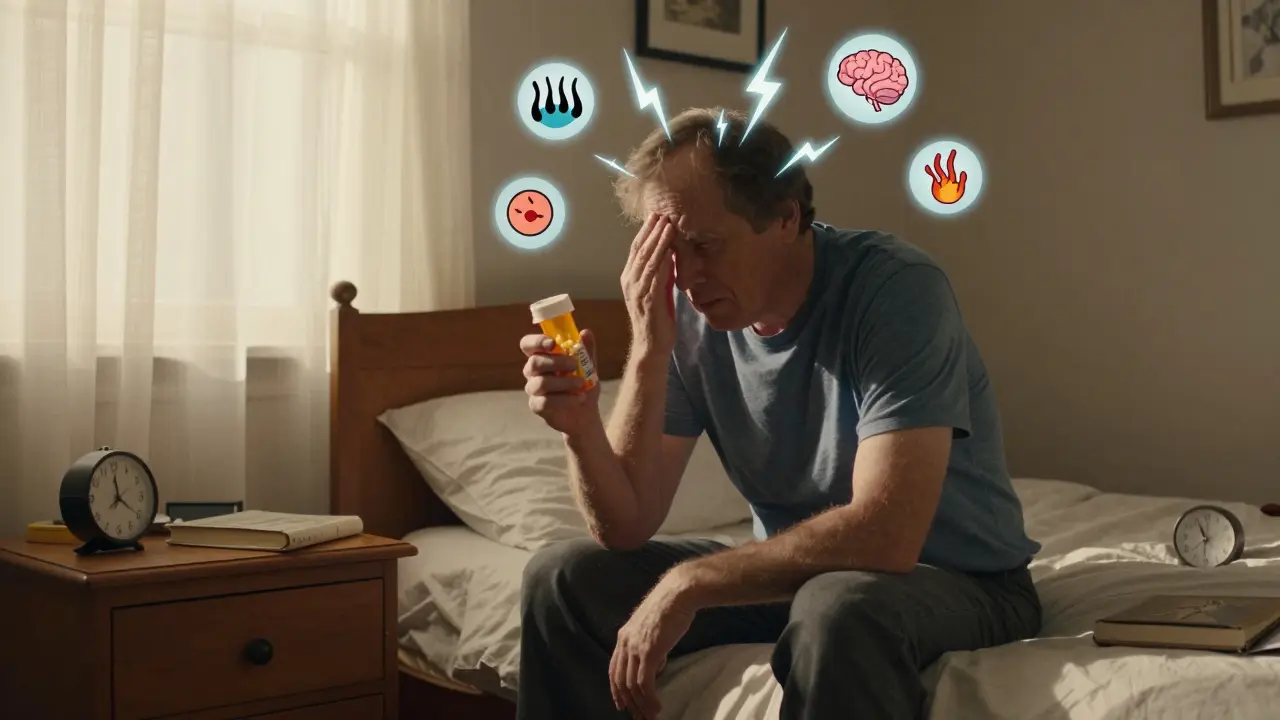
Stopping an antidepressant isn’t as simple as just skipping a pill. For many people, the body reacts in ways that feel sudden, confusing, and sometimes terrifying. You might wake up dizzy, feel electric shocks in your head, or get hit with nausea out of nowhere. These aren’t signs your depression is coming back-they’re symptoms of antidepressant discontinuation syndrome, a very real physical reaction to stopping or reducing medication too quickly.
What Exactly Is Antidepressant Discontinuation Syndrome?
This isn’t addiction. You won’t crave the drug or use it to get high. But your brain and nervous system have adapted to the presence of the medication. Over weeks or months, your body adjusts its own chemical balance to work alongside the drug. When you remove it suddenly, that balance crashes. It’s like turning off a steady stream of water in a pipe that’s been pressurized for months-the system needs time to readjust. The term was originally pushed by pharmaceutical companies to avoid the stigma of “withdrawal,” but doctors now agree it’s a classic physical withdrawal syndrome-similar to what happens with benzodiazepines or even caffeine. The American Academy of Family Physicians officially recognized it in 2006, and since then, research has only confirmed how common and real it is.What Do the Symptoms Feel Like?
Symptoms usually show up within 2 to 4 days after stopping or cutting back-sometimes even within hours if you were on a short-acting drug like paroxetine or venlafaxine. The classic pattern is summed up by the acronym FINISH:- Flu-like symptoms: Fatigue, muscle aches, chills, headaches, diarrhea
- Insomnia: Trouble falling asleep, vivid dreams, night sweats
- Nausea: Feeling sick to your stomach, vomiting
- Imbalance: Dizziness, vertigo, feeling off-balance or like you’re walking on a boat
- Sensory disturbances: “Brain zaps”-sudden, brief electric shock sensations, often when moving your eyes. Tingling, numbness, or ringing in the ears
- Hyperarousal: Anxiety, irritability, panic attacks, restlessness, feeling on edge
Not All Antidepressants Are the Same
The risk and severity of withdrawal depend heavily on the type of antidepressant you’re taking and how long it stays in your system.- SSRIs (like sertraline, escitalopram): Commonly cause brain zaps and nausea. Paroxetine has the shortest half-life (about 21 hours) and causes the worst withdrawal symptoms.
- SNRIs (like venlafaxine, duloxetine): Often worse than SSRIs. Venlafaxine’s half-life is only 5-11 hours. Nearly half of users report moderate to severe symptoms when stopping abruptly.
- TCAs (like amitriptyline): Can cause movement issues-tremors, stiff muscles, balance problems, even parkinsonian symptoms.
- MAOIs (like phenelzine): The most dangerous. Stopping suddenly can trigger agitation, psychosis, catatonia, or severe cognitive disruption. These require urgent medical attention.
- Fluoxetine (Prozac): Has a half-life of 4-6 days. Because it sticks around so long, withdrawal is rare and mild-even if you miss a dose.

Is It Withdrawal or Relapse?
This is the biggest point of confusion-and the reason so many people get misdiagnosed. Relapse of depression doesn’t come on suddenly. It creeps in over weeks: low mood, loss of interest, fatigue. Withdrawal hits fast-within days-and includes physical symptoms that depression doesn’t normally cause, like brain zaps, dizziness, or electric shocks. If you stop your antidepressant and feel awful within 48 hours, it’s likely withdrawal. If you restart the same medication, those symptoms usually vanish within 72 hours. That’s a key diagnostic clue doctors use. But here’s the problem: 38% of cases get misdiagnosed as a return of depression, anxiety, or even a neurological disorder. Patients are often told they “need to go back on the meds” without anyone asking, “Did you stop them suddenly?”How to Avoid or Manage Withdrawal
The best strategy is prevention.- Never stop cold turkey. Abrupt discontinuation increases severe symptom risk by 3.2 times.
- Taper slowly. Most guidelines recommend 6-8 weeks to reduce the dose gradually. For venlafaxine or paroxetine, even longer-up to 12 weeks-is safer.
- Use a longer-half-life drug. If you know you’ll need to stop someday, your doctor might start you on fluoxetine instead. It’s gentler on the way out.
- Don’t switch generics without supervision. Ask your pharmacist if the new pill is bioequivalent. Small differences in absorption can trigger symptoms.
- Monitor during pregnancy. Over 40% of pregnant women stop antidepressants on their own. This is a high-risk time. Always talk to your doctor first.
- Don’t panic.
- Call your prescriber immediately.
- Restarting your original dose-even just a small amount-usually resolves symptoms within 1-3 days.
- Don’t try to tough it out. Withdrawal isn’t a character test. It’s a physiological response.

What About Long-Term Withdrawal?
Most medical sources say symptoms last 1-2 weeks. But patient communities tell a different story. The Surviving Antidepressants forum, with over 15,000 members, reports that 73% of users had symptoms lasting longer than two weeks. Nearly 30% said their symptoms dragged on for more than six months. One woman described brain zaps for 9 months after stopping sertraline. A 2022 study in the Journal of Clinical Psychiatry found 18.7% of people still had symptoms after three months. This is called “protracted withdrawal.” It’s not well understood, but it’s real. The Royal College of Psychiatrists updated their guidelines in 2022 to include advice for managing long-term cases. Ongoing clinical trials are now looking for biomarkers that predict who’s at risk.What Should You Do If You’re Thinking About Stopping?
If you’re considering stopping your antidepressant:- Don’t make the decision alone. Talk to your doctor or psychiatrist.
- Ask: “What’s my medication’s half-life? How long should the taper be?”
- Request a written tapering schedule. Don’t rely on memory.
- Track your symptoms daily-mood, sleep, dizziness, brain zaps. This helps your doctor spot patterns.
- Know the signs of relapse vs. withdrawal. Keep a journal.
- If symptoms hit, contact your provider within 24 hours. Don’t wait.
Final Thought: You’re Not Crazy
If you’ve experienced brain zaps or dizziness after stopping your medication and were told it’s “all in your head,” you’re not alone. And you’re not wrong. The science is clear: antidepressant discontinuation syndrome is a physical condition. It’s not addiction. It’s adaptation. And it deserves the same care as any other withdrawal syndrome. Your body didn’t break. It adjusted. And now it needs time to readjust.Can antidepressant withdrawal be dangerous?
Yes, in rare cases. While most withdrawal symptoms are uncomfortable but not life-threatening, stopping MAOIs suddenly can trigger severe reactions like psychosis, catatonia, or seizures. Even with SSRIs or SNRIs, extreme anxiety, panic attacks, or suicidal thoughts can emerge during withdrawal-especially if symptoms are misdiagnosed as relapse. Always contact your doctor immediately if you experience severe mental or physical distress after stopping medication.
How long does antidepressant withdrawal last?
For most people, symptoms last 1-2 weeks and resolve once the body readjusts. But up to 18-30% of individuals experience symptoms for months, sometimes over a year. This is called protracted withdrawal and is more common with short-half-life drugs like paroxetine and venlafaxine. Patient-reported data suggests longer durations are underreported in medical literature.
Why do I get brain zaps when I stop antidepressants?
Brain zaps-sudden, brief electric shock sensations-are thought to result from rapid changes in serotonin signaling in the brainstem and sensory pathways. They’re most common with SSRIs and SNRIs, especially after abrupt discontinuation. Moving your eyes often triggers them. While harmless, they can be startling. Slowing the taper significantly reduces their frequency and intensity.
Can I switch to a different antidepressant to avoid withdrawal?
Sometimes, but it’s risky. Switching antidepressants without tapering can cause overlapping withdrawal and side effects, making symptoms worse. The safest approach is to taper off the current drug first, then start the new one at a low dose after a washout period. Always do this under medical supervision.
Is it safe to stop antidepressants during pregnancy?
It’s not safe to stop without medical guidance. About 41% of pregnant women stop their antidepressants on their own, often out of fear for the baby. But abrupt discontinuation can trigger severe withdrawal symptoms that affect both mother and fetus. A slow, supervised taper is usually safer than sudden cessation. Never stop without talking to your OB-GYN and psychiatrist together.

Josh josh
January 25, 2026 AT 22:00bella nash
January 26, 2026 AT 22:59Curtis Younker
January 27, 2026 AT 16:29Allie Lehto
January 27, 2026 AT 22:56Henry Jenkins
January 29, 2026 AT 12:01Nicholas Miter
January 29, 2026 AT 18:20Suresh Kumar Govindan
January 30, 2026 AT 05:32George Rahn
January 31, 2026 AT 04:18Karen Droege
February 1, 2026 AT 02:02Napoleon Huere
February 2, 2026 AT 20:37Shweta Deshpande
February 3, 2026 AT 02:56