Biosimilar Cost Savings Calculator
Biosimilar medications typically cost 15-30% less than brand-name biologics while providing the same safety and effectiveness. Calculate your potential savings below.
The U.S. healthcare system saved $31 billion from biosimilars between 2015-2022, with projected savings of $307 billion by 2030. Learn more about biosimilar savings
With the average biologic costing $20,000-$30,000 per year, biosimilars can make treatment affordable and accessible.
Did you know? Over 1.3 billion patient treatment days have been tracked with biosimilars across Europe with no safety signals beyond what was already known from the original drugs.
When your doctor suggests switching from a brand-name biologic to a biosimilar, it’s normal to feel uneasy. You’ve heard the warnings: biosimilar medications aren’t the same. They’re ‘similar but not identical.’ But what does that actually mean for your health?
What Exactly Is a Biosimilar?
A biosimilar is not a generic copy. Unlike small-molecule generics, which are chemically identical to their brand-name versions, biosimilars are made from living cells - like proteins, antibodies, or enzymes. They’re complex, big molecules. Think of them like identical twins, not clones. They’re not carbon copies, but they’re so close that no meaningful difference shows up in how they work in your body. The European Medicines Agency (EMA) approved the first biosimilar in 2006. The U.S. followed in 2015 with Zarxio, a version of filgrastim used to boost white blood cells after chemotherapy. Since then, over 55 biosimilars have been approved in Europe, and 26 in the U.S. By 2023, the FDA had approved 12 new ones alone - including four versions of Humira (adalimumab), a top-selling drug for arthritis and autoimmune diseases. The goal isn’t just to cut costs - though that’s a big part of it - but to make life-changing treatments more accessible. Biologics can cost $20,000 to $30,000 a year. Biosimilars typically cost 15% to 30% less. That’s not a small difference when you’re paying out of pocket or your insurer is trying to control spending.How Do We Know They Work the Same Way?
Regulators don’t just take a manufacturer’s word for it. Before a biosimilar gets approved, it goes through a mountain of testing:- **Analytical studies** - comparing the molecular structure, purity, and stability to the original drug
- **Nonclinical studies** - testing in animals for toxicity and immune response
- **Clinical studies** - testing in humans, usually in a small group, to prove no meaningful difference in safety or effectiveness
Real-World Evidence: Billions of Doses and Counting
Lab results are one thing. Real patients using these drugs for years? That’s another. Sandoz, one of the biggest biosimilar makers, tracked over 1.3 billion patient treatment days across eight of its biosimilars - including drugs for rheumatoid arthritis, cancer, and anemia. One of those, rituximab, was used in more than 1.8 million patient doses. Not a single safety signal emerged that wasn’t already known from the original drug. A 2023 review of this data concluded: “The benefit-risk profile of each biosimilar remains favorable and consistent with the reference biologic.” That’s not a marketing slogan. It’s a peer-reviewed analysis based on real-world data. In Europe, where biosimilars have been used longer, adoption rates are high. For filgrastim (a blood cell booster), 65% of prescriptions are for biosimilars. For infliximab (used in Crohn’s and psoriasis), it’s 55%. The U.S. is slower - only 35% for filgrastim, 28% for infliximab - but that’s changing fast.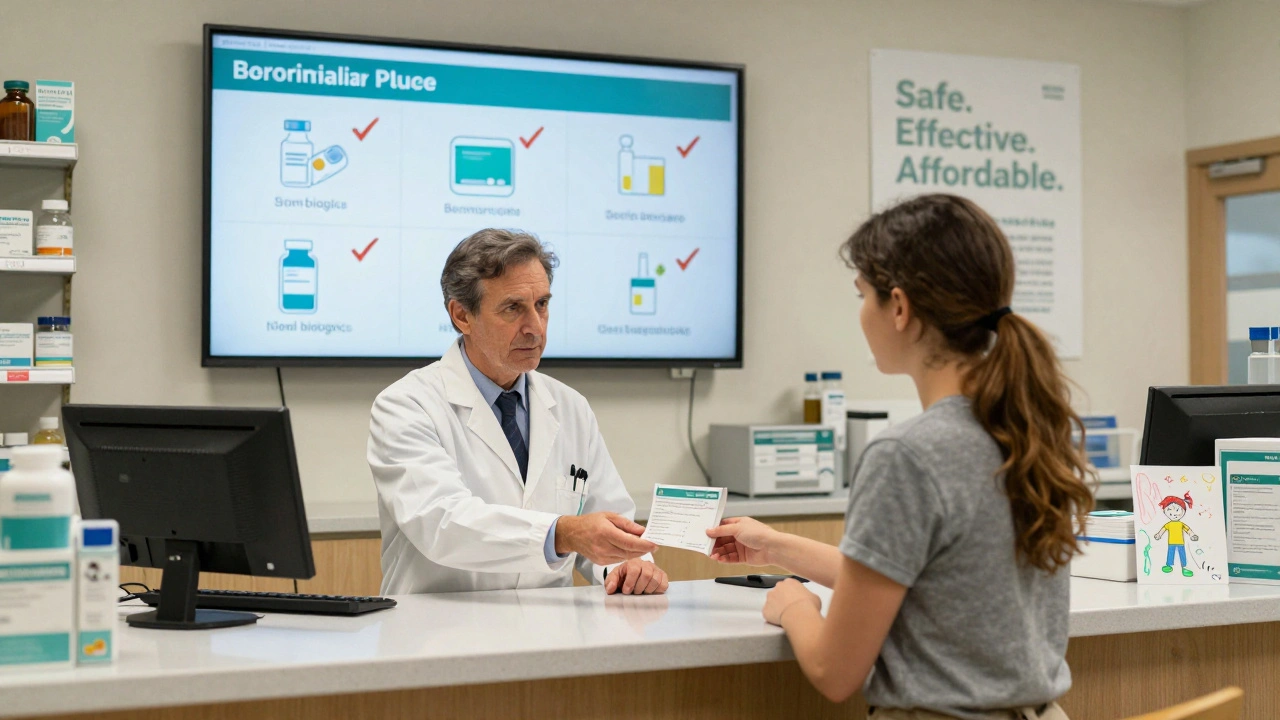
What About Switching? Is It Safe?
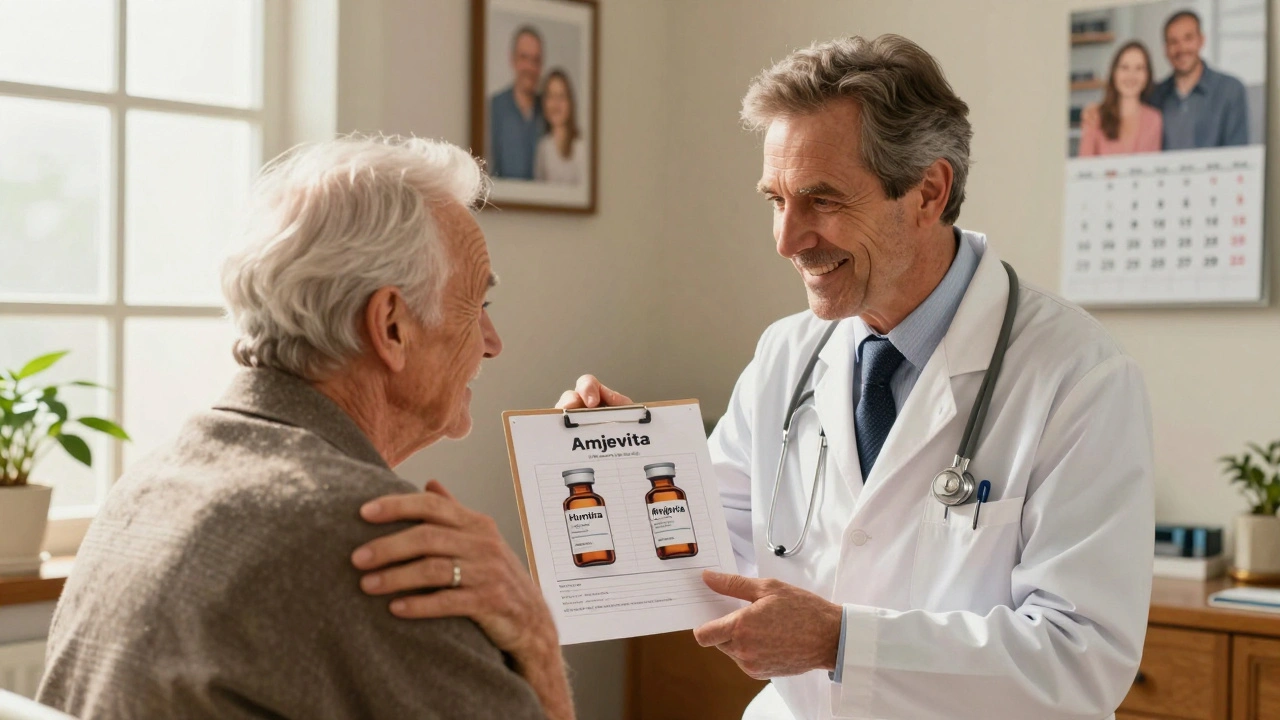
One of the biggest fears patients have: “What if I switch from Humira to Amjevita and something goes wrong?” The FDA’s 2023 guidance says this clearly: “Cumulative experience with biosimilars has shown that the risks of switching between the reference product and a biosimilar are insignificant.” That’s backed up by multiple studies. One large trial (NCT03729674) tracked patients switching back and forth between originator drugs and biosimilars. It looked at everything: disease flare-ups, hospital visits, lab results, and even how often people stopped treatment. No difference. Even switching from one biosimilar to another? A 2024 study in the Taylor & Francis Journal found no loss of effectiveness or rise in side effects. If your insurance switches you from one biosimilar to another next year, you’re not at higher risk. The real issue isn’t science - it’s perception.Why Do So Many People Still Doubt Biosimilars?
You’d think the evidence would settle things. But patient surveys show widespread hesitation. A 2022 survey found that 42% of doctors say patients are reluctant to start biosimilars. Why? Partly because of messaging. Originator drug companies have spent millions marketing the idea that biosimilars are “highly similar, but not identical.” That sounds scary. It implies something’s missing. But “not identical” doesn’t mean “less safe.” It just means they’re made from living cells - and no two batches of any biologic are ever 100% identical. Even the original drug changes slightly from one production run to the next. The FDA even called out Genentech in 2018 for misleading communications that implied biosimilars were riskier. That kind of messaging sticks. On patient forums, you’ll find stories like this: “I switched to a biosimilar and got a rash. I switched back and it went away.” Sounds convincing. But here’s the catch: these are anecdotes. They’re not controlled. People get sick. Their conditions change. Stress, diet, sleep, infections - all of that affects symptoms. Without a clinical study, you can’t know if the biosimilar caused it. In contrast, the FDA’s pharmacovigilance system - which tracks every reported side effect - shows no spike in adverse events after biosimilar switches. In fact, a pharmacist on Reddit with five years of hospital experience said: “I’ve seen zero adverse events from biosimilar switches.”
What About Cost and Access?
Biosimilars aren’t just safer than people think - they’re saving lives by making treatment affordable. From 2015 to 2022, biosimilars saved the U.S. healthcare system $31 billion. Projected savings through 2030? $307 billion. That’s money that can fund other care, lower premiums, or keep patients on treatment instead of skipping doses because they can’t afford them. In countries like Germany and Sweden, where biosimilars are widely used, patients have better access to biologics for conditions like Crohn’s disease, multiple sclerosis, and cancer. In the U.S., many patients still can’t get these drugs at all - or only after years of insurance battles. The global biosimilar market was $9.3 billion in 2022. By 2030, it’s expected to hit $58.1 billion. That growth isn’t because of hype. It’s because the data works.What Should You Do If Your Doctor Suggests a Biosimilar?
Ask questions. But ask the right ones. Instead of: “Is this safe?” - ask: “Has this biosimilar been used by thousands of patients? Is there long-term data?” Instead of: “Is it the same?” - ask: “Has it been proven to work just as well, with the same side effects?” Most biosimilars are approved for the same uses as the original drug. If Humira is approved for rheumatoid arthritis, psoriasis, and Crohn’s, then its biosimilar version is too - unless proven otherwise. You don’t need extra testing. If you’re on a biosimilar and feel fine - don’t panic if your insurance switches you to another. The evidence says it’s safe. And if you’re worried about side effects? Keep a symptom journal. Track pain, fatigue, rashes, or flares. Share it with your doctor. That’s the best way to know if something’s changed - not rumors or fear.The Bottom Line
Biosimilar medications are not experimental. They’re not second-rate. They’re rigorously tested, closely monitored, and used by millions worldwide. The science is clear: they are safe and effective. The only difference? They cost less. Regulatory agencies - the FDA, EMA, and WHO - all agree: when approved through their standards, biosimilars are as safe and effective as the original biologics. The real gap isn’t in the medicine. It’s in the misinformation. If your doctor recommends a biosimilar, you’re not being offered a compromise. You’re being offered the same treatment - at a price that makes it possible for you to keep taking it.Are biosimilar medications the same as generics?
No. Generics are chemically identical copies of small-molecule drugs, like aspirin or metformin. Biosimilars are complex proteins made from living cells, so they can’t be exact copies. But they’re designed to have no clinically meaningful differences in safety or effectiveness compared to the original biologic drug.
Can I switch from a biologic to a biosimilar safely?
Yes. Multiple studies, including one tracking over 1.3 billion patient treatment days, show switching between a reference biologic and its biosimilar doesn’t increase risk of side effects or reduce effectiveness. The FDA and EMA both confirm that switching is safe based on real-world evidence.
Do biosimilars cause more side effects than the original drugs?
No. Large-scale studies and pharmacovigilance data from the FDA and EMA show no increase in adverse events with biosimilars. Any side effects reported are consistent with those of the original biologic. Anecdotal reports of new reactions are not supported by population-level data.
Why are biosimilars cheaper if they’re so similar?
Biosimilars cost less because manufacturers don’t have to repeat the massive, expensive clinical trials done for the original drug. They use the existing safety data and focus testing on proving similarity. This cuts development costs significantly, allowing lower prices without cutting corners on safety.
Are biosimilars approved for all the same conditions as the original?
Yes, unless proven otherwise. Regulators approve biosimilars for all the same uses (indications) as the reference product based on scientific evidence. You don’t need separate trials for each condition. For example, if Humira is approved for rheumatoid arthritis and psoriasis, its biosimilar versions are too - even if only tested in one condition.
Can I switch between different biosimilars?
Yes. Evidence shows switching from one biosimilar to another - even multiple times - doesn’t affect safety or effectiveness. Studies have tracked patients switching back and forth with no increase in disease flares or adverse events. This is now accepted by major regulatory agencies.
Are biosimilars used in cancer treatment?
Yes. As of early 2024, the FDA had approved 17 biosimilars for cancer treatments, including drugs for breast cancer, lymphoma, and colorectal cancer. These are used in hospitals and clinics worldwide and have shown equivalent effectiveness and safety to the original biologics in large clinical trials.
Why is adoption slower in the U.S. than in Europe?
In the U.S., patent thickets, rebating practices, and marketing by originator companies have slowed adoption. In Europe, government policies encourage biosimilar use and set price caps. As a result, biosimilar market share for drugs like infliximab is 55% in Europe versus 28% in the U.S. But U.S. adoption is accelerating - with 12 new biosimilars approved in 2023 alone.

Inna Borovik
December 6, 2025 AT 22:08Let’s cut through the marketing fluff. Biosimilars aren’t magic. They’re cheaper versions of drugs that cost $30K/year because Big Pharma figured out how to stretch patents for decades. The data looks good on paper, but real patients aren’t lab rats. I’ve seen people switch and get weird flares that never happened before. No one talks about that. The FDA approves based on ‘no clinically meaningful differences’-but what’s ‘meaningful’? If your quality of life drops because you’re now exhausted every Tuesday? That’s meaningful to you.
And don’t get me started on the ‘billions of patient days’ stat. That’s not safety-it’s scale. You can’t prove safety with volume alone. You need longitudinal, patient-reported outcomes. And those? Still sparse. Don’t mistake widespread use for proven safety.
Rashmi Gupta
December 7, 2025 AT 07:16Interesting how everyone ignores the elephant in the room: if biosimilars are so identical, why does the original drug still exist? Why aren’t they just merged into one product? The whole ‘not identical but safe’ thing is a paradox wrapped in regulatory jargon. It’s like saying two snowflakes are functionally the same… until one melts faster.
Also, who’s paying for the long-term studies? Not the manufacturers. They’re incentivized to move on to the next drug. The patient becomes the experiment. And we’re supposed to be grateful?
Andrew Frazier
December 7, 2025 AT 08:57Y’all are overthinking this. America makes the best drugs in the world. Why are we letting some cheap knockoff from India or Germany replace our biologics? You think they test these things like we do? Nah. They cut corners. FDA approval? More like FDA rubber stamp. I’ve got a cousin on Humira-she’s stable. Why risk it for $500 off? You think your life’s worth a few bucks? Get real.
Also, biosimilars are communist medicine. Europe’s full of them. You want socialism? Go live there. We got the best. Pay for it.
Mayur Panchamia
December 9, 2025 AT 01:38Ohhh, so now we’re supposed to trust ‘regulatory agencies’?? Who do you think controls them? Big Pharma owns the FDA, the EMA, the WHO-they’re all the same circus! Biosimilars? More like ‘biosimilar lies’! They’re made in factories with lower standards, shipped in unregulated containers, and administered by nurses who’ve never even heard of the original drug’s MOA!
And don’t even get me started on the ‘1.3 billion patient days’-that’s not evidence, that’s a marketing campaign written by a PR firm with a thesaurus! You think I’m scared of a rash? I’m scared of a delayed immune collapse 5 years from now that no one will connect back to this ‘cheap’ drug! Where’s the 10-year data? Where’s the transparency? Nowhere!!
Karen Mitchell
December 9, 2025 AT 17:27It is deeply concerning that this article presents biosimilars as an unequivocal public health triumph, when the empirical record remains incomplete, the longitudinal data insufficient, and the financial incentives of manufacturers profoundly misaligned with patient outcomes. The language employed-‘no clinically meaningful differences’-is not scientific clarity; it is legalistic obfuscation designed to assuage public anxiety while permitting cost-cutting at the expense of rigorous post-marketing surveillance.
Furthermore, the dismissal of anecdotal reports as ‘uncontrolled’ ignores the foundational principle of clinical medicine: the individual patient’s experience is data. To privilege population-level statistics over subjective suffering is not evidence-based-it is dehumanizing.
Geraldine Trainer-Cooper
December 9, 2025 AT 19:05we’re all just trying to stay alive
if a drug works and costs less, why are we arguing about it?
the fear isn’t science
it’s being told what to trust
and nobody’s asking what happens when you’re switched without your knowledge
and then your body says no
who do you call then?
the FDA?
your doctor?
the insurance company that saved $2k?
Nava Jothy
December 11, 2025 AT 09:26I switched to a biosimilar last year... and I cried for three days. Not because of side effects-but because I felt like a second-class citizen in my own healthcare system. I paid my premiums, I followed every rule, and now they’re treating me like I’m getting a discount version of my life? 😭
And don’t tell me ‘it’s the same’-my skin broke out, my fatigue spiked, my therapist asked if I was depressed. I switched back. The symptoms vanished. The biosimilar didn’t ‘fail’-I failed to be heard.
They call it ‘no clinically meaningful difference’... but my pain? My sleepless nights? My grief? Those are meaningful to me.
And if you think I’m being dramatic-you’ve never had to choose between rent and your immune system. 💔
Annie Gardiner
December 12, 2025 AT 11:04Wait, so if biosimilars are so safe and identical, why does every single one require a separate FDA approval? Why not just say ‘this is the same as Humira’ and call it a day? Because they’re not. They’re similar. And similarity isn’t sameness.
And if you’re okay with switching between biosimilars like it’s a game of musical chairs… that’s not confidence. That’s resignation.
Also, I’ve seen patients get switched without consent. No discussion. No consent form. Just a new prescription in the mail. That’s not healthcare. That’s corporate logistics.
And yeah, I get it-costs are insane. But if we’re going to cut corners, let’s fix the system. Not turn patients into cost centers.