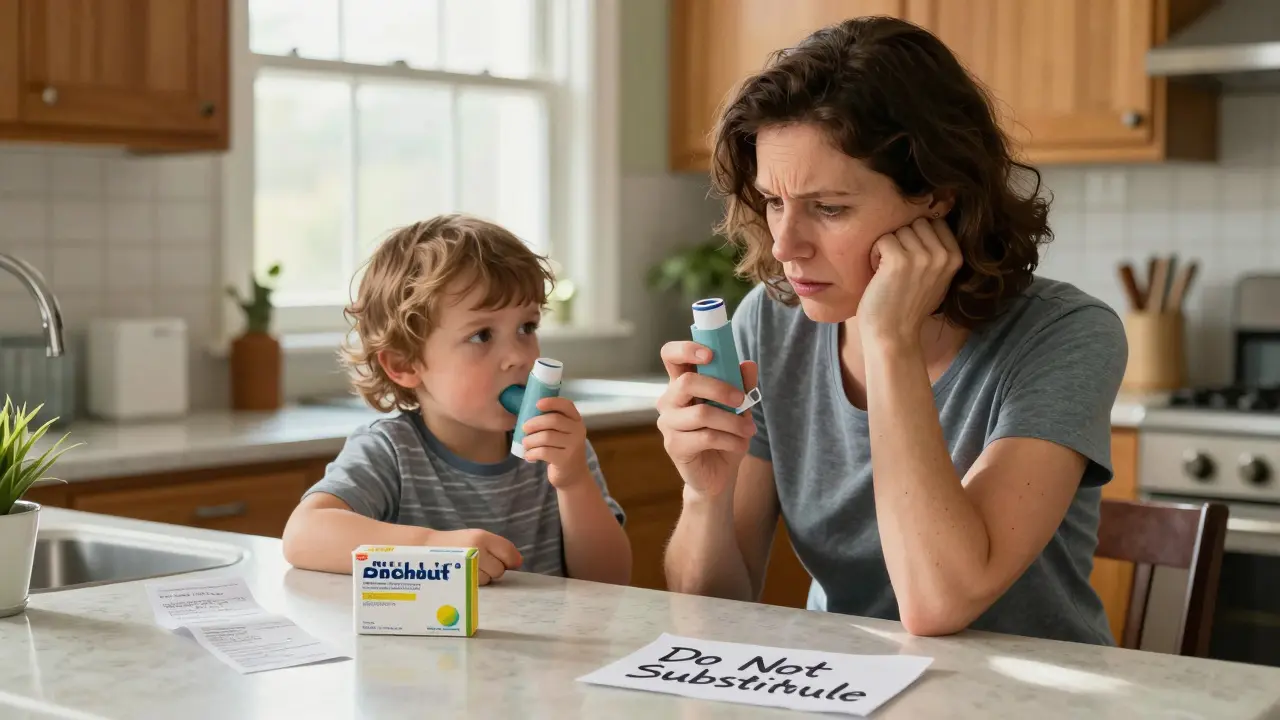
When a child’s asthma inhaler suddenly looks different - smaller, a different color, or even shaped oddly - it’s not just a packaging change. It could be a medication switch that puts their health at risk. While generic drugs save families and insurers money, switching a child’s prescription isn’t as simple as swapping one pill for another. In pediatrics, even tiny differences in how a drug is absorbed, how it’s delivered, or what’s in the inactive ingredients can lead to serious consequences.
Why Kids Are Different
Adults and children don’t process medications the same way. A child’s body is still growing. Their liver, kidneys, and digestive system aren’t fully developed. For example, a 3-month-old baby metabolizes omeprazole - a common acid-reducing drug - mostly through an enzyme called CYP2C19. That enzyme matures slowly, and by 6 months, it’s still only half as active as in adults. So even if a generic omeprazole suspension is labeled "bioequivalent" to the brand-name Prevacid based on adult studies, it might not work the same in a baby. The FDA admits this gap: their bioequivalence standards were built for adults, not infants. This isn’t theoretical. In a 2015 study of pediatric heart transplant patients, switching from brand-name tacrolimus to its generic version caused a 14% drop in average blood drug levels. For these kids, even a small dip can trigger organ rejection. Tacrolimus has a narrow therapeutic index - meaning the difference between too little and too much is razor-thin. Yet, the FDA allows generics to vary by up to 20% in absorption compared to the brand. That’s fine for a 200-pound adult. For a 12-pound infant? It’s dangerous.What’s in the Medicine - And What’s Not
Generics must contain the same active ingredient as the brand. But they don’t have to match the fillers, binders, dyes, or flavorings. These inactive ingredients matter more than you think. A child with a rare allergy might react to a new dye in a generic version of their seizure medication. One study found that switching between different generic manufacturers of phenytoin - an antiepileptic drug - led to unexplained seizures in children who had been stable for years. The active ingredient was identical. But the coating, the texture, the way it dissolved in the stomach? Those changed. For kids who take liquid medicines, flavor matters too. If a child’s favorite strawberry-flavored asthma syrup is replaced with a bitter-tasting generic, they’ll spit it out. Caregivers report that 15-20% of children stop taking their medication after a switch, not because they don’t need it - but because it tastes awful or they can’t swallow the new pill size. One mother in Philadelphia told researchers her 5-year-old with asthma refused the new inhaler because the device felt "too heavy." The active ingredient was the same. But the inhaler’s mechanism was different. The child didn’t get enough medicine. Within two weeks, she ended up in the ER.Who Decides the Switch?
Most switches aren’t made by doctors. They’re made by insurance companies. This is called non-medical formulary switching - when a plan drops a brand-name drug and forces patients onto a cheaper generic, not because the doctor recommends it, but because it saves money. In 2021, UnitedHealthcare changed its formulary for 4.2 million children. One in five had to switch maintenance medications. Some families were told their child’s asthma drug was no longer covered unless they switched to a generic version - even though their child had been stable on the brand for years. State laws vary wildly. In 19 states, pharmacists can swap a brand for a generic without telling the parent. In 7 states and Washington, D.C., they must get consent. In 31 states, they just have to notify you - sometimes days after the switch. A 2009 study showed that when states required consent, generic substitution rates dropped by 25%. That’s not because people didn’t want to save money. It’s because parents knew enough to ask questions.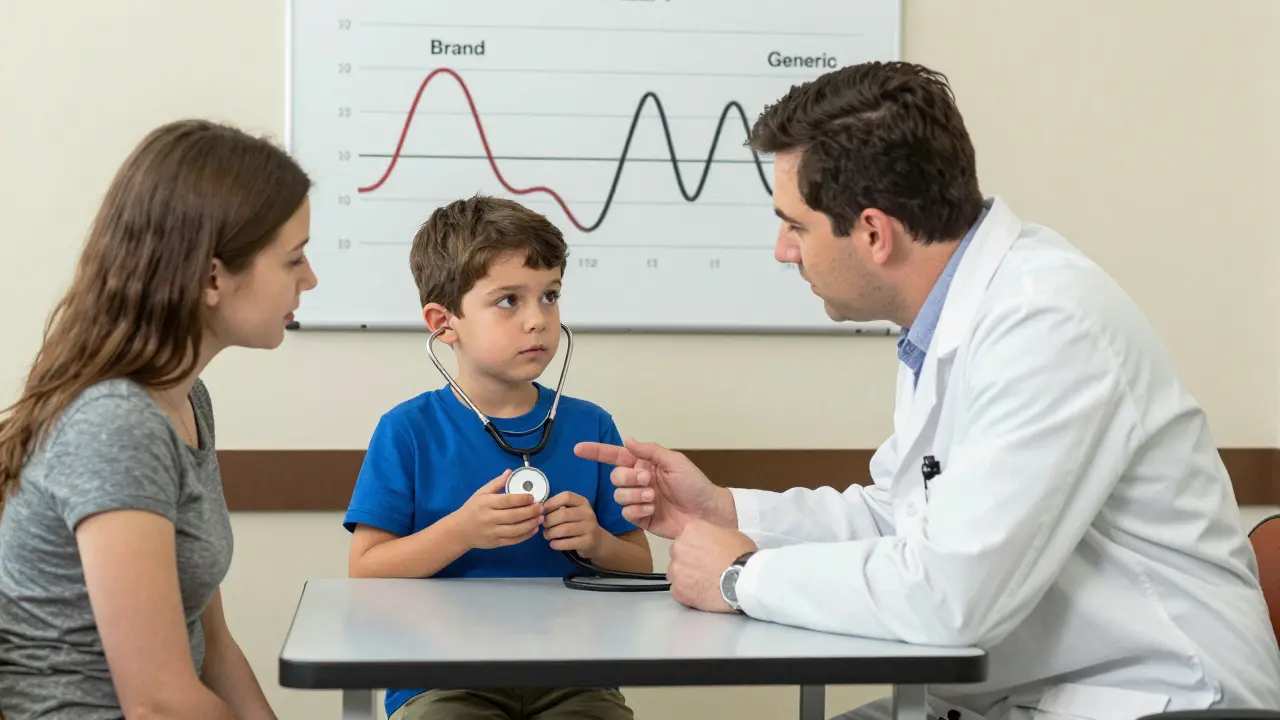
Therapeutic Areas That Need Caution
Not all drugs are equal when it comes to switching. The FDA itself flags certain categories as high-risk for children:- AEDs (antiepileptic drugs) - Even small drops in blood levels can trigger seizures.
- Psychiatric medications - Switching antidepressants or ADHD drugs can cause mood swings, withdrawal, or worsening behavior.
- Cardiac drugs - Like digoxin or beta-blockers. A 10% change in absorption can mean the difference between control and heart failure.
- Transplant drugs - Tacrolimus, cyclosporine. These are life-or-death. Studies show switching increases rejection risk.
- Cancer drugs - Many pediatric oncology drugs aren’t even available in generic form. When they are, the data on safety in kids is almost nonexistent.
And here’s the kicker: less than 12% of generic drugs approved between 2010 and 2020 included any pediatric-specific bioequivalence testing. That means 88% of generics given to kids were approved based on adult data - even if the child is 6 months old.
What Parents and Caregivers Can Do
You don’t have to accept a switch blindly. Here’s what to ask:- "Is this a generic?" - If the pill looks different, ask. Don’t assume it’s the same.
- "Has this been tested in children?" - If the pharmacist says "it’s the same," ask for the pediatric study data. Most won’t have it.
- "Can we stay on the brand?" - If your child is stable, ask the doctor to write "Do Not Substitute" on the prescription. It’s legal in every state.
- "Is the delivery system the same?" - For inhalers, nasal sprays, or liquid suspensions, the device matters. A different inhaler design can reduce drug delivery by up to 80%.
- "Who made this?" - Different manufacturers of the same generic can have different effects. If your child had a bad reaction to one brand of generic, ask for the same manufacturer next time.
Also, keep a written log. Note the date of the switch, the name of the drug, the color and shape of the pill, and any changes in your child’s behavior, sleep, appetite, or symptoms. This log can be critical if your child ends up in the hospital.

Where the System Is Failing
The system is built to save money - not to protect kids. Insurance companies save billions by switching generics. In 2019 alone, generics saved the U.S. healthcare system $2.2 trillion. But those savings come at a cost. A 2023 meta-analysis in Pediatrics found that children with chronic conditions who were switched had an 18% higher chance of hospitalization than those who stayed on the same medication. Pediatricians are caught in the middle. Many don’t know the details of bioequivalence standards. A 2018 survey found only 37% of pharmacists routinely discussed switching risks with parents of children on chronic meds. And the FDA? They acknowledge the problem. In 2022, they launched the Pediatric Formulation Initiative to fix it. But progress is slow. Only 68% of new drugs approved since 2013 include a pediatric version - even though the law requires it.The Path Forward
Change is coming - but it’s not fast enough. California passed a law in 2022 requiring Medicaid plans to have a pediatric-specific review committee before changing formularies. Other states are watching. The American Academy of Pediatrics is finalizing new guidelines for generic prescribing in children, expected in late 2024. Researchers are pushing for pediatric-specific bioequivalence testing, especially for drugs with narrow therapeutic windows. Until then, the burden falls on families. You are your child’s best advocate. If your child’s medication changes - even slightly - ask questions. Demand answers. And don’t let cost savings override safety.Are generic drugs safe for children?
Generic drugs can be safe for children - but not always. The active ingredient is the same as the brand, but how the drug is absorbed, how it’s delivered, and what’s in the inactive ingredients can differ. For children, especially infants and those on critical medications like seizure, transplant, or heart drugs, these differences can be dangerous. Always ask if the generic has been tested in children.
Can a pharmacist switch my child’s medication without telling me?
Yes, in 19 states and most of the U.S., pharmacists can substitute a generic without your permission. In 7 states and Washington, D.C., they must get your consent. In 31 states, they just have to notify you - sometimes after the fact. Always ask if a switch was made, and if you’re unsure, call your doctor.
What should I do if my child’s medication looks different?
Don’t assume it’s the same. Check the label, ask the pharmacist if it’s a generic, and confirm with your child’s doctor. Look for changes in color, shape, size, or delivery method - especially for inhalers or liquids. If your child has a chronic condition, ask your doctor to write "Do Not Substitute" on the prescription.
Why do some generics cause side effects in kids?
The active ingredient is identical, but the fillers, dyes, or coating can differ. Some children react to certain dyes or flavorings. Also, the way the drug dissolves in the stomach can change - especially in young children with immature digestive systems. For example, a child on epilepsy medication might have a seizure after switching to a different generic because the absorption rate changed.
How can I find out if a generic has been tested in children?
Very few have. Only 12% of generics approved between 2010 and 2020 included pediatric studies. Ask the pharmacist for the FDA-approved labeling or check the manufacturer’s website. If you can’t find data, assume it hasn’t been tested in children. Talk to your pediatrician about whether the switch is safe for your child’s age and condition.

Christopher Brown
February 24, 2026 AT 09:22Stop pretending generics are dangerous. This is just fearmongering wrapped in medical jargon. The FDA approves these drugs. If they were unsafe for kids, they wouldn’t be on the market. Insurance companies aren’t evil-they’re saving billions so families can afford healthcare at all. Stop whining because your kid’s inhaler looks different. Get over it.
Sanjaykumar Rabari
February 25, 2026 AT 23:37This is part of a bigger plan. Big Pharma owns the FDA. They let cheap generics in so they can control the market. Then they make you pay more later. They are testing on children without telling parents. This is not about money. This is about control. Watch what happens next.
Kenzie Goode
February 26, 2026 AT 07:39I’ve been there. My daughter switched from brand-name albuterol to a generic inhaler and went from stable to wheezing every night. I didn’t realize the device mechanism changed until I watched her use it-she wasn’t getting any medicine. I called the pharmacy, demanded the original, and they gave it to me. It’s not about being anti-generic. It’s about being pro-kid. Always ask. Always check. Your gut knows when something’s off.
Dominic Punch
February 27, 2026 AT 14:59Let’s cut through the noise. The real issue isn’t generics-it’s the lack of pediatric-specific testing. The FDA’s standards were designed for adults, and that’s a systemic failure. But here’s what you can do: if your child’s drug has a narrow therapeutic index-like tacrolimus or phenytoin-ask for the brand. Write ‘Do Not Substitute’ on the script. It’s legal. It’s your right. And if your pharmacist pushes back, ask for the manager. Knowledge is power. And you, as a parent, are the most important link in this chain.
John Smith
February 28, 2026 AT 01:31Shalini Gautam
February 28, 2026 AT 15:25As an Indian mom of two asthmatic kids, I’ve switched generics three times. In India, we don’t have the luxury of brand-name drugs. But I learned: check the manufacturer. Stick with one if it works. My son’s seizure meds? I only use the same batch from the same company-even if it costs more. Because I’ve seen what happens when you don’t. It’s not about fear. It’s about consistency. And if your system doesn’t let you choose? Fight harder.
Steven Pam
March 2, 2026 AT 09:16Look-I get it. Parents are scared. And honestly? They should be. But don’t let panic blind you to the truth: most kids do fine on generics. The problem isn’t the drugs-it’s the lack of communication. Pharmacists don’t explain. Doctors don’t warn. Insurance companies don’t care. So here’s what works: keep a log. Take a photo of the pill before you leave the pharmacy. Ask for the manufacturer name. If your kid acts weird after a switch? Call the doctor. Don’t wait. But also-don’t assume every change is a disaster. Some kids just need a little time to adjust. Stay calm. Stay informed. And for heaven’s sake, don’t Google it at 2 a.m.
Timothy Haroutunian
March 2, 2026 AT 22:41Let me tell you about the time my son’s asthma medication switched from a blue inhaler to a black one. He didn’t say anything. He just stopped using it. Two weeks later, he was in the ER with oxygen masks and a 104-degree fever. The pharmacy didn’t call. The doctor didn’t warn us. The insurance company didn’t care. We found out later the new generic had a different propellant-so the drug didn’t reach his lungs. It wasn’t the active ingredient. It was the damn *mechanism*. And now? I keep a binder. Color-coded. With photos. And receipts. And I’ve written to every senator in this state. Because if you think this is just about a pill? You’re wrong. This is about a system that treats children like line items on a spreadsheet. And if you’re not angry? You’re not paying attention.