Opioid Nausea Relief Calculator
How can you reduce nausea?
Based on clinical data from the article, estimate how much nausea relief you might experience with different strategies.
Estimated Nausea Reduction
Potential nausea relief
Recommendations
For many people on long-term opioid therapy, nausea doesn’t go away after a few days. It sticks around. Not just a little queasiness after taking a pill - but constant, draining, life-limiting nausea that makes eating, sleeping, and even sitting up feel impossible. This isn’t just bad luck. It’s chronic opioid-induced nausea (OINV), and it affects 20-33% of patients on opioids for more than a few weeks. And while tolerance to pain relief might build over time, nausea often doesn’t. For 1 in 5 people, it becomes a permanent side effect.
Why Does Opioid Nausea Stick Around?
Opioids don’t just block pain signals. They also hit receptors in your brainstem that control vomiting - the chemoreceptor trigger zone - and mess with your inner ear’s balance system. That’s why turning your head too fast can make you feel like the room is spinning, even if you’re lying still. Some opioids, like oxymorphone, are far worse than others. Oxycodone is about 60 times less likely to cause nausea than oxymorphone. Tapentadol? Much gentler on the stomach.
Genetics play a role too. If your body can’t break down codeine properly (a CYP2D6 poor metabolizer), you’re more likely to feel sick. And unlike constipation, which often improves with laxatives, nausea doesn’t always respond to simple fixes. That’s why many patients stay stuck in a cycle: they take the opioid for pain, get nauseated, skip doses, and end up in more pain - which means they take more opioid, and the nausea comes back harder.
Diet: Small Meals, Not Bland Food
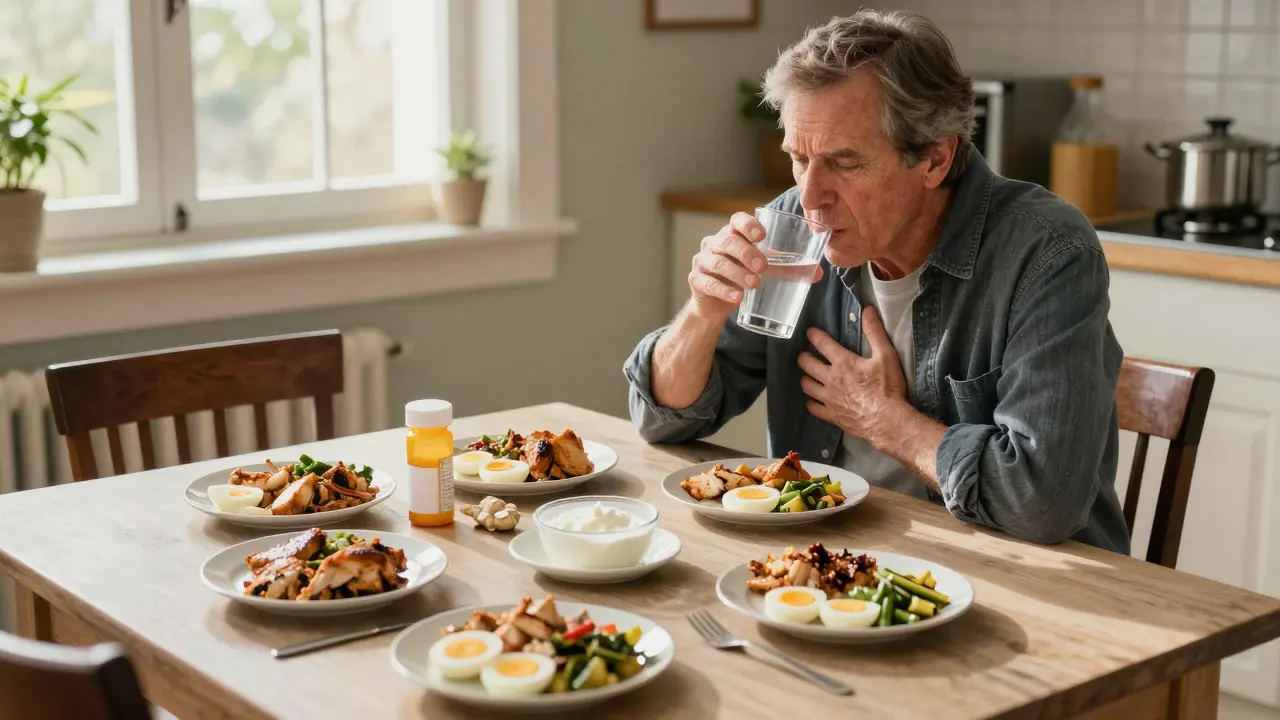
Most doctors tell you to eat bland food. Rice, toast, crackers. But patients who’ve lived with this for months say that doesn’t help much. In fact, a 2022 survey from the University of Washington pain clinic found that 55% of people felt better switching to six small meals a day - around 150-200 calories each - instead of three big ones. Why? Your stomach isn’t emptying properly. Big meals stretch it out, triggering more nausea.
What works better than bland carbs? Protein. A 2023 analysis of 429 patients on PatientsLikeMe showed 63% reported less nausea with small portions of chicken, eggs, or Greek yogurt. Ginger helps too. A study on PainNewsNetwork.org found 78% of users who took ginger chews (like Briess brand) got moderate to strong relief. Don’t bother with ginger tea - the chews have concentrated, consistent doses. Try one every 4-6 hours.
Avoid fatty, fried, or spicy foods. They slow digestion even more. And don’t drink with meals. Sipping liquids while eating fills your stomach faster, making nausea worse. Wait 30 minutes after eating to sip anything.
Hydration: Sip, Don’t Chug
Drinking eight glasses of water a day sounds good - until you’re nauseated. Chugging fluids makes your stomach swell, and that triggers vomiting reflexes. Instead, sip 2-4 ounces every 15-20 minutes. That’s about half a cup every 20 minutes. It keeps you hydrated without overwhelming your system.
Water alone isn’t always enough. Opioids can throw off your electrolytes. Many patients find relief with electrolyte drinks like Pedialyte or homemade versions (water + pinch of salt + splash of juice). A 2020 multicenter study showed 47% of patients had less severe nausea when switching from plain water to electrolyte fluids. Avoid sugary sodas - they can spike blood sugar and worsen nausea.

Medications: What Actually Works (and What Doesn’t)
Not all antiemetics are created equal. Here’s what the data says:
- Metoclopramide: First-line for many doctors. Works by speeding up stomach emptying. About 60% effective. But it can cause restlessness, tremors, or even parkinsonism with long-term use. The FDA warns against using it for more than 12 weeks.
- Prochlorperazine: A phenothiazine. Works on the brain’s vomiting center. 65-70% effective. Cheap - under $5 per dose. Often better tolerated than metoclopramide.
- Promethazine: Similar to prochlorperazine. Can make you very sleepy. Good for nighttime use, but not ideal if you need to drive or work.
- Ondansetron (Zofran): More expensive - around $35 per dose. Only 5-10% more effective than prochlorperazine in direct comparisons. Best for breakthrough nausea, not daily prevention.
- Haloperidol: Less effective than phenothiazines. 55-60% success rate. Risk of movement disorders. Not recommended as first choice.
- Dexamethasone: Steroid. Only 40-50% effective. No clear mechanism for opioid nausea. Used sometimes in cancer patients, but not ideal for chronic pain.
Many patients try ondansetron because it’s well-known, but it’s not worth the cost unless other options fail. Prochlorperazine is the real workhorse - effective, safe for short-term use, and affordable.
Opioid Rotation: The Most Effective Strategy
If nausea won’t quit, changing your opioid might be the only thing that does. This is called opioid rotation. It’s not a last resort - it’s a standard tool.
Switching from morphine to oxycodone? Weak recommendation, but patients report big improvements. Tramadol to hydrocodone? Same thing. Fentanyl patches? A 2022 survey of 1,247 patients on the American Chronic Pain Association forum found 52% had significant relief after switching to fentanyl patches. Why? Fentanyl doesn’t cross the blood-brain barrier the same way morphine does. Less stimulation of the vomiting center.
But here’s the catch: you can’t just swap one for another at the same dose. Methadone? You need to cut the dose by 50-75% when switching because it builds up differently in your body. Too much can be deadly. Always do this under a doctor’s supervision.
Non-Drug Tricks That Actually Help
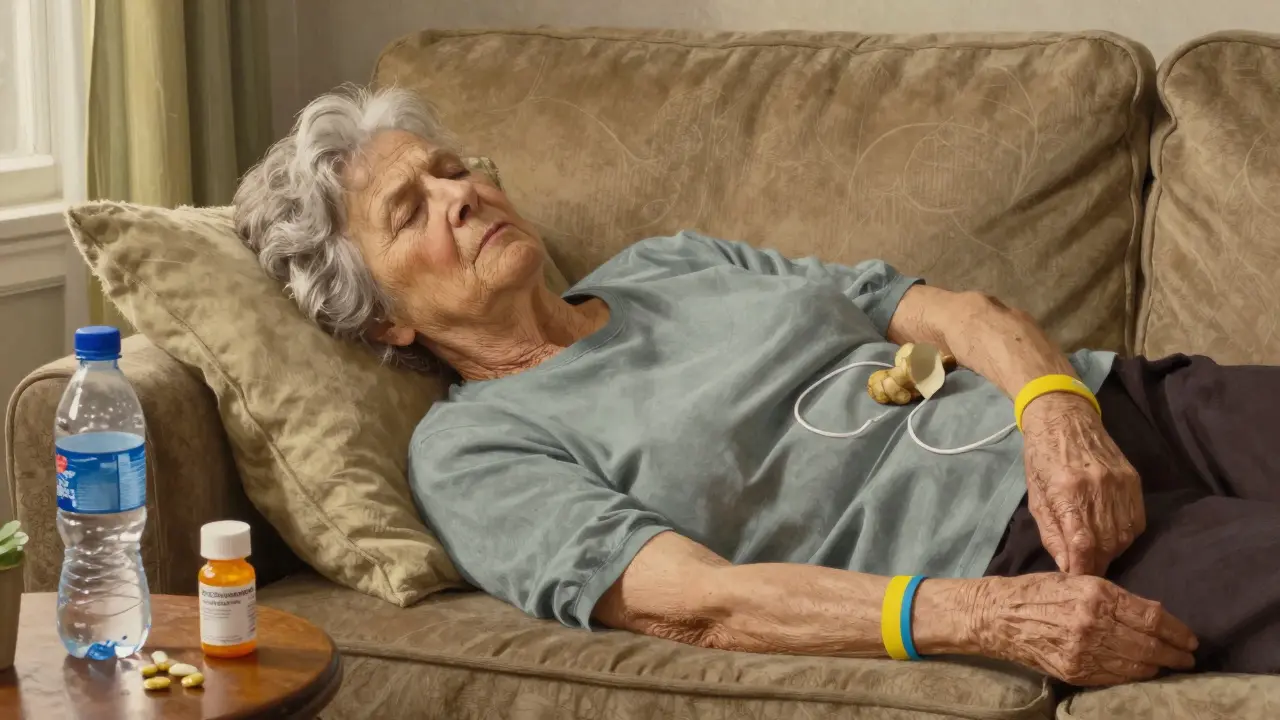
Rest your head. Seriously. Heuser’s 2017 study showed keeping your head still reduced nausea by 35-40%. Lying flat with your head supported - not propped up - makes a big difference. Closing your eyes adds only 5-7% more relief. So don’t waste time with blindfolds. Just stay still.
Try acupressure bands (like Sea-Bands). They’re not magic, but they’re safe, cheap, and worth a try. Some patients swear by them. No harm in testing.
What Doesn’t Work - And Why
Don’t rely on peppermint oil, CBD, or marijuana for nausea unless you’re also using proven treatments. There’s no solid data supporting them for opioid-induced nausea. Some patients report feeling better, but it’s likely placebo or a side effect of relaxation, not direct anti-nausea action.
And don’t wait for tolerance to kick in. If you’re still nauseated after 14 days, you’re in the 15-20% who won’t adapt. Waiting longer won’t help. It just makes you sicker.
When to Ask for Help
If nausea is making you miss meals, lose weight, or skip your opioid doses, it’s time to talk to your provider. Chronic OINV isn’t just uncomfortable - it’s dangerous. It leads to under-treated pain, depression, and hospital visits. In the U.S., it costs $1.2 billion a year in extra care.
Ask for a referral to a pain specialist or palliative care team. Most hospitals have protocols for this. Kaiser Permanente reduced opioid discontinuation by 28% just by routinely prescribing antiemetics from day one. You don’t have to suffer in silence.
The Future Is Coming
There’s real hope on the horizon. A new drug targeting the kappa-opioid receptor - the one that messes with your inner ear - is in Phase III trials and could be available by 2025. Low-dose naltrexone (0.5-1 mg daily) is being tested at Johns Hopkins and showed a 45% drop in nausea severity in early results. And researchers are even looking at gut bacteria - early data shows people with certain microbiomes respond better to treatment.
But right now, your best tools are simple: eat small, protein-rich meals, sip electrolytes slowly, try prochlorperazine, and consider switching your opioid if nausea lasts more than two weeks. Don’t wait. Don’t assume it’ll get better on its own. Chronic opioid nausea is treatable - you just need the right plan.
How long does opioid-induced nausea last?
For most people, nausea improves within 3-7 days as tolerance builds. But about 15-20% of patients develop chronic opioid-induced nausea that lasts beyond 14 days, even with stable opioid doses. If it hasn’t improved by then, it likely won’t without intervention.
Can I take ginger with my opioid medication?
Yes. Ginger is safe to use with opioids and has no known dangerous interactions. Ginger chews (like Briess brand) are preferred over tea because they deliver a consistent dose. Take one every 4-6 hours as needed. Many patients report noticeable relief within a day or two.
Why is metoclopramide not recommended for long-term use?
Metoclopramide carries a FDA boxed warning for tardive dyskinesia - a serious movement disorder that can become permanent. The risk increases after 12 weeks of use. For chronic opioid-induced nausea, which often lasts months or years, safer alternatives like prochlorperazine are preferred.
Is fentanyl better than morphine for reducing nausea?
Yes, for many people. Fentanyl patches cause less nausea than morphine because they deliver the drug differently and affect the brain’s vomiting center less. A 2022 patient survey found 52% of those who switched from morphine to fentanyl patches had significant improvement in nausea. Always switch under medical supervision with proper dose conversion.
Should I stop my opioid if I’m nauseated?
No - stopping abruptly can cause withdrawal and worsen pain, which may make nausea even worse. Instead, work with your doctor to adjust your treatment plan. Try antiemetics, change your diet, or consider opioid rotation. Never reduce or stop opioids without professional guidance.
Can diet alone fix opioid-induced nausea?
Diet helps - but rarely fixes it alone. Small, protein-rich meals and ginger chews reduce severity in many patients, but if nausea persists beyond two weeks, you’ll likely need medication or an opioid switch. Diet is a support tool, not a cure.
How do I know if I’m a CYP2D6 poor metabolizer?
You can get tested with a simple saliva or blood genetic test. If you’ve had bad reactions to codeine, tramadol, or hydrocodone - like extreme nausea, drowsiness, or lack of pain relief - you might be one. Ask your doctor about pharmacogenetic testing if you’ve had persistent side effects with these drugs.

Jane Wei
December 17, 2025 AT 11:57ginger chews changed my life. no joke. i was on oxycodone for 8 months and felt like i was gonna puke every damn morning. tried the tea, tried crackers, nothing. then i bought those briess chews and boom - 3 days later i could eat breakfast without crying. also, sipping electrolytes instead of chugging? genius. why does no one tell you this?
Naomi Lopez
December 18, 2025 AT 07:33Let’s be real - the fact that you’re recommending prochlorperazine over ondansetron suggests you’ve actually read the literature. Most clinicians just prescribe Zofran because it’s ‘trendy’ and patients ask for it. Prochlorperazine is cheap, effective, and doesn’t cost $35 per pill. Also, the point about opioid rotation being underutilized? Spot on. Too many providers treat nausea as a ‘side effect’ instead of a pharmacological signal to change therapy.
Brooks Beveridge
December 19, 2025 AT 20:58hey, i just want to say thank you for writing this. i’ve been on methadone for 5 years and the nausea was making me feel like a ghost in my own body. i tried everything - peppermint, CBD, even acupuncture. nothing. then i started eating tiny chicken and egg portions every 4 hours and sipping Pedialyte like it was water. it didn’t fix it, but it made it bearable. and when i switched to fentanyl patches? holy hell. it’s been 11 months and i haven’t thrown up once. you’re not alone. and you’re not broken. this stuff works. keep going.
Nishant Desae
December 19, 2025 AT 21:02i read this whole thing and i just wanna say i feel you. i live in india and we dont have easy access to prochlorperazine or even ginger chews sometimes. but i started eating boiled eggs with a pinch of salt and sipping water with a tiny bit of lemon and salt - not much, just enough to taste - and my nausea went from 8/10 to 4/10. i also stopped drinking with meals like you said and wow. i didnt even think about that. also, my doctor said metoclopramide is fine but i read the warning and i was scared. so i stopped. now i just take half a ginger chew every 5 hours and lie still with my head on a pillow. its not perfect but its better. thank you for sharing this. i feel less alone now.
Jonathan Morris
December 20, 2025 AT 22:25Let’s not ignore the elephant in the room: this entire post reads like a pharmaceutical industry script. Ginger chews? Electrolites? Prochlorperazine? All cheap, low-risk interventions that don’t require big pharma to profit. Meanwhile, the real solution - reducing opioid dependence - is buried under 12 paragraphs of ‘here’s how to make the poison more palatable.’ This isn’t treatment. It’s damage control for a system that refuses to acknowledge addiction as a crisis. You’re just teaching people how to survive the poison instead of getting off it.
Martin Spedding
December 22, 2025 AT 17:07prochlorperazine works. fentanyl patches work. ginger chews work. stop overthinking it. also, stop drinking with meals. duh.
Raven C
December 23, 2025 AT 10:47While I appreciate the thoroughness of this exposition, I must express my profound concern regarding the casual endorsement of prochlorperazine as a ‘workhorse’ - a term that, in my view, trivializes the potential for extrapyramidal symptoms, particularly in vulnerable populations. Moreover, the assertion that ‘diet alone cannot fix it’ feels reductive, as if the body’s innate regulatory systems are somehow irrelevant to pharmacological intervention. One must also consider the psychosocial burden: chronic nausea is not merely a physiological phenomenon - it is an existential erosion of autonomy. I implore readers to consult not only pharmacological protocols but also integrative modalities - mindfulness-based stress reduction, cognitive behavioral therapy for chronic nausea - lest we reduce human suffering to a checklist of supplements and drug substitutions.
Jessica Salgado
December 24, 2025 AT 21:10i’m crying a little reading this. i’ve been on opioids for 3 years and no one ever told me about the head stillness thing. i’ve been propped up on pillows for years thinking it would help. lying flat? with my head supported? i tried it last night. and i didn’t throw up. i actually slept. i’m not kidding - i slept for 5 hours straight. thank you. i don’t know who you are, but you just gave me back a piece of my life.