
Running up a flight of stairs leaves you winded. You chalk it up to age or just being out of shape. But what if that breathlessness is actually the first sign of Chronic Obstructive Pulmonary Disease, also known as COPD, which is a progressive lung condition characterized by airflow limitation that is not fully reversible? Understanding where you stand in this progression isn't just about medical labels; it's about knowing exactly what tools you have to keep your lungs working better for longer.
The global standard for tracking this disease comes from the Global Initiative for Chronic Obstructive Lung Disease, commonly referred to as GOLD. This system, established in 2001 and updated annually (most recently in the 2023 report), categorizes severity into four distinct stages. These stages are defined primarily by Forced Expiratory Volume in 1 second (FEV1) measurements from a simple breathing test called spirometry.
Key Takeaways
- COPD is staged into four levels (1-4) based on how much air you can exhale in one second (FEV1) compared to a healthy person of your age and size.
- Stage 1 (Mild) often goes unnoticed, with symptoms only appearing during strenuous activity.
- Stage 2 (Moderate) brings noticeable shortness of breath during daily tasks and requires long-term medication management.
- Stage 3 (Severe) significantly limits self-care activities like dressing, often requiring combination therapy.
- Stage 4 (Very Severe) involves extreme respiratory limitation, frequent hospitalizations, and usually requires supplemental oxygen.
- Early diagnosis via spirometry is critical, as treatment started in Stage 1 or 2 can slow disease progression by up to 50%.
How Doctors Measure Your Lung Function
To understand the stages, you first need to understand the metric. The cornerstone of COPD staging is spirometry, a diagnostic tool that measures lung capacity and airflow speed. Specifically, doctors look at two numbers:
- FEV1/FVC Ratio: This confirms the diagnosis. If your ratio falls below 70% after using a bronchodilator, it indicates airflow obstruction consistent with COPD.
- FEV1 Percentage: This determines the stage. It compares how much air you forced out in one second against what is "predicted" for someone with your height, age, sex, and ethnicity.
According to the American Thoracic Society and European Respiratory Society guidelines from 2022, this post-bronchodilator measurement is the gold standard. Without this test, any staging is essentially a guess. Yet, data from the CDC shows that only about 35.7% of primary care visits for respiratory symptoms include this crucial test, leading to widespread under-diagnosis.
Stage 1: Mild COPD - The Silent Phase
In Stage 1 COPD, classified as Mild, your FEV1 is 80% or more of the predicted normal value. Here’s the tricky part: you might feel completely fine most of the time.
A 2021 study in the CHEST Journal found that 65% of patients in this stage only experience breathlessness when walking fast on level ground or climbing slight hills. About 42% report a chronic cough with some sputum production, but many dismiss this as a "smoker’s cough" or just getting older.
What happens here?
- Symptoms: Occasional shortness of breath during strenuous exercise. Minimal impact on daily life.
- Treatment Focus: The single most effective intervention is smoking cessation. Research from the Lung Health Study shows quitting slows FEV1 decline from 60mL/year in smokers to just 30mL/year in quitters.
- Medication: Short-acting bronchodilators may be prescribed as needed for symptom relief.
If you catch COPD here, you have the best chance to halt its progress. Dr. Fernando J. Martinez, Editor-in-Chief of the American Journal of Respiratory and Critical Care Medicine, notes that identifying COPD at Stage 1 or 2 allows treatments to slow disease progression by 50% compared to delayed intervention.
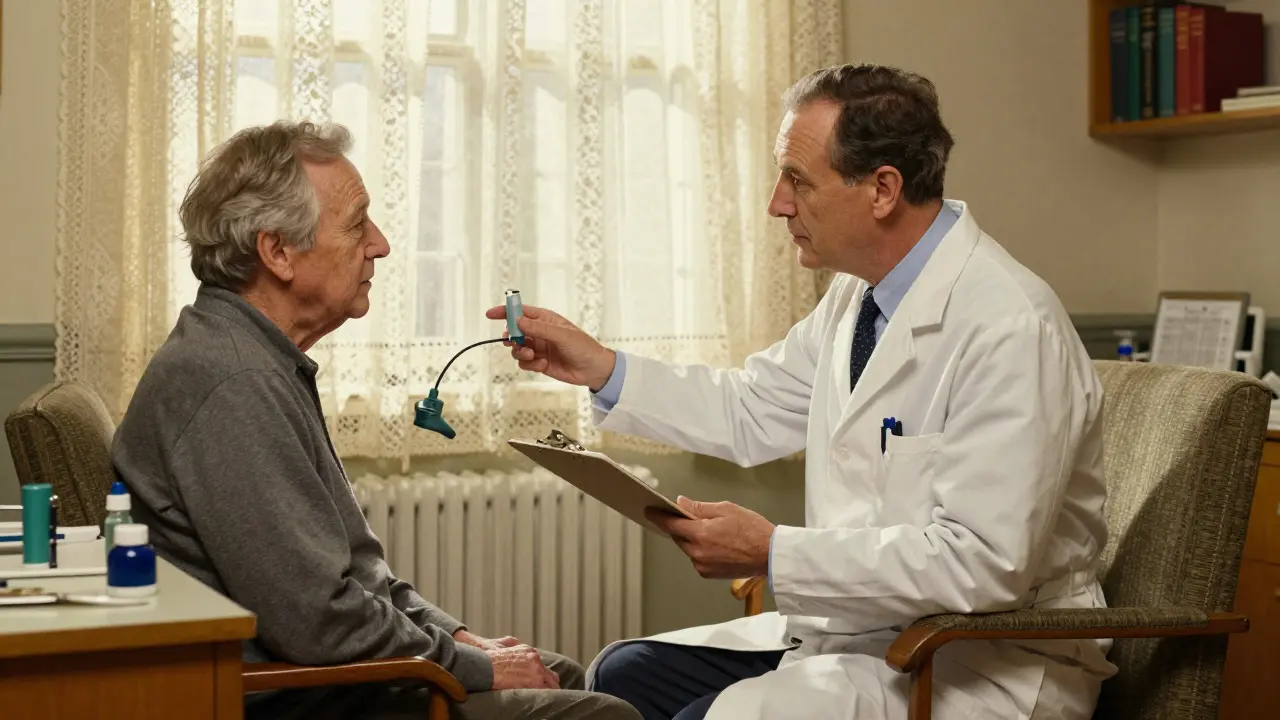
Stage 2: Moderate COPD - When Daily Life Gets Harder
As the disease progresses to Stage 2 COPD, marked as Moderate, your FEV1 drops to between 50% and 79% of predicted values. This is where the rubber meets the road for most patients.
You likely won’t notice symptoms just sitting on the couch, but walking to the mailbox or carrying groceries becomes a challenge. The Lung Institute’s 2022 Symptom Survey documented that 83% of Stage 2 patients have to stop walking on level ground every few minutes to catch their breath. Additionally, 76% experience increased mucus production that interferes with daily activities.
Management Shifts:
- Medication: Doctors typically introduce long-acting bronchodilators, either Long-Acting Beta-Agonists (LABA) or Long-Acting Muscarinic Antagonists (LAMA). The UPLIFT trial showed these improve FEV1 by an average of 100-150mL.
- Rehabilitation: Pulmonary rehabilitation programs become crucial. A Cochrane Review (2021) reported these programs increase the distance patients can walk in six minutes by 45-75 meters.
- Vaccination: Annual influenza vaccination reduces exacerbation risk by 32%, according to recent studies.
Many patients in this stage face a frustrating delay in diagnosis. The COPD Foundation reports that 78% of Stage 2 patients had their symptoms dismissed by primary care physicians as "just getting older" or "deconditioning," leading to an average diagnosis delay of 3.7 years.
Stage 3: Severe COPD - Significant Limitation
Entering Stage 3 COPD, labeled Severe, means your FEV1 has fallen to between 30% and 49% of predicted values. At this point, breathing difficulties start to intrude on basic self-care.
Data from the Cleveland Clinic’s 2023 Patient Registry reveals that 92% of Stage 3 patients report breathlessness during simple tasks like dressing themselves. Furthermore, 68% experience reduced oxygen saturation levels (SpO2 below 90%) during routine activities. This is where anxiety often creeps in; Reddit discussions show 63% of Stage 3 patients describe panic attacks triggered by mundane tasks like making coffee.
Treatment Intensifies:
- Combination Therapy: Monotherapy is often no longer enough. The SUNSET trial (2020) demonstrated that combining LAMA/LABA resulted in 14% fewer moderate-to-severe exacerbations compared to single-agent therapy.
- Steroids: For patients with elevated blood eosinophil counts (>300 cells/μL), adding inhaled corticosteroids can reduce exacerbations by 25%, per the WISDOM trial.
- Monitoring: Regular assessment of cardiovascular health becomes vital, as comorbidities affect 65% of Stage 2-3 patients and contribute significantly to mortality.
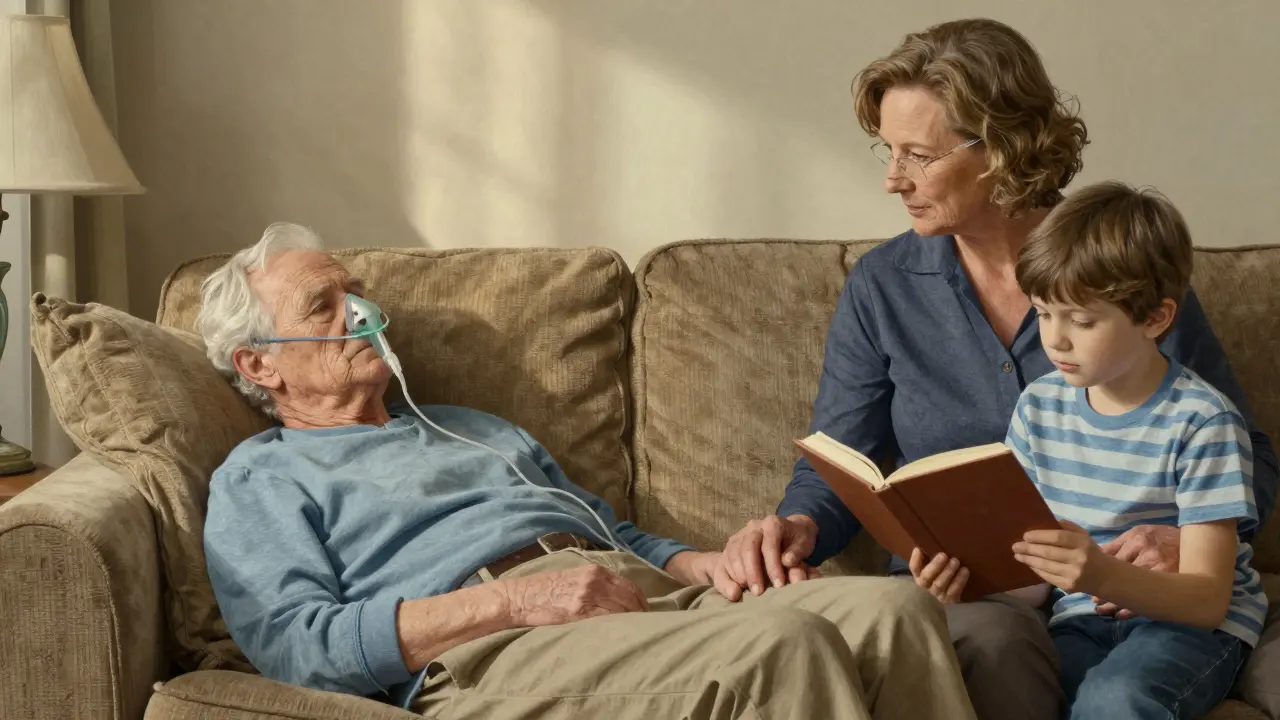
Stage 4: Very Severe COPD - Critical Management
Stage 4 COPD, categorized as Very Severe, is defined by an FEV1 of less than 30% of predicted values. This stage represents extreme respiratory limitation.
The physical toll is heavy. The American Journal of Respiratory and Critical Care Medicine (2022) reports that 89% of Stage 4 patients require supplemental oxygen therapy for more than 15 hours a day. Frequent exacerbations are common, with 74% experiencing episodes severe enough to require hospitalization. Each exacerbation carries a significant risk, with a 22% mortality rate within one year following a severe event, according to European Respiratory Review data.
Life-Saving Interventions:
- Oxygen Therapy: Long-term oxygen therapy (LTOT) for at least 15 hours daily improves 1-year survival from 73% to 90%, as shown in the NOTT trial.
- Ventilation Support: Non-invasive ventilation may be used to reduce hospital readmissions by 28%, per 2022 European Respiratory Society guidelines.
- Palliative Care: Managing social isolation and financial hardship (with oxygen equipment costing ~$287/month out-of-pocket) becomes part of holistic care.
Beyond Spirometry: The ABCD Assessment
While FEV1 tells us how much air moves, it doesn't always tell us how the patient feels. That’s why the GOLD guidelines also use a multidimensional grouping system (Groups A, B, C, D). This assesses:
- Symptom Burden: Measured by the modified Medical Research Council (mMRC) dyspnea scale or the COPD Assessment Test (CAT).
- Exacerbation History: Defined as having ≥2 moderate exacerbations or ≥1 hospitalization in the previous year.
This distinction is vital because, as noted in the ECLIPSE cohort study, 38% of patients classified as high-risk (Group D) actually have Stage 2 COPD based on FEV1 alone. This means a patient can have "moderate" lung function but suffer severely from symptoms and frequent flare-ups, requiring aggressive treatment regardless of their spirometric stage.
| Stage | Severity Label | FEV1 (% Predicted) | Typical Symptoms | Primary Treatment Focus |
|---|---|---|---|---|
| 1 | Mild | ≥80% | Shortness of breath only during strenuous activity | Smoking cessation, short-acting bronchodilators |
| 2 | Moderate | 50-79% | Stopping to breathe while walking on level ground | Long-acting bronchodilators (LABA/LAMA), pulmonary rehab |
| 3 | Severe | 30-49% | Breathlessness during self-care (dressing, bathing) | Combination therapy (LAMA/LABA), possible steroids |
| 4 | Very Severe | <30% | Breathlessness at rest or with minimal movement | Long-term oxygen therapy, non-invasive ventilation |
Why Early Detection Matters More Than Ever
The gap between feeling sick and getting diagnosed is widening. Dr. MeiLan Han from the University of Michigan highlights that many patients don't recognize Stage 1 and 2 symptoms as abnormal, delaying diagnosis by an average of 5.2 years. During those five years, lung tissue continues to degrade irreversibly.
New developments aim to close this gap. The NIH’s 2024 research agenda prioritizes blood biomarkers, such as plasma fibrinogen levels, which correlate with faster FEV1 decline. Additionally, AI-assisted spirometry interpretation, piloted at Massachusetts General Hospital, has been shown to reduce staging errors by 35%. However, until these technologies become widespread, the onus remains on individuals with risk factors-particularly smokers over 40-to demand spirometry testing when they experience persistent cough or breathlessness.
Can COPD stages be reversed?
No, COPD is a progressive disease, meaning the structural damage to the lungs cannot be undone. However, the *progression* of the disease can be significantly slowed. Quitting smoking at Stage 1 can halve the rate of lung function decline. Effective management in later stages can stabilize symptoms and prevent exacerbations, maintaining quality of life even if the FEV1 number continues to drop slowly.
What is the difference between GOLD groups and COPD stages?
COPD stages (1-4) are based strictly on lung function measurements (FEV1) from spirometry. GOLD groups (A, B, C, D) are a broader assessment that includes both lung function AND symptom burden/exacerbation history. A patient might be Stage 2 (moderate lung function) but Group D (high symptoms/high risk), indicating they need more aggressive treatment than their spirometry score alone would suggest.
How accurate is home spirometry?
Home spirometers can be useful for monitoring trends, but they are not recommended for initial diagnosis or official staging. Proper staging requires clinical-grade spirometry performed under supervision to ensure correct technique and calibration. Misinterpretation of home devices can lead to incorrect staging, so always confirm results with a pulmonologist.
Does FEV1 predict life expectancy?
FEV1 is one factor among many. While lower FEV1 generally correlates with higher mortality risk, other factors like cardiovascular health, frequency of exacerbations, age, and smoking status play huge roles. For instance, cardiovascular comorbidities contribute to 40% of COPD-related deaths. Therefore, managing heart health is just as important as managing lung function.
When should I see a specialist?
You should seek evaluation from a pulmonologist if you are over 40, have a history of smoking, and experience chronic cough, sputum production, or shortness of breath. Even if you believe your symptoms are mild, early referral ensures proper spirometry testing and access to pulmonary rehabilitation programs, which are most effective when started early.
