Every year, foodborne illness makes 48 million people in the U.S. sick - that’s about 1 in 6 of us. Most of us never know exactly what made us ill. Was it the chicken salad from the deli? The undercooked burger? Or maybe the pre-washed spinach that looked perfectly clean? The truth is, we don’t always get answers - but we can stop guessing. Knowing what’s lurking in our food and how to keep it safe makes all the difference.
What’s Really Making People Sick?
Not all foodborne illnesses are the same. Some make you miserable for a day or two. Others can land you in the hospital - or worse. The CDC tracks the biggest culprits, and the list is revealing.Norovirus is the most common. It causes about 58% of all foodborne outbreaks. You catch it from contaminated food handled by someone who’s sick, or from surfaces that haven’t been cleaned properly. It hits fast - symptoms show up in 12 to 48 hours. Nausea, vomiting, diarrhea. You feel awful, but most people recover in just 3 days. It’s annoying, not usually deadly.
But then there’s Salmonella. It causes fewer outbreaks than Norovirus, but it’s far more dangerous. It’s linked to eggs, poultry, and raw milk. About 1.35 million people get sick from it each year in the U.S. Alone, it’s responsible for nearly a third of all foodborne deaths. Some people develop reactive arthritis that lasts months. Kids and older adults are most at risk.
Listeria monocytogenes is the quiet killer. It doesn’t make headlines often, but it’s terrifying. It grows in the fridge. That’s right - even cold food isn’t safe. It’s found in soft cheeses, deli meats, and smoked seafood. Pregnant women are 10 times more likely to get infected. And when they do, it can cause miscarriage, stillbirth, or deadly infection in newborns. One in five people who get Listeria die. It’s rare, but deadly.
Escherichia coli O157:H7 is another serious threat. It’s often tied to undercooked ground beef or contaminated produce. What makes it dangerous isn’t just the diarrhea - it’s the risk of hemolytic uremic syndrome (HUS). This rare complication can destroy red blood cells and damage kidneys, especially in children under 5. About 5 to 10% of people infected with this strain develop HUS.
Campylobacter is the most common cause of bacterial diarrhea in the U.S. It’s usually from raw or undercooked chicken. One in four cases now involves antibiotic-resistant strains, making treatment harder than it used to be.
Why Some Pathogens Are Worse Than Others
You might think the most common pathogen is the most dangerous. But that’s not true. Norovirus makes the most people sick - but only 4% end up hospitalized. Listeria? It causes only 1.5% of illnesses, but nearly 20% of foodborne deaths. That’s the real problem: numbers don’t tell the whole story.Here’s how the top five stack up:
| Pathogen | Illnesses per Year | Hospitalizations | Deaths |
|---|---|---|---|
| Norovirus | 19-21 million | 26% | 11% |
| Salmonella | 1.35 million | 35% | 28% |
| Clostridium perfringens | ~1 million | 1% | 1% |
| Campylobacter | ~850,000 | 15% | 6% |
| Listeria monocytogenes | ~1,600 | 91% | 19% |
See the pattern? The pathogens that cause the most deaths aren’t the ones that make the most people sick. Listeria and Salmonella are the silent threats. They don’t spread quickly like Norovirus, but when they hit, they hit hard. And they’re not going away.
How Food Gets Contaminated - And How to Stop It
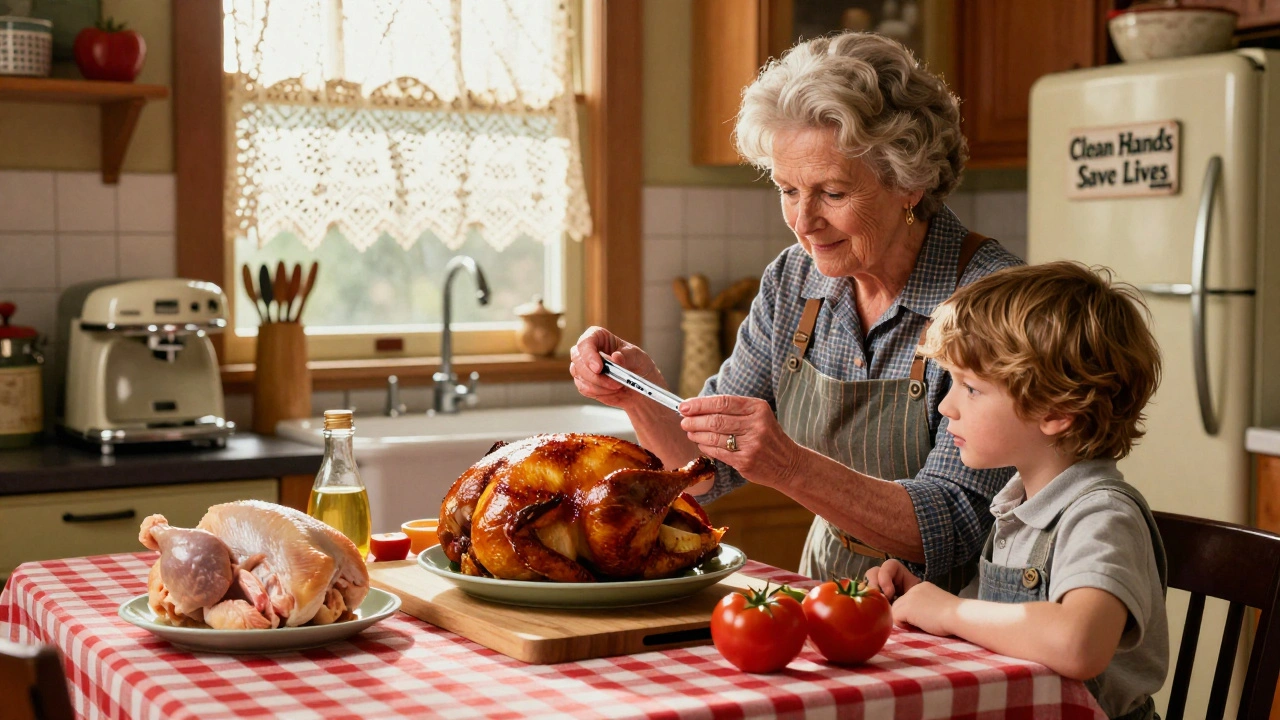
Most foodborne illness comes from simple mistakes in the kitchen. Not from dirty factories or tainted imports. From your fridge to your plate, here’s where things go wrong.Undercooked meat is the #1 cause of Salmonella and E. coli infections. People think chicken is done when it’s no longer pink. That’s wrong. You need a thermometer. The USDA says poultry must reach 165°F (74°C). Ground beef? 160°F (71°C). Steak? 145°F (63°C) with a 3-minute rest. If you don’t use a thermometer, you’re guessing. And guessing kills.
Cross-contamination is another big one. You chop raw chicken on a cutting board, then use the same board for tomatoes. That’s how Salmonella gets on your salad. Color-coded boards help - red for meat, green for produce. But even that’s not enough. Wash everything after use. And don’t forget your hands. Wash for 20 seconds - the time it takes to sing "Happy Birthday" twice.
Improper storage is where Listeria thrives. It doesn’t care if your fridge is cold. It grows at 4°C (39°F). That means soft cheeses, deli meats, and pre-packaged salads are risky if they’ve been sitting too long. If you’re pregnant or immunocompromised, avoid them. Or heat deli meats until they’re steaming hot.
Raw milk and unpasteurized juice are old-school risks. People think raw is healthier. It’s not. Pasteurization kills harmful bacteria without changing taste or nutrition. Skip the raw stuff unless you know exactly where it came from - and even then, it’s not worth the risk.

What’s Changing in Food Safety
Food safety isn’t stuck in the past. Technology is helping. Whole genome sequencing lets health officials trace an outbreak back to a single truckload of spinach - in days, not weeks. That’s a huge win.The FDA’s Food Safety Modernization Act (FSMA), passed in 2011, changed everything. Instead of reacting to outbreaks, it forces producers to prevent them. Farms must now test water, track animal waste, and document cleaning procedures. For the first time, the FDA can force a recall. Before FSMA, they had to ask nicely.
But the system still has gaps. Only 40% of leafy green farms get inspected each year. Yet they cause 22% of E. coli outbreaks. Imported produce is another weak spot. Cyclospora, a parasite once rare in the U.S., has jumped 300% since 2012 - mostly from countries with weaker food safety rules.
And climate change is making it worse. Warmer oceans mean more Vibrio bacteria in shellfish. Heavier rains wash animal waste into fields where lettuce grows. By 2050, the USDA expects foodborne illness from produce to rise by 20-30%.
What You Can Do Right Now
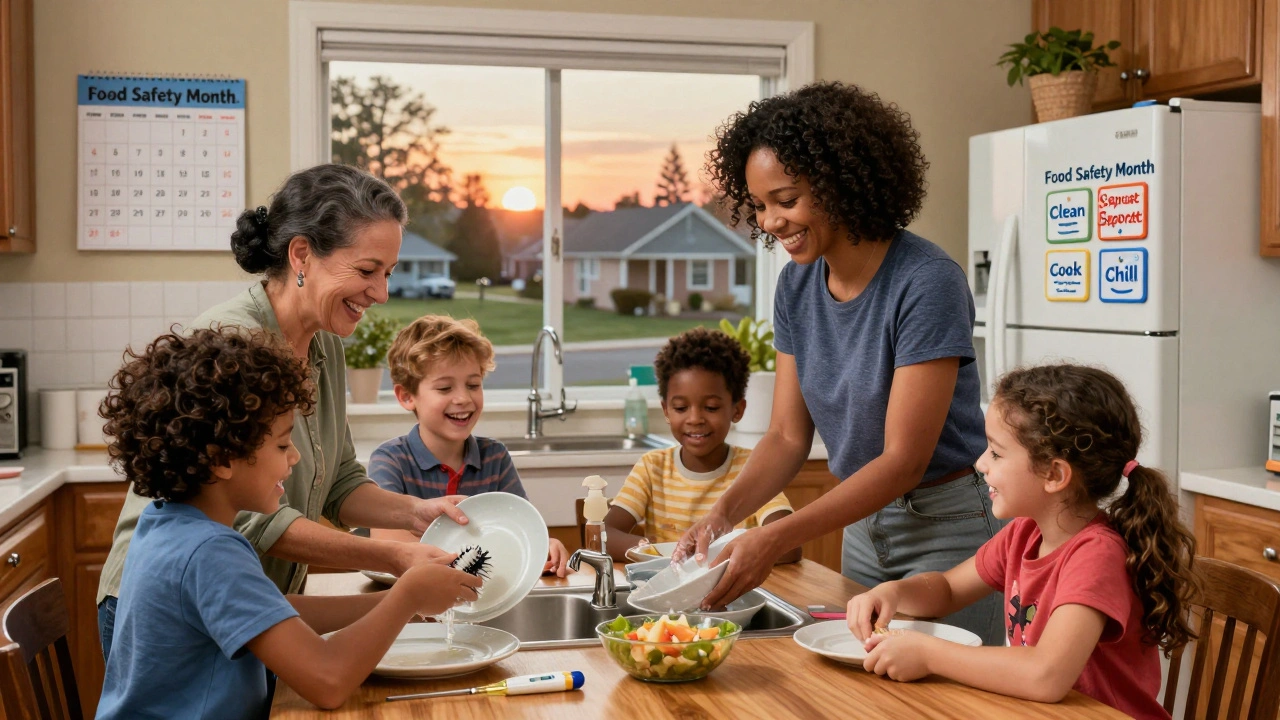
You don’t need to be an expert to stay safe. Just follow these four rules:- Clean - Wash hands, surfaces, and produce. Use soap and warm water. Don’t rinse meat - it splashes bacteria everywhere.
- Separate - Keep raw meat, eggs, and seafood away from ready-to-eat foods. Use different cutting boards. Store raw meat on the bottom shelf of the fridge so drips don’t contaminate other food.
- Cook - Use a food thermometer. Don’t rely on color or texture. Chicken at 165°F? Done. Ground beef at 160°F? Done. No exceptions.
- Chill - Keep your fridge at or below 40°F (4°C). Don’t leave food out for more than 2 hours (1 hour if it’s over 90°F). Clean your fridge drip pan monthly - that’s where Listeria hides.
And if you’re pregnant, over 65, or have a weak immune system? Be extra careful. Avoid soft cheeses like Brie or feta unless they’re labeled "made with pasteurized milk." Skip raw sprouts. Don’t eat raw cookie dough. These aren’t just old wives’ tales - they’re life-saving advice.
The Real Cost of Getting Sick
Foodborne illness isn’t just about discomfort. It’s expensive. The average cost per case? $1,600 for Norovirus. For Listeria? $227,000. That’s hospital bills, lost wages, long-term care.Small businesses suffer too. One outbreak can shut down a restaurant for weeks. A single case of Listeria linked to a deli can cost millions in recalls and lawsuits. That’s why the food industry spends $7 billion a year on safety - and why compliance is no longer optional.
But the biggest cost? The lives lost. 3,000 people die every year in the U.S. from foodborne illness. That’s more than car crashes involving drunk drivers. And most of those deaths are preventable.
What Comes Next
By 2025, the FDA plans to require mandatory pathogen reduction plans for leafy greens. New rapid tests will detect E. coli or Salmonella in under two hours - not days. AI will help track contamination patterns across supply chains. Blockchain might let you scan a QR code on your lettuce and see its entire journey from farm to shelf.But technology won’t fix everything. The real solution is education. People need to know how to handle food safely at home. Right now, 48% of Americans judge meat doneness by color. 37% thaw meat on the counter. Only 23% clean their fridge drip pans.
Change starts with you. Not with new laws or fancy machines. With a thermometer in your kitchen. With a clean cutting board. With washing your hands before you touch your food.
Food should nourish you. Not hurt you. And with a few simple habits, you can make sure it does.

Anna Roh
December 9, 2025 AT 21:20My uncle got sick from raw cookie dough last Christmas. We thought it was just a bad stomach bug. Turns out it was E. coli. He was in the hospital for a week. Don't eat raw dough. Just don't.
Simran Chettiar
December 10, 2025 AT 23:26It is fascinating, is it not, how the very act of sustenance-so primal, so intimate-has become a silent battlefield against invisible adversaries? We prepare our meals with care, yet remain blind to the microbial specters that dance upon our cutting boards and lurk within our refrigerators. Norovirus, that mischievous trickster, spreads not through malice but through human negligence; Listeria, the slow assassin, thrives in cold silence, indifferent to our moral certainties. Are we not, then, merely tenants in a house we refuse to clean? The thermometer is not merely a tool-it is a moral imperative. And yet, we glance at the color of chicken as if it were a fortune cookie. We are not ignorant; we are willfully blind.
The FDA’s FSMA is a step, yes-but legislation cannot replace the quiet discipline of washing hands for twenty seconds, of separating raw from ready, of honoring the sanctity of temperature. We seek technological salvation in blockchain and AI, yet the root of the problem lies in the kitchen, not the server farm. Is it not tragic that our greatest threat is not the pathogen, but our own complacency?
And climate change? It does not merely raise sea levels-it raises the tide of Vibrio in our oysters, washes manure into our lettuce fields, and turns our summer picnics into potential death traps. We speak of sustainability as if it were a buzzword, yet we refuse to alter our habits when they might save a life. We want our spinach raw, our cheese soft, our steak pink-and we are willing to gamble with death for the sake of taste. What does that say about us?
Perhaps the answer lies not in more regulations, but in a rekindling of reverence-for food, for the body, for the fragile boundary between nourishment and poison. We have forgotten that eating is an act of trust. And trust, once broken, is not easily restored.
Tim Tinh
December 12, 2025 AT 03:31Y'all really need to stop thawing meat on the counter. I saw my cousin do this and he got salmonella so bad he missed his wedding. Just put it in the fridge overnight or use the microwave. It's not that hard. Also, wash your hands. Like, actually wash them. Not the 3-second splash thing. 20 seconds. Sing happy birthday twice. I'm not joking.
Tiffany Sowby
December 13, 2025 AT 06:00Why do we even care about food safety when the government can't even keep our water clean? This is all just a distraction. They want us scared of chicken so we don't ask why our hospitals are crumbling. Also, 'pasteurized milk' is just corporate propaganda. Real food doesn't need chemicals.
Asset Finance Komrade
December 14, 2025 AT 17:29Interesting data, though I must respectfully challenge the premise that Listeria is the 'quiet killer.' In Australia, we've had outbreaks tied to rockmelons-yes, cantaloupes-that were far more insidious. The CDC data is U.S.-centric. Global food systems operate differently. Also, emoji: 🍉💀
And let's not pretend that 'cleaning the fridge drip pan' is a universal solution. In humid climates, mold grows faster than you can say 'Listeria.' Maybe we need better fridge design, not just more chores for middle-class Americans.
Brianna Black
December 15, 2025 AT 06:20I used to think food poisoning was just a bad night. Then my daughter got HUS from undercooked beef. She was 4. She spent 37 days in the hospital. Kidneys. IVs. Catheters. No one told me to check the thermometer. No one told me it could kill her. Now I carry one everywhere. I even check the temp of my own chicken. And I tell everyone. Every. Single. Person. This isn't advice. It's survival.
Shubham Mathur
December 16, 2025 AT 03:28People keep talking about thermometers like they're magic but no one talks about how many homes don't even have one. Or how in low income areas, you can't afford to throw out spoiled food. Or how migrant workers handle food 12 hours a day without gloves or clean water. This isn't just about washing hands. It's about justice. Who gets to be safe? Who gets to be warned? The CDC stats don't show that. But I see it every day. We need systemic change not just personal discipline
Stacy Tolbert
December 17, 2025 AT 16:16Reading this made me cry. I lost my mom to Listeria. She was 72. She ate a deli sandwich because it was 'just one bite.' She didn't even know. The doctors said she was healthy. That's the worst part. It doesn't announce itself. I heat every slice of deli meat now. Even mine. I don't care if it's 'gross.' I don't care if it's 'overcooked.' I just want to live long enough to see my kids grow up. Please. Just heat it.