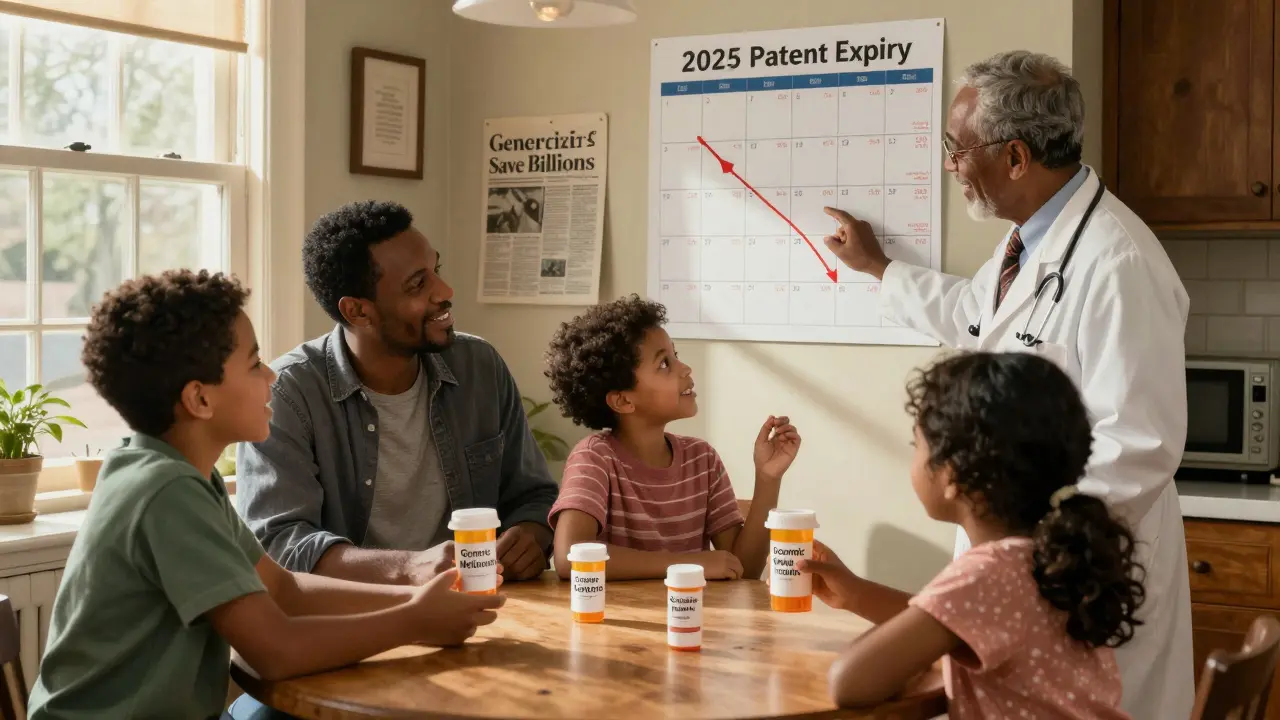
The global generic drugs market isn’t just growing-it’s reshaping how the world pays for medicine. By 2030, it could be worth anywhere from $530 billion to over $800 billion, depending on who you ask. What’s clear is this: as more branded drugs lose patent protection, cheaper versions are stepping in to fill the gap. And for patients, hospitals, and governments, that means big savings. But it’s not just about price. The future of generics is being shaped by complex biologics, regulatory shifts, and manufacturing revolutions-especially in places like India, China, and the EU.
Why Generic Drugs Are Becoming the Default Choice
Generic drugs aren’t knockoffs. They’re exact copies of branded medications, with the same active ingredients, same dosages, same effectiveness. The only difference? Price. A typical generic can cost 80% less than its brand-name version. That’s why, in countries like the UK and Germany, doctors routinely prescribe generics unless there’s a medical reason not to. The biggest driver behind this shift? Patent cliffs. Between 2025 and 2030, drugs generating over $200 billion in annual sales will lose exclusivity. Think of big-name drugs for diabetes, cancer, and autoimmune diseases. Once their patents expire, dozens of manufacturers can start making versions. And they will. That’s not speculation-it’s already happening. Ustekinumab and vedolizumab, two top-selling biologics for psoriasis and Crohn’s disease, are among the first to go off-patent. Their generic equivalents, called biosimilars, are already being approved in Europe and the U.S.The Rise of Biosimilars: The New Frontier
Not all generics are the same. Traditional generics are simple chemical compounds. Biosimilars are more complex-they’re copies of biological drugs made from living cells. These include monoclonal antibodies used in cancer treatment, rheumatoid arthritis, and severe asthma. They’re harder and more expensive to make, but they’re also more profitable once they hit the market. The biosimilars segment is growing at nearly 8.2% per year, faster than traditional generics. Why? Because the market for these drugs is massive. In 2024, just five biologic drugs brought in over $50 billion in global sales. Once those patents expire, even a small share of that market translates to billions in revenue for generic makers. Companies like Sandoz (part of Novartis) and Amgen are already racing to be first. Early entrants get the biggest slice of the pie because payers and hospitals prefer established suppliers with proven safety records.Where the Growth Is: Asia Leads, Europe Stabilizes, U.S. Catches Up
The map of generic drug production has changed. Ten years ago, the U.S. and Europe dominated manufacturing. Now, India and China are the powerhouses. India supplies 20% of all generic drugs worldwide and 60% of the global vaccine supply. Its strength? Low-cost manufacturing and a deep pipeline of generic approvals. Indian firms like Sun Pharma and Dr. Reddy’s have become global giants. But it’s not just volume-it’s strategy. India is now moving into complex generics and biosimilars, not just simple pills. China’s influence is different. Instead of competing on price alone, it’s using volume-based procurement. The government buys drugs in bulk, forcing manufacturers to slash prices to win contracts. This has reset global price benchmarks. A pill that sells for $10 in the U.S. might go for $1.50 in China. That squeezes margins, but it also forces innovation. Companies that can produce high-quality generics at ultra-low costs now control the global supply chain. In Europe, growth is steadier. Germany and the UK lead in adoption thanks to strong public health policies that prioritize generics. The EU has streamlined approval processes for biosimilars, cutting development time by up to 18 months. Meanwhile, Southeast Asian countries like Thailand and Vietnam are launching pooled procurement programs-where multiple nations team up to buy generics together. This gives them more bargaining power and encourages manufacturers to build local supply chains. The U.S. market is catching up. After years of consolidation, big players like Teva and Viatris now control a large share of the market. But pricing pressure is fierce. Medicare and private insurers are pushing for lower prices, and the FDA is approving generics faster than ever. In 2024, over 4,000 generic drugs were approved in the U.S.-a record.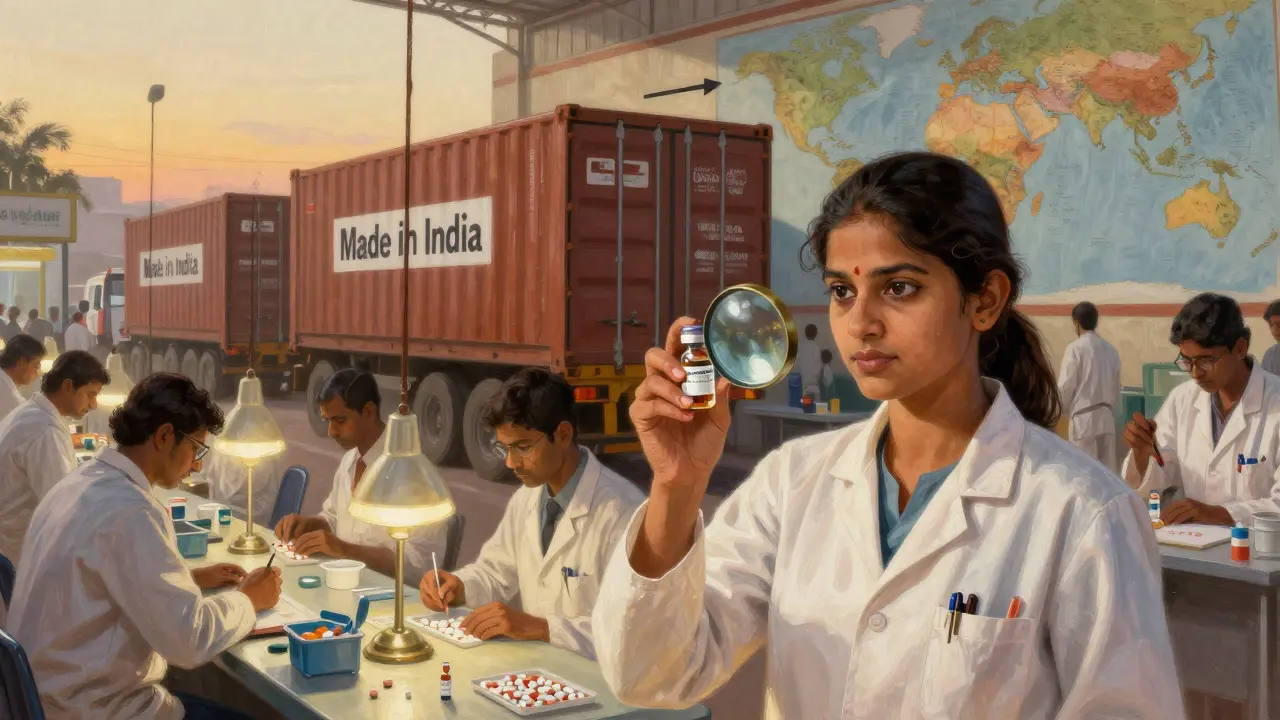
Therapeutic Areas Driving Demand
Not all generic drugs are created equal. Some therapeutic areas are growing faster than others because of rising disease rates and aging populations. Diabetes is a top driver. Over 500 million people worldwide have diabetes. Generic versions of metformin, insulin, and GLP-1 agonists like liraglutide are in high demand. Even though newer branded drugs like Ozempic and Mounjaro are still expensive, their patents will expire in the next 5-8 years. When they do, the market could explode. Oncology is another big area. Cancer treatments are among the most expensive drugs on the market. Generic versions of chemotherapy agents are already common, but biosimilars for drugs like trastuzumab (Herceptin) and rituximab (Rituxan) are just starting to take off. By 2030, oncology could account for over $300 billion in global drug sales-with generics making up a growing portion. Inflammatory diseases like psoriasis and rheumatoid arthritis are also seeing rapid generic adoption. Drugs like Dupixent and Skyrizi are still under patent, but their success signals what’s coming. Once they expire, generic versions will be in high demand because these are lifelong treatments. Patients don’t stop taking them. They just need affordable options.Technology Is Changing How Generics Are Made
Manufacturing generics isn’t just about mixing chemicals anymore. It’s becoming a high-tech operation. Robotic automation is cutting production costs and improving consistency. Companies are using AI to predict which drugs will be most profitable to copy next. Machine learning models analyze patent expirations, market demand, and regulatory timelines to prioritize development. Another big change? Medication adherence tools. Many patients stop taking their meds because they’re too expensive or complicated. Tech-enabled refill systems now sync with pharmacies and insurers to automatically reorder generics. Some apps even send reminders and track whether patients are taking their pills. This isn’t just good for patients-it’s good for manufacturers. Higher adherence means more consistent sales.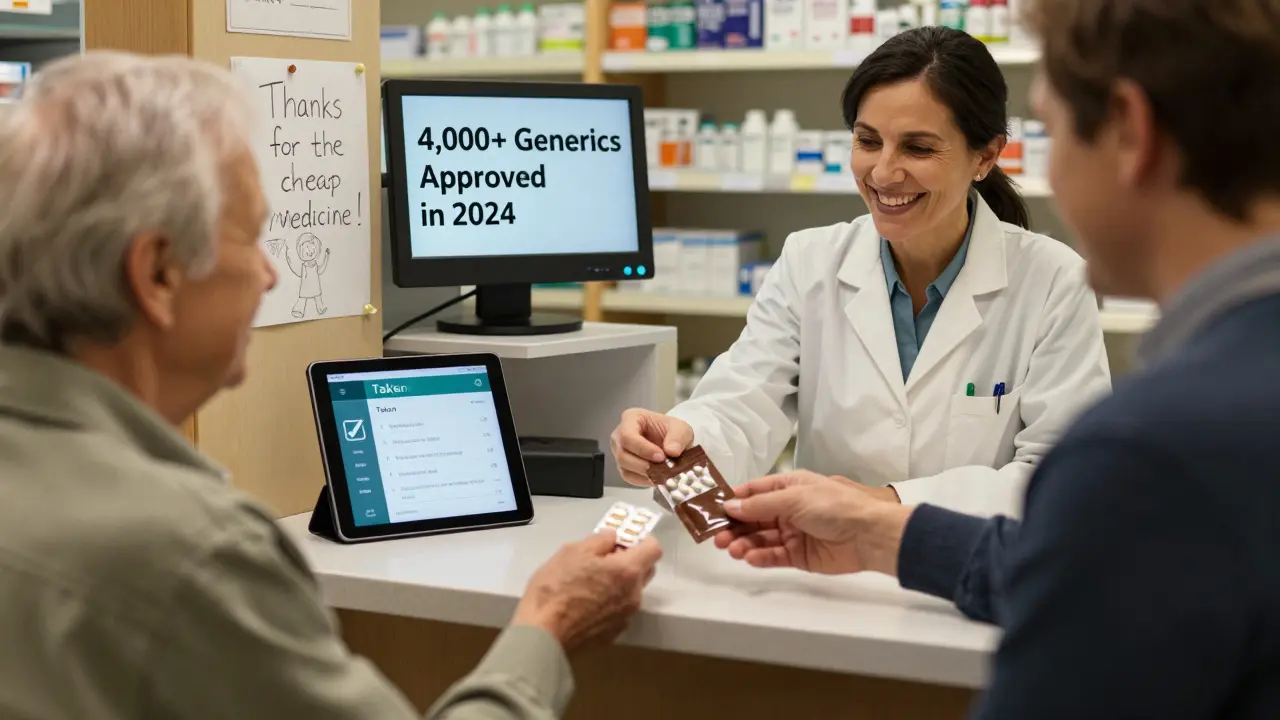
Challenges Ahead: Pricing Pressure and Complexity
The future isn’t all sunshine. There are serious hurdles. The biggest one? Price erosion. In markets like China and the U.S., generic prices keep falling. A drug that sold for $50 a month might drop to $5 within two years of generic entry. That makes it hard for manufacturers to recoup R&D costs, especially for complex biosimilars that cost hundreds of millions to develop. Another challenge? Complexity. The next wave of off-patent drugs aren’t simple pills. They’re inhalers, injectables, and combination therapies. Making these requires advanced equipment, sterile environments, and specialized expertise. Smaller companies can’t compete. That’s leading to more consolidation. Only the biggest players will survive. Regulatory uncertainty is also a risk. Patent lawsuits can delay generic entry by years. In the U.S., “patent thickets”-where brands file dozens of minor patents to block competition-are still common. If courts keep siding with brand-name companies, the pipeline could slow down.What This Means for Patients and Health Systems
For patients, the future looks better. More affordable drugs mean fewer people skip doses or skip care because they can’t pay. In low-income countries, generic access is saving lives. In wealthier nations, it’s helping control rising healthcare costs. For governments, it’s a win too. The UK’s NHS saves over £1 billion a year through generic prescribing. In the U.S., Medicare saved $314 billion on generics between 2010 and 2020. Those savings can be redirected to mental health services, cancer screening, or rural clinics. But it’s not automatic. Policymakers need to keep supporting generic adoption. That means funding regulatory agencies, speeding up approvals, and encouraging pharmacies to substitute generics unless there’s a medical reason not to.Final Outlook: Growth Is Real, But It’s Getting Harder
The data doesn’t lie. The generic drug market is expanding. By 2030, it will likely be worth at least $600 billion. Some estimates go as high as $900 billion. That’s a massive opportunity. But the low-hanging fruit is gone. The easy wins-simple pills like ibuprofen or metformin-are already saturated. The future belongs to companies that can handle complex drugs, navigate global regulations, and build supply chains that are both efficient and reliable. The winners won’t be the cheapest. They’ll be the smartest.Are generic drugs as safe as brand-name drugs?
Yes. Generic drugs must meet the same strict quality, safety, and effectiveness standards as brand-name drugs. In the U.S., the FDA requires generics to have the same active ingredient, strength, dosage form, and route of administration. They must also be bioequivalent-meaning they work the same way in the body. Thousands of studies and real-world use confirm that generics perform just as well as their branded counterparts.
Why are some generic drugs still expensive?
Some generics stay pricey due to low competition. If only one or two companies make a drug, there’s little pressure to lower prices. This often happens with older drugs, complex formulations, or those with manufacturing challenges. In other cases, supply chain disruptions or raw material shortages can cause temporary spikes. But over time, as more manufacturers enter the market, prices usually drop significantly.
What’s the difference between a generic and a biosimilar?
Generics are exact copies of small-molecule drugs made from chemicals. Biosimilars are highly similar-but not identical-to complex biological drugs made from living cells. Because biological drugs are harder to replicate exactly, biosimilars aren’t called “generics.” They require more testing and are typically more expensive to develop. But once approved, they offer the same cost-saving benefits.
Which countries are the biggest producers of generic drugs?
India is the largest producer by volume, supplying 20% of global generics and 60% of vaccines. China is the second-largest and is increasingly influential in setting global prices through its bulk procurement system. The U.S. and Europe produce many generics too, but rely heavily on imports from Asia for raw materials and finished products.
Will generic drugs replace branded drugs completely?
No-and they shouldn’t. Branded drugs still play a vital role in innovation. New treatments for rare diseases, cancer, and neurological conditions often start as branded drugs. Generics come in after patents expire, making those treatments affordable for millions. The two work together: innovation creates new medicines, and generics ensure they’re accessible.
How do patent expirations affect generic drug availability?
Patent expiration is the trigger. Once a drug’s patent ends, other manufacturers can legally produce and sell the same drug. But there’s often a delay. Companies may file legal challenges, or regulatory agencies may take time to approve new applicants. In some cases, branded companies use tactics like “evergreening” to extend protection. But overall, the more patents that expire, the faster generics flood the market and prices fall.

Mike Rose
January 30, 2026 AT 11:03generic drugs? more like generic results. i mean come on, if it’s not branded, how do you even know it works? my cousin took some indian stuff and ended up in the er. not cool.
Bobbi Van Riet
January 30, 2026 AT 15:58actually, the science is rock solid on this. generics have to pass bioequivalence tests that prove they release the same amount of active ingredient at the same rate as the brand. the FDA doesn’t cut corners. i’ve worked in pharma compliance for 15 years and i’ve seen the paperwork. it’s insane how strict it is. the real issue isn’t safety-it’s pricing games and supply chain chaos. when only one company makes a drug, they jack up the price. when 10 companies make it? boom, price drops like a rock. that’s capitalism, folks.
Rohit Kumar
February 1, 2026 AT 11:57in india, we don’t just make generics-we make hope. for a diabetic in rural Bihar, a $0.10 tablet of metformin isn’t a drug, it’s a lifeline. the world talks about patents like they’re sacred, but what’s sacred is a mother feeding her child because she can afford insulin. we don’t need applause. we just need to keep making pills that work.
Lily Steele
February 2, 2026 AT 06:35love this breakdown. i’ve been on a biosimilar for my rheumatoid arthritis and it’s been life changing. cheaper, same results. my insurance loves it too. the only thing i wish more people knew is that switching from brand to generic doesn’t mean switching on quality. it just means switching to fairness.
Gaurav Meena
February 2, 2026 AT 23:14the future is not just in making generics-it’s in making them accessible. in nigeria, we see the same drugs priced 5x higher than in india. why? because of middlemen, bad logistics, and corruption. we need global partnerships-not just trade. we need supply chains that respect patients, not profits. if india can do it, the world can too.
Jodi Olson
February 3, 2026 AT 01:02the erosion of pharmaceutical innovation is a real concern. while generics serve a necessary function, the relentless pressure to reduce prices may disincentivize the development of next-generation therapies. if no company can recoup the $2.6 billion average cost of bringing a new drug to market, we risk a future where only the most common conditions are treated-and the rare, the complex, the mysterious are left behind.
Carolyn Whitehead
February 4, 2026 AT 03:34so basically, if your drug’s patent expires, everyone gets to play? that’s kinda cool. like when your favorite band breaks up and then 10 cover bands start playing the same songs at open mics. only in this case, the music saves lives.
Katie and Nathan Milburn
February 5, 2026 AT 10:46the data supporting the safety and efficacy of generic medications is overwhelming. regulatory agencies worldwide enforce stringent standards. anecdotal claims of adverse outcomes are statistically negligible compared to the millions of safe, successful substitutions daily. systemic cost containment through generic utilization remains one of the most effective public health interventions of the 21st century.
Eliana Botelho
February 7, 2026 AT 09:26you’re all missing the point. the real problem isn’t generics-it’s that we let big pharma convince us that expensive = better. why does a pill cost $100 if it’s just chemicals? because they sold us the story. they made us believe the logo matters more than the molecule. and now we’re shocked when the truth comes out? please. we were told the emperor had clothes. we just didn’t want to admit we saw he was naked.
owori patrick
February 8, 2026 AT 03:18we need more transparency. not just in pricing, but in who owns what. a lot of these ‘indian’ generics are owned by american investors. the profits go overseas while the work happens here. it’s not anti-generic-it’s pro-justice. if we’re going to make life-saving drugs, let the people who make them share in the value.