
When you’re dealing with acid reflux, stomach ulcers, or irritable bowel syndrome, doctors often prescribe gastrointestinal combination products-pills that pack two or more drugs into one tablet. Why? Because treating complex digestive issues isn’t always about one drug doing all the work. Sometimes, you need an acid blocker to calm the stomach and an antibiotic to kill H. pylori. Or a pain reliever paired with a protective agent to avoid ulcers from NSAIDs. These combos cut down pill counts, improve adherence, and can work better together than separately.
What Are Gastrointestinal Combination Products?
Gastrointestinal combination products are fixed-dose medications that combine two or more active ingredients to treat digestive conditions. They’re not just convenience pills-they’re designed for synergy. For example, Duexis combines 800 mg of ibuprofen (a painkiller) with 26.6 mg of famotidine (an acid reducer). This combo is FDA-approved specifically to relieve arthritis pain while lowering the risk of stomach ulcers, a common side effect of long-term NSAID use.
Another major category is H. pylori eradication therapy. This usually pairs a proton pump inhibitor (PPI) like omeprazole or lansoprazole with two antibiotics-commonly amoxicillin and clarithromycin. The goal? Kill the bacteria that cause most peptic ulcers. Without this triple combo, treatment often fails. These aren’t random mixes; they’re clinically proven regimens with specific dosing rules. MassHealth, for example, limits omeprazole to four capsules per day unless you have Zollinger-Ellison syndrome or Barrett’s esophagus.
Newer combinations are entering the market too. Vonoprazan (Voquezna), approved in July 2024, is a potassium-competitive acid blocker (P-CAB), not a traditional PPI. It blocks stomach acid differently and is approved for heartburn in nonerosive GERD. It’s already being studied in combos with antibiotics for H. pylori, potentially replacing older PPI-based regimens.
Generic Availability: What’s Available and What’s Not
The good news? Many components of these combos have generic versions. Omeprazole, lansoprazole, amoxicillin, clarithromycin-all are cheap generics. But the fixed-dose combination? That’s where things get tricky.
The FDA approved the first generic version of Duexis (ibuprofen/famotidine) in August 2021. Par Pharmaceutical and Alkem Laboratories both launched generics that same year. Today, you can get the same 800 mg/26.6 mg tablet for a fraction of the brand price. That’s a win for patients on Medicare or private insurance.
But not all combos are so easy. Linzess (linaclotide) for IBS-C got a generic in 2021 from Mylan. That’s a clear success story. On the other hand, Xifaxan (rifaximin) lost exclusivity in 2024 after 20.7 years on the market, and generics are now rolling out. But newer combos like vonoprazan-based regimens are still under patent. Expect to wait at least 5-7 years before generics appear.
Here’s the catch: even if the individual drugs are generic, the combination might still be brand-only. Insurance companies often require prior authorization (PA) for the brand-name combo unless there’s no FDA-approved generic version. For example, if you need rabeprazole with another drug, and no combo exists as a generic, your doctor must prove you’ve tried and failed the separate generics first.
Key Combination Products and Their Generic Status
| Combination Product | Brand Name | Primary Use | Generic Available? | Approval Date (Generic) |
|---|---|---|---|---|
| Ibuprofen + Famotidine | Duexis | Arthritis pain with GI protection | Yes | August 3, 2021 |
| Omeprazole + Amoxicillin + Clarithromycin | Pylera, others | H. pylori eradication | Yes (separate generics) | N/A (no fixed-dose generic) |
| Linaclotide | Linzess | IBS-C, chronic constipation | Yes | February 9, 2021 |
| Sitagliptin + Metformin | Janumet | Diabetes (off-label GI use) | Expected 2026 | Not yet |
| Vonoprazan-based combos | Voquezna | GERD, H. pylori (under study) | No | July 18, 2024 (brand only) |
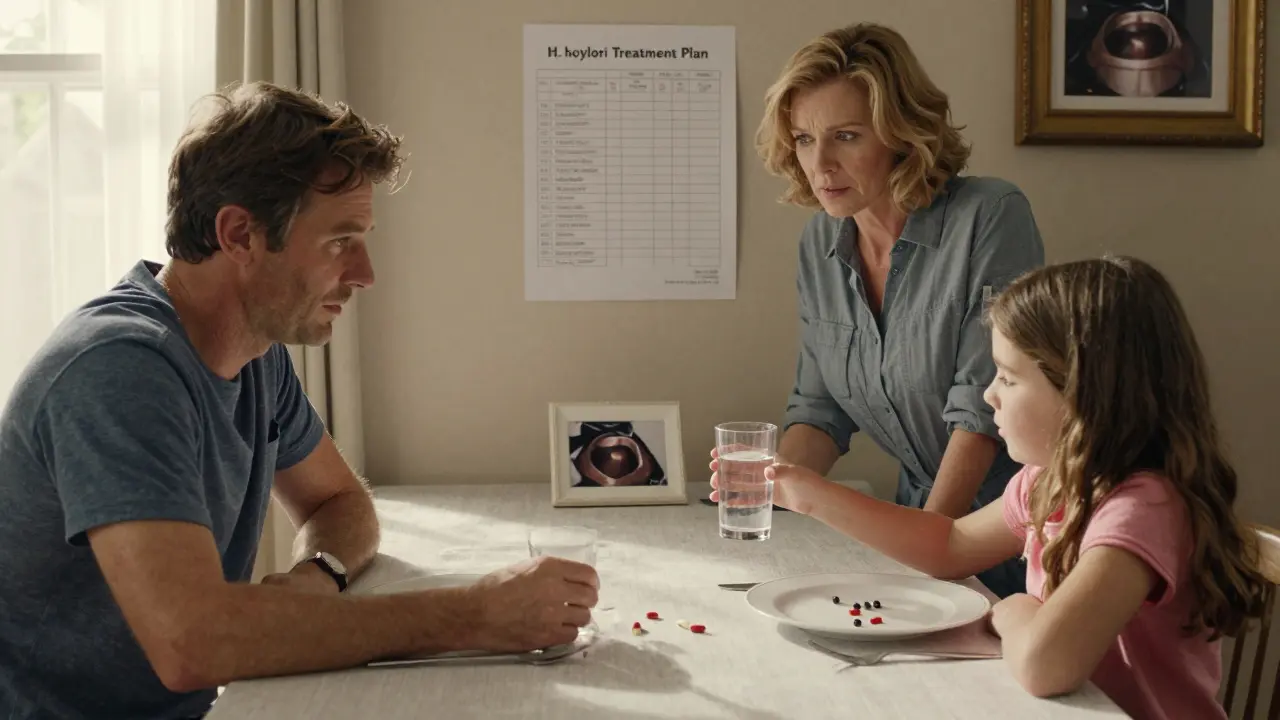
Notice something? Many H. pylori treatments aren’t sold as fixed-dose combos in the U.S. Instead, doctors prescribe three separate pills. That’s because the FDA never approved a single tablet with all three. So while you can get each drug cheaply, you’re still taking three pills a day. Some countries have fixed-dose H. pylori combos, but in the U.S., it’s still mostly separate generics.
Alternatives to Combination Products
If your combo isn’t covered, or you can’t get the generic, what then? You have options.
Option 1: Take the components separately. This is often the most cost-effective route. If you’re on Duexis, ask your pharmacist: can you get 800 mg ibuprofen and 26.6 mg famotidine as two separate pills? You’ll likely pay less, and you’ll have more control over timing. Some patients even prefer this because they can adjust doses independently.
Option 2: Switch to a different class. For acid reflux, if PPIs aren’t working or causing side effects, vonoprazan is a newer alternative. It works faster and lasts longer than omeprazole. For H. pylori, if clarithromycin resistance is high in your area (common in the U.S.), your doctor might swap it for metronidazole or levofloxacin.
Option 3: Use over-the-counter (OTC) options. Loperamide (Imodium) for diarrhea has been available OTC since 2021. Bismuth subsalicylate (Pepto-Bismol) still works for mild upset stomachs and even has some antibacterial effect against H. pylori. These aren’t replacements for prescription combos, but they can help with symptoms while you wait for insurance approval.
For inflammatory bowel disease, newer biologics like risankizumab-rzaa (Pyzchiva) and ustekinumab-ttwe (biosimilar to Stelara) are now available. These aren’t traditional GI combos, but they’re part of the evolving landscape. They’re expensive-often $50,000+ per year-but Medicare is now negotiating prices, and biosimilars are starting to bring costs down.
Insurance, Prior Authorization, and Access Barriers
Getting these drugs isn’t just about what’s available-it’s about what your insurance will pay for. Most plans treat combination products as distinct from their individual components. That means even if you can buy omeprazole and amoxicillin separately for $5, your insurer might deny coverage for the brand-name H. pylori combo unless you prove you’ve tried the generics first.
MassHealth and similar programs require:
- Documentation of prior treatment failure with generic versions
- Medical records showing a GI specialist consultation
- Proof of diagnosis (e.g., endoscopy results for ulcers)
For high-dose PPIs (like 40 mg omeprazole daily), you’ll need to show you have Zollinger-Ellison syndrome, Barrett’s esophagus, or erosive esophagitis. Otherwise, they’ll cap you at one capsule per day. This isn’t about cost-cutting-it’s about avoiding long-term PPI risks like bone loss or kidney damage.
And here’s a hidden issue: just because a generic is approved doesn’t mean it’s in stock. The FDA’s First Generic Drug Approvals list shows approval dates, but many patients report delays of weeks or months before pharmacies can fill the prescription. Always call ahead. Ask your pharmacy if they’ve received the ANDA (Abbreviated New Drug Application) product from the manufacturer.

What’s Coming Next?
2026 is shaping up to be a big year for GI generics. Janumet (sitagliptin + metformin) is expected to go generic, opening up a new avenue for patients with diabetes-related gastroparesis or acid reflux. Xifaxan’s generic rollout is already underway, which could cut costs for travelers’ diarrhea and SIBO treatment.
Vonoprazan combos for H. pylori are in late-stage trials. If approved, they could replace the standard triple therapy within five years. They’re more effective, especially in areas with high antibiotic resistance. The big pharma players-Takeda, AstraZeneca, AbbVie-are investing heavily here.
Meanwhile, the market is shifting toward biologics. Even though they’re expensive, they account for 33% of GI drug revenue. That’s because they work where pills don’t-especially for Crohn’s disease and ulcerative colitis. Biosimilars like Pyzchiva are starting to make these drugs more affordable, but they’re still not cheap.
What Should You Do?
If you’re on a GI combination product:
- Ask your pharmacist: Is there a generic version? If yes, ask for it.
- If not, ask your doctor: Can I take the two drugs separately? Often, this saves money and gives you more control.
- If your insurance denies coverage, request a prior authorization. Make sure your doctor includes documentation of failed generic trials.
- For newer drugs like vonoprazan, check if your plan covers it. If not, ask about patient assistance programs from the manufacturer.
- Don’t assume a brand-name drug is better. For most GI combos, the generic works just as well.
The bottom line? Gastrointestinal combination products are powerful tools. But they’re not always necessary. Sometimes, simpler, cheaper, and equally effective options exist. The key is asking the right questions-of your doctor, your pharmacist, and your insurer.
Are generic gastrointestinal combination products as effective as brand names?
Yes, when the FDA approves a generic combination product, it must meet the same standards for strength, purity, and performance as the brand. For example, the generic version of Duexis contains the exact same amounts of ibuprofen and famotidine as the brand. Studies show no difference in effectiveness or side effects. The only differences are in inactive ingredients like fillers or coatings, which rarely affect how the drug works.
Why aren’t all GI combination products available as generics?
Patents protect brand-name drugs for up to 20 years, and companies often extend protection with new formulations or delivery methods. For example, vonoprazan was approved in 2024 and won’t have generics until at least 2031. Also, some combinations are complex to manufacture-ensuring the two drugs don’t interact in the tablet-so generic makers may delay entry. Finally, if the market is small (like rare liver disease drugs), companies may not see enough profit to justify the cost of developing a generic.
Can I switch from a brand-name GI combo to separate generic pills?
In most cases, yes. Many patients successfully switch from Duexis to taking ibuprofen and famotidine as two separate pills. The dosages match exactly. The only downside is taking two pills instead of one. But if cost is an issue, this is often the smartest move. Always check with your doctor before switching, especially if you’re on other medications or have kidney or liver issues.
Why does my insurance require prior authorization for my GI combo?
Insurance companies use prior authorization to control costs and ensure appropriate use. They want to make sure you’ve tried cheaper generic alternatives first. For example, if you’re on a branded H. pylori combo, they’ll ask for proof you’ve already tried omeprazole and amoxicillin separately and that they didn’t work. This isn’t about denying care-it’s about preventing unnecessary spending on expensive brand drugs when generics are available.
What’s the difference between vonoprazan and omeprazole?
Omeprazole is a proton pump inhibitor (PPI) that blocks acid production by binding to pumps in the stomach wall. It takes 2-3 days to reach full effect. Vonoprazan is a potassium-competitive acid blocker (P-CAB). It works faster-often within hours-and blocks acid more completely. It’s also less affected by food or CYP2C19 gene variations, which can make PPIs less effective in some people. For H. pylori, vonoprazan-based regimens have higher cure rates in clinical trials.
If you’re struggling with access, side effects, or cost, talk to your doctor about alternatives. There’s almost always a path forward-whether it’s switching to generics, splitting your pills, or trying a newer drug. You don’t have to pay more than you need to for effective treatment.

Gerard Jordan
January 19, 2026 AT 13:26Man, I just switched from Duexis to generic ibuprofen + famotidine last month and saved like $120 a month 😍. My stomach’s happy, my wallet’s happy, and I’m not even thinking about the brand anymore. Pharma companies really need to chill with the price gouging.
michelle Brownsea
January 20, 2026 AT 01:46Let me be perfectly clear: the notion that generics are 'just as effective' is a dangerous myth perpetuated by corporate lobbying and FDA regulatory capture. The inactive ingredients-yes, even the fillers-are not inert; they alter bioavailability, absorption kinetics, and, frankly, your gut microbiome. I’ve seen patients deteriorate after switching. This isn’t about cost-it’s about corporate negligence masquerading as progress.
Roisin Kelly
January 21, 2026 AT 13:15They’re hiding something. Why do the generics always come out right after the brand’s patent expires? Coincidence? Nah. Big Pharma owns the FDA, the pharmacies, AND your insurance. They want you to think generics are fine so you’ll keep paying for the same drug under a different name. I’m not taking anything unless it’s brand-and I’ll fight my insurer for it.
lokesh prasanth
January 21, 2026 AT 16:02Generic good. Brand overpriced. Why 3 pills for H. pylori? Stupid. US system broken.
Sangeeta Isaac
January 21, 2026 AT 20:12So… I asked my pharmacist if I could split my vonoprazan into two pills and she looked at me like I’d asked to brew tea in my IV bag. 🤭 Meanwhile, my insurance denied the combo because ‘separate generics exist’-but they don’t exist AS a combo. So now I’m taking 4 pills a day and pretending I’m a human pharmacy. Someone please give me a medal.
Philip Williams
January 22, 2026 AT 06:03It is imperative to recognize that the clinical equivalence of generic gastrointestinal combination products is rigorously validated by the FDA under the Abbreviated New Drug Application process. Bioequivalence studies must demonstrate that the rate and extent of absorption are within 80–125% of the reference product. Therefore, when properly dispensed, generic formulations are therapeutically interchangeable. Patients should be encouraged to utilize generics to reduce financial burden without compromising efficacy.
Melanie Pearson
January 23, 2026 AT 09:06As an American citizen, I find it intolerable that our healthcare system allows foreign manufacturers to produce our life-saving medications. These generics are made in India and China-countries with lax quality controls. How can we trust a pill manufactured in a facility that doesn’t even follow our sanitation standards? This isn’t cost-saving-it’s national security risk.
Uju Megafu
January 23, 2026 AT 23:08Y’all are acting like this is about medicine. It’s not. It’s about who gets to live and who gets to die. My cousin got denied the combo because her insurance said ‘try generics first’-but she couldn’t afford the separate pills. So she stopped taking them. Now she’s in the hospital. Again. And nobody cares. They just want to save $5 a pill. Meanwhile, we’re all just livestock waiting for the slaughter.
Jarrod Flesch
January 24, 2026 AT 03:41Just wanna say-this post was super helpful. I’ve been on Duexis for 3 years and didn’t know the generic existed until now. Just called my pharmacy and they had it in stock for $12. Made my day 😊. Also, if anyone’s on vonoprazan and needs tips, hit me up-I’ve got the whole regimen mapped out. We got this, folks.