
When you pick up a generic pill at the pharmacy, you’re saving money-often hundreds of dollars per month. But behind that low price tag is a complex, expensive, and sometimes broken system. The FDA approval costs for generics aren’t just numbers on a balance sheet. They directly shape how fast life-saving drugs reach patients, how much they cost, and who gets left behind.
What You’re Really Paying For
The FDA doesn’t approve generic drugs for free. Under the Generic Drug User Fee Amendments (GDUFA), drugmakers pay fees just to get their application reviewed. For FY 2025, the total fee structure is nearly $639 million. Of that, $211 million comes from ANDA (Abbreviated New Drug Application) fees alone. That’s the cost just to submit a generic drug for review.Here’s what that breaks down to per application:
- Product fee: $136,485
- Facility fee: $238,055 (per manufacturing site)
- Application fee: Part of the total ANDA fee structure
That’s roughly $375,000 just to file. Compare that to a brand-name drug’s New Drug Application (NDA), which costs $3.7 million. The gap is huge-but so is the difference in what these drugs do. Generics make up 90% of all prescriptions filled in the U.S. but only 12% of total drug spending. That’s $467 billion in savings in 2024 alone.
The Hidden Cost: Complex Generics Get Stuck
Not all generics are created equal. Simple pills with one active ingredient? Those usually go through fine. But complex drugs-like inhalers, injectables, nasal sprays, or topical creams-are a different story.In 2015, the FDA changed its policy. Instead of giving manufacturers clear feedback on why a formulation didn’t match the brand-name drug, they started saying things like “insufficient data” or “not demonstrated sameness.” No specifics. No roadmap.
What does that mean in real terms? A mid-sized generic company spent $8.7 million over three years trying to get one nasal spray approved. Three reformulations. Three rejections. No clear reason why the first two failed. That’s not inefficiency-that’s a regulatory trap.
According to Patients Rising, this policy change added 2-3 years to development timelines for complex generics. And it’s not rare. Thirty percent of complex generic applications get multiple review cycles. For simple generics? Just 15%.
How Long Does It Really Take?
The FDA says it aims to review standard applications in 10 months. In 2023, the actual average was 11.2 months. For priority applications? Target is 8 months. Reality? Often longer.But here’s the kicker: most companies spend 18-24 months developing the drug before they even submit it. Then comes the FDA review. If they get a Complete Response Letter (CRL)-which happens in 35% of cases-they’re looking at another 8-12 months and $2-5 million in extra costs just to fix the issues.
And the paperwork? It’s exploded. In 2013, an ANDA submission averaged 50,000-75,000 pages. Today? 150,000-200,000 pages. That’s not more science-it’s more bureaucracy. Deloitte estimates this has increased preparation costs by 35%.

Who Pays the Price?
You might think, “So what? The company pays the fees.” But they don’t eat the cost. They pass it on.When a generic drug takes longer to get approved, the brand-name version stays on the market longer. Patients keep paying full price. In one case, it took 4.7 years to approve generic versions of testosterone replacement therapy. During that time, patients paid 300% more.
On Reddit, patients share stories like: “I pay $1,200 a month for my blood thinner because the generic hasn’t been approved yet.” Others talk about skipping doses because they can’t afford the brand. Pharmacists in New York say they’ve seen patients choose between insulin and groceries.
Meanwhile, Medicare Part D enrollees saved an average of $1,152 per person in 2024 thanks to generics. That’s real money. But those savings vanish when approvals stall.
Why the FDA Won’t Just Fix It
The FDA isn’t trying to hurt patients. Their job is safety. In 2022, a faulty valsartan recall affected 22 million people. That’s why they’re cautious.FDA Commissioner Robert Califf admitted in 2024 that resource constraints limit their ability to give detailed feedback on complex drugs. But he also defended the current process as necessary. The agency’s fear? If they go back to giving specific reformulation advice without more staff, they risk approving unsafe products.
It’s a classic trade-off: speed vs. safety. And right now, the system is tilted too far toward safety-at the cost of access.
What’s Changing? The Push for Reform
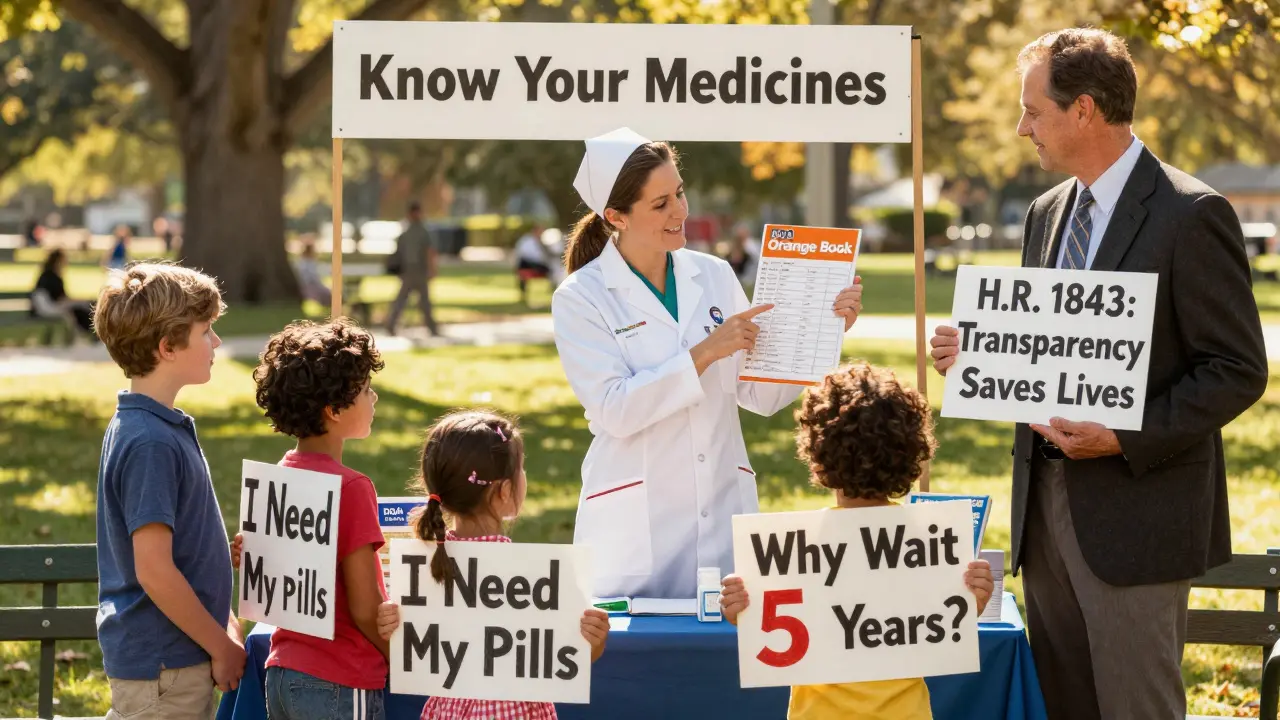
In September 2025, Rep. Neal Dunn and Rep. Kevin Mullin introduced H.R. 1843: the Increasing Transparency in Generic Drug Applications Act. It’s simple: force the FDA to give specific feedback on formulation issues for complex generics.The Congressional Budget Office estimates this one change could accelerate approval for 12-15 complex drugs each year. That’s $1.8-2.3 billion in extra annual savings. Over five years? $18-23 billion.
The bill has 72 co-sponsors-bipartisan support. It’s scheduled for committee markup in December 2025. Industry groups are pushing hard. Patient advocates are mobilizing.
The FDA is also preparing for GDUFA IV (2028-2032). They’re asking for a 3-5% annual fee increase to hire more reviewers. But they’re also warning: without more funding, the 35% improvement in first-cycle approval rates since 2013 could vanish.
What Can Be Done?
If you’re a patient: track approval status. Check the FDA’s Approved Drug Products with Therapeutic Equivalence Evaluations (Orange Book). If your drug isn’t there yet, ask your pharmacist when it’s expected.If you’re a manufacturer: use Type II meetings early. According to AAM, 78% of companies that did this cut review time by over 3 months. Don’t wait until you’re rejected.
If you’re a policymaker: support bills like H.R. 1843. The math is clear. More transparency = faster approvals = lower prices = better health outcomes.
The Bigger Picture
In 2024, the FDA approved 1,051 generic drugs-a record. But 287 applications were stuck due to patent fights, and 143 were delayed by manufacturing issues. That’s nearly 400 drugs that didn’t reach patients on time.Eighty-three percent of brand-name drugs still have no generic competition five years after patent expiry. That’s not because no one wants to make them. It’s because the system makes it too hard, too slow, and too expensive.
Generic drugs are the backbone of affordable healthcare. They’re not a luxury. They’re a necessity. But when the path to approval is blocked by opaque rules and underfunded review teams, patients pay the price-not the drug companies, not the FDA, but the people who need the medicine most.
The question isn’t whether we can afford to fix this. It’s whether we can afford not to.
How much does it cost to get a generic drug approved by the FDA?
The total cost to file a generic drug application (ANDA) with the FDA is roughly $375,000, including product fees ($136,485) and facility fees ($238,055). This doesn’t include development costs, which can add millions more, especially for complex drugs. Companies also face additional expenses if they receive a Complete Response Letter and need to resubmit.
Why are generic drug approvals taking so long?
Approval delays happen for two main reasons: lack of clear feedback from the FDA on complex formulations since 2015, and underfunded review teams. For simple generics, the average review time is 11.2 months. For complex ones-like nasal sprays or injectables-it can take 18-24 months or longer, especially if multiple reformulations are needed due to vague rejection letters.
Do generic drugs take longer to approve than brand-name drugs?
No, the process is faster for generics-but only if the drug is simple. Brand-name drugs (NDAs) cost over $3.6 million to approve and take 10-12 months on average. Generic applications (ANDAs) cost far less and are designed to be quicker. But for complex generics, approval delays can stretch beyond brand-name timelines because of opaque FDA feedback and repeated reformulations.
What’s the impact of delayed generic approvals on patients?
Delays mean patients pay higher prices for brand-name drugs longer. For example, it took 4.7 years to approve generic versions of testosterone therapy, during which patients paid 300% more. Many report skipping doses or choosing between medication and rent. In 2024, 83% of brand-name drugs still had no generic competition five years after patent expiration, largely due to approval bottlenecks.
Is there any legislation to fix FDA approval delays for generics?
Yes. H.R. 1843, the Increasing Transparency in Generic Drug Applications Act, introduced in September 2025, requires the FDA to provide specific feedback on formulation issues for complex generics. The Congressional Budget Office estimates it could accelerate approval for 12-15 complex drugs annually, saving $1.8-2.3 billion per year. The bill has bipartisan support and is scheduled for committee review in December 2025.


Joie Cregin
January 18, 2026 AT 10:57Wow. I just spent 20 minutes reading this and now I feel like I’ve been punched in the gut by bureaucracy. I’ve been on insulin for 8 years and still pay $400 a vial because the generic keeps getting stuck. My pharmacist says it’s not about science anymore-it’s about paperwork dragons. 🐉
Rob Deneke
January 19, 2026 AT 11:52the real crime is that we let this happen and then act shocked when people skip doses to afford rent
Chelsea Harton
January 21, 2026 AT 01:43they charge 375k just to ask nicely
Nick Cole
January 21, 2026 AT 18:03Stop pretending this is about safety. It’s about profit. The FDA has 300 reviewers for 1000+ applications. They’re drowning in red tape while patients drown in debt. This isn’t oversight-it’s obstruction.
Riya Katyal
January 22, 2026 AT 06:06so the FDA is basically a 1998 AOL dial-up modem trying to process Netflix requests
waneta rozwan
January 23, 2026 AT 00:33Let me be crystal clear-this isn’t a policy failure. This is a moral failure. We are literally letting people die because we’d rather fund a 300-page form than a single reviewer. Shame on every legislator who hasn’t signed H.R. 1843. You’re not just slow-you’re cruel.
Nicholas Gabriel
January 24, 2026 AT 18:58It’s important to note, however, that the FDA’s caution is not without precedent-recall the 2022 valsartan incident, which affected over 22 million people, and which, in turn, underscores the necessity of rigorous review processes-even if they’re painfully slow. That said, transparency, as proposed in H.R. 1843, could be the critical bridge between safety and accessibility.
Cheryl Griffith
January 25, 2026 AT 14:12I work in a rural pharmacy. We’ve had patients cry because they couldn’t afford their blood pressure med. One woman told me she’d been cutting her pills in half for six months. That’s not healthcare. That’s survival. And it’s not because they’re lazy-it’s because the system broke.
Jody Fahrenkrug
January 26, 2026 AT 13:39my cousin’s a pharmacist in Ohio. she says the worst part isn’t the cost-it’s the silence. No one tells you why the generic got rejected. Just ‘insufficient data.’ Like… what data? How much? What part? It’s like trying to fix a car with a manual written in invisible ink.
Kasey Summerer
January 28, 2026 AT 03:07US health care: where you pay $500 for a pill that costs $0.50 to make, and then get told to ‘be grateful you have access.’ 🤡
Ryan Hutchison
January 30, 2026 AT 00:33other countries do this better because they don’t have the same legal system. We’re too litigious. If we cut the red tape, we’d have generics in 3 months. But nope-lawyers and lobbyists won’t let us. America is the only country where you need a PhD to get a pill approved.
Melodie Lesesne
January 31, 2026 AT 11:44my mom’s on a generic for heart disease and the last time she filled it, the price jumped 40% because the manufacturer gave up after 3 rejections. she’s 72. she doesn’t have $1200 a month. i don’t know what to tell her anymore.
Corey Sawchuk
February 1, 2026 AT 23:17the fact that 83% of brand drugs still have no generic after 5 years says everything. it’s not innovation holding them back. it’s the system. and we’re the ones paying for it
evelyn wellding
February 2, 2026 AT 01:12if we fix this, we could save millions. seriously. think about it. 🙌