
Imagine handing your child a dose of cough syrup, only to realize later you gave them double the amount. It happens more often than you think. In fact, nearly half of caregivers admit to giving a dose that is off by at least 20% from what was prescribed. These liquid medication mistakes aren't just annoying; they can lead to hospital visits or worse. The good news? You can prevent most of these errors with simple tools and clear habits.
Why Liquid Meds Are Tricky
Liquid medications are different from pills. You can't just swallow one whole tablet; you have to measure out a specific volume. This introduces room for error at every step: prescribing, dispensing, and administering. According to the Institute for Safe Medication Practices (ISMP), wrong-dose errors are one of the top ten persistent hazards in healthcare. For children, the risk is even higher. A 2023 study in the Journal of Pediatrics found that about 80% of home medication errors involve liquids. Why? Because we often use kitchen spoons or cups that aren't designed for precise medical measurement. A teaspoon isn't always 5 milliliters, and a tablespoon varies by region and manufacturer. When precision matters, guesswork fails.
The Right Tools Matter Most
The single biggest change you can make is swapping out household items for proper medical devices. The American Academy of Pediatrics has recommended using metric-based measuring devices exclusively since 2015. Here’s why:
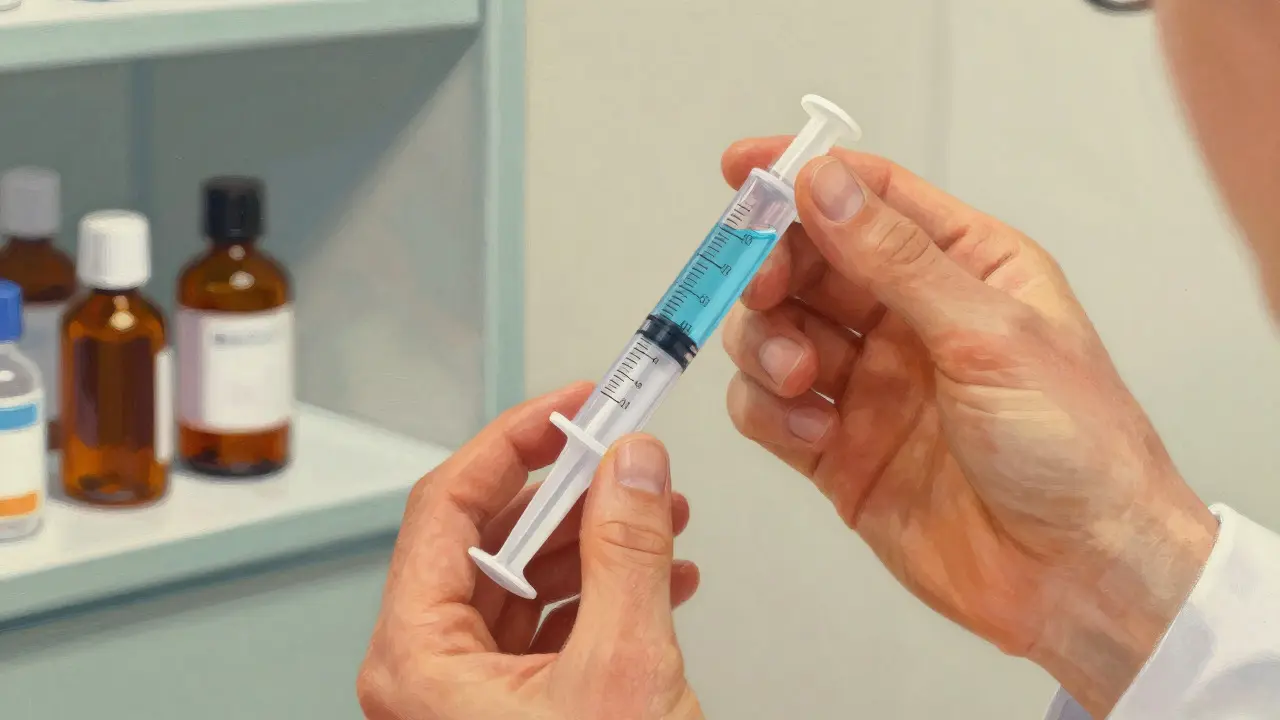
- Oral Syringes: These are the gold standard. They feature fine graduations (marks) that allow for accurate small doses. For doses under 1 mL, look for syringes marked in 0.1 mL increments. For doses between 1 and 5 mL, 0.5 mL increments work well. Studies show oral syringes are 37% more accurate than dosing cups.
- Dosing Cups: While better than spoons, they still fall short. A multi-site study found error rates of 41.1% for cups versus just 8.2% for syringes when measuring small amounts. If you must use a cup, ensure it has clear, bold markings and is specifically designed for medication, not food.
- Kitchen Spoons: Avoid these entirely. They are inconsistent and rarely calibrated for medicine. Using a spoon can easily lead to a 25-40% deviation in dosage.
| Tool | Average Accuracy for Small Doses | Error Rate | Best Use Case |
|---|---|---|---|
| Oral Syringe | 94% | 8.2% | All liquid medications, especially pediatric |
| Dosing Cup | 76% | 41.1% | Larger volumes only if syringe unavailable |
| Kitchen Spoon | 62% | High variability | Avoid for medication |
Standardizing Units: Stick to Milliliters
Another major source of confusion is mixing units. Prescriptions might say "5 mL" while the label says "1 teaspoon." This mismatch causes errors. The World Health Organization notes that eliminating non-metric units prevents about one-third of all wrong-dose errors. Always ask your pharmacist to prescribe in milliliters (mL). If you see teaspoons or tablespoons on a prescription, ask for clarification. In the UK and many other countries, metric units are standard, but older prescriptions or imported products might still use imperial measures. Consistency is key. Train yourself and your family to think in mL, not spoons.
Preventing Confusion at the Pharmacy
Errors don't just happen at home; they start in the pharmacy. Look-alike packaging can cause mix-ups. For example, two different brands of ibuprofen suspension might look almost identical. To combat this, pharmacies increasingly use amber-colored bottles with bold labels that say "FOR ORAL USE ONLY." This follows ANSI Z535.4-2011 safety standards and reduces look-alike errors by over 40%. When picking up meds, check the label carefully. Confirm the drug name, strength, and instructions. If you’re unsure, ask the pharmacist to demonstrate how to use the dosing device they provided. Many pharmacies now include an oral syringe with every liquid prescription, which is a great sign. If they don’t, ask for one. It costs less than a dollar and saves potential trouble.
Technology as a Safety Net
In hospitals and clinics, technology plays a huge role in preventing errors. Electronic Health Records (EHRs) with computerized physician order entry (CPOE) can flag doses that seem too high or low based on a patient's weight. This feature alone has been shown to reduce pediatric liquid medication errors by 58%. Barcode Medication Administration (BCMA) systems also help nurses verify the right patient, right drug, and right dose before giving the med. These systems cut errors by nearly half. While you might not have access to these tools at home, the principle applies: double-checking with a second source (like a calculator app or a pharmacist) adds a layer of safety. Some newer apps even use augmented reality to help verify doses, though these are still emerging.

Practical Steps for Home Caregivers
You don’t need high-tech equipment to be safe at home. Follow these simple steps every time you administer liquid medication:
- Wash Your Hands: Basic hygiene prevents contamination and helps you focus.
- Check the Label Twice: Read the drug name, dose, and frequency. Compare it with your prescription slip.
- Use the Provided Device: Always use the oral syringe or dosing cup given by the pharmacy. Don’t substitute with kitchenware.
- Measure Slowly: Pull the plunger slowly to avoid air bubbles. Check the level at eye level for accuracy.
- Administer Immediately: Some liquids separate if left standing. Mix gently if instructed, then give the full dose.
- Log It Down: Keep a simple log of when you gave the med. This helps track adherence and spot patterns if side effects occur.
What to Do If You Suspect an Error
If you think you’ve given the wrong dose, don’t panic. First, note the time and amount. Then, call your pharmacist or doctor. They can advise whether to wait for the next dose or seek immediate care. In many cases, a slightly high dose isn’t dangerous, but consistency matters. If the error was significant (over 20-30%), professional guidance is essential. Never try to "make up" for a missed or extra dose without advice, as this can lead to toxicity or treatment failure.
FAQ
Are kitchen spoons ever acceptable for measuring liquid medication?
Generally, no. Kitchen spoons vary in size and are not calibrated for medical precision. An "even" teaspoon can range from 4.5 to 6 mL depending on the brand and how it’s filled. For critical doses, always use an oral syringe or a dedicated dosing cup with metric markings.
What is the difference between a dosing cup and an oral syringe?
An oral syringe is a small, tube-like device with a plunger, ideal for small, precise doses (under 10 mL). A dosing cup is a small cup with markings around the side, better for larger volumes. Syringes are more accurate for small amounts, while cups are easier for bigger doses. Both should have clear metric (mL) markings.
Why do pharmacies sometimes not provide a measuring device?
Sometimes it’s due to cost constraints or oversight, though guidelines recommend providing one. If yours doesn’t come with a device, ask the pharmacist for an oral syringe. It’s a cheap investment that significantly improves safety. You can also buy them at most pharmacies or online.
How can I tell if my child is getting the right dose?
Trust the tool, not your eyes. Use the provided syringe or cup and read the marking at eye level. If the prescription says 5 mL, fill the syringe until the black line aligns exactly with the 5 mL mark. Double-check the label against the prescription. If in doubt, call the pharmacy to confirm.
Do electronic health records really prevent medication errors?
Yes. EHRs with clinical decision support can flag unusual doses based on patient weight and age. This automated check catches calculation errors before the prescription is finalized. Studies show this reduces pediatric liquid medication errors by nearly 60%, making it a vital tool in modern healthcare settings.
