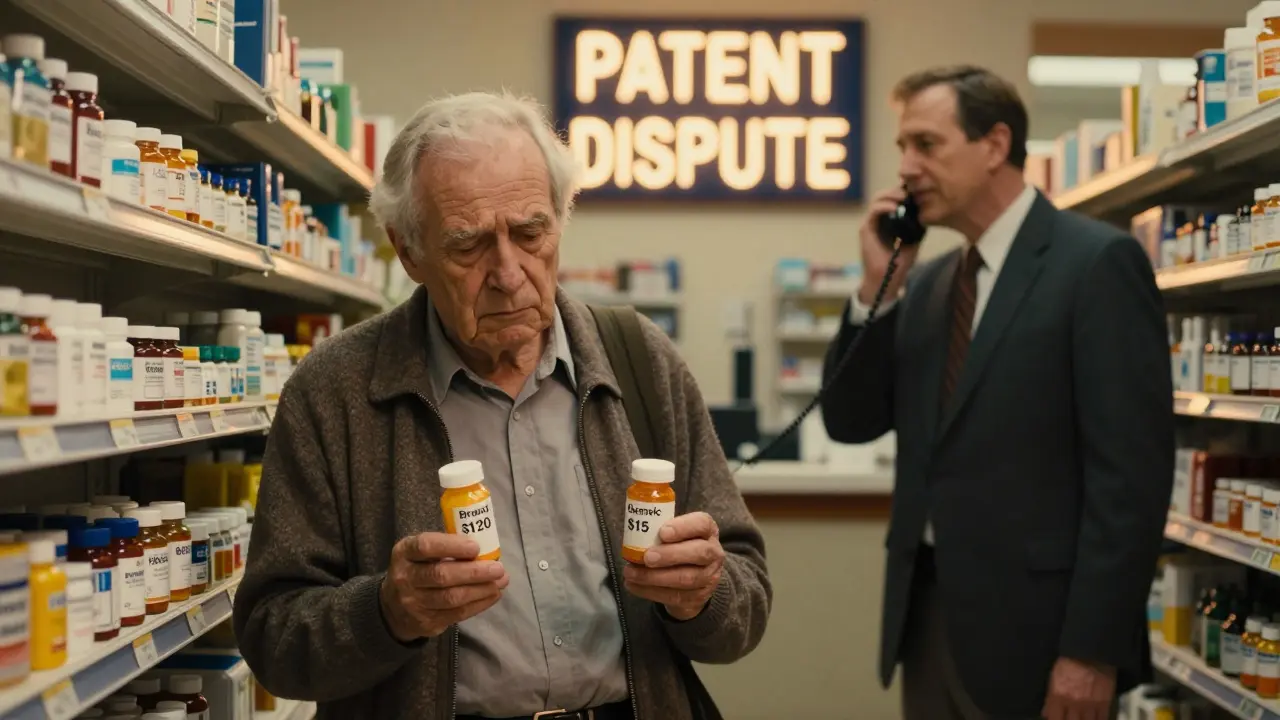
When a brand-name drug’s patent expires, you’d expect cheaper generic versions to hit the market quickly. But in reality, it often takes years longer - not because of science or manufacturing delays, but because of legal battles fought in courtrooms across the U.S. This isn’t just about big pharma vs. small generics. It’s about whether patients can get life-saving medications at prices they can afford. The system was meant to balance innovation and access. Instead, it’s become a tool to delay competition.
The Hatch-Waxman Act: A Promise Broken
In 1984, Congress passed the Drug Price Competition and Patent Term Restoration Act - better known as the Hatch-Waxman Act. The goal was simple: let generic drug makers bring affordable versions to market faster, while still giving innovators enough time to profit from their research. The key mechanism? The Paragraph IV certification. When a generic company files an Abbreviated New Drug Application (ANDA), it can certify that a brand-name drug’s patent is either invalid or won’t be infringed. That triggers a 30-month clock. During that time, the FDA can’t approve the generic - unless the court rules in the generic company’s favor. It sounds fair. But here’s the catch: brand-name companies don’t always play by the rules. They list patents in the FDA’s Orange Book - the official list of patents tied to branded drugs - that have nothing to do with the actual medicine. Think of patents on inhaler mouthpieces, packaging designs, or manufacturing equipment. These aren’t protecting the drug. They’re protecting market share.Serial Litigation: The Hidden Strategy
A 2025 report from the Association for Accessible Medicines (AAM) found ten cases where brand companies filed multiple lawsuits using patents they held back, one after another. This is called serial patent litigation. One drug saw generic entry delayed by nearly a decade after its original patent expired. The strategy? File a lawsuit, wait out the 30-month stay, then file another lawsuit with a different patent. Rinse and repeat. The courts are starting to push back. In early 2025, Judge Chesler in New Jersey ruled in Teva v. Amneal that six patents on a dose counter for the ProAir® HFA inhaler were improperly listed. Why? Because they didn’t claim the actual drug - albuterol sulfate. The judge wrote: "The drug for which Teva submitted its application was albuterol sulfate inhalation aerosol. The dose counter is not the drug." That ruling could invalidate 15-20% of currently listed Orange Book patents, according to Skadden’s analysis.Where the Lawsuits Happen: The Eastern District of Texas
You won’t find a single court handling most of these cases. The Eastern District of Texas now handles 38% of all pharmaceutical patent lawsuits - more than double the next busiest district. Why? Because it’s fast, predictable, and historically friendly to patent holders. After a brief dip following the 2017 TC Heartland decision, which tried to limit forum shopping, the Eastern District reclaimed its spot as the go-to venue for brand-name companies. It’s not just about location. It’s about strategy. Law firms like Fish & Richardson, Quinn Emanuel, and Jones Day saw their patent litigation revenue jump 35-40% in 2024. That’s not because they’re doing more good work. It’s because the system is rigged to keep lawsuits going.
Patent Settlements: Are They Helping or Hurting?
You’ve probably heard of "pay-for-delay" deals - where a brand company pays a generic maker to stay off the market. The FTC calls them anticompetitive. But here’s what you won’t hear from the FTC: in many cases, settlements actually speed up generic entry. A 2025 IQVIA Institute report found that when brand and generic companies settle, generics enter the market an average of five years before the patent expires. That’s not a delay. That’s acceleration. The problem isn’t settlement itself - it’s when settlements are used to block competition entirely, or when companies list patents they know are weak just to force a payout. The FTC disagrees. In 2024, they challenged over 300 improper Orange Book listings. In May 2025, they sent warning letters to 200 more patents across 17 drugs. The targets? Big names like Teva and Amgen. Their argument: if you can list every possible patent - even ones that don’t protect the drug - you can keep generics out indefinitely.The Numbers Don’t Lie
The financial cost is staggering. The FTC estimates improper patent listings delay generic competition for about 1,000 drugs every year. That costs the U.S. healthcare system $13.9 billion annually. Look at specific drugs:- Eliquis (apixaban): 67 patents protecting one pill.
- Ozempic, Wegovy, Rybelsus (semaglutide): 152 patents across three versions of the same drug.
- Oncology drugs: On average, 237 patents per drug. Some have over 400.
What’s Changing? The New Front Lines
There are signs the system is cracking under its own weight. The FDA is proposing new rules requiring brand companies to certify under penalty of perjury that every patent listed in the Orange Book meets legal standards. That change is expected in Q2 2026. If enforced, it could wipe out thousands of invalid listings overnight. Generic companies are also turning to the Patent Trial and Appeal Board (PTAB). Instead of fighting in court, they’re asking the USPTO to review and cancel weak patents. IPR filings against pharma patents jumped 47% from 2023 to 2024. But the Supreme Court’s April 2025 ruling in Smith & Nephew v. Arthrex made it harder for generic companies to file these challenges unless they’re directly affected - a blow to many small manufacturers. Meanwhile, the FTC and DOJ held joint listening sessions in March 2025, where 12 generic companies testified about how device patents, packaging patents, and manufacturing patents were being used to block competition. One company said they spent $12 million in legal fees just to get one generic drug approved - after the original patent expired seven years earlier.Who’s Really Losing?
It’s not the lawyers. It’s not even the big drug companies. It’s the patient. A diabetic waiting for a generic version of insulin. A cancer patient needing a cheaper version of a targeted therapy. A senior on fixed income trying to afford their heart medication. These people don’t care about patent law. They care about whether they can afford their pills. The Hatch-Waxman Act was supposed to fix this. Instead, it became a loophole. The system rewards complexity. It punishes speed. And it lets companies game the rules to keep prices high - even after their patents should have expired. The solution isn’t to eliminate patent protection. It’s to stop letting companies abuse it. Clearer rules. Stricter enforcement. Fewer patents on packaging. Faster court decisions. And real consequences for listing patents that don’t belong in the Orange Book. The next time you hear about a "patent dispute" in the news, ask yourself: Is this about innovation? Or is it about keeping prices high?What is the Hatch-Waxman Act and how does it relate to generic drug litigation?
The Hatch-Waxman Act of 1984 created a legal pathway for generic drug companies to bring cheaper versions to market by allowing them to file Abbreviated New Drug Applications (ANDAs). A key part is the Paragraph IV certification, where a generic company claims a brand’s patent is invalid or won’t be infringed. This triggers a 30-month stay on FDA approval, giving the brand company time to sue. The law was meant to balance innovation and access, but now it’s often used to delay generic entry through strategic litigation.
What is the Orange Book and why does it matter?
The Orange Book is the FDA’s official list of patents linked to brand-name drugs. Only patents covering the active ingredient, formulation, method of use, or manufacturing process can legally be listed. But many companies list patents on delivery devices, packaging, or software - things that don’t protect the actual medicine. These improper listings trigger lawsuits and delay generic approval. Courts are now starting to strike down these listings, as seen in the 2025 Teva v. Amneal case.
What are "pay-for-delay" settlements in generic drug litigation?
Pay-for-delay settlements occur when a brand-name drug company pays a generic manufacturer to delay launching its cheaper version. The FTC considers these anticompetitive. But not all settlements are like this. A 2025 IQVIA report found that most settlements actually speed up generic entry by over five years before patent expiration. The real problem is when companies use weak or irrelevant patents to force settlements - not the settlements themselves.
Why is the Eastern District of Texas the most popular court for patent lawsuits?
The Eastern District of Texas has become the go-to venue for brand-name drug companies because it’s known for fast trial dates, experienced judges familiar with patent law, and historically favorable rulings for patent holders. After a brief decline following the 2017 TC Heartland decision, it regained its top spot in 2024, handling 38% of all pharmaceutical patent cases - more than double the next busiest district.
How do patents on delivery devices delay generic drugs?
Brand companies sometimes patent parts of the delivery system - like inhaler dose counters, auto-injector mechanisms, or special packaging - and list them in the Orange Book. Even though these don’t protect the active ingredient, they still trigger a 30-month stay on FDA approval. Courts are now ruling these are invalid. In the 2025 Teva v. Amneal case, Judge Chesler ruled that a dose counter patent couldn’t be listed because it wasn’t part of the drug itself. This could invalidate thousands of similar patents.
What’s the impact of having too many patents on one drug?
Some drugs have hundreds of patents - like semaglutide (Ozempic/Wegovy) with 152, or Eliquis with 67. This creates "patent thickets," where generic companies must fight dozens of legal battles just to enter the market. The average number of patents per drug has risen from 37 for small molecules in 2015 to 78 for biologics today. This delays generic entry, inflates prices, and costs the healthcare system billions each year.

Kathryn Weymouth
December 22, 2025 AT 07:33The Hatch-Waxman Act was supposed to be a win-win, but now it’s just a loophole for pharma to game the system. I’ve seen friends skip doses because they can’t afford brand-name insulin-this isn’t abstract. It’s life or death. And the fact that companies are patenting inhaler mouthpieces? That’s not innovation. That’s extortion dressed up as IP law.
Art Van Gelder
December 23, 2025 AT 08:35Let me tell you something-this whole system is a Rube Goldberg machine built by lawyers for lawyers. You’ve got Big Pharma filing patents on the color of the pill bottle, then dragging generics through court for three years just to delay entry. And guess who pays? The elderly on fixed incomes. The single moms juggling three jobs. The veterans trying to afford their PTSD meds. Meanwhile, the law firms? They’re booking vacations in the Hamptons. Fish & Richardson didn’t get rich because they’re brilliant-they got rich because the rules are rigged. And the Eastern District of Texas? It’s not a court. It’s a patent casino where the house always wins. The FDA’s new perjury rule might be the only thing that can break this cycle. But I doubt it’ll stick. Why? Because power doesn’t give up without a fight. And right now, power wears a suit and carries a briefcase full of patents.
Vikrant Sura
December 23, 2025 AT 19:49eh whatever. patents are patents. if you wanna make generics, figure it out. stop crying.
Candy Cotton
December 24, 2025 AT 20:52It is imperative to note that the United States maintains the most robust intellectual property regime in the history of civilization. To suggest that patent litigation constitutes an abuse is not merely misguided-it is a direct affront to American ingenuity and the constitutional mandate to promote progress in science and useful arts. The notion that pharmaceutical innovation should be sacrificed for cost-efficiency is a Marxist fantasy masquerading as public policy. The FDA’s proposed perjury requirement is an overreach that will chill investment and ultimately harm patients by reducing R&D. Let the market decide-not bureaucrats.
Jeremy Hendriks
December 26, 2025 AT 07:55What if the real problem isn’t patents-it’s the myth of scarcity? We’re told that drugs cost so much because of R&D, but the truth is, once a molecule is known, the marginal cost of production is pennies. The patent system doesn’t protect innovation-it protects monopoly. And monopolies don’t need to be smart. They just need to be loud. And rich. And legally armed. We’ve turned healthcare into a legal battlefield because we’ve convinced ourselves that profit is the only measure of value. But what if value isn’t measured in dollars-but in lives? What if the real crime isn’t breaking a patent-but failing to protect a person?
Ajay Brahmandam
December 26, 2025 AT 15:13Man, this is wild. I work in pharma logistics in India and we see this stuff firsthand. Some of these patents on packaging? Totally useless. One guy told me his company spent 2 years fighting a patent on a blister pack design just to get a blood pressure med approved. Meanwhile, people in rural areas are cutting pills in half. No one wins except the lawyers. PTAB is the real hero here-hope the rules don’t get tightened further.
jenny guachamboza
December 27, 2025 AT 10:51okay but what if the whole thing is a deep state plot? 🤔 I heard the FDA is controlled by shadow pharma bots and the Eastern District of Texas is a front for the Illuminati. Also, why does Ozempic have 152 patents? That’s not science-that’s a cult. 🤯💉 #PatentConspiracy #GenericLiberation
Aliyu Sani
December 28, 2025 AT 18:35Look, this isn’t just about patents-it’s about epistemic violence. The Western legal apparatus has weaponized IP to restructure global health equity. When a Nigerian patient can’t access a generic version of a drug because a Delaware court upholds a patent on a plastic cap, that’s colonialism with a briefcase. The PTAB is a band-aid. What we need is a decolonial framework for pharmaceutical access. Not more litigation. Not more loopholes. But redistribution. And yes, I’m talking about compulsory licensing. It’s not radical. It’s reparative.