
When your doctor prescribes a generic medication and the pharmacy says it’s not covered, it’s not a mistake. It’s a non-formulary generic-a drug that’s cheap, effective, and FDA-approved, but your insurance plan doesn’t list it. And that means you’re stuck paying full price, skipping doses, or fighting to get it covered. This isn’t rare. In 2022, over 12% of all generic prescriptions were blocked by formulary restrictions. For people managing chronic conditions like diabetes, Crohn’s disease, or high blood pressure, this isn’t just inconvenient-it’s dangerous.
Why does this happen?
Insurance companies create formularies to control costs. They pick a few generic versions of each drug-usually the ones with the deepest discounts from manufacturers-and cover those. Even if your doctor prescribes a different generic version that works better for you, it might not be on the list. That’s not because it’s less safe. It’s because the plan’s pharmacy benefit manager (PBM) negotiated a deal with one brand, not another. The result? You get denied. The pharmacy tells you the drug isn’t covered. You call your insurer. They say, "We don’t include this generic." You go back to your doctor. And now you’re stuck in a loop of paperwork, delays, and out-of-pocket costs that can hit $400 a month-while the same drug costs $15 if it were covered.What you can do: the exceptions process
Federal law requires every Medicare Part D and most commercial plans to have a formal way to appeal these denials. It’s called a coverage determination request or formulary exception. This isn’t a suggestion. It’s your legal right. Here’s how it works, step by step:- Get the denial in writing. The pharmacy must give you a written notice explaining why the drug isn’t covered. Don’t take a verbal answer. Request the formal denial letter.
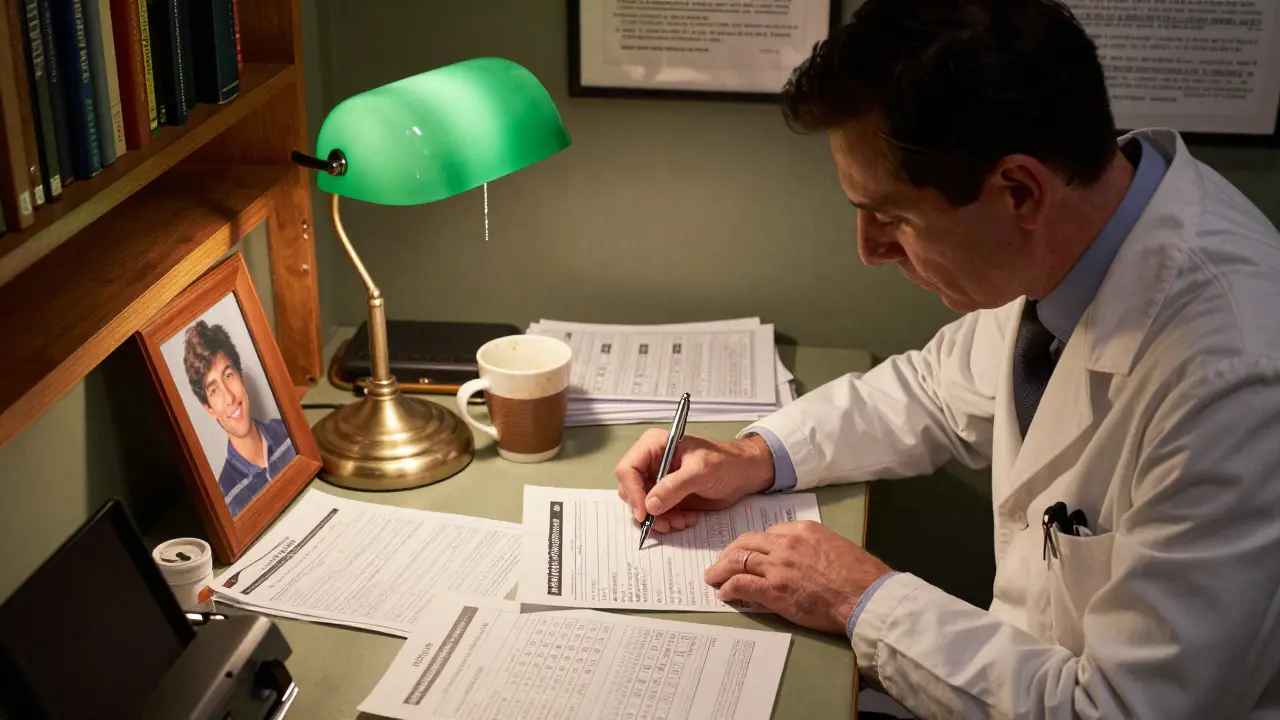
- Ask your doctor to file an exception. Your doctor needs to complete a form-usually provided by your insurer-explaining why the non-formulary generic is medically necessary. They must say why other covered alternatives won’t work. For example: "Patient had severe nausea and diarrhea on Formulary Drug A. Switched to non-formulary generic B in 2022. Hemoglobin A1c dropped from 9.2 to 6.8. No adverse effects. Alternatives failed twice."
- Submit the request. Your doctor’s office can submit it online, by fax, or by mail. Keep a copy. Track the date.
- Wait 72 hours. For non-urgent cases, the plan has 72 business hours to respond. If your condition is urgent-like a flare-up of Crohn’s disease or uncontrolled seizures-they must respond in 24 hours.
- If denied, appeal. You have 60 days to file an internal appeal. If that fails, you can request an independent external review. About 58% of initial denials are overturned on appeal.
What your doctor needs to include
Not all requests get approved. The difference between approval and denial often comes down to one thing: specificity. According to the Crohn’s & Colitis Foundation, the most successful requests include:- Exact dates of previous failed medications
- Lab results showing improvement on the non-formulary drug (e.g., fecal calprotectin, HbA1c, cholesterol levels)
- Documented side effects from formulary alternatives
- Proof you’ve tried at least two covered options already
What if you can’t wait 72 hours?
If you’re running out of medication and can’t afford to pay out of pocket, you’re not out of options. Federal rules require insurers to provide a 72-hour emergency supply while your exception is being reviewed. But here’s the catch: 37% of plans ignore this rule. If you’re denied emergency access, call your insurer’s member services immediately. Ask for a supervisor. Say: "I’m entitled to a 72-hour emergency supply under CMS guidelines. I need it now to avoid medical harm." Keep calling until you get it. Document every call-name, time, date.Costs matter-even after approval
Even if your exception is approved, you’re not in the clear. Here’s the hidden trap: if your drug is approved as a non-formulary exception, you cannot request a lower cost-sharing tier. That means you might still pay 3.7 times more than if it were on the formulary. For example: a 90-day supply of generic metformin ER costs $15 if covered. But if approved as an exception, you might pay $417. That’s what one patient in New Jersey paid before winning her appeal. The American Medical Association warns that many doctors don’t realize they can request a separate tiering exception after a formulary exception is granted. It’s a second step. Ask your doctor: "Can we also request that this drug be placed on Tier 2 or Tier 3, even though it’s non-formulary?" It’s not guaranteed, but it’s worth asking.What’s changing in 2025?
The system is slowly improving. In October 2023, CMS rolled out standardized clinical criteria for common conditions like diabetes, IBD, and hypertension. This means doctors now have clearer guidelines for what evidence to include. Starting in 2024, Medicare Part D must automatically approve exceptions for insulin and naloxone-two life-saving generics that were too often blocked. By 2025, CMS plans to integrate the exception process directly into electronic health records. That could cut processing time by 40%. But until then, you’re still stuck navigating a broken system.
Real stories, real costs
On Reddit, a user named PharmTechSarah spent four months and four submissions to get her generic mesalamine approved. Each time, her doctor added more lab data. The fifth submission? Approved. Another patient, DiabetesWarrior, paid $417 out of pocket for one month of generic metformin before submitting her A1c results showing a 2.4-point drop on the non-formulary version. The appeal took 17 days. She got approved. But she never got reimbursed. A 2023 GoodRx survey found that 63% of people who appealed won. But only 29% knew they could ask for an expedited review. Most waited the full 72 hours-and went without medication.What to do now
If you’ve been denied coverage for a generic drug:- Don’t stop taking it unless your doctor says so.
- Get the denial letter in writing.
- Call your doctor’s office and ask them to file a formulary exception today.
- Ask them to include specific clinical data-lab results, dates, side effects.
- If you’re running low on meds, demand your 72-hour emergency supply.
- Keep records of every call, email, and form.
- If denied, file an appeal within 60 days.
Don’t give up
This system was built to protect insurers, not patients. But the rules are on your side. The approval rate for properly documented requests is 74%. That’s not luck. That’s data. You’re not asking for a luxury. You’re asking for the same generic drug your doctor knows works. And you have the right to get it.What is a non-formulary generic?
A non-formulary generic is a generic medication that your insurance plan doesn’t list on its approved drug list (formulary). Even though it’s the same active ingredient as a covered version, the plan doesn’t pay for it unless you get an exception approved.
Can I still get my non-formulary generic if it’s denied?
Yes. Federal law requires your insurance plan to have a formal appeals process called a formulary exception. If your doctor provides strong clinical evidence-like lab results or failed alternatives-the request is often approved. About 58% of initial denials are overturned on appeal.
How long does the exception process take?
For non-urgent cases, the plan has 72 business hours to respond. If your condition is urgent-like a flare-up of Crohn’s, uncontrolled seizures, or insulin dependence-they must respond in 24 hours. You can also request an emergency 72-hour supply while waiting.
Why do doctors sometimes refuse to file exceptions?
Many doctors are overwhelmed. The AMA found physicians spend nearly 14 hours a week just handling prior authorizations and exceptions. Some don’t know how to complete the forms correctly, or they assume the request won’t be approved. Always ask your doctor to try-and offer to help them gather the needed data.
Will my cost be lower if the exception is approved?
Not necessarily. Even if your drug is approved as a non-formulary exception, you can’t request a lower cost-sharing tier. You might still pay 3 to 4 times more than if it were on the formulary. Ask your doctor to also file a separate tiering exception to reduce your out-of-pocket cost.
Are there any drugs that are automatically covered now?
Yes. Starting in 2024, Medicare Part D plans must automatically approve exceptions for insulin and naloxone. These were previously blocked even when medically necessary. Other drugs may follow as CMS updates its standardized clinical criteria.
What if my appeal is denied?
You can request an independent external review. This is a third-party reviewer who doesn’t work for your insurance plan. You have 60 days to file after your internal appeal is denied. The review usually takes 14-21 days. If approved, your plan must cover the drug.
Can I switch to a different insurance plan to avoid this?
Only during open enrollment (November-December) or if you qualify for a special enrollment period. Before switching, check the new plan’s formulary. Many plans have similar restrictions. The best move is to fight the denial under your current plan-it’s faster and legally protected.

Jessica Salgado
December 16, 2025 AT 06:42I had to fight for my mesalamine for six months. Six. Every time I thought it was over, they’d come back with some new excuse. I kept adding lab results, doctor notes, even a letter from my GI specialist. Finally, on the seventh try, they approved it. I cried in the pharmacy parking lot. This isn’t just bureaucracy-it’s emotional labor disguised as healthcare.
Linda Caldwell
December 17, 2025 AT 05:33Just do it. File the exception. Your doctor’s too busy to care but you’re the one paying $400 a month. Don’t wait. Start today. You got this.
Anna Giakoumakatou
December 17, 2025 AT 22:49Oh sweet summer child. You think this is about health? No. It’s about PBMs getting kickbacks from the one generic brand they’ve bought. The rest of us are just collateral damage in a corporate game of monopoly where the board is made of our insulin vials and blood pressure pills. Bravo, capitalism. You win again.
CAROL MUTISO
December 19, 2025 AT 20:39Let me tell you something nobody else will: the real tragedy isn’t the denial-it’s the silence. The patients who never speak up because they’re tired, scared, or just don’t know where to start. I’ve helped over a dozen people navigate these appeals. It’s not magic. It’s paperwork with purpose. Write down every side effect. Track every A1c. Send the damn lab results. And if your doctor shrugs? Ask for their supervisor. Or better yet-ask them to sign the form with a pen made of fire. Because this system is broken, but you? You’re not.
Erik J
December 21, 2025 AT 08:31Did anyone check if the non-formulary generic is actually bioequivalent? I’ve seen cases where the filler ingredients differ and cause reactions. Not saying it’s always true-but it’s worth verifying before filing an appeal. Just a thought.
BETH VON KAUFFMANN
December 21, 2025 AT 09:18Let’s be real-this is just prior auth 2.0. The system’s designed to extract maximum administrative overhead from clinicians while minimizing patient outcomes. The 74% approval rate? That’s only for those who survive the gauntlet. Most people give up after the first ‘denied.’ And the insurers know it. That’s the whole business model.
Martin Spedding
December 21, 2025 AT 11:02lol at the 72hr emergency supply rule. My mom got denied insulin for 3 weeks. Called 17 times. They said ‘we’ll review.’ She ended up in the ER. Now she’s on a different plan. Never again. Also typo: ‘formulary’ is spelled wrong 3x in this post. Just sayin’.
Raven C
December 23, 2025 AT 09:00While I appreciate the sentiment, I must emphasize that the emotional rhetoric employed herein-however well-intentioned-obscures the fundamental economic realities of pharmaceutical pricing structures. The notion that ‘you have the right to get it’ is legally accurate, yet ethically naive, as it presumes a healthcare system operating under principles of equity rather than actuarial risk management. One must, therefore, temper hope with institutional realism.