
When a child breaks out in hives after eating peanut butter, or an adult gets stomach cramps after drinking milk, the obvious question isn't just what caused it-it's is it really an allergy? Many people assume that a positive skin test or high IgE blood level means they’re allergic. But that’s often not true. Up to 80% of positive test results for common foods like eggs or milk turn out to be false alarms. That’s why doctors don’t rely on tests alone. They turn to the one test that gives a clear, real-world answer: the oral food challenge.
Why Oral Food Challenges Are the Gold Standard
Oral food challenges (OFC) are the most accurate way to confirm or rule out a food allergy. No blood test, no skin prick can match it. The reason is simple: OFC doesn’t measure antibodies-it measures what your body actually does when you eat the food. If you react, you’re allergic. If you don’t, you’re not. That’s it. The American Academy of Allergy, Asthma & Immunology (AAAAI), the European Academy of Allergy and Clinical Immunology (EAACI), and the Italian Society of Pediatric Allergy and Immunology (SIAIP) all agree: OFC is the gold standard. Why? Because clinical history and lab tests together get it wrong nearly half the time. A 2019 NIH review found diagnostic accuracy below 50% without an OFC. That means thousands of people avoid foods they don’t actually need to-missing out on nutrition, social events, and peace of mind. OFCs aren’t just for diagnosing new allergies. They’re also used to check if someone has outgrown one. About 65% of children with milk or egg allergies outgrow them by age 5. Without an OFC, parents are left guessing. Is the reaction gone, or just quieter? Only eating the food in a controlled setting gives a real answer.How an Oral Food Challenge Works
An OFC isn’t a quick snack test. It’s a carefully controlled medical procedure that takes 3 to 6 hours. It starts with a tiny amount-often just 1 to 2 milligrams of the allergen. That’s less than a single grain of rice for peanut. The dose is slowly increased every 15 to 30 minutes, under constant watch. A doctor and nurse are there the whole time. Emergency gear-epinephrine, antihistamines, oxygen-is ready in case of a reaction. There are three types of OFCs:- Open challenge: You and the doctor both know what you’re eating. This is the most common-used in about 90% of cases.
- Single-blind: Only the doctor knows what’s being given. Used when anxiety might affect symptoms.
- Double-blind placebo-controlled: Neither you nor the doctor knows if it’s the real food or a placebo. This is the most accurate but rarely used outside research because it’s complicated and expensive.
Is It Safe?
The biggest fear around OFCs is that they’ll cause a severe reaction. That’s understandable. But the truth is, serious reactions are rare. About 40% to 60% of challenges result in mild symptoms-mostly hives or flushing. Only 1% to 2% require epinephrine. In over 20 years of widespread use, death from an OFC has never been reported in the U.S. when done under proper supervision. A 2020 study in the Journal of Allergy and Clinical Immunology found that only 0.9% of OFCs needed emergency treatment. That’s lower than the risk of a reaction from accidentally eating the food outside a hospital. The key is doing it right: in a clinic with trained staff, proper equipment, and clear protocols. Doctors won’t do an OFC if you’ve had a recent severe reaction to the food. That’s not the time to test. You need to be stable, healthy, and not sick with a cold or flu. Respiratory infections can make reactions worse.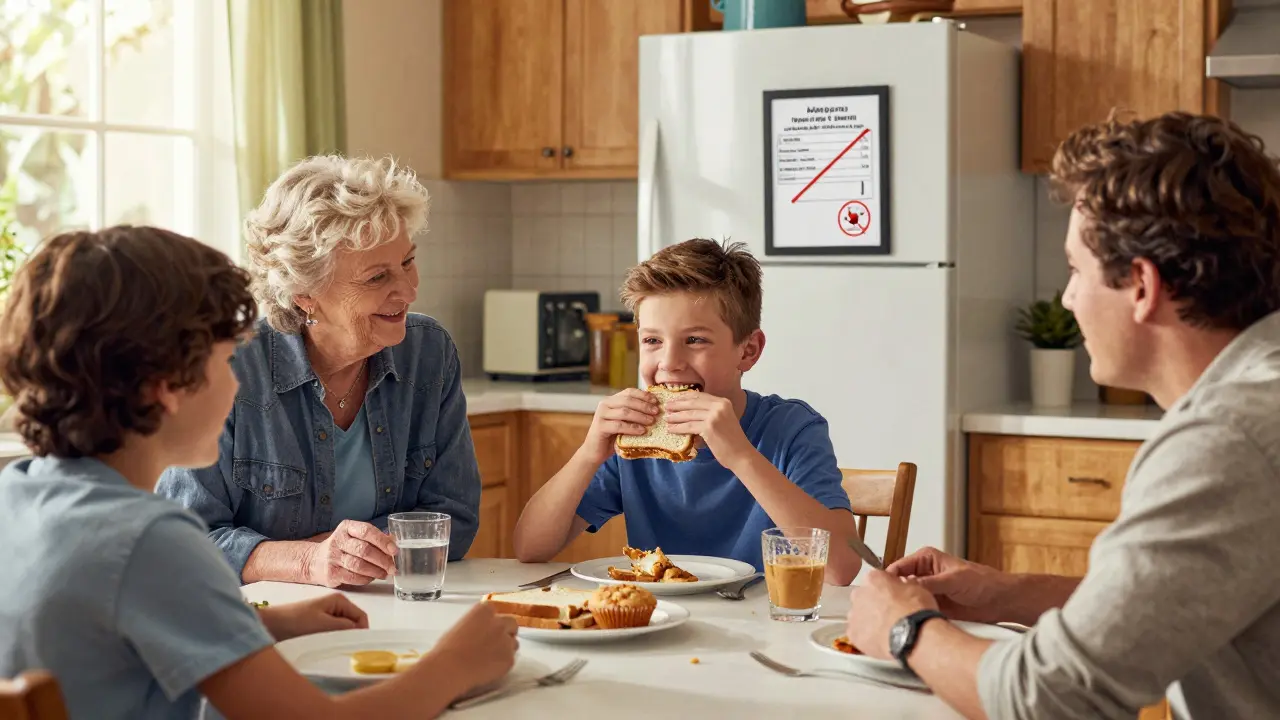
What You Need to Do Before the Challenge
Preparing for an OFC is just as important as the test itself. Here’s what patients and caregivers need to know:- Stop antihistamines 5 to 7 days before. These drugs can hide symptoms and make the test useless.
- Don’t eat anything unusual the day before. Stick to your normal diet to avoid confusing symptoms.
- Be well-rested and in good health. No fever, cough, or asthma flare-up.
- Bring distractions-books, tablets, games. The challenge takes hours. Kids (and adults) get bored. Comfortable clothes help too.
- Ask questions beforehand. Know what the food will look like, how much you’ll eat, and what happens if you react.
What OFCs Can’t Do
OFCs are powerful, but they’re not perfect. They’re not a screening tool. You don’t walk into a clinic and say, “Let’s test for everything.” That would be dangerous and unnecessary. They’re used only when there’s a reason to suspect an allergy-like a past reaction or unclear test results. They also can’t predict how much of a food you can tolerate. Some people react to a crumb. Others can eat a whole serving. OFCs can help find that threshold, but it’s not always the goal. Often, the question is just: “Can I eat this at all?” And while newer tests like component-resolved diagnostics (CRD) can identify specific proteins in foods, they still can’t replace OFC. CRD is about 85% accurate. OFC is close to 100%. No blood test, no AI algorithm, no biomarker has come close yet.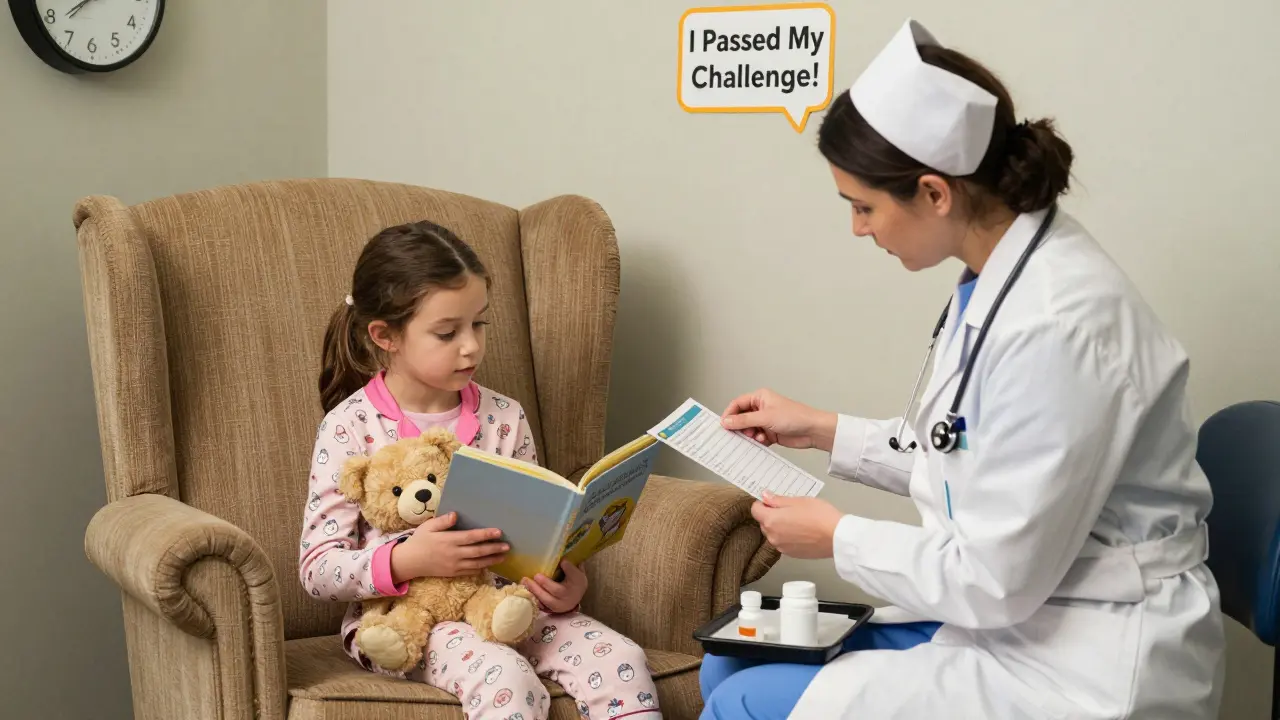
Who Performs OFCs and Where?
OFCs are done by board-certified allergists in specialized clinics. You won’t find them in a general practitioner’s office or a walk-in clinic. The procedure requires specific training. The AAAAI recommends that doctors perform at least 10 supervised challenges before doing them alone. Major hospitals like Cleveland Clinic, Mayo Clinic, and Children’s Hospital of Philadelphia do 500 to 1,000 OFCs per year. Private allergists typically do 50 to 200. That’s because each one takes hours, requires staff, and uses resources. It’s not a quick lab test-it’s a full medical event. In 2023, the AAAAI updated its guidelines to allow home-based OFCs for low-risk cases-like children with mild egg allergies who are likely to outgrow them. This is a big step. It could make OFCs more accessible and less stressful. But it’s only for carefully selected patients, with strict protocols and emergency plans in place.The Bigger Picture: Why This Matters
Food allergies affect 32 million Americans. That’s one in ten kids and one in thirteen adults. And the numbers are rising. Between 1997 and 2011, food allergies in children jumped 50%. But many people are avoiding foods they don’t need to. That leads to nutritional gaps, anxiety, social isolation, and unnecessary expense. Dr. Matthew Greenhawt, a leading allergist, says OFCs prevent unnecessary dietary restrictions in 25% to 30% of cases. That’s huge. Imagine being told you’re allergic to milk your whole life-only to find out you can drink it safely. That changes everything. OFCs aren’t just about safety. They’re about freedom. Freedom from fear. Freedom to eat at restaurants. Freedom to go to birthday parties. Freedom to live without constant worry. And while researchers are looking for better biomarkers, experts agree: for now, and for the foreseeable future, the oral food challenge remains the only test that gives a real, reliable answer. As Dr. Kari Nadeau of Stanford says, “OFC will remain the gold standard.”What Comes After the Challenge?
If the OFC is negative-you’re not allergic-you’ll get a written plan. It might say: “You may now include peanut in your diet regularly. Start with 1 teaspoon of peanut butter twice a week.” You’ll be advised to keep an epinephrine auto-injector on hand, just in case. Why? Because even if you’ve tolerated it once, your body can change. If it’s positive-you had a reaction-you’ll get a clear diagnosis. You’ll learn what to avoid, how to read labels, and how to respond to accidental exposure. You’ll also get a personalized emergency action plan. Either way, you leave with certainty. No more guesswork. No more anxiety about every meal. Just facts.Are oral food challenges painful?
No, oral food challenges are not painful. The food is swallowed like normal. The only discomfort comes from anxiety or mild symptoms like itching or stomach upset if a reaction occurs. The procedure itself doesn’t involve needles or invasive steps.
Can adults have oral food challenges too?
Yes, adults can and do have oral food challenges. While food allergies are often diagnosed in childhood, many adults develop new allergies or suspect they’ve outgrown one. OFCs are equally effective for adults and are commonly used to confirm or rule out allergies to shellfish, tree nuts, or sesame.
How long does it take to get results from an oral food challenge?
You get results during the challenge. If you react, the doctor knows right away. If you finish the full dose without symptoms, you’re declared tolerant by the end of the 3- to 6-hour process. There’s no waiting for lab results.
What if I have a reaction during the challenge?
If a reaction occurs, the challenge is stopped immediately. Medical staff treat it on the spot with antihistamines, steroids, or epinephrine if needed. Most reactions are mild and resolve quickly. You’ll be monitored for at least two hours after the reaction stops to make sure it doesn’t come back.
Can I do an oral food challenge at home?
Home-based oral food challenges are now possible for low-risk cases, like children with mild egg or milk allergies who are likely to outgrow them. But only under strict supervision by an allergist. You must have a written plan, emergency medication, and a way to reach medical help immediately. It’s not for everyone-only for carefully selected patients.
Do I need to stop my other allergy medications before an OFC?
Yes. Antihistamines (like Benadryl or Zyrtec) must be stopped 5 to 7 days before the challenge because they can mask early signs of a reaction. Other medications like asthma inhalers or acid reflux drugs are usually okay, but always check with your allergist.

Ambrose Curtis
January 27, 2026 AT 17:35Man, I had no idea up to 80% of those positive allergy tests are fake. My kid got flagged for milk last year and we’ve been avoiding dairy like it’s poison. Turns out we were just scared of ghosts. We did the OFC last month-no reaction. Now she drinks milk like it’s water. Best decision ever.
Irebami Soyinka
January 29, 2026 AT 12:26Y’all in the West be scared of everything. In Nigeria, we just eat the food and if we die, we die. 😅 But seriously-this is why I love real medicine. No guesswork. No fearmongering. Just facts and a doctor watching you eat peanut butter like it’s a snack. Respect.
Brittany Fiddes
January 29, 2026 AT 14:50Oh please. Another ‘science is perfect’ manifesto from the allergy industrial complex. You know what’s more accurate? Listening to your body. I’ve had hives since I was 3 after eating shellfish. Do I need a lab to tell me I’m allergic? No. I need a therapist to help me unlearn the trauma of being forced to eat crab at my cousin’s wedding. 😌
Linda O'neil
January 30, 2026 AT 02:32This is life-changing info. If you’re sitting there avoiding foods because of a blood test that’s 80% wrong-you’re not being careful, you’re being misled. Talk to your allergist. Push for an OFC. It’s not scary, it’s liberating. I used to cry before birthday parties. Now I eat cake like a normal human. Thank you for this post.
Robert Cardoso
January 31, 2026 AT 09:30Let’s be real-the only reason OFCs are ‘gold standard’ is because pharma doesn’t make money off them. Blood tests? Skin pricks? Those are billable. A 6-hour supervised snack? No CPT code. No profit. So of course they keep pushing the expensive, inaccurate tests. It’s capitalism disguised as medicine.
Phil Davis
February 2, 2026 AT 00:38So… you’re telling me the only way to know if I’m allergic is to eat the thing I’m terrified of… while a doctor watches? With epinephrine on standby? Sounds like a reality show. ‘Survivor: Allergy Edition.’ Winner gets to eat pizza again. 🏆
Amber Daugs
February 3, 2026 AT 05:05People need to stop being so reckless. If your kid has a history of reactions, why would you ever risk an oral challenge? You’re not just playing with their health-you’re playing with their life. This isn’t a game. It’s not ‘maybe they outgrew it.’ It’s ‘maybe they die.’
Chris Urdilas
February 5, 2026 AT 03:36Wait-so you’re telling me the most accurate test is also the most inconvenient, expensive, and time-consuming? And we still do 500+ of these a year at big hospitals? That’s wild. We need to make this more accessible. Home-based OFCs for low-risk cases? That’s the future. Let’s stop treating food allergies like they’re nuclear codes.
jonathan soba
February 6, 2026 AT 02:29Interesting how the article cites AAAAI, EAACI, and SIAIP as if they’re infallible. But what about the 2021 meta-analysis from the University of Oslo that showed significant inter-rater variability in OFC interpretation? And the fact that placebo responses in double-blind trials can reach 12%? This isn’t as clean as they make it sound.
SRI GUNTORO
February 7, 2026 AT 08:48Why do you think people are allergic to everything now? It's because you don't eat real food anymore. You eat chemicals. You drink processed milk. You eat GMO peanuts. Your body is screaming. You don't need a test-you need to go back to nature. Stop trusting doctors who get paid by big pharma. 🙏
James Dwyer
February 8, 2026 AT 02:23My daughter did an OFC for egg last year. She cried the whole time. I cried. The nurse held her hand. When she finished the last bite and didn’t break out-we all hugged. I didn’t know you could cry from relief. Thank you for writing this. It’s not just medicine-it’s freedom.
Ambrose Curtis
February 9, 2026 AT 23:30Just read the comment above about home OFCs. My cousin did one for milk with her 4-year-old. They had a nurse on Zoom, epinephrine in the fridge, and a 911 card taped to the fridge. Kid ate the whole cup of yogurt. No reaction. Now she eats ice cream every weekend. No more ‘special diet’ at school. Best. Day. Ever.