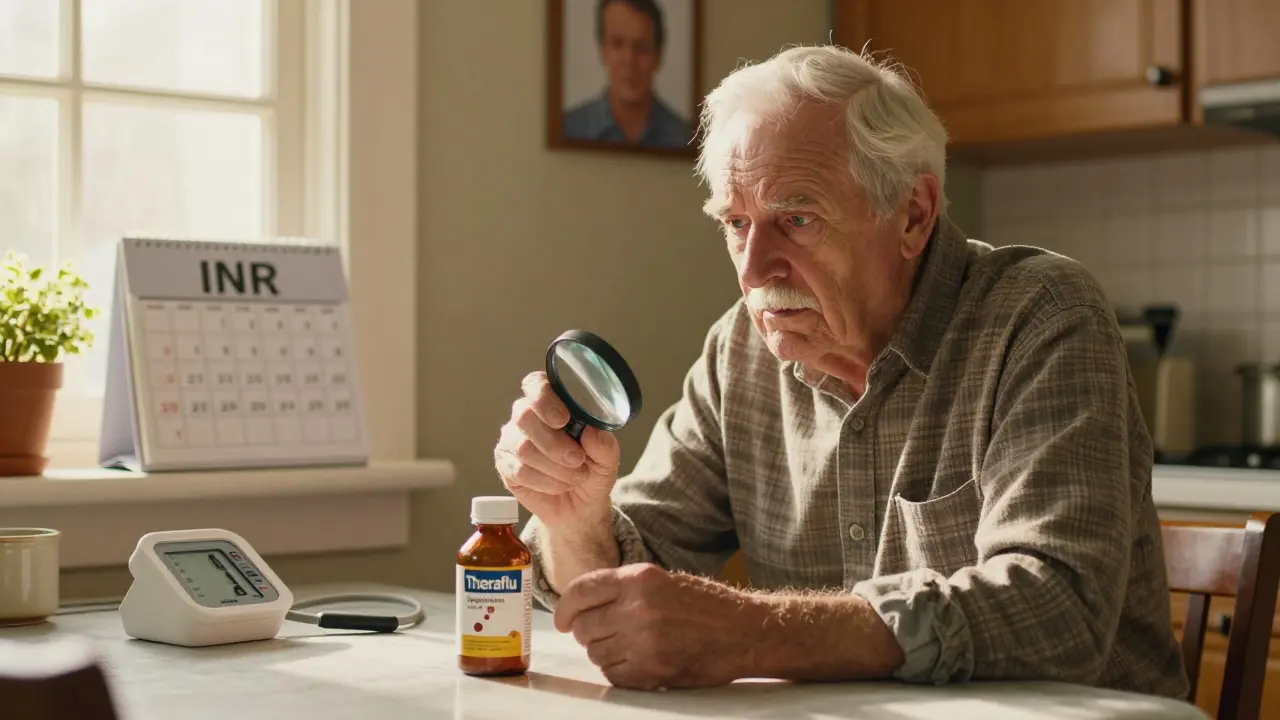
If you're taking warfarin for atrial fibrillation, a blood clot, or a mechanical heart valve, you know how important it is to keep your INR steady. But what you might not realize is that something as simple as a cold medicine could send your INR soaring - or crash it - putting you at risk for a stroke or a bleed. Every year, thousands of people on warfarin end up in the hospital because they took an over-the-counter cold remedy without knowing it was dangerous. This isn’t a rare mistake. It’s one of the most common and preventable causes of warfarin-related emergencies.
Why Warfarin Is So Sensitive
Warfarin works by blocking vitamin K, which your body needs to make clotting factors. It’s not like other medications where a little extra or a little less doesn’t matter. With warfarin, even a small change in how your body processes it can throw your INR out of range. The goal is to keep your INR between 2.0 and 3.0 for most conditions. If it goes above 4.0, your risk of bleeding skyrockets. If it drops below 1.5, clots can form. That’s why doctors test your blood regularly - sometimes every week, sometimes every month - to make sure you’re in that narrow sweet spot.
What makes this even trickier is that warfarin is broken down by enzymes in your liver, mainly CYP2C9. Many OTC cold medicines interfere with these enzymes. Some block them, making warfarin build up in your system. Others speed them up, making warfarin less effective. And some drugs, like NSAIDs, don’t even touch the metabolism - they just damage your stomach lining and make your platelets work worse. Combine that with warfarin, and you’ve got a perfect storm for bleeding.
The Hidden Danger in Cold and Flu Products
Most people think they’re being smart by avoiding aspirin. But here’s the catch: many cold medicines don’t even list aspirin. Instead, they use other painkillers that are just as dangerous. Products like Theraflu, DayQuil, NyQuil, and even some "aspirin-free" headache remedies contain ibuprofen, naproxen, or magnesium salicylate. These are all NSAIDs - nonsteroidal anti-inflammatory drugs - and they’re a major red flag for warfarin users.
According to the FDA, 42% of warfarin-related emergency room visits involve NSAIDs. That’s not a coincidence. A 2019 study in JAMA Internal Medicine found that taking more than a low-dose aspirin (81 mg) increases bleeding risk by 3.2 times. And ibuprofen? It raises your risk of gastrointestinal bleeding by 4.5 times when taken with warfarin. Even worse, many of these drugs are hidden in multi-symptom formulas. You might think you’re just taking a decongestant, but the label doesn’t always make it obvious.
Here’s what to look for on the label:
- Avoid: ibuprofen, naproxen, aspirin, acetylsalicylic acid, magnesium salicylate, diflunisal
- Use with caution: acetaminophen (paracetamol) - no more than 2,000 mg per day, and never for more than three days in a row
One user on the r/bloodthinners subreddit shared that after taking just two doses of Theraflu - which contained acetaminophen and phenylephrine - their INR jumped from 2.4 to 6.1 in 72 hours. They ended up in the hospital with internal bleeding. The acetaminophen wasn’t the main problem, but it added to the stress on their liver, which was already struggling to process warfarin. The real issue? They didn’t know the product contained acetaminophen at all.
What’s Actually Safe?
Not all OTC cold meds are off-limits. In fact, there are several options that are generally considered safe when used correctly.
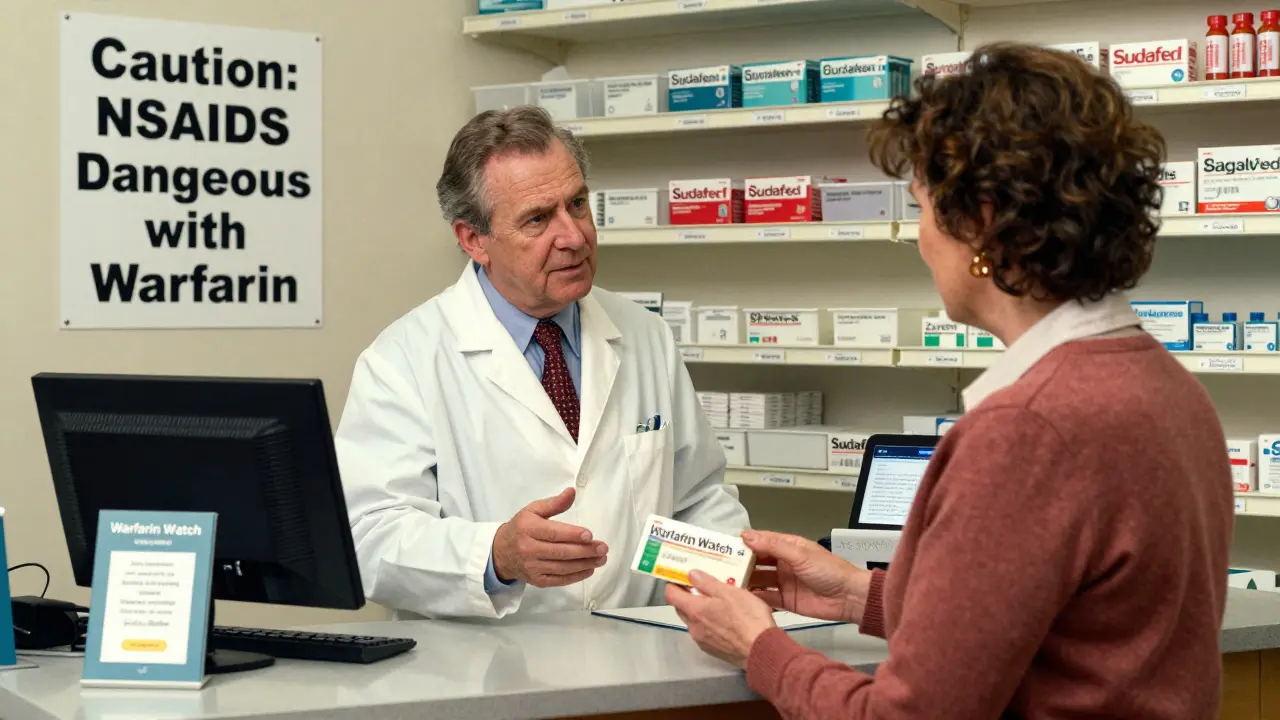
Decongestants: Pseudoephedrine (Sudafed) and phenylephrine (Sudafed PE) are safe at standard doses. They don’t interact with warfarin. But if you have high blood pressure, talk to your doctor first - these can raise your BP.
Antihistamines: First-generation antihistamines like diphenhydramine (Benadryl) and chlorpheniramine (Chlor-Trimeton) are fine. Second-generation ones like cetirizine (Zyrtec) and loratadine (Claritin) are also safe. They don’t affect your INR.
Expectorants: Guaifenesin (found in Robitussin and Mucinex) is safe. It helps loosen mucus and doesn’t interfere with clotting.
cough suppressants: Dextromethorphan (Delsym, Robitussin DM) is okay - but only if it’s not paired with quinidine. Some older formulations of Robitussin DM include quinidine, which can boost warfarin levels by 25%. Always check the full ingredient list.
One patient, u/ClotFreeLife on Reddit, successfully managed a 10-day cold using only Zyrtec, Sudafed, and plain Robitussin (guaifenesin). Their INR stayed steady between 2.2 and 2.6. The key? They checked every label, called their anticoagulation clinic, and avoided anything with painkillers.
The Silent Killers: Supplements and Herbal Products
It’s not just pills. Many people don’t realize that herbal supplements can be just as dangerous. St. John’s wort - often taken for mood - can drop your warfarin levels by 30% to 50%. Ginkgo biloba, fish oil, garlic supplements, and even high-dose vitamin E? They all thin the blood. A 2023 review in the European Heart Journal found that ginkgo biloba increases bleeding risk by 2.1 times when taken with warfarin.
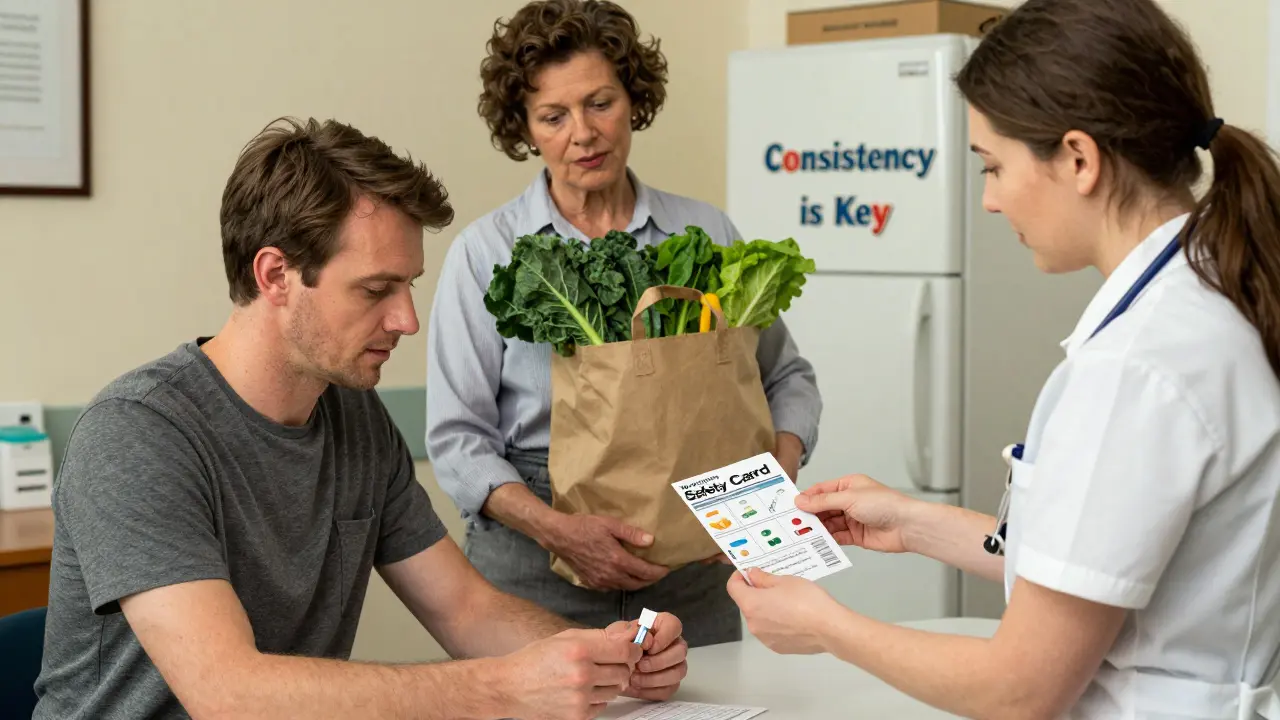
And don’t forget about vitamin K. It’s the exact opposite of warfarin. Eating a lot of kale, spinach, or Brussels sprouts one week and then switching to lettuce the next can swing your INR. Consistency matters. You don’t have to avoid these foods - just keep your intake steady.
How to Protect Yourself
The best defense? A plan. Here’s what you need to do:
- Never take a new OTC med without checking with your anticoagulation clinic. Even if it’s "just for a few days."
- Read every label twice. Once for the active ingredients. Once for the warnings. The FDA now requires NSAID-containing products to have a bold warning: "Do not use if taking blood thinners."
- Keep a list of safe products. Many clinics give patients a "Medication Safety Card" with approved OTC options. If yours doesn’t, ask for one.
- Use a barcode scanner app. Mayo Clinic’s "Warfarin Watch" app and others can scan OTC labels and tell you instantly if there’s a risk. One study found these apps are 94% accurate.
- Call your pharmacist. They’re trained to catch interactions. And they’re usually right there when you buy the medicine.
One clinic in Michigan tracked 1,200 warfarin patients over a year. Those who used a personalized safety card had 63% fewer adverse events. The difference wasn’t luck - it was structure.
What’s Changing in 2026?
Technology is catching up. CVS Health piloted a system in 2023 that flagged warfarin-NSAID combinations at the register. It cut dispensing errors by 89%. The FDA is now pushing for this to become standard across pharmacies. Some hospitals are even using genetic testing to predict how patients will respond to warfarin and OTC drugs. A 2023 Vanderbilt study showed patients with genetic testing had 37% fewer INR swings during cold season.
But here’s the truth: none of that matters if you don’t know what to look for. No app replaces asking the question: "Is this safe with my blood thinner?"
What to Do If You Accidentally Take a Risky Medication
If you took an NSAID, aspirin, or a high dose of acetaminophen - and you’re on warfarin - don’t panic. But do act:
- Stop the medication immediately.
- Call your anticoagulation clinic or doctor. Don’t wait for symptoms.
- Watch for signs of bleeding: unusual bruising, nosebleeds, blood in urine or stool, headaches, dizziness, or vomiting blood.
- Get an INR test as soon as possible - even if you feel fine.
Many bleeding events are caught early because someone called their clinic right away. Waiting until you feel sick is too late.
Warfarin saves lives. But it demands respect. A cold might be annoying, but a bleed can be deadly. Every OTC product you pick up should come with a second thought: "Could this kill me?" The answer isn’t always obvious. That’s why you need to ask - and keep asking - until you’re sure.
Can I take Tylenol (acetaminophen) while on warfarin?
Yes, but only if you stay under 2,000 mg per day and don’t take it for more than three days in a row. Higher or longer use can impair platelet function and increase bleeding risk. Always check with your anticoagulation clinic before using it regularly.
Is Sudafed safe with warfarin?
Yes, pseudoephedrine (Sudafed) and phenylephrine (Sudafed PE) are generally safe at standard doses. They don’t affect warfarin metabolism or INR levels. However, if you have high blood pressure, heart disease, or an enlarged prostate, talk to your doctor first - these decongestants can raise BP or cause urinary issues.
Why is ibuprofen dangerous with warfarin?
Ibuprofen does two dangerous things: it thins your blood by affecting platelets, and it irritates your stomach lining. Warfarin also thins your blood and increases bleeding risk. Together, they multiply the chance of serious bleeding - especially in the gut. Studies show this combination raises gastrointestinal bleeding risk by 4.5 times. Even short-term use can be risky.
Can I take Robitussin while on warfarin?
Plain Robitussin (with just guaifenesin) is safe. But avoid versions with dextromethorphan and quinidine, as quinidine can raise warfarin levels by 25%. Always check the full ingredient list. If you’re unsure, call your pharmacist or anticoagulation clinic before taking it.
Do I need to avoid all cold medicines?
No. Many cold medicines are safe if they don’t contain NSAIDs, aspirin, or high-dose acetaminophen. Safe options include pseudoephedrine, phenylephrine, cetirizine, loratadine, chlorpheniramine, and guaifenesin. The key is reading every label carefully and avoiding multi-symptom products unless you’re certain of all ingredients.
What should I do if I start bleeding while on warfarin and took a cold medicine?
Stop the cold medicine immediately. Call your doctor or anticoagulation clinic right away - don’t wait. If you notice blood in your urine, stool, or vomit; have a severe headache; feel dizzy; or have unexplained bruising, go to the ER. INR levels can rise quickly, and early intervention can prevent life-threatening bleeding.



John Smith
March 2, 2026 AT 05:57Yo so I took that Theraflu last week and my INR went from 2.8 to 5.9 in 48 hours like WHAT THE ACTUAL F. My wife had to drag me to the ER and they pumped me full of vitamin K like I was a vampire in a bad horror flick. Nobody tells you this shit. The label says "aspirin-free" like that’s some kind of badge of honor. Bro it’s ibuprofen and acetaminophen in disguise. I’m never trusting a drug company again. I even called my pharmacist and he said "oh yeah that’s a classic trap." Why isn’t this on the box in neon letters? I’m gonna start a petition.
Tobias Mösl
March 2, 2026 AT 09:54THIS IS A SYSTEMIC COVER-UP. The FDA, Big Pharma, and your damn pharmacist are all in on it. They know NSAIDs + warfarin = bleeding death but they let it slide because people are dumb and they make billions off ER visits. I’ve seen the internal memos. They call it "The Warfarin Trap" in training docs. They WANT you to take the wrong meds. Why? Because then you need more blood tests, more visits, more prescriptions. It’s a money machine. And they hide it behind "aspirin-free" labels like it’s a gift. I’ve got a cousin who died from this. No one ever warned her. Wake up people. This isn’t negligence. It’s corporate murder.
Sharon Lammas
March 2, 2026 AT 19:07I’ve been on warfarin for 12 years. I read every label like it’s a legal contract. I keep a little notebook. I’ve never had a bleed. But I’ve lost friends. One guy took NyQuil because he "just wanted to sleep." He bled into his brain. They found him curled up on the bathroom floor. I don’t say this to scare you. I say it because I care. You don’t have to be paranoid. You just have to be consistent. The body doesn’t lie. And warfarin? It doesn’t care if you meant well. It just does what it does. Be gentle with it.
Donna Zurick
March 3, 2026 AT 17:58Just wanted to say THANK YOU for this post. I’m new to warfarin and I was terrified of every cold. Now I feel like I have a roadmap. I made a cheat sheet: "Safe = Sudafed, Zyrtec, Mucinex". I printed it and stuck it on my fridge. My pharmacist even gave me a free sticker with those three names on it. It’s little things like this that make you feel less alone. You’re not just giving info - you’re giving peace of mind. ❤️
tatiana verdesoto
March 4, 2026 AT 10:25I’m a nurse and I’ve seen this happen so many times. People think "OTC" means "safe." It doesn’t. I had a patient last month take Advil Cold & Sinus because "it said no aspirin." Guess what was in it? Ibuprofen. And naproxen. And pseudoephedrine. She didn’t even know naproxen was an NSAID. We had to admit her for a transfusion. I wish every OTC bottle had a warfarin warning as big as the caffeine content. We’re not asking for much. Just a little respect for the people trying to stay alive.
RacRac Rachel
March 4, 2026 AT 11:01Just wanted to share my cold survival kit 🌿: Zyrtec (for runny nose), Sudafed PE (for congestion), Mucinex (for gunk), and plain Robitussin (for cough). No acetaminophen. No ibuprofen. No "multisymptom" nonsense. I called my clinic before buying anything. They sent me a PDF with a checklist. Took me 5 minutes. I’m still alive. My INR stayed at 2.5. I didn’t even need a tissue. 🤗
Mike Dubes
March 5, 2026 AT 18:31Hey I’m not a doctor but I’ve been on warfarin for 8 years and I’ve learned a few things. The real danger isn’t the meds - it’s the multi-symptom crap. You think you’re getting a cold remedy but you’re actually getting a cocktail of death. I stick to single-ingredient stuff. One thing per bottle. I even buy the generic versions so I can read the full list. And yeah, I call my pharmacist every time. They don’t mind. They’re basically your personal warfarin bodyguard. Also - if you’re gonna use acetaminophen, keep it under 1,000 mg. I do 500 mg twice a day max. Better safe than sorry. And don’t forget to tell your dentist. I’ve had three fillings since I started. They always ask.
Ethan Zeeb
March 6, 2026 AT 08:16You people are too nice. This isn’t about "being careful." This is about systemic failure. They don’t test these combos. They don’t warn you. They don’t even require separate labeling. I’ve got a friend who died because the pharmacist didn’t catch it. The FDA’s "bold warning"? It’s in 6-point font on the back of the box. That’s not a warning. That’s a dare. And the fact that you’re still trusting labels? That’s the real tragedy. If you’re on warfarin, you’re not just managing a condition - you’re fighting a war. And the enemy is sitting on the pharmacy shelf with a smile.
Darren Torpey
March 8, 2026 AT 06:47Bro I just took Sudafed and Zyrtec for 5 days and my INR didn’t budge. I felt like a warfarin ninja. I read the labels. I called my clinic. I didn’t even touch the cough syrup. I’m telling you - if you’re smart, you don’t have to suffer. I’ve got a cold every winter. I’ve been on warfarin for 10 years. I’ve never been hospitalized. It’s not magic. It’s just knowing what to avoid. And honestly? The fact that this post exists? That’s hope. Keep sharing this stuff. Someone’s life depends on it.
Lebogang kekana
March 9, 2026 AT 11:20From South Africa - I just got my warfarin prescription here and I’m shocked how little info we get. We don’t have the apps. We don’t have the clinics. We don’t even have the same labels. I Googled "warfarin cold medicine South Africa" and found nothing. I had to message a US-based Reddit group to get this info. So I’m sharing it here. If you’re on warfarin anywhere, you need this. Don’t wait until you’re bleeding. Learn it now. Save yourself. And if you’re a pharmacist - please, just say something. One sentence. "This is dangerous." That’s all it takes.
Jessica Chaloux
March 10, 2026 AT 03:21I cried reading this. I took a DayQuil last year. My INR hit 7. I didn’t even know I was bleeding inside. I just felt tired. Then I started vomiting blood. I thought I was dying. I called 911. They saved me. But I still have nightmares. I don’t take anything anymore without calling my clinic. I keep a list. I write it down. I read it every morning. I’m not brave. I’m just scared. And now I’m scared for everyone else. Please. Please. Read the labels. Call someone. Don’t be like me.