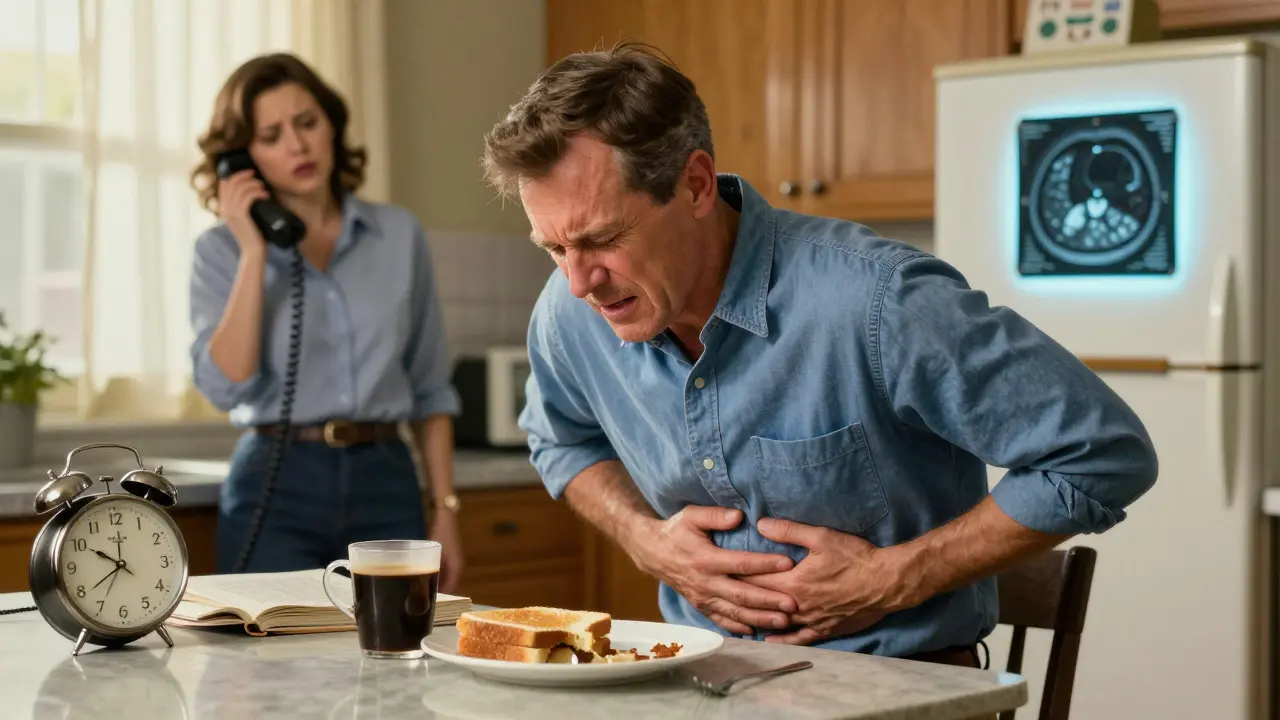
When your pancreas swells up, it doesn’t just hurt-it can change your life. Pancreatitis isn’t just a bad stomach ache. It’s inflammation of the organ that helps you digest food and control your blood sugar. And there are two very different versions: acute and chronic. One comes on fast, often after a night of heavy drinking or a gallstone gets stuck. The other creeps in slowly, quietly destroying your pancreas over years. But no matter which one you’re dealing with, nutrition isn’t just helpful-it’s essential for survival.
Acute Pancreatitis: The Sudden Attack
Acute pancreatitis hits like a lightning strike. One minute you’re fine, the next you’re doubled over with sharp pain in your upper belly, radiating to your back. Nausea, vomiting, fever-these aren’t just symptoms. They’re your body screaming that enzymes meant to digest food are now digesting you. Normally, these enzymes stay inactive until they reach the small intestine. In acute pancreatitis, they turn on inside the pancreas itself. That’s autodigestion. And it’s dangerous.
Most cases (about 80%) are caused by gallstones or alcohol. The rest? Sometimes it’s medications, high triglycerides, or just… nothing obvious. About 30% of cases have no clear cause, which frustrates both patients and doctors.
Doctors diagnose it with three things: pain that fits, blood tests showing lipase or amylase levels at least three times higher than normal, and a CT or MRI scan showing swelling or fluid around the pancreas. Severity is split into mild, moderate, and severe. Mild means you’re in pain but your organs are fine. Severe means your kidneys, lungs, or heart are failing-and that’s where the risk jumps. Mortality can hit 30% in these cases.
Here’s the good news: most people bounce back in a week. But only if they get the right care early. The biggest game-changer? Fluids. Aggressive IV fluids within the first 24 hours cut the risk of tissue death and infection by nearly a third. Delayed hydration? That’s when things go south.
Chronic Pancreatitis: The Slow Burn
Chronic pancreatitis is the quiet killer. You don’t wake up with a stabbing pain. Instead, you start noticing that meals make you hurt. You lose weight even though you’re eating. Your poop floats, smells awful, and is greasy-that’s steatorrhea, and it means your pancreas can’t make enough enzymes to break down fat.
This isn’t inflammation that heals. This is scarring. Calcium deposits form inside the pancreas. Ducts get blocked. The organ shrinks. Over time, you lose the ability to digest food and make insulin. Half of people with chronic pancreatitis develop diabetes within 12 years. Nine out of ten develop exocrine insufficiency-meaning your body can’t digest fats, proteins, or carbs properly.
Alcohol is the main culprit in 80% of cases. But genetics matter too. Mutations in genes like PRSS1 or SPINK1 can cause it even in non-drinkers. Smoking? It’s worse than alcohol. Quitting smoking cuts disease progression in half over five years.
Pain is the biggest struggle. It’s not always constant. Some people have flare-ups after eating. Others feel fine for months, then get hit hard. The pain can be so severe that 65% of patients end up on opioids. And here’s the cruel twist: long-term opioid use leads to dependence in 30% of cases. Many patients wait over four months to see a specialist. By then, damage is done.
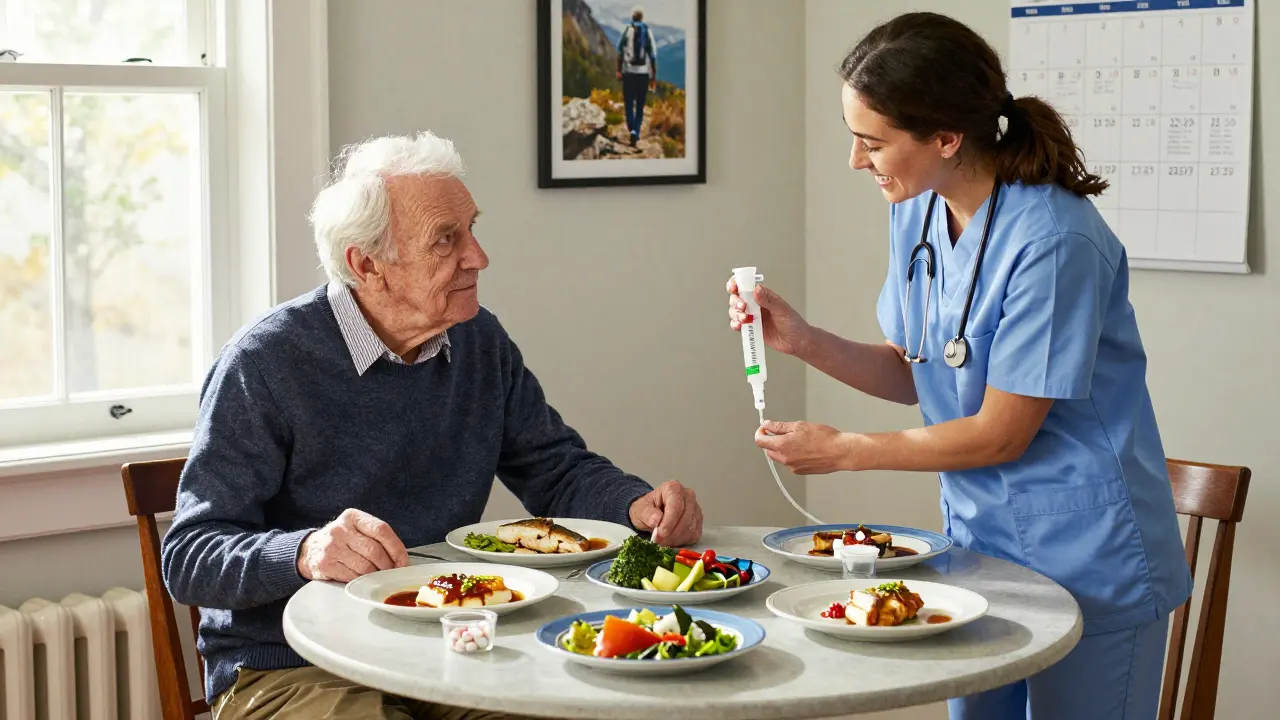
Nutrition: The Lifeline in Both Cases
What you eat doesn’t just affect your weight-it affects whether your pancreas survives.
In acute pancreatitis, doctors used to starve patients to "rest" the pancreas. That’s outdated. Now, we feed early. Starting enteral nutrition (through a tube into the small intestine) within 24 to 48 hours cuts infection risk by 30%. You need about 30-35 calories per kilogram of body weight and 1-1.5 grams of protein per kilogram. That’s not much, but it’s enough to keep your gut healthy and your immune system strong.
For chronic pancreatitis, nutrition is even more critical. You’re not just managing symptoms-you’re preventing malnutrition, diabetes, and bone loss.
First: pancreatic enzyme replacement therapy (PERT). This isn’t optional. It’s life-saving. You need 40,000 to 90,000 lipase units with each main meal, and 25,000 with snacks. Creon and other modern formulations work better than old ones-they’re acid-resistant and release enzymes exactly where they’re needed. If you’re still having fatty stools after taking them, your dose is too low. A 72-hour stool test can tell you for sure.
Second: fat intake. During an acute flare, you need to cut fat to 20-30 grams a day. But in chronic cases? Don’t go too low. Your body still needs fat-for vitamins, hormones, energy. Aim for 40-50 grams a day, but choose the right kind. Medium-chain triglycerides (MCTs)-found in coconut oil and special medical formulas-don’t need pancreatic enzymes to digest. They’re absorbed directly into the bloodstream. Many patients report fewer bowel movements and better energy after switching to MCT oil.
Third: vitamins. Chronic pancreatitis patients are often deficient in fat-soluble vitamins: A, D, E, and K. One study found 85% had low vitamin D. That’s not just weak bones-it’s immune trouble, muscle loss, and depression. Vitamin B12 deficiency is common too, because the pancreas helps absorb it. You’ll likely need supplements, not just diet.
And eat small. Six to eight small meals a day. That’s easier on your pancreas than three big ones. It helps control blood sugar, reduces pain after eating, and keeps your energy steady.

What Works-and What Doesn’t
Some advice you hear is wrong. "Just avoid alcohol and you’ll be fine." What if you already have scarring? Then avoiding alcohol stops it from getting worse-but it won’t heal what’s already gone.
"Take more enzymes." More isn’t always better. Taking too many can cause fiber-like blockages in the gut. Always take them with food. Don’t crush them. Don’t mix them with hot drinks. And never skip them before a meal-even if you think it’s "light."
"I’ll just eat low-fat and be okay." That’s a trap. Too little fat means you’re not absorbing vitamins. You’ll lose muscle, your hair will thin, your bones will break. You need fat-but the right kind, in the right amount.
And don’t ignore diabetes. Pancreatogenic diabetes (Type 3c) is different from Type 1 or 2. Your blood sugar swings wildly because your pancreas can’t release insulin steadily. That’s why Dexcom G7, the first CGM approved specifically for this type, is a breakthrough. It helps you catch highs and lows before they hurt you.
Looking Ahead: New Hope
There’s real progress. A new blood test called pancreatic stone protein (PSP) can predict how bad an acute attack will be within 24 hours. That means doctors can act faster.
In chronic cases, stem cell therapy is being tested. Early results show some patients regain up to 30% of lost enzyme function after a year. Probiotics-specific strains like Lactobacillus rhamnosus GG-are reducing pain by 40% in trials. And new enzyme formulas, like Liprotamase (not made from pigs), are helping people with allergies.
But the biggest tool is still early diagnosis and consistent nutrition. The patients who do best aren’t the ones who had the least pain. They’re the ones who stuck with their enzymes, took their vitamins, ate small meals, and quit smoking.
One patient, Sarah, spent seven years misdiagnosed. Then she found a pancreas center that gave her MCT oil and adjusted her enzyme dose. Her fatty stools dropped from five times a day to one or two a week. She gained back 20 pounds. She started walking again.
Another, Mark, lost 35 pounds despite taking enzymes. He ended up on a feeding tube. His story isn’t rare. But it’s preventable-with the right knowledge, the right team, and the right diet.
Pancreatitis doesn’t have to mean giving up food. It doesn’t have to mean endless pain. It means learning how to eat differently. And that’s something you can control.
Can acute pancreatitis turn into chronic pancreatitis?
Yes, but it’s not common. Most people recover fully from acute pancreatitis without lasting damage. However, repeated episodes-especially if caused by ongoing alcohol use or gallstones-can lead to scarring and chronic pancreatitis. Each flare increases the risk. That’s why stopping alcohol and treating gallstones after the first attack is so important.
Do I need to take pancreatic enzymes forever if I have chronic pancreatitis?
If your pancreas has lost its ability to make digestive enzymes, yes-you’ll need them for life. The damage is permanent. But the good news is that enzyme replacement therapy works well. Most people see a big drop in bloating, gas, and fatty stools once they’re on the right dose. You’ll need regular check-ups to adjust your dose as your needs change.
Why am I still losing weight even though I’m taking enzymes?
There are a few reasons. First, your enzyme dose might be too low. Many people underdose because they don’t know how much they need. Second, you might not be taking them with every bite of food-they need to mix with your meal. Third, you might have another issue like small intestine damage or diabetes causing malabsorption. A 72-hour fecal fat test can confirm if your enzymes are working. If not, your doctor may need to adjust your diet or add other treatments.
Is a low-fat diet always best for pancreatitis?
No. During an acute flare, yes-cut fat to 20-30 grams a day to give your pancreas a break. But in chronic pancreatitis, too little fat causes vitamin deficiencies and muscle loss. The goal is moderate fat (40-50g/day) from healthy, easy-to-digest sources like MCT oil, lean fish, and avocado. Avoid fried foods and butter. But don’t fear all fat-just choose the right kind.
Can I ever drink alcohol again after pancreatitis?
If you had alcohol-induced acute pancreatitis, you should avoid alcohol completely. Even one drink can trigger another attack. If you have chronic pancreatitis, any alcohol will speed up tissue damage and increase your risk of cancer. There’s no safe amount. Quitting is the single most effective way to slow the disease.
What’s the link between chronic pancreatitis and pancreatic cancer?
Chronic pancreatitis increases your risk of pancreatic cancer by 15 to 20 times. Over 10 years, about 4% of people with chronic pancreatitis will develop it. That’s why high-risk patients-especially those with genetic mutations or long-standing disease-are monitored with annual MRI or MRCP scans. Early detection saves lives. If you’ve had chronic pancreatitis for more than five years, ask your doctor about screening.

Jhoantan Moreira
February 4, 2026 AT 00:33Katherine Urbahn
February 4, 2026 AT 07:10Harriot Rockey
February 5, 2026 AT 21:26Janice Williams
February 7, 2026 AT 02:20Coy Huffman
February 8, 2026 AT 08:26rahulkumar maurya
February 9, 2026 AT 04:41Demetria Morris
February 10, 2026 AT 13:18Susheel Sharma
February 12, 2026 AT 07:43Roshan Gudhe
February 12, 2026 AT 14:49Rachel Kipps
February 14, 2026 AT 11:23