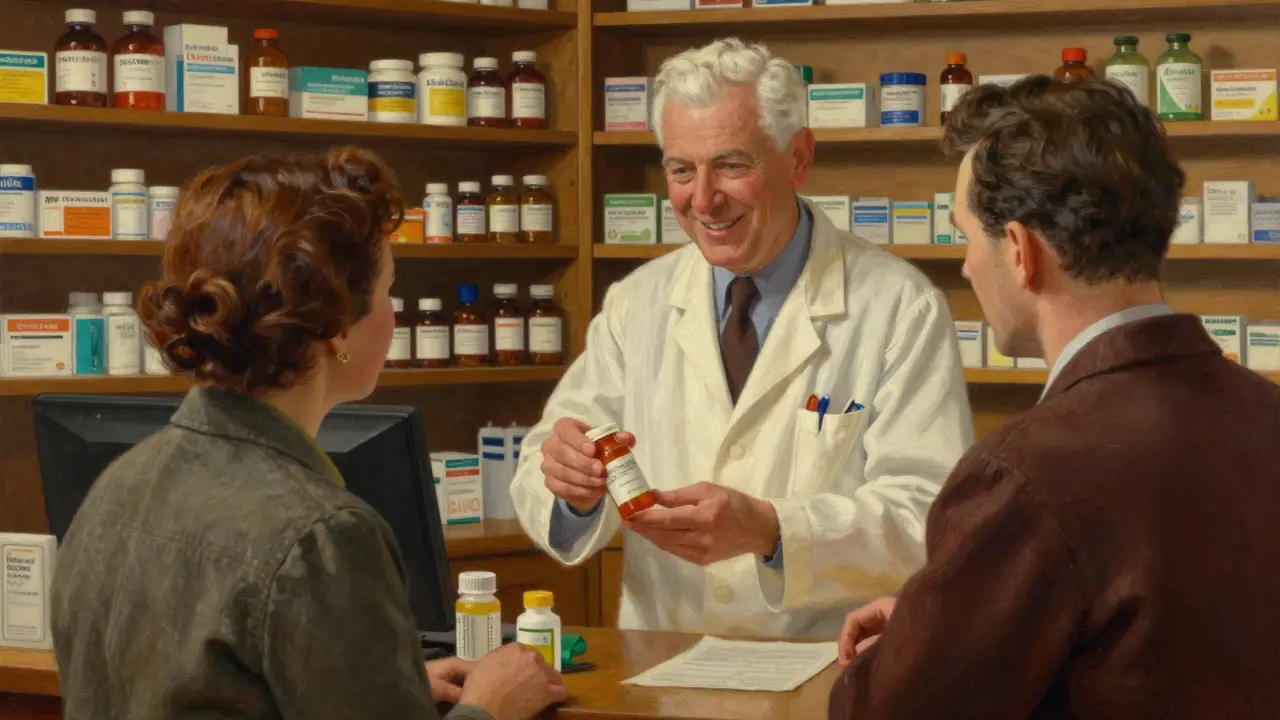
When you pick up a prescription at the pharmacy, there is a ninety percent chance it is a generic version of the original brand-name medication. You trust that it works just as well because regulators say it does. But what happens after that pill leaves the shelf? The answer lies in post-market studies, which are systematic monitoring efforts conducted after a drug is approved to detect safety issues that emerged during widespread use. For generic drugs, this phase is not just routine paperwork; it is a critical safety net.
Unlike brand-name drugs that undergo years of expensive clinical trials involving thousands of patients, generics are approved based on bioequivalence, meaning they deliver the same active ingredient into the bloodstream at the same rate and extent as the reference listed drug. This shortcut saves billions of dollars but creates a blind spot. We simply do not know how these cheaper alternatives perform in real-world scenarios until people start taking them. That is why clinical follow-up and post-market surveillance are essential tools for protecting public health.
Why Generics Need Extra Scrutiny After Approval
The approval process for generic drugs is abbreviated by design. Manufacturers must prove their product is bioequivalent to the Reference Listed Drug (RLD), but they do not need to repeat large-scale safety trials. This makes sense economically, but it means the initial safety data is borrowed from the originator company. The problem arises when manufacturing processes differ. A generic tablet might dissolve slightly faster or slower than the brand name due to different inactive ingredients, known as excipients.
In controlled trials with fewer than 5,000 participants, these minor differences often go unnoticed. However, when millions of people take the drug, small variations can lead to significant issues. For example, patients with narrow therapeutic index drugs-medications where a tiny change in dose can cause harm-might experience adverse effects if the generic absorption rate varies. Post-market studies aim to catch these discrepancies before they become widespread crises.
Consider the case of levothyroxine, a common thyroid medication. Pharmacists have reported instances where patients experienced palpitations or fatigue after switching between different generic manufacturers. These signals only appear through continuous monitoring of patient outcomes long after the drug hits the market.
The Regulatory Framework: FDAAA and FDASIA
The backbone of modern drug safety monitoring in the United States rests on two major legislative acts. The FDA Amendments Act (FDAAA) of 2007 gave the Food and Drug Administration (FDA) stronger authority to require post-marketing studies. Before this, the agency had limited power to mandate additional research once a drug was on the shelves. Then came the FDA Safety and Innovation Act (FDASIA) of 2012, which further enhanced the agency's ability to monitor safety signals and enforce compliance.
These laws established a risk-based approach to surveillance. Not every generic drug gets the same level of scrutiny. The FDA prioritizes complex generics, such as inhalers, transdermal patches, and drug-device combinations. Howard Chazin, Director of the Clinical Safety Surveillance Staff at the FDA, has noted that the agency proactively screens these high-risk products. They datamine reports to detect early warning signs, ensuring that potential dangers are identified quickly.
This regulatory shift marks a move from passive observation to active investigation. Manufacturers are no longer allowed to sit back and wait for complaints; they must actively participate in the safety ecosystem.
How the FDA Monitors Generic Drugs
The FDA employs several sophisticated methods to keep track of generic drug safety. The most visible tool is the MedWatch program, which allows healthcare professionals and consumers to report adverse events and product problems to the FDA. These reports flow into the Adverse Event Reporting System (FAERS), where analysts look for patterns. If a sudden spike in gastrointestinal side effects appears for a specific generic antibiotic, investigators dig deeper.
However, spontaneous reporting has limitations. It relies on people remembering to report issues, which often leads to underreporting. To solve this, the FDA launched the Sentinel Initiative in 2008. Fully operational by 2016, this system accesses electronic health records from over 300 million patients. It enables near real-time safety monitoring without relying solely on voluntary reports.
For generic drugs, the Sentinel Initiative uses modules like Active Postmarketing Risk Identification and Analysis (ARIA). This tool processes hundreds of millions of patient records to identify safety signals automatically. It can compare outcomes between patients taking a brand-name drug versus those taking a generic, providing concrete data on whether the generic performs differently in diverse populations, including the elderly and women of childbearing potential.

Challenges in Attributing Safety Signals
One of the biggest hurdles in generic drug surveillance is attribution. When a patient reports an adverse event, they often do not know which manufacturer produced their generic pill. Pharmacies switch suppliers frequently to manage costs. A patient might take Generic Brand A one month and Generic Brand B the next, never realizing the change.
Dr. Aaron Kesselheim, a professor at Harvard Medical School, pointed out in a 2022 analysis that this fragmentation complicates the job of safety monitors. If a safety signal emerges, it is difficult to determine if it is caused by the drug class itself or a specific manufacturer's quality control issue. Only about 35% of generic drug adverse event reports specify the manufacturer, according to a 2023 Government Accountability Office (GAO) report.
This gap forces regulators to rely on broader trends rather than pinpointing exact sources. It also highlights the importance of quality-related safety issues. Problems like tablet dissolution failures, precipitates in oral liquids, or transdermal patches failing to adhere properly are often manufacturing-specific. In 2022 alone, the FDA recorded 1,247 generic drug recalls, representing 78% of all drug recalls that year. Many of these were tied to quality defects that post-market surveillance helps to uncover.
The Role of Manufacturers in Pharmacovigilance
Generic drug manufacturers share the burden of safety monitoring. Under 21 CFR Part 310 and 314, they must establish comprehensive pharmacovigilance systems. This includes collecting adverse event reports, processing them, and submitting them to the FDA within strict timeframes. Serious adverse events must be reported within 15 calendar days.
Implementing these systems is costly. A 2022 analysis by the Tufts Center for the Study of Drug Development estimated median annual costs of $1.2 million per company for pharmacovigilance activities. Smaller manufacturers often struggle with this financial burden, leading to inconsistent reporting practices. Larger companies, however, are adopting advanced technologies. About 78% of the top 20 generic companies now use AI-powered signal detection systems to sift through noise and identify true safety concerns.
Manufacturers also face pressure to maintain transparency. In 2021, Teva Pharmaceuticals received a warning letter for inadequate adverse event reporting systems, resulting in a six-month delay in new product approvals. Such enforcement actions underscore the seriousness with which the FDA treats post-market obligations.
| Method | Data Source | Speed of Detection | Limitations |
|---|---|---|---|
| Spontaneous Reporting (MedWatch) | Patient and provider reports | Variable | Underreporting, lack of manufacturer detail |
| Sentinel Initiative | Electronic health records (EHR) | Near real-time | Requires standardized data formats |
| Prescription Event Monitoring | Pharmacy claims data | Monthly/Quarterly | Lacks clinical outcome details |
| Patient Registries | Disease-specific databases | Slow | High cost, limited generalizability |

Real-World Evidence and Future Directions
The future of generic drug safety lies in Real-World Evidence (RWE). The FDA’s strategic plan for 2024-2026 emphasizes enhancing post-market surveillance for complex generics using RWE. The Sentinel Initiative’s new Common Data Model Plus, implemented in January 2023, incorporates social determinants of health data. This allows researchers to understand how factors like income, education, and geography affect drug safety outcomes.
Blockchain technology is also emerging as a potential solution to the attribution problem. Pilot programs at five major generic companies aim to use blockchain for supply chain transparency. By creating an immutable record of each batch’s journey from factory to pharmacy, regulators could trace adverse events back to specific manufacturing lots more easily.
Despite these advancements, challenges remain. The fragmented nature of the generic market, with over 100 manufacturers competing for market share, makes consistent monitoring difficult. As Chip Davis, CEO of the Association for Accessible Medicines, stated in 2023, modern data analytics are crucial to distinguishing true safety signals from background noise.
What Patients and Providers Can Do
You play a vital role in this safety network. Healthcare providers should document any unusual reactions carefully, noting the specific generic manufacturer if possible. Patients should be aware that switching between generic brands is common and may occasionally affect how they feel. If you experience unexpected side effects after a switch, inform your doctor and pharmacist.
Reporting adverse events through MedWatch is simple and free. Your report contributes to the larger dataset that keeps everyone safe. Remember, post-market studies are not just bureaucratic exercises; they are the final line of defense in ensuring that the medications you rely on are truly safe and effective.
Why are post-market studies important for generic drugs?
Generic drugs are approved based on bioequivalence rather than extensive clinical trials. Post-market studies detect safety issues that emerge during widespread use, such as variations in absorption rates or quality defects, which were not evident in the limited pre-approval testing.
How does the FDA monitor generic drug safety?
The FDA uses multiple methods, including spontaneous reporting via MedWatch, the Sentinel Initiative for analyzing electronic health records, and periodic inspections of manufacturers. They also conduct targeted safety reviews for high-risk generic products.
What is the difference between brand-name and generic drug surveillance?
Brand-name drugs undergo rigorous pre-approval clinical trials with thousands of participants. Generic drugs skip these trials, relying on bioequivalence data. Therefore, post-market surveillance is more critical for generics to identify potential differences in real-world performance and safety.
Can I report a side effect from a generic drug?
Yes, you can report adverse events through the FDA's MedWatch program. Providing details about the specific generic manufacturer, if known, helps regulators attribute safety signals accurately and improve product quality.
What are complex generic drugs?
Complex generics include products like inhalers, topical creams, injectables, and drug-device combinations. Their delivery mechanisms are harder to replicate exactly, making them higher risk for quality and safety issues, thus requiring more intensive post-market surveillance.
