
Millions of people take proton pump inhibitors (PPIs) every day for heartburn, acid reflux, or stomach ulcers. They work fast, they feel effective, and many assume they’re harmless since you can buy them over the counter. But what happens when you take them for months-or years? The truth is, long-term use of PPIs isn’t as safe as most people think. And stopping them suddenly can make things worse.
What Are Proton Pump Inhibitors?
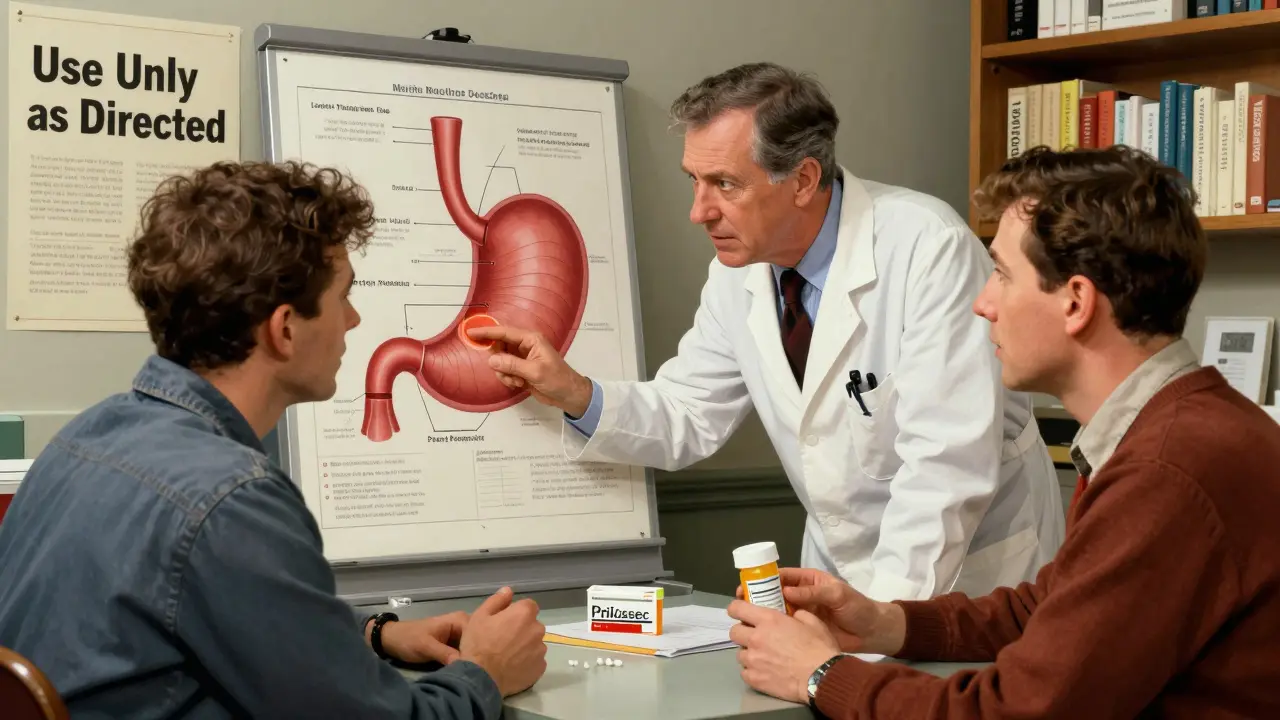
PPIs are medications that shut down the stomach’s acid production at its source. They block the proton pump-the final step in acid secretion-so your stomach makes far less acid. Common brands include omeprazole (Prilosec), esomeprazole (Nexium), lansoprazole (Prevacid), and pantoprazole (Protonix). These drugs are powerful. For people with severe esophagitis or ulcers, they’re often life-changing. Healing rates for erosive esophagitis can be over 90%.
But they’re not meant to be taken forever. PPIs take 1 to 4 days to reach full effect, so they’re useless for quick relief. That’s why antacids or H2 blockers like famotidine (Pepcid) are better for occasional heartburn. PPIs are designed for short-term healing, not daily, indefinite use.
The Hidden Risks of Long-Term Use
The FDA has issued seven safety warnings about PPIs since 2010. These aren’t theoretical concerns-they’re based on real data from hundreds of thousands of patients.
Fracture risk: Long-term PPI use increases the chance of hip, wrist, and spine fractures. One study found that people who took PPIs for 6 to 8 years had a 55% higher risk of hip fractures compared to non-users. The reason? Less stomach acid means less calcium absorption. This risk goes down after you stop taking them.
Magnesium deficiency: This is rare but dangerous. PPIs interfere with magnesium absorption in the gut. Low magnesium can cause muscle cramps, irregular heartbeat, and even seizures. The FDA now recommends checking magnesium levels if you’ve been on PPIs for more than a year.
Vitamin B12 deficiency: Stomach acid helps release B12 from food. Without enough acid, your body can’t absorb it properly. Around 10-15% of long-term PPI users develop low B12 levels. Symptoms include fatigue, numbness in hands and feet, and memory problems. It’s often mistaken for aging or stress.
C. diff infections: PPIs raise your risk of getting Clostridioides difficile, a severe gut infection that causes chronic diarrhea. Hospitalized patients on PPIs are twice as likely to get it. Even healthy people aren’t immune.
Acute interstitial nephritis: This is a rare but serious kidney inflammation. It can lead to permanent kidney damage if not caught early. The FDA flagged this in 2016, and cases have been documented in people taking PPIs for just a few months.
Some studies have linked PPIs to dementia, heart disease, and chronic kidney disease-but the evidence is mixed. Many of these links come from observational studies where people taking PPIs were also older, sicker, or on multiple other medications. That doesn’t mean PPIs caused the problem-it just means they were present. Still, it’s enough reason to be cautious.
When Should You Stop Taking PPIs?
You should reconsider PPI use if:
- You’ve been taking them for more than 8 weeks without a clear diagnosis (like confirmed GERD or ulcers)
- You’re using over-the-counter PPIs for longer than 14 days, more than once every 3 months
- You’re taking them for mild, occasional heartburn that responds to lifestyle changes
- You’re on multiple medications that interact with PPIs (like clopidogrel or certain antifungals)
The American College of Gastroenterology says PPIs should be prescribed at the lowest dose for the shortest time possible. That means if your symptoms are under control after 4-8 weeks, it’s time to try stopping-or at least reducing.
Stopping PPIs Isn’t as Simple as Quitting
Here’s the catch: stopping PPIs cold turkey can backfire. When your stomach has been quiet for months, it overcompensates. This is called rebound acid hypersecretion. Up to 80% of long-term users experience worse heartburn, bloating, and nausea after quitting. It’s not a relapse of your original condition-it’s your body’s natural response to suddenly having no acid suppression.
That’s why you need a plan. The best approach is a gradual taper:
- Reduce your dose by half (e.g., from 20mg to 10mg) for 1-2 weeks
- Switch to taking it every other day for another 1-2 weeks
- Then try taking it only when symptoms flare up (on-demand use)
- Finally, stop completely
During this time, you can use antacids like Tums or H2 blockers like famotidine for breakthrough symptoms. Don’t panic if your heartburn returns-it usually peaks around day 7-10 and fades by week 3-4.
What to Do Instead of Daily PPIs
Many people don’t need daily acid suppression. Lifestyle changes can work just as well-or better.
- Eat smaller meals and avoid eating 3 hours before bed
- Limit coffee, alcohol, spicy foods, chocolate, and citrus
- Loosen tight clothing around your waist
- Elevate the head of your bed by 6-8 inches
- Quit smoking
- Manage stress with breathing exercises or walking
For people with mild GERD, these changes often eliminate symptoms. Even for those with moderate GERD, intermittent use-taking PPIs only during flare-ups-is more than enough. One study found that 30-50% of long-term users could stop PPIs entirely without symptoms returning, as long as they tapered properly and made lifestyle adjustments.

Who Should Stay on PPIs?
Not everyone should stop. Some people need long-term PPIs. That includes:
- People with Barrett’s esophagus (a precancerous condition)
- Those with recurrent peptic ulcers or bleeding ulcers
- Patients on long-term NSAIDs like ibuprofen or naproxen
- People with severe, persistent erosive esophagitis
If you fall into one of these groups, don’t stop without talking to your doctor. But even then, ask: Is this the lowest effective dose? Have we checked my magnesium and B12 levels? Is there a chance I can cut back?
What’s Next for PPIs?
New drugs called potassium-competitive acid blockers (P-CABs), like vonoprazan, are being studied. They work faster than PPIs and may have fewer long-term side effects. But they’re still new-long-term safety data isn’t available yet. For now, PPIs remain the gold standard for healing, but not for lifelong use.
Meanwhile, the problem of overprescribing continues. In the U.S., an estimated $12 billion is spent each year on unnecessary PPI prescriptions. Doctors aren’t always to blame-patients ask for them, and many think they’re harmless. But that’s the danger: when a drug feels safe, people forget to question it.
Ask yourself: Why am I taking this? Is it helping? Have I tried other ways? If you’ve been on PPIs for more than a year, it’s time to talk to your doctor about a plan to get off them-safely.
Can I stop taking PPIs cold turkey?
No. Stopping suddenly can cause severe rebound acid reflux because your stomach overproduces acid after being suppressed for months. Instead, gradually reduce your dose over several weeks, then switch to on-demand use before stopping completely.
How long does it take to feel better after stopping PPIs?
Most people experience worse symptoms for the first 1-2 weeks after stopping, peaking around day 7-10. By week 3-4, the rebound usually fades. If symptoms persist beyond 6 weeks, see your doctor to rule out other causes.
Are over-the-counter PPIs safer than prescription ones?
No. OTC PPIs contain the same active ingredients as prescription versions. The only difference is dosage and labeling. The FDA limits OTC use to 14 days every 3 months because long-term use carries the same risks-whether you got it from a pharmacy or a doctor.
Can PPIs cause weight gain?
PPIs don’t directly cause weight gain, but some people eat more after their heartburn improves-because they no longer avoid foods that trigger symptoms. This can lead to weight gain over time. Also, low stomach acid can affect digestion and nutrient absorption, which may indirectly influence appetite.
Do PPIs increase the risk of stomach cancer?
There’s no strong evidence that PPIs cause stomach cancer. However, long-term use can cause changes in stomach lining cells (like ECL cell hyperplasia), which in rare cases may progress to neuroendocrine tumors after 15+ years. This is extremely uncommon and mostly seen in people with chronic H. pylori infection or autoimmune conditions. Regular monitoring is recommended for high-risk patients.
What supplements should I take if I’m on PPIs long-term?
If you’ve been on PPIs for over a year, ask your doctor to check your magnesium and vitamin B12 levels. If they’re low, supplementation may help. Calcium citrate (not calcium carbonate) is better absorbed with low acid, so consider that if you’re at risk for fractures. Always get blood tests before starting supplements-don’t guess.
Final Thoughts
PPIs are powerful tools-but like any powerful tool, they’re not meant to be used every day for years. The risks are real, but they’re manageable. You don’t have to live with heartburn, but you also don’t have to rely on daily pills. Work with your doctor to find the lowest dose, the shortest duration, and the best lifestyle plan for your body. Your stomach-and your bones, kidneys, and brain-will thank you.

Patty Walters
January 8, 2026 AT 21:42Just got off PPIs after 5 years. Rebound was brutal-day 7 felt like acid was pouring out my ears. But by week 4, I was fine. Started with 10mg every other day, then switched to Pepcid as needed. Lifestyle changes? Huge. No coffee after noon, no late dinners, bed at 45 degrees. My doctor didn’t even mention magnesium-I had to ask. Now I take a daily B12 and magnesium glycinate. Don’t just quit cold. Plan it.
tali murah
January 10, 2026 AT 16:53Oh here we go. Another ‘PPIs are evil’ clickbait article written by someone who’s never prescribed one. Let me guess-you think people should just ‘eat less spicy food’ and magically heal? The FDA warnings? Yes, they exist. But so do the 80% of GERD patients who’d be in the ER without PPIs. You’re scaring people into suffering because you hate Big Pharma. Grow up.
Kiruthiga Udayakumar
January 11, 2026 AT 06:41OMG I KNEW IT. I’ve been saying this for YEARS. People pop these like candy-‘Oh it’s OTC, it’s fine!’-then wonder why they’re osteoporotic at 50. I work in a pharmacy. I’ve seen it. 70-year-old woman on Nexium for 12 years, hip fracture, B12 at 180, magnesium crashed. And she’s still on it because ‘it helped once.’ No. It helped then. Now it’s poisoning you. Stop being lazy. Eat right. Move. Stop blaming your stomach for your poor choices.
Angela Stanton
January 12, 2026 AT 13:25Rebound acid hypersecretion is a pharmacokinetic artifact of chronic H+/K+ ATPase inhibition leading to compensatory enterochromaffin-like cell hyperplasia and upregulated proton pump expression. Also, PPIs alter gut microbiota composition, increasing Firmicutes:Bacteroidetes ratio-this correlates with metabolic dysregulation. Long-term use = dysbiosis = leaky gut = systemic inflammation. Check your CRP. Also, calcium citrate > carbonate. Always.
Diana Stoyanova
January 13, 2026 AT 17:20Y’all are making this way too complicated. I stopped PPIs cold turkey after 3 years. First week? Hell. Day 3 I cried. Day 7 I thought I was dying. But I drank ginger tea, walked 2 miles every day, slept on pillows, and didn’t eat after 7pm. By day 14? Gone. Not a single symptom. My body healed itself. You don’t need a 12-step plan. You need willpower and a little discipline. Stop being a medical zombie. Your stomach isn’t broken-it’s just been coddled.
Gregory Clayton
January 14, 2026 AT 13:26Why are we letting Big Pharma tell us what to do? I’m an American. I’ve got 3 kids, a job, and a truck. I don’t have time to ‘taper’ or ‘eat smaller meals.’ If my heartburn’s bad, I take a pill. That’s it. You want me to sleep with my head in a sling? Eat like a rabbit? Nah. I’ll take my $10 OTC and be done with it. You want to live in a yoga studio? Go ahead. I’m living.
Ashley Kronenwetter
January 15, 2026 AT 11:40The data supporting long-term PPI risks is robust, particularly regarding fractures, hypomagnesemia, and C. diff. However, the benefit-risk ratio must be individualized. Patients with Barrett’s esophagus or recurrent bleeding ulcers derive net benefit from continued therapy. Discontinuation should be guided by clinical indication, not fear. Shared decision-making with a gastroenterologist is essential.
Lindsey Wellmann
January 17, 2026 AT 04:55😭 I was on PPIs for 7 years. Then I found out I had a hiatal hernia. My doctor said ‘just keep taking it.’ I didn’t even know I could have surgery. I had a Nissen fundoplication last year. No more pills. No more burning. Just… peace. 🙏 I cried in the parking lot after my first normal meal. If you’ve been on PPIs forever-ask about surgery. It’s not scary. It’s life-changing. 💕
Ian Long
January 17, 2026 AT 20:29I get both sides. The risks are real. But so is the suffering. I had a patient who couldn’t eat, couldn’t sleep, couldn’t breathe because of reflux. PPIs gave her back her life. Now she’s off them, after 8 years, with diet and elevation. But she didn’t quit cold turkey. She didn’t ‘just will it away.’ She had support. Maybe the real problem isn’t PPIs-it’s that we don’t give people the tools to get off them safely. We just hand out pills and walk away.
Maggie Noe
January 18, 2026 AT 09:09Think about this: if PPIs were so dangerous, why aren’t we seeing mass hospitalizations? Millions are on them. If 10% developed kidney failure, we’d know. The studies are observational-they show correlation, not causation. People on PPIs are older, sicker, on more meds. Of course they have more problems. But that doesn’t mean the pill caused it. Maybe we’re blaming the tool instead of the user. Or the lifestyle. Or the healthcare system.
Heather Wilson
January 18, 2026 AT 20:36So you say ‘stop PPIs.’ But what’s the alternative? H2 blockers? They’re weaker. Antacids? They last 30 minutes. Lifestyle changes? You’re assuming everyone has time, money, and access to organic food. Not everyone lives in a wellness influencer’s dream. For many, PPIs are the only thing keeping them functional. Don’t preach. Provide options.
Jeffrey Hu
January 20, 2026 AT 19:11Did you know pantoprazole has a longer half-life than omeprazole? That’s why it’s better for maintenance. Also, CYP2C19 polymorphisms affect metabolism-poor metabolizers get higher exposure. If you’re on PPIs long-term, get genotyped. And stop using OTC ones. They’re not ‘safer.’ They’re just less monitored. And yes, you can get addicted. It’s not ‘addiction’-it’s physiological adaptation. Same as SSRIs. Same as beta-blockers. Don’t be dramatic.
Johanna Baxter
January 22, 2026 AT 11:29I took PPIs for 10 years. Then I got cancer. Not stomach. Pancreatic. My oncologist said ‘you were on PPIs too long.’ I didn’t even know there was a link. I feel so stupid. I trusted my doctor. I trusted the label. I thought it was safe. Now I’m chemoing and my kids are scared. Don’t be like me. Stop now. Please.
Jerian Lewis
January 22, 2026 AT 20:48My grandma took PPIs for 20 years. She broke her hip at 82. They said ‘osteoporosis.’ But her B12 was 150. Her magnesium? Undetectable. She was confused, tired, weak. We stopped the PPIs. Started supplements. Within 3 months, she was walking again. She said, ‘I didn’t know I was sick-I just thought I was old.’ PPIs don’t just hurt your stomach. They steal your life, slowly.
Phil Kemling
January 24, 2026 AT 06:13What does ‘safety’ even mean? If a drug lets you live without pain for 15 years, but slightly increases your fracture risk decades later-is that a win? We treat symptoms, not root causes. We medicate discomfort instead of asking why the stomach is angry. Maybe the real question isn’t ‘should I stop PPIs?’ but ‘why did my body need them in the first place?’ And why don’t we fix that?