
Sulfonylurea Hypoglycemia Risk Estimator
Patient Profile
Risk Assessment Results
Fill out the profile to see your estimated risk level.
Imagine you are driving your car. You press the accelerator to speed up, but what if the pedal got stuck down? Your engine would rev wildly, burning fuel even when you aren't moving. This is essentially how sulfonylureas, a common class of medications for type 2 diabetes, work in your body. They force your pancreas to release insulin regardless of whether your blood sugar actually needs lowering. While this mechanism effectively reduces high blood glucose levels, it carries a significant risk: hypoglycemia, or dangerously low blood sugar.
If you have been prescribed a sulfonylurea, understanding this risk is not just about reading side effect labels; it is about knowing how to stay safe. These drugs have been around since the 1950s and remain widely used because they are cheap and effective at lowering HbA1c levels by 1.0% to 2.0%. However, that effectiveness comes with a trade-off. According to data from the American Diabetes Association, approximately 10.1% of patients taking these medications will experience a hypoglycemic episode during their treatment. For some, this means mild shakiness. For others, particularly the elderly, it can mean hospitalization or worse.
How Sulfonylureas Cause Low Blood Sugar
To understand why hypoglycemia happens, we need to look at the biology. Sulfonylureas bind to specific receptors on your pancreatic beta cells called SUR1. When they attach, they block potassium channels, which causes the cell membrane to depolarize. This triggers calcium to rush into the cell, forcing it to dump stored insulin into your bloodstream. The problem is that this process does not care what your current blood sugar level is. It pushes insulin out anyway.
This 'glucose-independent' insulin secretion is the root cause of the risk. If you take the medication, skip a meal, or exercise more than usual, your blood sugar can drop below the safe threshold of 70 mg/dL. Unlike newer diabetes medications such as GLP-1 receptor agonists or SGLT-2 inhibitors, which only work when blood sugar is high, sulfonylureas keep working until the drug wears off. This lack of 'smart' regulation is why vigilance is required.
Not All Sulfonylureas Are Created Equal
One of the biggest misconceptions is that all sulfonylureas carry the same risk. They do not. The generation and specific chemical structure of the drug play a massive role in your safety profile. There are first-generation drugs like tolbutamide and chlorpropamide, but today, most prescriptions are for second-generation agents: glyburide (also known as glibenclamide), glipizide, glimepiride, and gliclazide.
Glyburide is the most commonly prescribed sulfonylurea in the United States, accounting for roughly 70% of prescriptions. However, it is also the most dangerous regarding hypoglycemia. A 2017 study published in *Diabetes Care* found that glyburide carried a 36% higher risk of severe hypoglycemia requiring hospitalization compared to glipizide. Why? Glyburide has a long half-life of about 10 hours and produces active metabolites that continue to lower blood sugar for days. Glipizide, on the other hand, has a short half-life of 2 to 4 hours and minimal active metabolites. It clears your system quickly, giving you more control.
| Drug Name | Half-Life | Hypoglycemia Risk Level | Key Characteristic |
|---|---|---|---|
| Glyburide | ~10 hours | High | Active metabolites; long duration |
| Glipizide | 2-4 hours | Moderate/Low | Short-acting; safer for elderly |
| Glimepiride | 5-9 hours | Moderate | Intermediate duration |
| Gliclazide | Varies | Lowest | Beta-cell specific; popular in Europe |
If you are over 65, the American Geriatrics Society Beers Criteria explicitly recommends avoiding glyburide due to a 2.5-fold higher risk of hypoglycemia compared to glipizide. Gliclazide, while not available in the US, is favored in Europe and Australia because it is highly specific to pancreatic beta cells, reducing its impact on other tissues and lowering hypoglycemia risk by 28% compared to glyburide.
Recognizing the Symptoms Early
Catching hypoglycemia early can prevent a minor inconvenience from becoming a medical emergency. Symptoms often appear in waves. The first signs are usually physical responses from your body's adrenaline surge. You might feel sudden sweating, which occurs in 85% of cases. Shakiness affects 78% of people, and hunger pangs hit 41%. As blood sugar continues to drop, cognitive symptoms set in. Irrability (65%) and confusion (52%) are red flags that your brain is starving for glucose.
If you miss these early signals, you could progress to severe hypoglycemia, characterized by seizures, loss of consciousness, or coma. This is why relying solely on how you feel is risky, especially if you develop 'hypoglycemia unawareness,' a condition where your body stops sending warning signals. In such cases, technology becomes your best friend.
Prevention Strategies That Actually Work
You don't have to live in fear of lows, but you do need a plan. Here are evidence-based strategies to minimize risk:
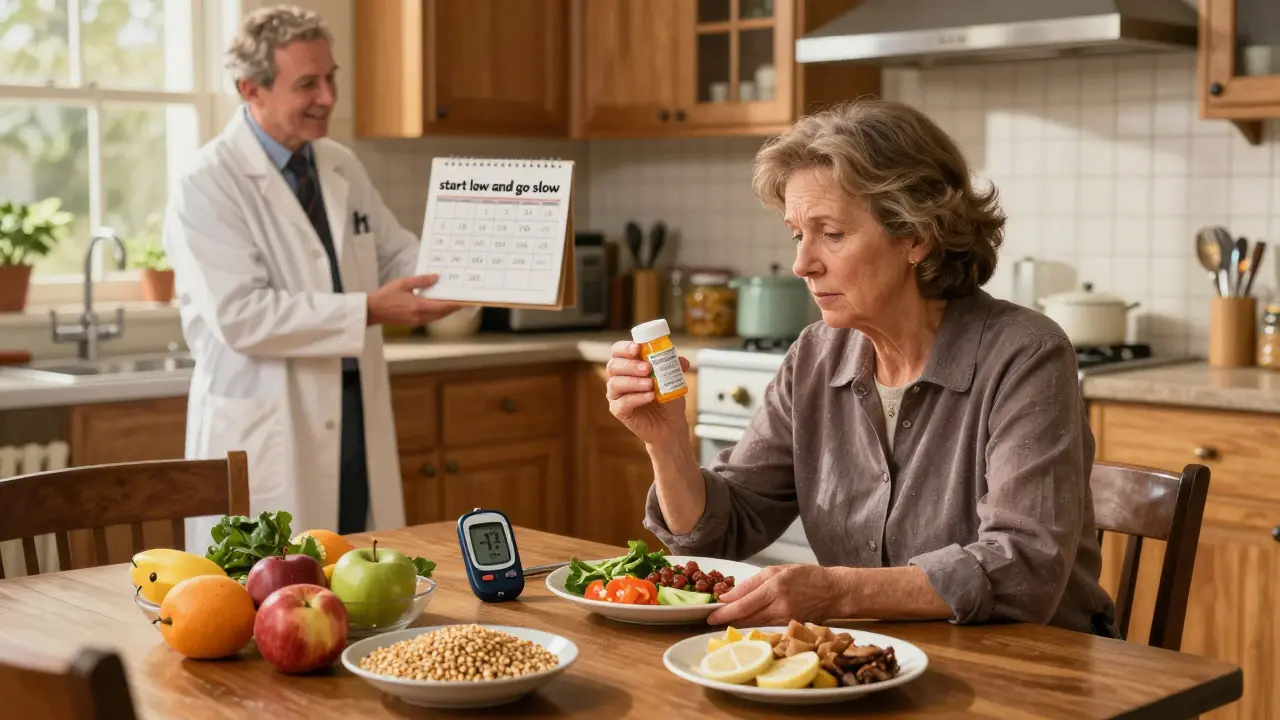
- Start Low and Go Slow: The American Diabetes Association recommends starting with the lowest possible dose. For example, begin with glyburide 1.25-2.5 mg daily or glipizide 2.5-5 mg daily. Titrate up slowly based on your HbA1c results, not aggressively.
- Never Skip Meals: Since sulfonylureas push insulin out regardless of food intake, missing a meal is a recipe for disaster. Try to eat consistent carbohydrate amounts at regular intervals.
- Use Continuous Glucose Monitoring (CGM): A 2022 trial called DIAMOND showed that CGMs reduced hypoglycemia duration by 48% in sulfonylurea users. Real-time alerts give you time to eat before your numbers crash.
- Check Drug Interactions: Certain medications can displace sulfonylureas from plasma proteins, increasing the amount of free drug in your blood. Sulfonamides, gemfibrozil, and warfarin can increase hypoglycemia risk significantly. Always inform your doctor of all supplements and prescriptions.
- Carry Fast-Acting Carbs: Keep glucose tablets or juice boxes handy. The standard treatment for mild hypoglycemia is the '15-15 Rule': consume 15 grams of fast-acting carbs, wait 15 minutes, and recheck your blood sugar.

The Role of Genetics in Your Risk
Your DNA plays a surprising role in how you metabolize these drugs. Research by SL Mitchell in 2020 highlighted that variants in the CYP2C9 gene can drastically alter your risk. People with the CYP2C9*2 or *3 alleles metabolize sulfonylureas much slower than average. This leads to higher drug concentrations in the blood and a 2.3-fold increased risk of hypoglycemia. If you find yourself having frequent lows despite careful management, ask your doctor about pharmacogenetic testing. Knowing your genotype could allow for a 30-50% dose reduction, maintaining glucose control without the dangerous drops.
When to Consider Alternatives
Sulfonylureas are incredibly affordable-generic glipizide costs about $4.00 per month in the US. This makes them accessible for millions. However, if the cost of monitoring and treating lows outweighs the savings, or if lifestyle changes become too restrictive, it may be time to discuss alternatives. Newer classes like DPP-4 inhibitors and SGLT-2 inhibitors have hypoglycemia rates below 0.3 events per 100 person-years, compared to 1.2-1.8 for sulfonylureas. While these drugs are more expensive, they offer a safer profile with fewer dietary restrictions. The decision should be a collaborative one between you and your healthcare provider, weighing financial constraints against quality of life and safety.
What should I do if my blood sugar drops below 70 mg/dL?
Follow the 15-15 rule immediately. Consume 15 grams of fast-acting carbohydrates, such as 4 glucose tablets, 4 ounces of fruit juice, or a tablespoon of honey. Wait 15 minutes, then check your blood sugar again. If it is still below 70 mg/dL, repeat the process. Once your level stabilizes above 70 mg/dL, eat a small snack with protein and complex carbs to maintain stability.
Is glyburide safe for elderly patients?
Glyburide is generally considered unsafe for patients over 65 due to its long half-life and active metabolites, which significantly increase the risk of severe hypoglycemia. The American Geriatrics Society recommends avoiding it in favor of shorter-acting agents like glipizide, which clear the body faster and pose less risk.
Can alcohol increase the risk of hypoglycemia with sulfonylureas?
Yes, alcohol can interfere with your liver's ability to release glucose, compounding the insulin-stimulating effects of sulfonylureas. This combination can lead to prolonged and severe hypoglycemia, sometimes occurring hours after drinking. It is crucial to limit alcohol intake and always drink with food if you are taking these medications.
Why are sulfonylureas still prescribed if they cause low blood sugar?
Sulfonylureas remain a cornerstone of diabetes treatment because they are highly effective at lowering HbA1c and are extremely inexpensive. For many patients, especially those with limited insurance coverage, they provide essential glycemic control. With proper education, monitoring, and dose adjustment, the risks can be managed safely.
Does exercise affect blood sugar differently on sulfonylureas?
Exercise increases your muscles' sensitivity to insulin and their uptake of glucose. When combined with sulfonylureas, which are already pushing insulin into your system, this can cause blood sugar to drop rapidly. It is recommended to check your blood sugar before and after exercise and consider eating a small carb-containing snack beforehand to prevent lows.
