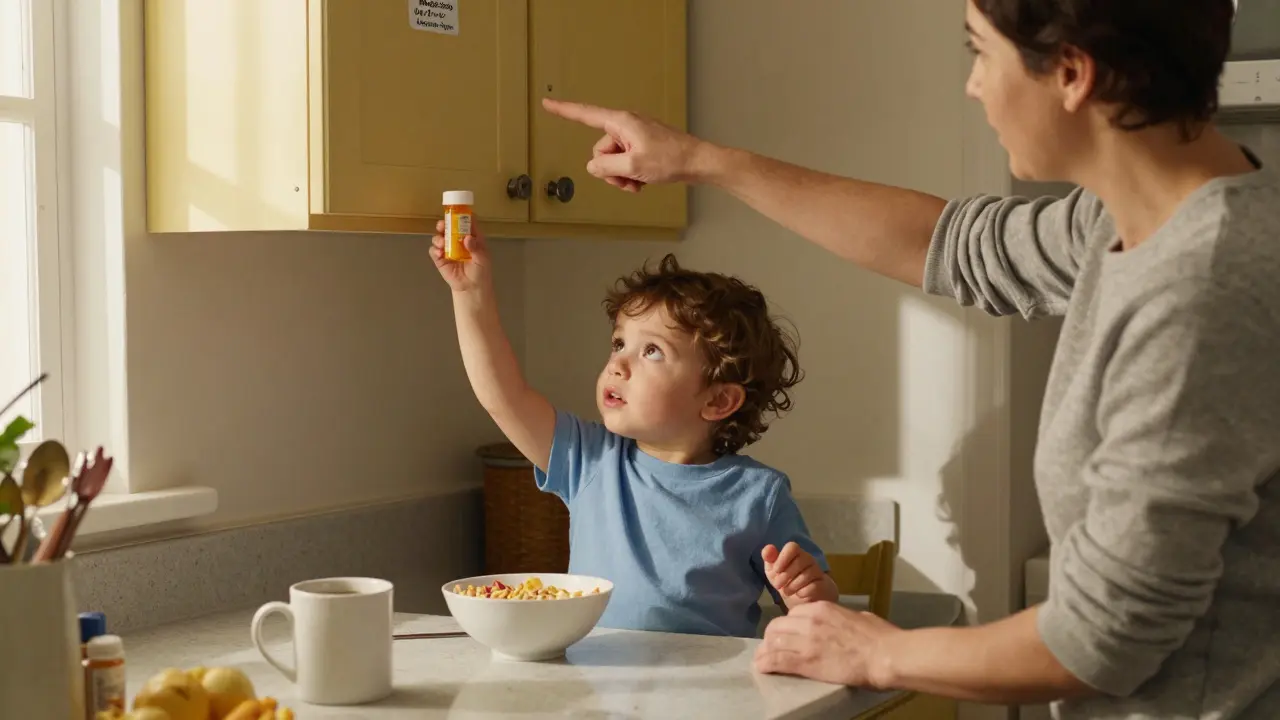
Every year, around 50,000 children under age 5 end up in emergency rooms because they accidentally swallowed medicine they weren’t supposed to. These aren’t rare accidents. They happen because kids see pills on counters, find bottles in purses, or think colorful liquid medicine tastes like candy. The good news? Medication safety isn’t just about locking things away-it’s about teaching kids, early and clearly, how to understand and respect medicine.
Why Kids Need to Learn About Medicine
Kids aren’t just curious-they’re observant. A 2-year-old watches Mom take a pill with breakfast and thinks, "That looks like gummy candy." A 4-year-old sees a bottle on the nightstand and grabs it because it’s right there. The FDA found that 78% of toddlers under 3 will copy what adults do with medicine within a minute of seeing it. That’s not rebellion-it’s imitation. The danger isn’t just in the pill count. A single dose of a heart medication or a prenatal vitamin can be deadly for a child. Even "safe" medicines like ibuprofen or children’s Tylenol can cause serious harm if given in the wrong amount. And here’s something most parents don’t realize: calling medicine "candy" to get a child to take it increases the risk of accidental overdose by 220%. That’s not a scare tactic-it’s data from a CDC study of over 1,200 poisoning cases.What Kids Should Learn at Each Age
Teaching medication safety isn’t one-size-fits-all. It changes as kids grow. The FDA breaks it down into clear stages:- Age 3: Kids should learn to give any pill they find to an adult-no tasting. They should also know that medicine is only for when a grown-up says so. If they see another child taking medicine, they need to tell a trusted adult.
- Age 5: They can start personalizing medicine bottles with stickers or their name. They learn that all medicine must be kept out of reach of little kids. They also learn to say "I feel worse" if they’ve taken medicine and don’t feel right.
- Age 6: Kids can begin reading labels with help. They learn to check the name on the bottle against the name the doctor gave them. They can start asking simple questions like, "Why do I need this?"
- Age 7: They learn how school medicine rules work. They can independently check a label against what Mom or Dad said. They also learn not to take medicine in front of younger kids-because kids copy them.
- Age 8: They should know their own weight. Dosing isn’t about age-it’s about weight. A child who weighs 40 pounds needs less than one who weighs 60 pounds, even if they’re the same age.
These aren’t abstract lessons. They’re survival skills. A 2021 study from Nationwide Children’s Hospital showed kids who got this kind of training were 47% better at telling medicine apart from candy than kids who didn’t.
Home Rules That Actually Work
Locking medicine up isn’t enough if you leave it on the nightstand because "it’s just for tonight." A Reddit survey of 1,200 parents found 18% keep medicine on bedside tables, 15% on kitchen counters, and 8% in purses or bags. That’s not safety-that’s temptation. The CDC says proper storage can prevent 67% of poisonings in kids aged 1 to 4. So what does "proper" mean?- Up and away: Store all medicine in a locked cabinet, high up and out of sight-not in a drawer kids can open.
- Lock boxes: Use storage boxes that meet ASTM F2057-22 safety standards. These aren’t just fancy containers-they’re tested to resist kids trying to open them.
- No more "candy" talk: Always say "medicine," never "gummy" or "sweetie." Even if you’re joking, kids remember the tone.
- Use the right tool: Never use a kitchen spoon. Use an oral syringe (free at most pharmacies) with clear markings. Using spoons leads to 40-98% dosing errors.
- Keep the number handy: Program 800-222-1222 (Poison Help) into every phone in the house. Ninety-one percent of calls about child medicine exposures happen within an hour of the incident.
And don’t forget grandparents. A CDC survey found 79% of grandparents don’t follow safety rules when kids visit. If your child goes to Grandma’s, send a small locked container with the medicine and a note: "Keep this up high. Never leave it out."
What Schools Are Doing Right (and Wrong)
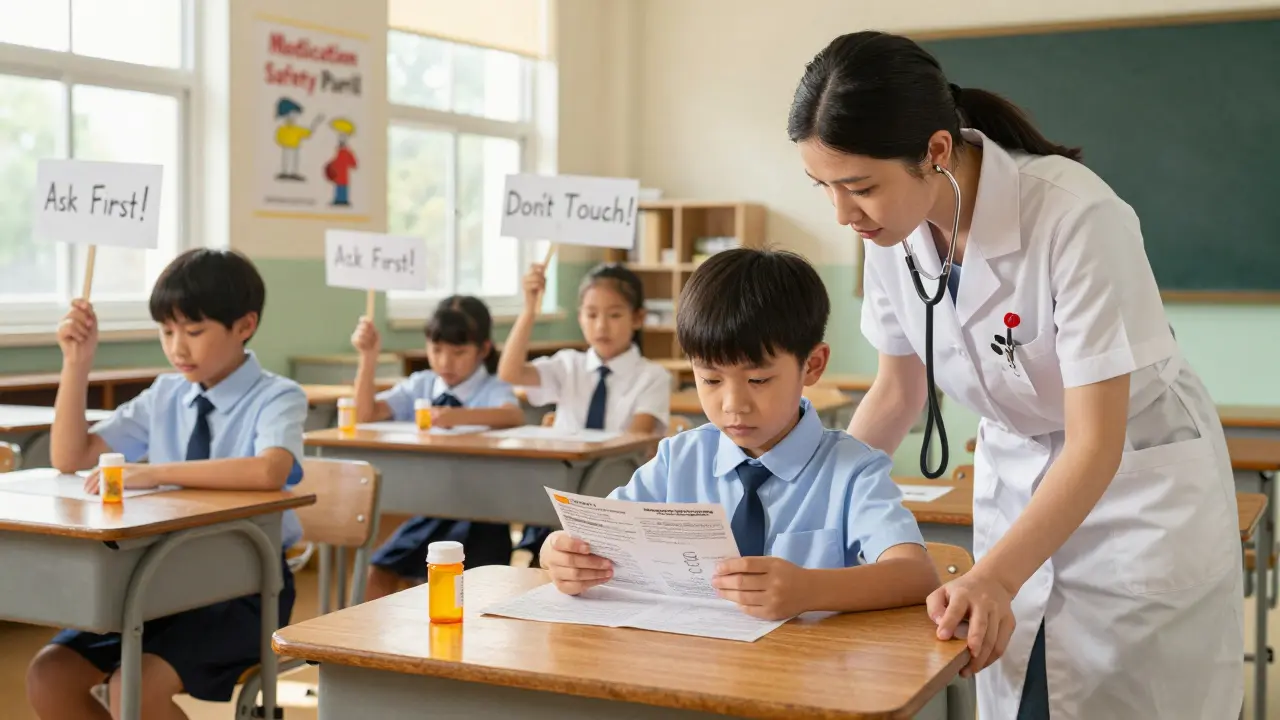
Schools have a big role. Federal rules since 2016 require Head Start programs to train staff on 12 specific medication competencies-like how to check labels, how to document doses, and how to spot allergic reactions. 92% of Head Start centers follow these rules. But most public schools? Not so much. Only 39% of U.S. schools have a full-time nurse. In rural areas, that number drops to 32%. That means teachers-who aren’t trained in medicine-are often the ones giving pills. And when kids move between classrooms or caregivers, 32% of errors happen. The best school programs use tools like Generation Rx’s "Medication Safety Patrol." It’s a classroom game where kids role-play finding medicine, recognizing it as dangerous, and telling an adult. They use real-looking (but fake) pill bottles. Teachers report that after one session, 89% of students can correctly tell medicine from candy. But here’s the gap: 76% of rural teachers say they have no printed materials. 44% have never been trained. Without resources, even the best intentions fail.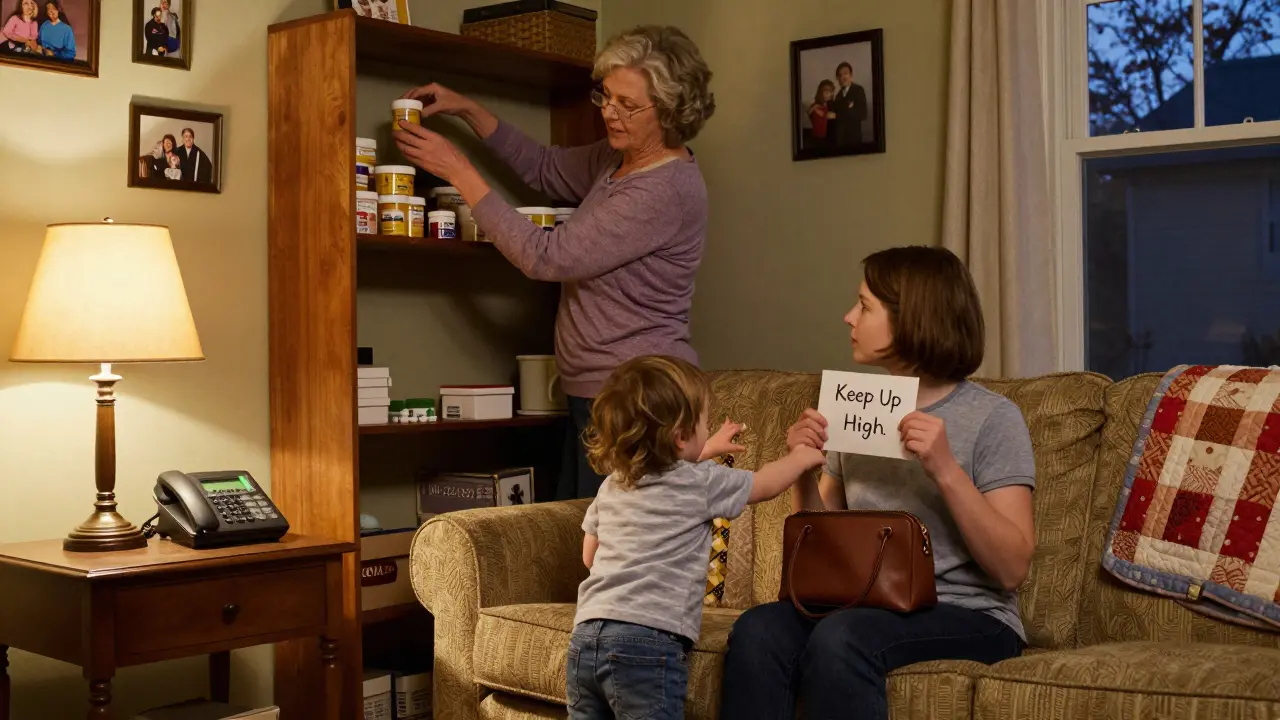
The Bigger Picture: What’s Missing
Most programs stop at age 10. But prescription misuse peaks at 16. A 2021 study in the Journal of Adolescent Health found teens are the second-largest group for unintentional injury deaths from medicine-after car crashes. We teach kids not to touch medicine, but we don’t teach older kids about sharing pills, taking more than prescribed, or mixing medicine with alcohol. Also, there’s a new threat: brightly colored liquid medicines. Between 2020 and 2023, liquid medication exposures in kids under 5 jumped 45%. These aren’t over-the-counter syrups-they’re prescription liquids for asthma, ADHD, or seizures. They taste sweet. They come in fun bottles. And manufacturers haven’t yet agreed on a bitterant standard to make them unpalatable. The CDC is expanding its PROTECT Initiative in 2024 to include teen education. That’s a step forward. But we need to start earlier, reinforce it longer, and fix the packaging.What Parents and Teachers Can Do Today
You don’t need a big budget or fancy training. Here’s what works:- Start early: Talk about medicine like you talk about fire or traffic. Simple, clear, and repeated.
- Use real-life moments: "This is your asthma inhaler. It helps you breathe. If you find one, give it to me."
- Practice weekly: Spend 10 minutes a week role-playing. "What if you found this bottle?" "What if your friend says it tastes like candy?"
- Check storage: Every month, walk through your home. Is medicine in the bathroom? In a purse? On the counter? Move it.
- Ask your school: Do they have a nurse? Do they use a formal program like Generation Rx? If not, ask for one. Bring them the free materials from GenerationRx.org.
- Know the number: 800-222-1222. Save it. Say it out loud. Make it part of your family routine.
Medicine isn’t magic. It’s powerful. And kids need to know that. Teaching them isn’t about fear-it’s about respect. Respect for their body. Respect for the power of medicine. And respect for the adults who help them stay safe.

Sandy Wells
March 21, 2026 AT 00:26So we’re supposed to teach toddlers that medicine isn’t candy but we’re not going to fix the fact that pharmaceutical companies make it taste like fruit punch? That’s the real problem. Not the kids. Not the parents. The marketing. And no, telling them "it’s medicine" won’t work when it looks like a gummy bear and smells like cotton candy.
Also, why are we blaming grandparents? Maybe because we don’t give them the tools. Send a locked container? Cute. But what about the ones who live in apartments with no cabinets? Or who forget? This feels like a Band-Aid on a hemorrhage.
Bryan Woody
March 22, 2026 AT 00:24Oh wow. 50,000 kids in ERs. Shocking. Like, who knew? Did you also know that 98% of toddlers will try to eat a sock if it’s within 18 inches? Kids are little chaos engines. You can’t teach safety to a two-year-old. You can only lock everything up, hide the keys, and pray.
And yes, calling medicine "candy" is dumb. But let’s be real - if you’re giving your kid Tylenol by saying "here’s a sweetie" because you’re exhausted and it’s 2 a.m. and they’re screaming - you’re not a monster. You’re a parent. Stop pretending this is about perfect parenting. It’s about surviving parenting. The system should fix the packaging. Not the kids. Not the moms. The damn system.
Desiree LaPointe
March 22, 2026 AT 16:59How delightfully quaint. We’re having a national conversation about teaching toddlers to not ingest pharmaceuticals like they’re Skittles - while the same corporations that design these sweet-tasting liquids are lobbying to block bitterant mandates. The irony is so thick you could spread it on toast.
And let’s not forget the real villain: the 2004 FDA decision to allow flavoring in pediatric prescriptions. That’s right. Not the parents. Not the grandparents. The bureaucrats who thought "cherry flavor" was a better innovation than "can’t be mistaken for candy."
Teaching kids to say "I feel worse"? That’s not safety. That’s trauma. The real solution is to make medicine taste like burnt plastic and look like a toxic waste drum. Then we won’t need lessons. We’ll need a funeral.
Also, Generation Rx? Cute. Like teaching kids not to touch fire while leaving the stove on.
Jackie Tucker
March 24, 2026 AT 08:05It’s fascinating how we’ve turned medicine into a moral puzzle instead of a public health crisis. We blame parents for leaving pills out - but we don’t fund lockboxes in low-income homes. We tell teachers to run role-play games - but we starve school nursing budgets. We lecture grandparents - but we don’t offer them training or resources.
This isn’t about ignorance. It’s about inequality. The kid who finds medicine on the counter? Their parent is working three jobs. The kid who gets a locked cabinet? Their parent has health insurance and a PTA meeting on Tuesdays.
Teaching kids to respect medicine? Sure. But let’s first respect the people trying to keep them alive.
shannon kozee
March 25, 2026 AT 19:11Lock boxes work. I use one. Simple. Effective. No drama. Just put it up high and lock it. And yes, use the syringe. Spoons are useless. Also, save the Poison Help number. I have it on my phone, my fridge, and my kid’s daycare form. Done.
Paul Cuccurullo
March 27, 2026 AT 17:45This is one of the most important conversations we’re not having. Medicine is not candy. But it’s also not a villain. It’s a tool. A powerful, life-saving tool - and children deserve to understand that with clarity, not fear.
I’ve seen firsthand how a simple 5-minute chat with my 4-year-old - "This is for your ears. Only Mommy or Daddy gives this. If you find it, bring it to me" - changed everything. No panic. No confusion. Just calm understanding.
Let’s not wait for an emergency. Let’s start today. With love. With consistency. With courage.
Timothy Olcott
March 28, 2026 AT 16:58AMEN TO THIS!!! 🇺🇸🔥
STOP TALKING AND START LOCKING!!
MY SIS LEFT HER PREGNANCY VITAMINS ON THE KITCHEN COUNTER AND MY 3-YEAR-OLD ATE 3 OF THEM!!
911. ER. SCARY AS HELL.
TEACH KIDS. BUT ALSO - LOCK IT UP. NO EXCUSES.
800-222-1222 IS MY NEW FAVORITE NUMBER 😤💊
matthew runcie
March 28, 2026 AT 17:55My daughter’s school does the "Medication Safety Patrol" thing. It’s weirdly effective. She came home and made me play "Find the Medicine" with toy bottles. She’s 5. She knows what’s safe and what’s not. No yelling. No fear. Just facts.
Also - I stopped saying "sweetie" for medicine. Now it’s "this is your medicine." She doesn’t ask for it. She doesn’t try to grab it.
Simple. Works.
Nicole James
March 30, 2026 AT 05:30Let’s be honest - this whole thing is a distraction. Who really benefits from teaching kids about medicine? The pharmaceutical industry? The CDC? The schools? Or are we just making parents feel guilty so we don’t have to regulate the real problem - the lack of bitterant standards? And why is no one talking about the fact that 73% of pediatric liquid meds are manufactured in China? With no U.S. safety oversight? And why are we using plastic bottles that kids can break open? Why aren’t we requiring childproof caps on ALL meds - not just the ones that are "high risk"? This feels like a PR stunt. Not a solution.
Nishan Basnet
March 30, 2026 AT 19:41As someone from India, I’ve seen how medicine is handled differently here - often stored in open drawers, given without labels, shared between siblings. But the core truth is universal: children are natural imitators.
What works isn’t just education - it’s consistency. My neighbor taught her child by always saying "medicine" and never touching pills in front of them. The child now refuses to touch any bottle - even candy-looking ones.
It’s not about fear. It’s about rhythm. Repetition. Routine.
And yes - the number 800-222-1222? I have it saved on every phone in my house. One less thing to panic about.
Allison Priole
April 1, 2026 AT 13:13I used to think this was overkill. Like, kids are gonna be kids. But then my nephew found my husband’s blood pressure pills. He didn’t eat them - he just held them and said, "This looks like candy. Can I try?"
That stopped me cold.
Now I have a locked box in the closet. I say "medicine" every single time. I use the syringe. I even made a little chart with stickers: "Find it? Bring it to me!"
It’s not perfect. But it’s better than before.
And I’m gonna send that box to my mom for when she babysits. No more "I’ll just leave it on the counter for tonight."
One small change at a time.