
One minute you’re fine. The next, your skin is burning, itching, and covered in raised, red welts that look like they’ve been stung by nettles. It’s a terrifying sensation, especially when you have no idea what caused it. This condition is called urticaria, commonly known as hives. It is a common skin reaction characterized by itchy, raised wheals resulting from histamine release in the skin. About one in five people will experience this at some point in their lives. While often harmless and fleeting, for many, it becomes a persistent, life-disrupting struggle.
If you are dealing with hives, you likely have three main goals: stop the itch immediately, find out what triggered it, and prevent it from coming back. This guide breaks down exactly how urticaria works, why standard treatments sometimes fail, and what modern medicine offers for those stuck in the cycle of chronic outbreaks.
What Is Urticaria and Why Does It Happen?
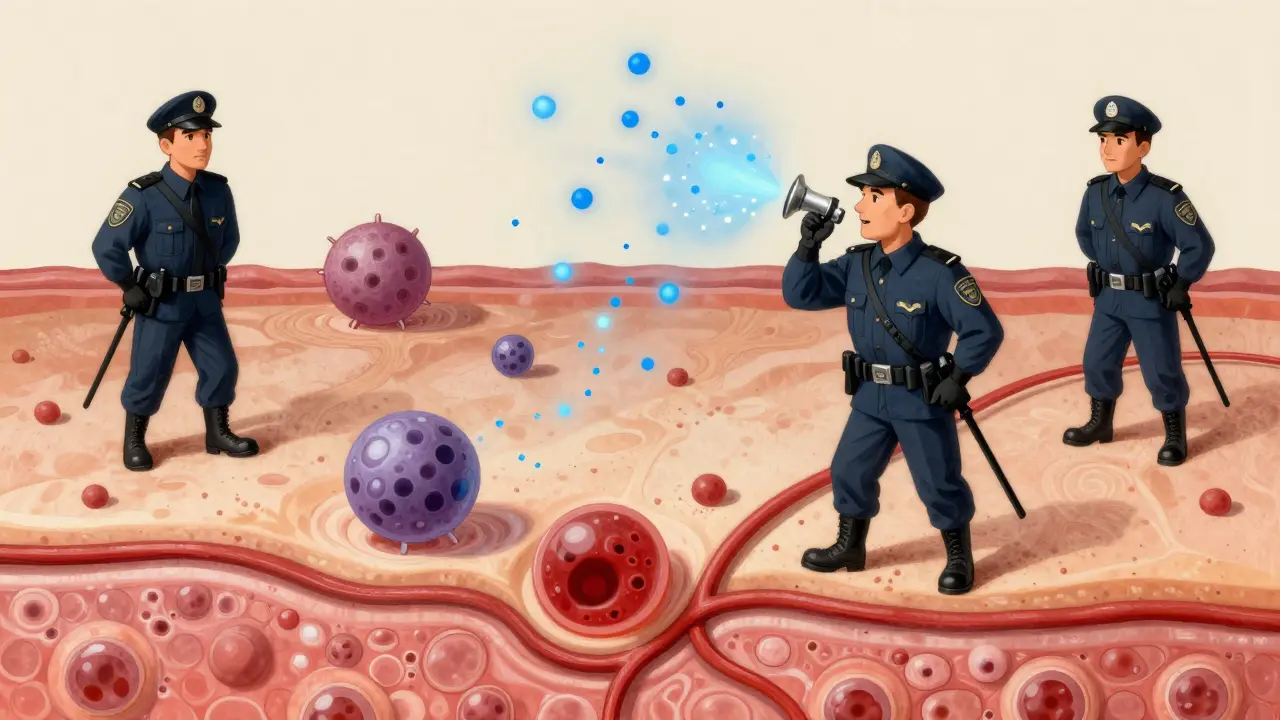
To understand hives, you need to look under the surface. Your skin contains immune cells called mast cells. Think of them as tiny security guards patrolling your body. When these guards detect a threat-whether it’s a true allergen like peanut protein or a non-allergic trigger like heat or stress-they sound the alarm. They do this by releasing chemicals, primarily histamine, which is a chemical mediator that causes blood vessels to dilate and leak fluid into surrounding tissues.
This leakage creates the classic hive: a raised, red, itchy welt known medically as a wheal. The redness comes from expanded blood vessels (vasodilation), and the swelling comes from fluid escaping into the skin layers. Crucially, individual hives usually disappear within 24 hours without leaving a mark. If a single spot stays raised for more than a day, it might not be simple urticaria, but rather another condition like vasculitis, which requires different medical attention.
We classify urticaria into two main types based on duration:
- Acute Urticaria: Lasts less than six weeks. This is the most common form, often linked to viral infections, food allergies, or medications.
- Chronic Spontaneous Urticaria (CSU): Persists for more than six weeks, occurring almost daily. In about 70-80% of these cases, no specific external trigger is found, suggesting an internal autoimmune mechanism where the body attacks its own mast cells.
Common Allergic Triggers and Physical Stimuli
Finding the cause is the first step to control, but it can feel like looking for a needle in a haystack. For acute hives, the culprit is often obvious. Common food allergens include nuts, shellfish, eggs, and milk. Medications like aspirin, ibuprofen (NSAIDs), and antibiotics such as penicillin are frequent offenders. Even insect stings or latex exposure can spark an immediate reaction.
However, if you have chronic hives, the triggers are often physical rather than dietary. These are known as physical urticarias. Here are the most common ones:
- Dermatographism: Also called "skin writing." Light pressure, like scratching or tight clothing seams, causes raised lines on the skin.
- Cold Urticaria: Exposure to cold air or water triggers hives in the exposed areas.
- Heat and Sweat: Cholinergic urticaria occurs during exercise, hot showers, or emotional stress when body temperature rises. These hives are typically small, pinpoint-sized.
- Solar Urticaria: A rare reaction to sunlight exposure.
- Vibratory Urticaria: Triggered by vibration, such as using power tools or driving a car.
For many with chronic spontaneous urticaria, there is no identifiable trigger. Stress doesn’t always cause hives directly, but it significantly worsens existing symptoms by lowering the threshold for mast cell activation. Keeping a symptom diary for two to four weeks can help identify patterns, noting foods, activities, temperatures, and stress levels alongside outbreak severity.
Antihistamines: The First Line of Defense
Since histamine is the primary driver of itching and swelling, blocking it is the logical solution. Antihistamines are the cornerstone of urticaria treatment. But not all antihistamines are created equal.
Doctors recommend second-generation antihistamines as non-sedating medications that block histamine receptors effectively without crossing the blood-brain barrier significantly. Examples include cetirizine (Zyrtec), loratadine (Claritin), fexofenadine (Allegra), and bilastine. These provide relief throughout the day without making you drowsy. In contrast, first-generation antihistamines like diphenhydramine (Benadryl) cross into the brain, causing sedation in up to 70% of users. While Benadryl works fast, its effects last only 4-6 hours, leading to a cycle of constant dosing and grogginess that disrupts work and sleep.
Here is a comparison of common options:
| Medication | Generation | Drowsiness Risk | Duration of Effect |
|---|---|---|---|
| Diphenhydramine (Benadryl) | First | High (50-70%) | 4-6 hours |
| Cetirizine (Zyrtec) | Second | Low-Moderate | 24 hours |
| Loratadine (Claritin) | Second | Very Low | 24 hours |
| Fexofenadine (Allegra) | Second | None | 24 hours |
For chronic cases, standard doses often aren't enough. International guidelines now recommend up-dosing second-generation antihistamines to up to four times the standard dose before moving to other therapies. Many patients find complete control at double or triple doses. Always consult your doctor before increasing dosage, as they need to monitor for any potential side effects.

Advanced Treatments for Resistant Cases
If high-dose antihistamines don’t bring the itching under control, you have options beyond steroids. Short-term use of corticosteroids like prednisone can quickly suppress severe flares, but they are not suitable for long-term management due to risks like weight gain, bone loss, and blood sugar spikes.
The game-changer for chronic urticaria has been biologic therapy. Omalizumab (Xolair) is a monoclonal antibody injection that binds to IgE antibodies, preventing them from activating mast cells. Approved for chronic idiopathic urticaria in 2014, it involves a subcutaneous injection every four weeks. Clinical trials show it achieves significant symptom reduction in about 65% of patients who didn’t respond to antihistamines alone. Most patients report feeling better within the first month.
More recently, new oral therapies have emerged. Remibrutinib, approved by the FDA in early 2024, is a tyrosine kinase inhibitor taken orally twice daily. It targets the signaling pathways inside mast cells, stopping the release of inflammatory chemicals. Early data suggests it offers complete symptom control for nearly half of treatment-resistant patients, offering a pill-based alternative to injections. Another option, dupilumab, was approved in late 2023 and blocks interleukin-4 and interleukin-13, showing promise for complex cases.
Living with Hives: Practical Management Strategies
Managing urticaria is as much about lifestyle adjustments as it is about medication. Here are practical steps to reduce flare-ups and improve quality of life:
- Avoid NSAIDs: Aspirin and ibuprofen can worsen hives in many people. Switch to acetaminophen (paracetamol) for pain relief unless your doctor advises otherwise.
- Wear Loose Clothing: Tight waistbands, bras, or socks can trigger dermatographism or pressure urticaria. Choose soft, breathable fabrics like cotton.
- Manage Temperature: If you have cold or heat urticaria, avoid extreme temperature changes. Take lukewarm showers instead of hot ones, and dress warmly in layers during winter.
- Track Your Symptoms: Use a journal or a dedicated app to log outbreaks, potential triggers, and medication effectiveness. This data is invaluable for your allergist.
- Reduce Stress: Since stress exacerbates symptoms, incorporate relaxation techniques like mindfulness, yoga, or deep breathing exercises into your routine.
It is also vital to address the mental health impact. Chronic itching leads to poor sleep, anxiety, and depression in up to 20% of patients. Don’t hesitate to seek support from mental health professionals or patient communities. You are not alone in this struggle.
How long do hives typically last?
Individual hives (wheals) usually appear and disappear within 24 hours, rarely lasting longer than a day in the same spot. Acute urticaria episodes generally resolve within a few days to six weeks. Chronic urticaria persists for more than six weeks and may come and go for months or years.
Are hives contagious?
No, hives are not contagious. You cannot catch urticaria from someone else. However, if the underlying cause is a viral infection (like a cold or flu), the virus itself may be contagious, even though the hives are not.
When should I see a doctor for hives?
Seek emergency care immediately if hives are accompanied by difficulty breathing, swelling of the lips/tongue/throat, dizziness, or nausea, as these are signs of anaphylaxis. See a doctor promptly if hives last more than two weeks, occur frequently, or do not respond to over-the-counter antihistamines.
Can stress cause hives?
Stress does not typically cause hives directly in healthy individuals, but it is a well-known trigger that can worsen existing urticaria or lower the threshold for reactions to other stimuli. Managing stress is a key part of comprehensive urticaria treatment.
What is the difference between hives and eczema?
Hives are raised, itchy welts that move around the body and fade within 24 hours without scarring. Eczema (atopic dermatitis) presents as dry, cracked, inflamed patches of skin that persist in the same location for days or weeks and may ooze or crust over. Hives are driven by histamine; eczema is driven by skin barrier dysfunction and inflammation.
Is Xolair safe for long-term use?
Yes, omalizumab (Xolair) has a strong safety profile for long-term use in chronic urticaria. Common side effects include injection site reactions. Serious allergic reactions (anaphylaxis) are rare (less than 0.2%). It is administered via injection every four weeks under medical supervision.
