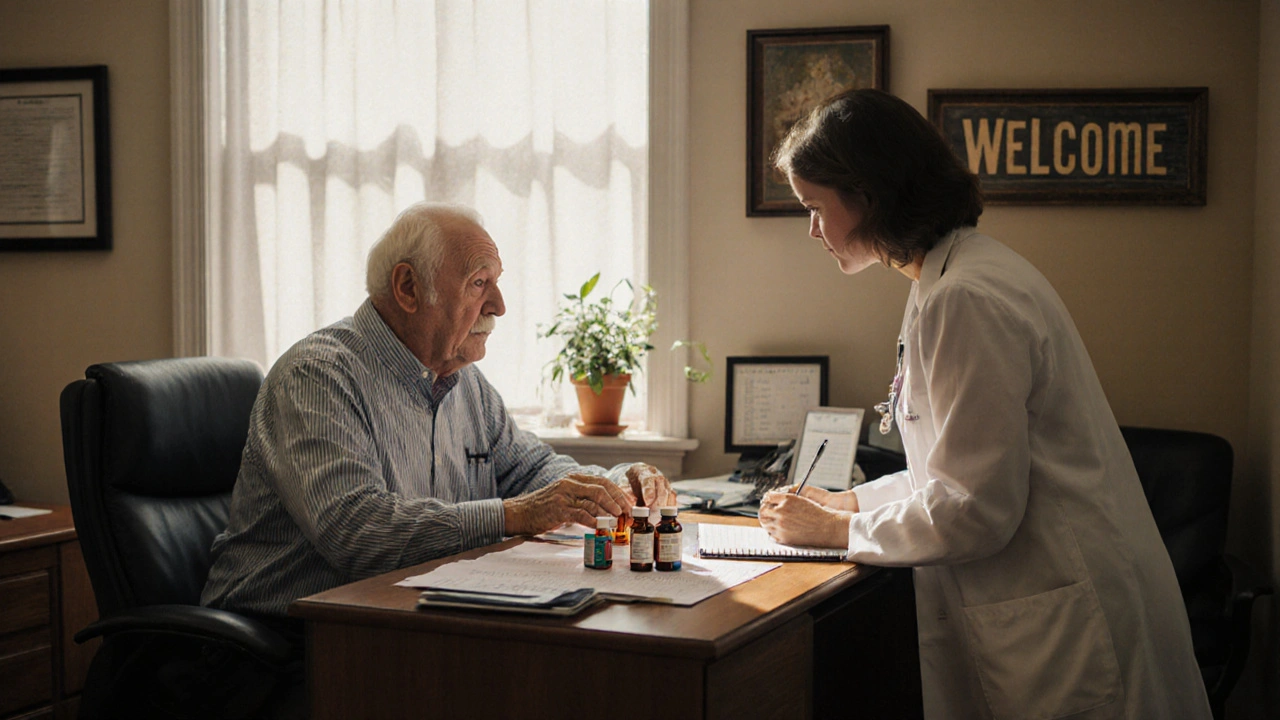
It’s not uncommon to pop a vitamin, turmeric capsule, or St. John’s wort tablet without thinking twice. After all, they’re "natural," right? But here’s the hard truth: supplements aren’t harmless snacks. They’re bioactive substances that can interfere with your prescriptions, worsen health conditions, or even cause dangerous side effects - if your provider doesn’t know you’re taking them.
Studies show that fewer than one in three people tell their doctor about the supplements they use. That’s not just an oversight - it’s a risk. In the U.S., over half of adults take dietary supplements. Nearly a quarter use herbal remedies. And yet, most doctors never ask. You assume they’ll bring it up. They assume you’ll mention it. And that silence? It’s where things go wrong.
What Happens When You Don’t Tell Your Provider
Imagine you’re on blood thinners like warfarin. You start taking garlic pills because you read they’re good for heart health. Garlic can thin your blood even more. You don’t tell your doctor. Then, during a minor procedure, you start bleeding uncontrollably. That’s not rare. It’s documented. In one Reddit thread, a user shared they nearly bled out during surgery because they never mentioned their daily garlic supplements. Their doctor had no idea.
St. John’s wort, one of the most popular herbal remedies for mood, can make birth control pills useless. It can also cancel out antidepressants, chemotherapy drugs, and HIV medications. Turmeric, often taken for joint pain, can interact with blood pressure and diabetes meds. Even common vitamins like vitamin K can mess with anticoagulants. These aren’t hypothetical risks. They’re real, preventable emergencies.
The FDA doesn’t test supplements before they hit shelves. Labels say "Not evaluated by the FDA" - and most people skip right over it. But here’s the kicker: the FDA can only act after harm is done. And even then, only about 1% of adverse reactions are ever reported. That means the real number of injuries from supplements is likely hundreds of times higher than what’s on record.
Why Patients Stay Silent
Why don’t people speak up? There are three big reasons.
First, many believe supplements are "too safe" to mention. A 2022 survey found 68% of users thought their doctor didn’t need to know because the products were "natural." But "natural" doesn’t mean safe. Poison ivy is natural. Arsenic is natural. Botanicals can be just as potent as pharmaceuticals.
Second, patients fear judgment. One user on HealthUnlocked said they waited two years to mention turmeric because they assumed their cardiologist would tell them to stop. Instead, the doctor asked - and then gave them a clear warning about interactions with their blood pressure meds. That’s the moment trust was built. But too many people never get there because they’re afraid to bring it up.
Third, doctors rarely ask. A 2021 JAMA survey found only 27% of physicians felt trained enough to discuss supplements. In a 15-minute appointment, what’s more urgent: your high blood pressure or your multivitamin? So the topic gets dropped. And patients assume silence means it’s not important.
What Providers Need to Know - And Why It Matters
Your provider doesn’t need to be an expert on every herb. But they do need to know what you’re taking. Why? Because interactions are real, measurable, and dangerous.
Take ginger. It’s often used for nausea. But it can increase bleeding risk during surgery. If you’re scheduled for a knee replacement and haven’t told your surgeon you’ve been taking ginger capsules for months, you could end up needing a blood transfusion. That’s not speculation - it’s in medical journals.
Or consider echinacea. People take it to prevent colds. But it can trigger immune reactions in people with autoimmune diseases like lupus or MS. If your rheumatologist doesn’t know you’re taking it, they might misdiagnose a flare-up as disease progression.
Even something as simple as calcium can interfere with thyroid medication. If you take levothyroxine and also take a calcium supplement at the same time, your body won’t absorb the thyroid drug properly. You’ll feel tired, gain weight, and your doctor will think your dose is wrong - when the real issue is timing and undisclosed supplements.
These aren’t edge cases. They’re common. And they’re preventable - if you speak up.
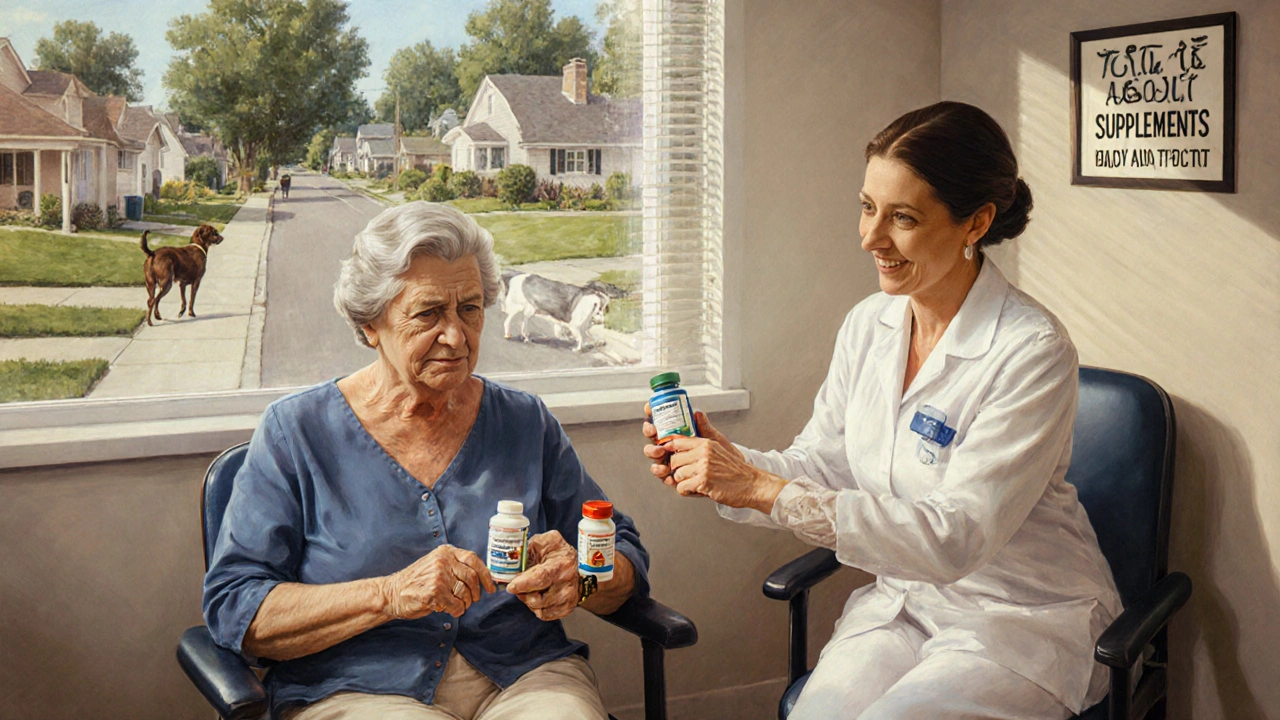
How to Talk to Your Provider - Even If It Feels Awkward
You don’t need a script. But you do need to be direct.
- Bring your bottles. Don’t just say "I take turmeric." Show the label. Ingredients vary wildly between brands. One bottle might have 500mg of curcumin; another might have 10mg and a bunch of fillers. Your provider needs to see the exact product.
- Use simple language. Say: "I’ve been taking this for X months. I didn’t think I needed to tell you, but now I want to make sure it’s safe with my other meds."
- Ask: "Could this interact with anything I’m on?" Most providers will say yes - and then check. Even if they’re not experts, they know how to look it up.
- Don’t wait for your annual checkup. Bring it up during any visit - especially if you’ve started a new supplement or changed your medication.
Some clinics now use a simple 5-question screening tool during intake: "Are you taking any vitamins, herbs, or supplements?" "Have you noticed any changes since starting them?" "Have you told your doctor?" "Are you taking them for a specific reason?" "Would you like advice on safety?"
Studies show that when providers use this tool, disclosure rates jump from 33% to 78%. That’s not magic. It’s structure. And it works.
What You Should Record Before Your Appointment
Write down everything. Not just the big stuff. Every pill, powder, tea, or tincture. Include:
- Product name
- Dosage (e.g., 500 mg, 2 capsules daily)
- Why you take it (e.g., "for sleep," "for joint pain")
- How long you’ve been taking it
- Where you bought it
Take photos of the labels. Or better yet - bring the bottles. Many people don’t realize that the same herb can have different active ingredients depending on the brand. A "ginkgo" supplement from one store might have 24% flavonoids; another might have 6%. Your provider needs to know the exact product.
Apps like MyMedList can help you track this. One 2023 trial showed that using such tools improved disclosure accuracy by 44%. That’s not just convenient - it’s life-saving.

What Happens When You Do Disclose
Here’s the good news: when you do speak up, your provider usually responds well.
A 2022 survey found that 78% of patients who disclosed their supplement use got helpful advice. Sixty-three percent said it improved their trust in their provider. That’s huge. It means your honesty doesn’t lead to judgment - it leads to better care.
One woman in her 60s started taking magnesium for leg cramps. She didn’t mention it until her doctor asked during a visit for high blood pressure. Turns out, magnesium can lower blood pressure too. Her doctor adjusted her medication, and her dizziness went away. She didn’t stop the magnesium - she just got the dose right. That’s the power of disclosure.
Another man was taking ashwagandha for stress. He never told his endocrinologist - until he started having heart palpitations. The doctor found it was interacting with his thyroid meds. They adjusted the dose, and his symptoms vanished. He’s now an advocate for disclosure.
These aren’t outliers. They’re examples of what happens when the gap between patient and provider closes.
The Bottom Line: Your Safety Isn’t Optional
You’re not being asked to stop your supplements. You’re being asked to be transparent. Your provider isn’t here to judge you. They’re here to keep you safe.
The system isn’t perfect. Doctors are rushed. Labels are confusing. But your voice? That’s the one thing you control. And it’s the most powerful tool you have.
Next time you walk into a clinic - whether it’s for a cold, a checkup, or a chronic condition - bring your supplements. Say the words. Ask the question. Don’t wait for them to ask you. Because in medicine, silence isn’t golden. It’s dangerous.
The FDA, the CDC, the American Medical Association - they all agree: disclosure saves lives. You don’t need to be an expert. You just need to be honest.

Brittany C
November 14, 2025 AT 19:26Let me just say this: the disconnect between patient behavior and clinical awareness is staggering. I’ve seen this in my work as a medical anthropologist-supplement use is often culturally coded, and patients assume it’s invisible to providers. The real issue isn’t just pharmacokinetics; it’s epistemic asymmetry. We’ve built a system where patients feel like they’re burdening doctors with ‘non-medical’ info, when in reality, that info is foundational to safety.
Sean Evans
November 15, 2025 AT 16:51LMAO at people who think ‘natural’ = safe. 😂 You know what’s natural? Poison dart frog venom. And yet you’re chugging turmeric like it’s kombucha. If your ‘herbal remedy’ has a label that says ‘not evaluated by the FDA’ and you still think it’s harmless, you’re one bad interaction away from an ER trip. Stop being a guinea pig. Tell your doctor. 🤦♂️
Anjan Patel
November 15, 2025 AT 21:50Bro, I took ashwagandha for 8 months because my yoga teacher said it ‘balances the chakras’ - then I started sweating like a sauna and my heart was doing the cha-cha. I didn’t say anything until my EKG looked like a stock market crash. My cardiologist looked at me like I’d just confessed to eating a live raccoon. Turns out, it spiked my cortisol and messed with my thyroid meds. Now I bring my bottles. Every. Single. Time. Don’t be me.
Scarlett Walker
November 16, 2025 AT 00:48I used to hide my magnesium because I thought my doctor would judge me. Then I finally spoke up and she said, ‘Oh good, I was wondering why your BP kept dropping!’ We adjusted my meds and now I feel like a new person. It’s not scary to talk about supplements - it’s empowering. You’re not annoying your doctor. You’re helping them help you. 💪
Hrudananda Rath
November 17, 2025 AT 11:02It is, indeed, a lamentable state of affairs - a populace so utterly unmoored from scientific literacy that they treat botanical extracts like dietary candy. The FDA’s regulatory lacuna is not an invitation to self-experimentation; it is a warning. One cannot invoke ‘natural’ as a moral shield while simultaneously disregarding pharmacological reality. This is not merely negligence - it is intellectual malpractice on a societal scale.
Brian Bell
November 18, 2025 AT 18:39My grandma takes 12 different supplements. I made her write them all down and bring them to her next appointment. She was embarrassed, but the doc caught that her calcium was blocking her thyroid med. Fixed it in 5 minutes. Now she’s the one telling everyone else to do it. 🙌
Nathan Hsu
November 18, 2025 AT 23:16...and yet... we must remember... that the human body is not a machine... nor is it a laboratory... and while pharmacokinetics are important... we must also consider the placebo effect... the psychological safety... the cultural context... the emotional weight... of these remedies... they are not just chemicals... they are rituals... traditions... comfort... and to dismiss them... is to dismiss the person behind them...
Ashley Durance
November 20, 2025 AT 05:03Of course people don’t tell their doctors. They’ve been conditioned to believe supplements are ‘safe’ by billion-dollar marketing campaigns. And doctors? They’re too busy billing codes to ask. But here’s the real problem: if you’re taking something that’s not regulated, you’re gambling with your life. And if you’re not disclosing it? You’re lying to your provider. That’s not ‘being proactive’ - that’s negligence dressed up as wellness.
Don Ablett
November 22, 2025 AT 02:27While the empirical evidence regarding herb-drug interactions is compelling, one must also acknowledge the epistemological gap between biomedical paradigms and lay health practices. The reluctance to disclose is not merely ignorance - it is a form of epistemic resistance. Patients often perceive medical authority as dismissive of holistic approaches, and thus withhold information not out of malice, but out of perceived alienation. The solution is not more admonishment, but institutionalized, non-judgmental inquiry protocols
Scott Saleska
November 23, 2025 AT 17:01Just FYI - I used to take St. John’s wort for ‘low mood’ and didn’t tell my psych. Three weeks later, my Zoloft stopped working. I thought I was getting worse. Turns out, the herb was metabolizing my antidepressant into nothing. I didn’t even know that was possible. Now I bring my entire medicine cabinet. No shame. Just safety.
Eleanora Keene
November 23, 2025 AT 21:12you dont have to be perfect about it. just start with one thing. like… maybe next time you see your doc, just say ‘hey, i’ve been taking this ginkgo thing for my memory’ and show them the bottle. that’s it. no big speech. no shame. just info. and then watch how they light up because you’re actually helping them help you. you got this 💖
Joe Goodrow
November 24, 2025 AT 23:57Why are we letting foreigners sell snake oil to Americans? The FDA is asleep at the wheel. If this was a pharmaceutical company doing this, we’d be in an uproar. But nope - let’s just let some guy in India sell ‘immune booster’ capsules made in a garage. Tell your doctor? Yeah right. Tell Congress to ban this crap first.
Kevin Wagner
November 25, 2025 AT 10:49Listen. I used to be the guy who thought ‘natural’ meant ‘no side effects.’ Then I got hospitalized because my turmeric + blood thinner combo turned me into a walking bruise. I’m alive because I finally spoke up. Now I’m the guy who brings my supplements to every appointment. I even made a little list. It’s not weird. It’s smart. And if your doc rolls their eyes? Find a new one. Your life isn’t a suggestion box.
Ryan Anderson
November 27, 2025 AT 04:15My doctor started using the 5-question screening tool last year. I didn’t realize how much I’d been hiding - I thought my fish oil was ‘too basic’ to mention. Turns out, it was interfering with my anticoagulant. Now I use MyMedList. It’s free. It’s easy. And I’ve saved myself from at least two potential ER visits. Seriously - do it. It’s not a burden. It’s self-care.
gent wood
November 29, 2025 AT 02:58It's a curious paradox, isn't it? We trust our physicians with our most intimate health concerns - our pain, our fears, our diagnoses - yet we withhold the very substances we consume daily, as though they were secrets to be guarded. The truth is, disclosure is not an act of vulnerability; it is an act of collaboration. And collaboration, in medicine, is the only path to true safety. Bring the bottles. Speak plainly. Your life is worth more than silence.