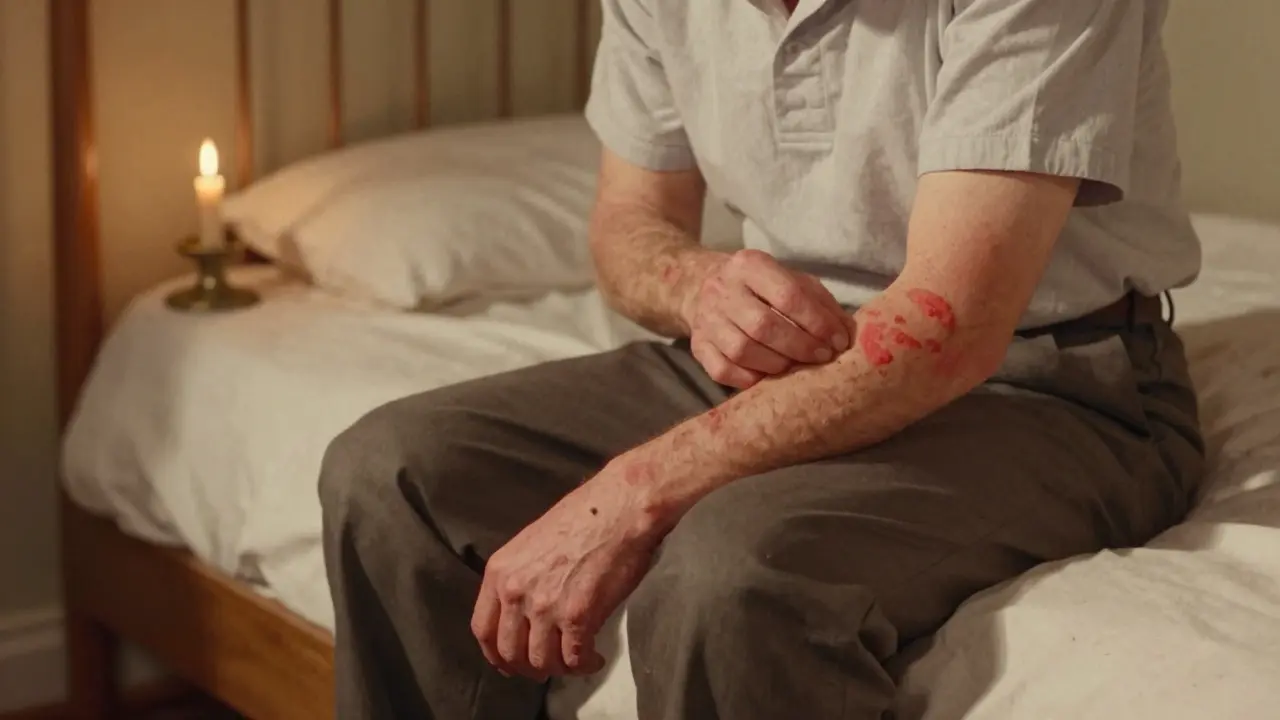
Itching until your skin bleeds isn't normal comfort; it's a warning signal that your body's defences have failed. For anyone dealing with Atopic Dermatitisa chronic inflammatory skin condition characterised by an impaired skin barrier, the problem lies deep beneath the surface. Standard creams often fail because they simply sit on top of the damage, ignoring the structural defect. Your skin acts as a wall, built of cells cemented together by specific lipids. When that cement vanishes, moisture escapes and irritants rush in. Restoring the barrier requires more than a thick layer of petrolatum; it demands precision biology.
The Architecture of Your Skin Barrier
Think of the outermost layer of your skin, known as the Stratum CorneumSkin Barrierthe protective outer layer of the skin composed of dead cells and lipids, as a brick-and-mortar structure. The bricks are corneocytes, flattened cells filled with keratin. The mortar is the lipid matrix holding them together. This mortar isn't just random grease; it relies on three critical ingredients in a strict formula. You need ceraimdes, cholesterol, and free fatty acids in a precise molar ratio of roughly 3:1:1. Without this balance, the wall crumbles.
- Ceramideslipid molecules that make up 50% of the skin barrier matrix: These act as the primary glue.
- Cholesterolconstitutes approximately 25% of the intercellular lipid matrix: This maintains the fluidity between layers.
- Free Fatty Acidsshort-chain lipids making up 10-15% of the barrier: These lock the structure into place.
Research indicates that people with eczema suffer from a significant drop in total ceramide levels, often losing 30% to 50% compared to healthy skin. Specifically, there is a shortage of long-chain ceramide 1, which is crucial for forming thick, waterproof lamellar bilayers. When these lipids are missing, your Transepidermal Water LossTEWLthe measure of water evaporation through the skin barrier skyrockets. Measurements show up to 60% higher water loss in affected areas. Essentially, you are dehydrated at the cellular level because your plumbing has holes.
Why Generic Moisturisers Fall Short
Walking down a pharmacy aisle, you see hundreds of bottles claiming to fix dry skin. However, many traditional emollients rely on occlusives like petrolatum or paraffin. These work by creating a seal over the skin, preventing immediate evaporation. While helpful temporarily, they don't repair the biological mortar. If you put a roof over a crumbling foundation, the building still collapses eventually.
Clinical trials suggest that physiological lipid mixtures-those matching the natural 3:1:1 ratio-repair the barrier 35% to 50% faster than simple occlusives. There is a distinct difference between a Physiological Lipid Mixtureformulation mimicking the natural lipid composition of the stratum corneum and a generic hydrator. A study published in the Dermatology and Therapy journal noted that incomplete mixtures, such as those containing ceramides without sufficient cholesterol, actually hinder recovery compared to doing nothing. This is counterintuitive; adding ingredients without balancing them can destabilise the membrane further.
| Feature | Traditional Occlusives | Ceramide-Dominant Emollients |
|---|---|---|
| Mechanism | Surface sealing | Structural integration |
| TEWL Reduction | 20-30% | 35-50% |
| Duration of Effect | Temporary (hours) | Sustained (72+ hours) |
| Composition | Petrolatum, oils | 3:1:1 Lipid Ratio |
Popular brands like CeraVe have brought ceramide technology to the mass market, making it more accessible. However, experts note a caveat: concentration matters. Not all commercial products contain enough active ingredient to trigger meaningful change. Prescription-grade options, such as EpiCeram® or TriCeram®, are formulated to meet the exact physiological standards required for severe cases.
Optimising Your Bathing Routine
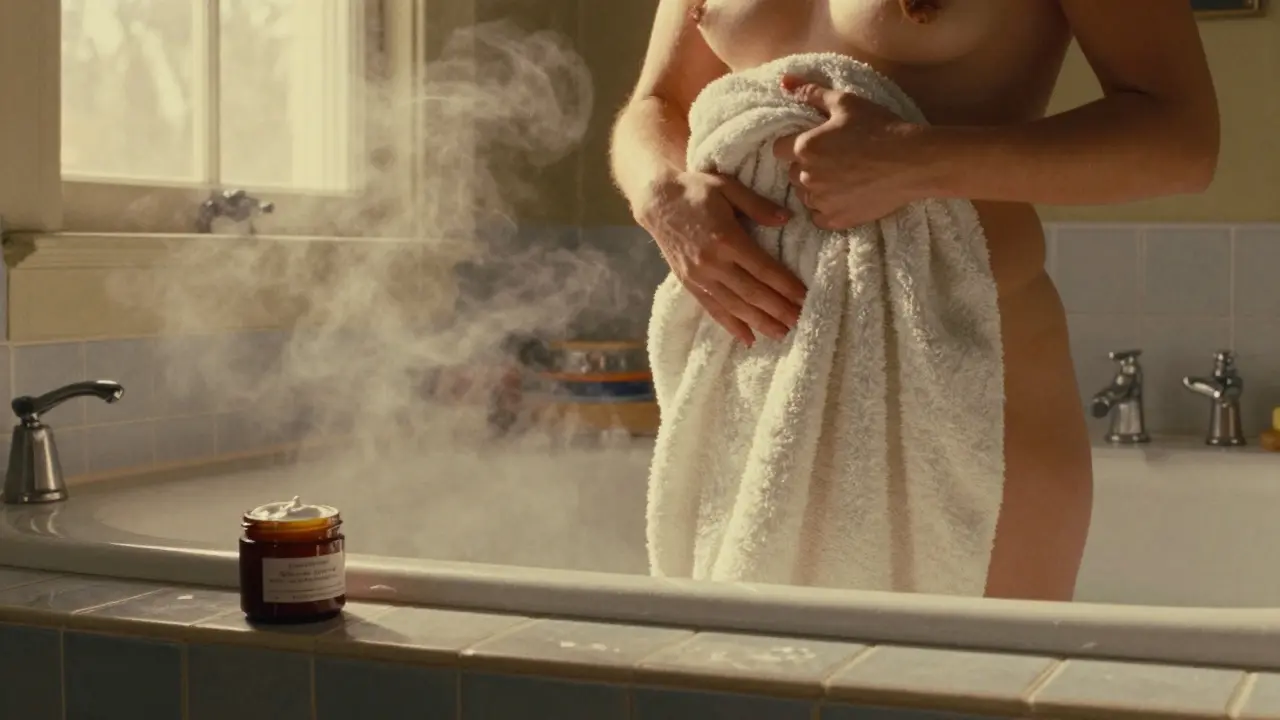
How you treat your skin around bath time determines whether your topical therapy succeeds or fails. Water itself is drying. Hot baths strip away natural oils, worsening the breach. To fix this, you should adopt the "soak and seal" methodology. Here is how the protocol works in practice:
- Use lukewarm water, ideally below 32°C (90°F). High heat activates enzymes that degrade your skin's natural lipids.
- Limit soaking time to 10-15 minutes. Prolonged exposure leaches out the remaining moisture-binding proteins.
- Step out and pat dry gently. Do not rub aggressively.
- Apply your ceramide cream within 3 minutes while the skin is still damp.
This timing window is critical. Applying the product to damp skin increases absorption capacity by nearly 70%. If you wait until your skin feels completely dry, the pores close off slightly, and the product sits on the surface rather than integrating into the lipid layers. Furthermore, choose cleansers with a pH around 5.5. Many standard soaps are alkaline (pH 9 or higher), which raises the skin's acidity too high, shutting down the enzymes responsible for producing your own ceramides.
Navigating Product Costs and Availability
There is a price gap between standard supermarket lotions and prescription barrier repair agents. As of early 2026, the cost for a premium tube of physiological emollient sits around £25 to £35 for 200g, whereas a generic petroleum jelly jar costs under £5. This creates access barriers. Insurance coverage in the UK varies, and NHS prescriptions often depend on specialist referral.
However, calculating the value shifts when you consider steroid use. Many patients report reducing their reliance on topical corticosteroids after consistently using barrier repair therapy for 6 weeks. Steroid creams are potent but carry side effects like thinning of the skin with long-term use. By fixing the underlying cause-the hole in the wall-you reduce inflammation naturally. In documented cases, patients have cut steroid usage from daily application to once weekly, saving money on medications and reducing health risks long-term.
Market trends show a shift toward biomarker-guided formulations. Companies are developing custom blends based on which specific ceramide species are lacking in your skin type. While not yet widespread in every clinic, this move suggests the future of treatment will be highly personalised. For now, sticking to the 3:1:1 ratio remains the gold standard recommendation from the European Academy of Dermatology.
Expectations and Timeline for Improvement
Patience is the hardest part of barrier repair. Unlike a hydrocortisone cream which might calm redness overnight, rebuilding the mortar takes time. Clinical data suggests visible improvement in hydration levels occurs within 21 to 28 days of consistent twice-daily application. Users often feel a tight sensation during the first week as the skin readjusts its hydration dynamics. This shouldn't discourage you; it is often a sign the formulation is working to restore the acid mantle.
If you have severe flare-ups, barrier repair is best used alongside other treatments. It manages maintenance but may not stop an acute attack instantly. Combine it with your prescribed anti-inflammatory medication during the worst phases, then transition to relying more heavily on the moisturiser as the flares subside. Consistency beats intensity here. Applying once a day sporadically yields poor results compared to applying it religiously twice a day.
Do I need a prescription for ceramide creams?
Not always. Over-the-counter options like CeraVe are available without a doctor's note. However, prescription versions like EpiCeram often contain higher concentrations and specific lipid ratios clinically proven for Atopic Dermatitis.
Can I use regular soap with my eczema skin?
Most regular soaps are too alkaline and strip necessary oils. Look for fragrance-free, pH-balanced cleansers with a pH near 5.5 to protect your natural barrier function.
How long does barrier repair take to work?
Significant improvements in skin hydration and reduced water loss typically occur within 4 to 6 weeks of consistent, twice-daily application.
Is petrolatum bad for eczema?
Petrolatum provides temporary relief by blocking evaporation but does not repair the biological structure of the skin barrier. Ceramide-based creams offer a deeper, restorative solution.
Does water hurt my skin?
Hot water damages the lipid barrier and increases water loss. Lukewarm baths followed immediately by moisturising help maintain hydration without causing irritation.

sanatan kaushik
March 31, 2026 AT 17:20You must stop using petrolatum if you want actual barrier repair done.
Debbie Fradin
April 1, 2026 AT 05:56Oh wonderful, another lecture on how we are spending our life savings on magic potions now.
The price tag alone makes my skin itch worse than the dermatitis.
Enjoy your science degrees while we pay for the privilege of staying hydrated.
Truly inspiring stuff if you ignore the bank account.
Jonathan Alexander
April 2, 2026 AT 07:18I remember nights where I scratched until the blood dried before I could sleep.
It feels like fire ants crawling under your epidermis constantly.
This is not dry skin but a torture method disguised as weather sensitivity.
Nothing compares to that specific kind of pain.
Charles Rogers
April 2, 2026 AT 14:48If you put cheap lotion on compromised tissue you deserve the suffering.
Stop blaming the genes when you refuse to buy the correct chemical balance.
People are too lazy to read the ingredient labels properly.
Basic discipline solves basic biology problems.
Adryan Brown
April 4, 2026 AT 03:43We have to understand the structural integrity deeply here before we panic.
The cells sit like bricks in a garden wall structure specifically.
Without the glue holding them tight the whole formation falls apart instantly.
Moisture escapes through the gaps created by missing lipids rapidly.
Standard cream just sits on top like a sheet over a broken fence.
You need actual building materials to patch the holes effectively.
Cholesterol keeps the fluidity moving between the layers smoothly.
Fatty acids lock everything into place without letting water pass through.
That ratio mentioned earlier is not a suggestion but a requirement.
Clinical data shows significant reduction in water loss when applied correctly.
Many people stop using the products because they do not see immediate results.
Patience is required while the new cells grow and cement themselves down.
Hot water dissolves what little fat you have left remaining on surface.
The enzymes responsible for healing get shut down by high heat exposure.
Just follow the protocol exactly as described in the medical guidelines.
Consistency over weeks rebuilds the wall much better than intensity.
Vikash Ranjan
April 5, 2026 AT 02:01I doubt the numbers presented in this study are fully accurate.
Laboratory conditions rarely match real world bathroom environments perfectly.
Your shower pressure and soap residue changes every single time.
Do not trust the perfect molar ratios found in sterile testing labs.
Biraju Shah
April 6, 2026 AT 05:09You need to cut the shower time immediately regardless of habit.
Standing in hot steam is actively removing the barrier components.
Pat yourself dry gently to avoid mechanical damage to the fragile stratum.
Apply the cream while damp to lock moisture inside the pores.
Carolyn Kask
April 6, 2026 AT 07:55Only Americans seem obsessed with brand names instead of ingredients.
Euro standards often have stricter regulations on active concentrations.
CeraVe is marketing fluff compared to prescription grade formulations actually.
You are paying for bottles not for the actual science inside them.
Ruth Wambui
April 7, 2026 AT 16:46Pharma giants know the cure involves simple lipid replacement.
They profit more from chronic inflammation treatments than prevention methods.
Why would they fix the root cause so quickly and permanently?
Suspect the supply chain deliberately keeps prices artificially high.
Michael Kinkoph
April 9, 2026 AT 15:12The formulation must be precise! It cannot be approximate!
Ordinary consumers lack the discernment required for true biological care!
One must prioritize purity! One must prioritize function!
Generic options are merely cosmetic fillers for vanity!
Jonathan Sanders
April 11, 2026 AT 05:13Another day, another expensive jar of hope sold to desperate people.
Tell me the science again so I can cry less about the price.
My wallet bleeds just watching these recommended lists accumulate.
Glad something works even if it bankrupts us slowly.
emma ruth rodriguez
April 12, 2026 AT 08:21The timeline for recovery is typically twenty-one to twenty-eight days minimum.
Please apply twice daily without fail to achieve maximum absorption rates.
Discontinue topical steroids gradually once the barrier stabilizes completely.
Consistent adherence yields superior outcomes over sporadic intensive treatments.