
Imagine you are reading a review for a new smartphone. The reviewer says the battery life is "average." If you already love that brand, you might think, "Average is fine; it’s reliable." If you hate that brand, you think, "See? It dies quickly." The facts didn’t change. Your brain did.
This is the core problem with cognitive biases: they are systematic errors in thinking that warp how we process information based on what we already believe. We often assume we react to the world objectively, but research shows this is rarely true. In fact, studies suggest that nearly 97% of our daily decisions are influenced by these unconscious mental shortcuts.
When brands or communicators send out "generic responses"-standardized messages, ads, or customer service replies-they expect a neutral reaction. They don’t get one. Instead, your preexisting beliefs filter that message, often distorting it entirely. Understanding this mechanism isn’t just academic; it’s crucial for anyone trying to communicate clearly, make better decisions, or understand why people fight over facts that seem obvious.
The Engine Behind the Bias: System 1 vs. System 2
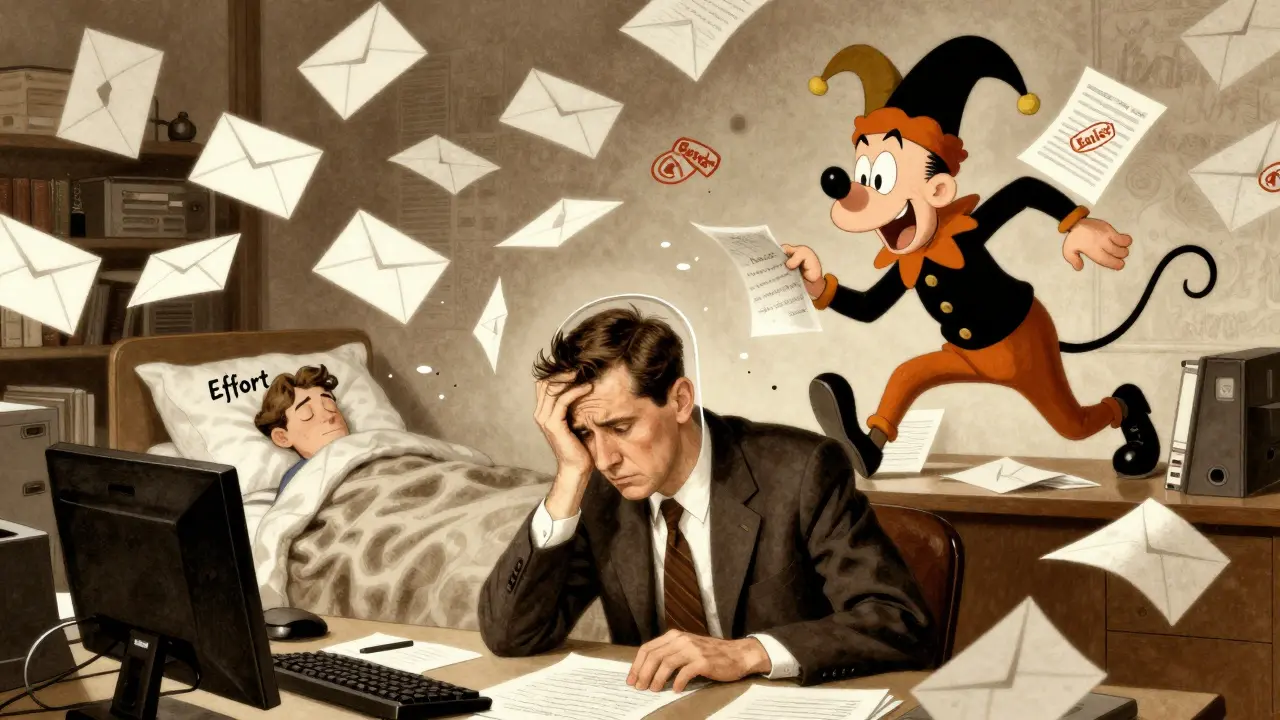
To understand why generic responses fail to land as intended, we have to look at how the brain works. Nobel laureate Daniel Kahneman described two systems of thinking. System 1 is fast, automatic, and emotional. It runs on autopilot. System 2 is slow, logical, and effortful. Most of the time, we rely on System 1 because it saves energy.
Here is the catch: System 1 is heavily influenced by your existing beliefs. When you receive a piece of information, System 1 instantly checks it against your worldview. If it fits, you accept it. If it clashes, you reject it or twist it to fit. System 2, the part of your brain capable of objective analysis, usually stays asleep because waking it up takes too much cognitive effort.
This dynamic explains why a standard email from a bank about "fees" triggers anger in some customers and indifference in others. The text is identical. The neurological response is not. fMRI studies show that when people encounter information confirming their beliefs, the ventromedial prefrontal cortex lights up-a reward center. When they face contradictory info, areas linked to conflict monitoring activate, creating a literal feeling of stress or discomfort.
Confirmation Bias: The King of Distortion
If there is one bias that dominates how beliefs affect responses, it is confirmation bias. This is the tendency to search for, interpret, and recall information in a way that confirms what you already think. It has an effect size of d=0.87, which is massive in psychological terms. For comparison, anchoring bias (relying too heavily on the first piece of info) sits at d=0.59.
Consider a political ad. It uses vague language like "We will protect our values." To a supporter, this means specific policies they love. To an opponent, it sounds like a threat to rights they cherish. Both groups read the same words but hear different meanings. A 2022 study analyzing online discussions found that users exposed to contradicting views showed 63% higher physiological stress and were 4.3 times more likely to dismiss the source as "biased," regardless of its actual credibility.
In business, this kills generic marketing. If a company sends a broad newsletter claiming "Our product improves efficiency," skeptics will immediately look for flaws. Believers will ignore the flaws and focus on the success stories. The message didn’t change; the filter did.
The False Consensus Effect: Assuming Everyone Agrees
Another major player is the false consensus effect. This is the belief that other people share our opinions and behaviors more than they actually do. Research across 12 countries showed people overestimate agreement with their beliefs by an average of 32.4 percentage points.
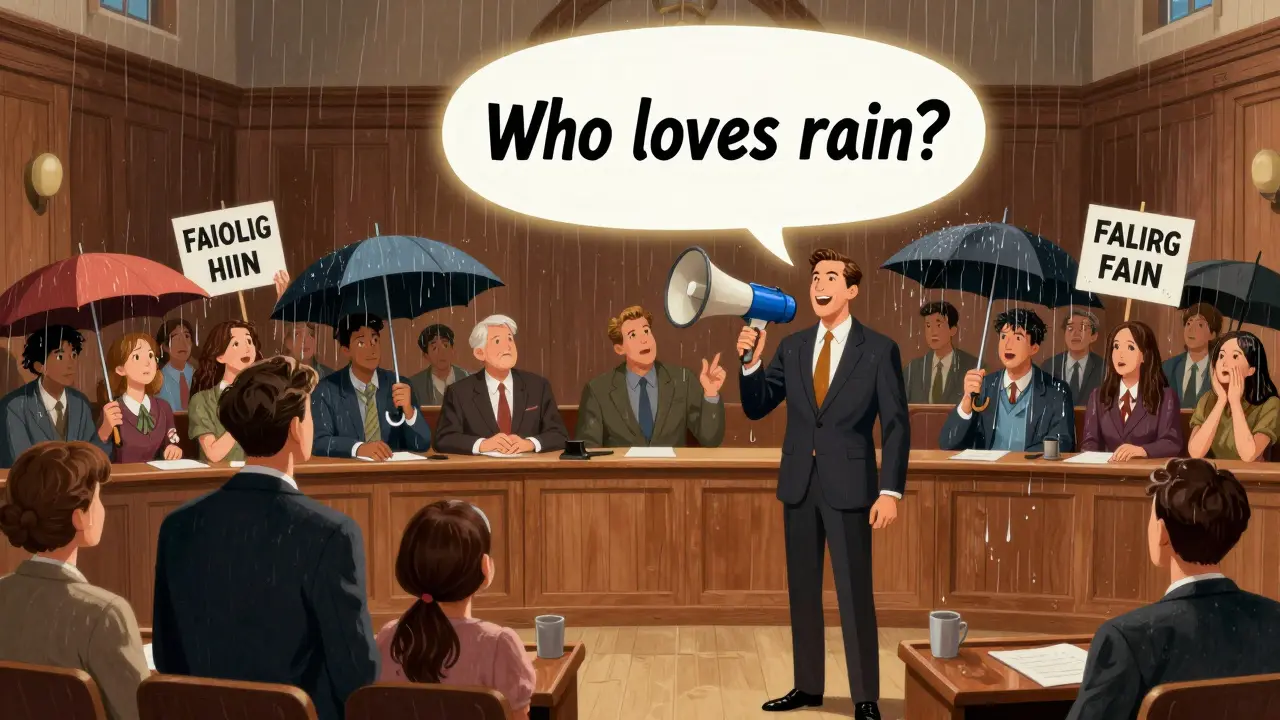
Why does this matter for generic responses? Because creators of those responses often suffer from this bias themselves. A brand manager might write a tweet saying, "Who else loves rainy days?" assuming everyone feels cozy. But for many, rain means flooding, mold, and sadness. The manager’s internal belief projects outward, creating a disconnect. They aren’t speaking to the audience; they are speaking to a mirror image of themselves.
This leads to tone-deaf communications. When companies issue apologies or statements, they often use language that resonates with their own corporate culture but alienates the public. They assume their logic is universal. It isn’t.
Framing Effects: Gains vs. Losses
How you present information changes how it is received. This is known as the framing effect. Experiments show that decision responses can shift by 31.2 percentage points depending on whether options are framed as gains or losses.
Take a medical diagnosis. A doctor tells Patient A, "This surgery has a 90% survival rate." Patient B hears, "This surgery has a 10% mortality rate." Statistically, these are identical. Psychologically, they are worlds apart. Patient A feels hopeful; Patient B feels terrified. Their subsequent questions, consent forms, and even pain tolerance may differ based solely on that framing.
In brand psychology, this is critical. A generic response like "Your refund will take 5-7 days" frames the wait as a duration. A better frame might be "Your money is safe and processing now; expect it by Friday." The first highlights loss (time); the second highlights security (gain). Beliefs about trust dictate which frame works. If a customer distrusts the brand, even the positive frame may trigger skepticism due to prior negative experiences.
| Bias Type | Core Mechanism | Impact on Response | Mitigation Strategy |
|---|---|---|---|
| Confirmation Bias | Favoring info that supports existing beliefs | Rejects contradictory data; reinforces echo chambers | Use "consider-the-opposite" technique |
| False Consensus | Overestimating how much others agree with us | Tone-deaf messaging; assumes shared context | Audience segmentation; empathy mapping |
| Framing Effect | Reacting differently to equivalent info based on presentation | Emotional volatility; risk aversion or seeking | A/B test language; focus on user-centric gains |
| Hindsight Bias | Believing you predicted an outcome after it happened | Undermines learning; creates false confidence | Document predictions before outcomes occur |
The Real-World Cost of Biased Responses
These aren’t just abstract concepts. They have tangible costs. In healthcare, diagnostic errors linked to cognitive bias account for 12-15% of adverse events. A doctor might see a symptom and jump to a conclusion (anchoring), ignoring other possibilities because the initial belief feels strong. In legal settings, confirmation bias increases wrongful conviction rates by 34%. Eyewitness testimony, heavily swayed by expectation bias, contributed to 69% of DNA-exonerated wrongful convictions.
In finance, optimism bias leads investors to underestimate risks by 25%, resulting in lower annual returns. Retail investors who exhibit strong optimism achieve 4.7 percentage points lower returns than realistic counterparts. The cost of ignoring how beliefs shape responses is measured in lost money, health, and justice.
Breaking the Cycle: Practical Mitigation Strategies
Can we stop our brains from doing this? Not entirely. These biases are evolutionary adaptations designed for speed. But we can build brakes. Here are three evidence-based strategies to reduce the impact of beliefs on generic responses.
- Consider the Opposite: Actively generate arguments against your initial position. A University of Chicago study found this simple step reduces confirmation bias effects by 37.8%. Before reacting to a news headline or brand statement, ask yourself: "What if the opposite were true? What evidence would support that?"
- Structured Decision Protocols: In professional settings, implement mandatory checks. The Harvard Decision Science Laboratory protocol requires doctors to consider three alternative diagnoses before finalizing an assessment. This reduced diagnostic errors by 28.3%. For businesses, this could mean requiring a "devil’s advocate" role in every strategy meeting to challenge assumptions.
- Cognitive Bias Modification (CBM): This involves training the brain to associate ambiguous stimuli with positive rather than negative interpretations. Meta-analyses show CBM can reduce belief-consistent responding by 32.4% after 8-12 weeks of practice. While originally developed for anxiety, the principles apply to general decision-making hygiene.
Technology is also stepping in. Tools like Google’s "Bias Scanner" API analyze language patterns for belief-consistent distortions with high accuracy. The EU’s AI Act, effective 2025, mandates bias assessments for high-risk AI systems. As algorithms mediate more of our interactions, understanding human bias becomes essential to auditing machine behavior.
Why This Matters for You
You don’t need to be a psychologist to benefit from this knowledge. Whether you are writing an email, evaluating a job candidate, or scrolling through social media, your beliefs are filtering reality right now. Recognizing that filter is the first step to clearer thinking.
Next time you receive a generic response that triggers a strong emotion, pause. Ask yourself: Is my reaction based on the content, or is it based on my preexisting belief about the sender? That small moment of reflection engages System 2. It won’t eliminate bias, but it will give you back some control.
What is the most common cognitive bias in everyday communication?
Confirmation bias is widely considered the most pervasive. It causes people to seek out and interpret information in ways that validate their existing beliefs, leading to polarized reactions to neutral or generic messages.
How can I tell if I am experiencing hindsight bias?
Hindsight bias occurs when you believe you "knew it all along" after an event happens. To check for it, look at your past predictions. Did you write them down beforehand? If you only remember being right without documented proof, you are likely experiencing hindsight bias.
Does cognitive bias affect everyone equally?
No. Cultural factors play a role. For example, self-serving bias is stronger in individualistic Western societies than in collectivist Eastern cultures. Additionally, individuals with higher scores on the Cognitive Reflection Test tend to override intuitive biased responses more effectively.
Can technology help mitigate cognitive biases?
Yes. AI tools can flag biased language patterns in real-time. Furthermore, structured digital protocols that force users to consider multiple perspectives before acting have been shown to improve judgment quality by over 20% in corporate settings.
Why do generic responses often fail to satisfy customers?
Generic responses fail because they ignore the recipient's unique belief framework. Due to confirmation bias and framing effects, a standard apology or explanation may be interpreted as insincere or evasive if it contradicts the customer's preconceived notion of the brand.
