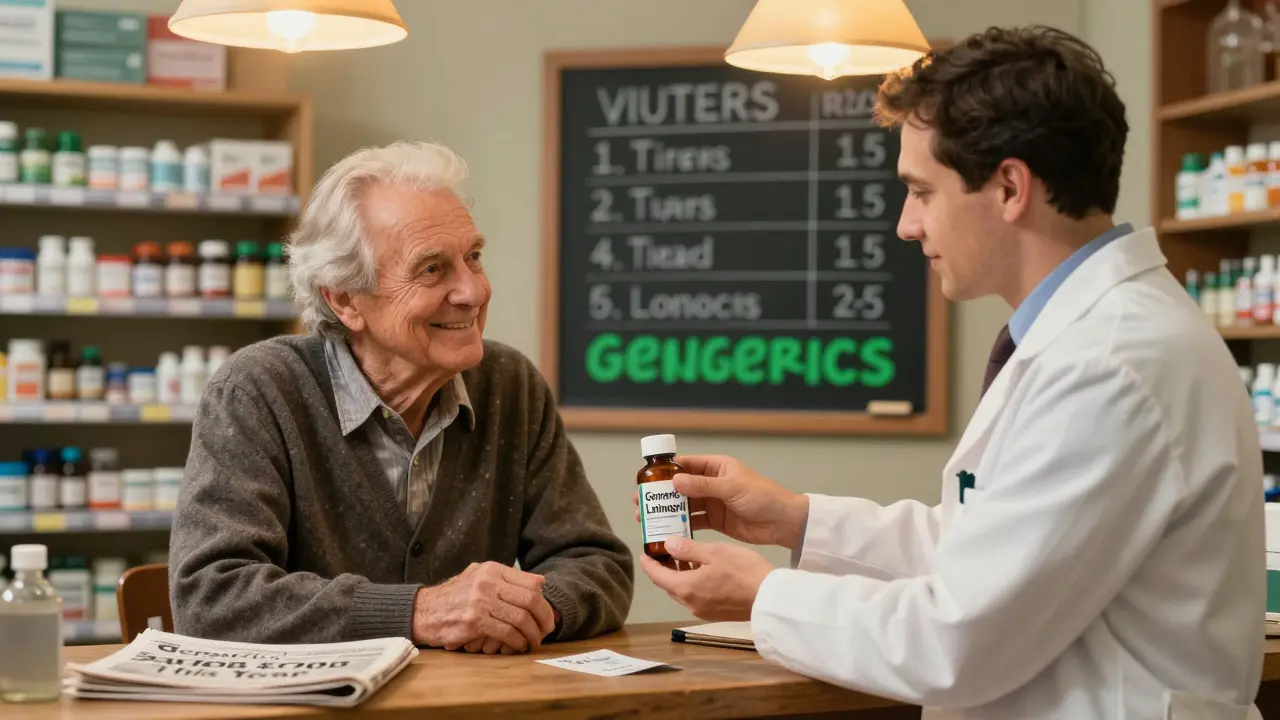
When you fill a prescription for blood pressure medication or antibiotics, you might not think about why your copay is $5 instead of $50. That difference isn’t random. It’s the result of a carefully engineered system built into your health insurance plan - one designed to save money by pushing you toward generic drugs.
Why Generics Are the Backbone of Insurance Cost Control
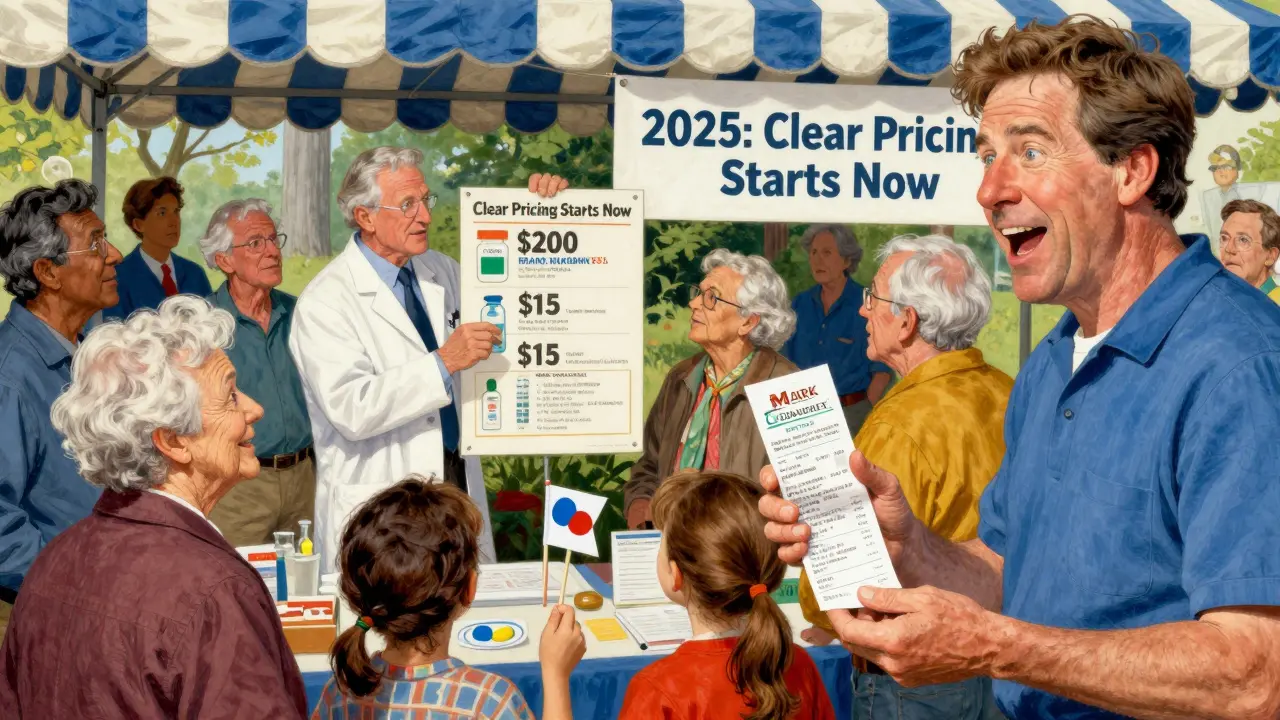
Generic drugs aren’t cheap because they’re low quality. They’re cheap because they’re copies. Once a brand-name drug’s patent expires, other manufacturers can legally make the exact same medicine, as long as it’s proven to work the same way in the body. The FDA requires this. No shortcuts. No guesswork.Here’s the math: a brand-name drug might cost $200 for a 30-day supply. The generic version? Around $15. That’s an 85% drop in price. And it’s not rare. In 2022, 91.5% of all prescriptions filled in the U.S. were for generics. But those generics made up only 22% of total drug spending. That’s the power of scale.
Over the last decade, generic drugs saved the U.S. healthcare system more than $3.7 trillion. That’s not a guess. It’s from IQVIA’s analysis. Every year, that number hits over $370 billion. For insurers, that’s a massive win. For patients, it should be too - but it’s not always that simple.
How Insurance Plans Push You Toward Generics
Health plans don’t just hope you’ll choose generics. They build rules that make it the easiest, cheapest, and sometimes only option.- Tiered formularies: Most plans split drugs into tiers. Generics are almost always Tier 1 - the lowest cost. You might pay $0 to $10 for a 30-day supply. Preferred brand drugs? $25 to $50. Non-preferred brands? $60 or more.
- Mandatory substitution: In 49 states, pharmacists can swap a brand-name drug for a generic without asking your doctor - as long as it’s allowed by law and the prescription doesn’t say "dispense as written."
- Step therapy: Before your plan will pay for a costly brand-name drug, you may have to try the generic first. This is required in 92% of Medicare Part D plans.
- Closed formularies: Some plans won’t cover the brand-name drug at all if a generic exists. If your doctor prescribes it, you’ll pay full price - or your plan will deny it outright.
These aren’t just policies. They’re financial levers. Between 2010 and 2020, generic copays rose just 12%. Brand-name copays jumped 47%. The gap got wider on purpose - to nudge people toward cheaper options.
Who’s Really Saving Money?
On paper, everyone wins. Insurers pay less. Patients pay less. The system looks efficient.But here’s the catch: the savings don’t always reach you.
Pharmacy Benefit Managers (PBMs) - the middlemen between insurers, pharmacies, and drugmakers - control how much you pay at the counter. They negotiate rebates from drug companies, but they don’t always pass those savings on. In fact, a 2022 study from the USC Schaeffer Center found that patients were often overpaying for generics by $10 to $15 per prescription because of something called "spread pricing."
How does that work? Let’s say your plan agrees to pay the PBM $15 for a generic drug. The PBM pays the pharmacy $8. You pay a $10 copay. The PBM pockets $7 - even though the drug only cost $8. You think you’re saving money. But the real savings are going to the middleman, not you.
This isn’t speculation. The Commonwealth Fund confirmed in March 2025 that PBMs keep the difference between what they’re reimbursed and what they actually pay pharmacies. That’s why some patients end up paying more for a generic than they would if they bought it outright through a service like Mark Cuban Cost Plus Drug Company.
Medicare, Medicaid, and Employers - All Playing the Same Game
Medicare Part D, which covers over 50 million seniors, uses tiered formularies just like private plans. In 2024, generic copays ranged from $0 to $15 across different plans. But even with these savings, 22% of beneficiaries struggled to get prior authorization for brand-name drugs when their plan said a generic was "therapeutically equivalent."Medicaid, which serves low-income Americans, actually has a slightly higher generic dispensing rate than private insurance - 89.3% in 2022. That’s because states use federal rules to cap how much they pay for generics. Some states even set price limits based on what other states pay, forcing manufacturers to lower prices just to stay in the program.
Employers, especially large self-insured ones, have been the most aggressive. A Johns Hopkins study found two big companies saved 9% to 15% on drug costs just by switching patients to generics - without any drop in health outcomes. That’s not a theory. That’s real data from real employees.
The Hidden Costs of Generic Substitution
Switching to generics isn’t always smooth. Some patients report side effects after being forced to switch. A Medscape poll in 2023 found 31% of doctors had patients who experienced new symptoms after being changed to a generic version.Why? Because generics have different fillers, coatings, or inactive ingredients. They’re not identical - just bioequivalent. For most people, that doesn’t matter. For some - like those with epilepsy, thyroid conditions, or mental health disorders - even tiny differences can cause problems.
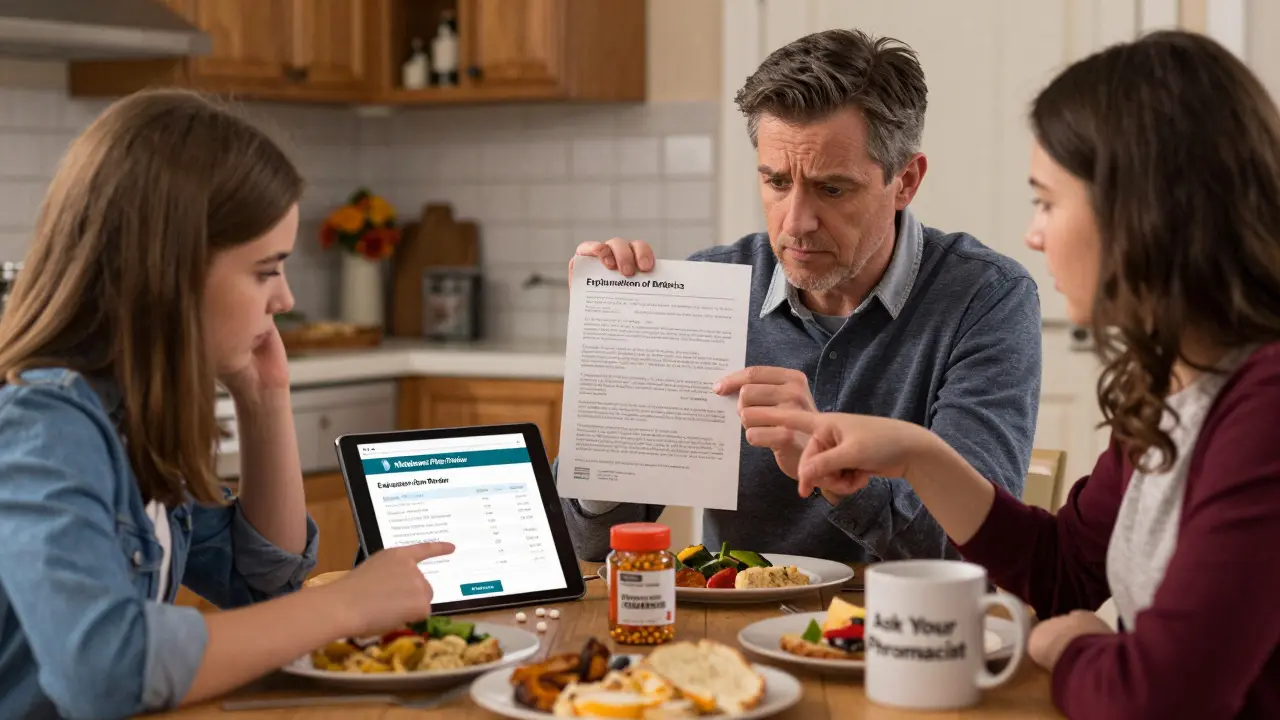
And then there’s the confusion. Only 38% of Medicare beneficiaries understood their plan’s generic coverage in 2023. They didn’t know why their copay changed. Or why their doctor had to fight to get them the brand-name drug. The Explanation of Benefits (EOB) statements they get from insurers are often impossible to read - until January 1, 2025, when new federal rules require clearer pricing breakdowns.
What’s Changing in 2025 and Beyond
The game is shifting. The Inflation Reduction Act, which took effect in 2025, capped Medicare Part D out-of-pocket drug costs at $2,000 a year. That changes the math. If you’re already paying $2,000, it doesn’t matter how much your generic costs - you’re not paying more. So insurers might start pushing harder for cheaper alternatives earlier in the year.Also coming in 2026: the CMS GENEROUS Model. This new Medicaid program will let the government negotiate lower prices for generics directly with manufacturers - bypassing PBMs entirely. The goal? Cut Medicaid drug spending by $40 billion over ten years.
Meanwhile, companies like Mark Cuban’s Cost Plus Drug Company are proving that transparent pricing works. For 124 generic drugs, they charge what the drug costs to make, plus a 15% markup. No rebates. No spreads. No hidden fees. Patients pay less. But this only helps the uninsured or those paying out-of-pocket. If you’re on Medicaid or Medicare, you won’t see any savings - because your plan still pays the PBM.
What You Can Do
You don’t have to be passive in this system. Here’s how to take control:- Ask your pharmacist: "Is there a generic for this?" Even if your doctor prescribed a brand, the pharmacy might have a cheaper option.
- Check your plan’s formulary online. Look up your drug. See what tier it’s on. Compare copays.
- Call your insurer. Ask: "What’s the actual cost of this generic to the pharmacy?" You might be surprised.
- If you’re on Medicare, use the Medicare Plan Finder tool. Compare plans based on your specific drugs, not just monthly premiums.
- Consider alternatives like the Mark Cuban Cost Plus Drug Company if you’re uninsured or paying out-of-pocket. You might save $5 to $15 per prescription.
Generics aren’t the enemy. They’re one of the most effective tools we have to make healthcare affordable. But the system around them is broken. Savings are being captured by intermediaries, not passed on to patients. Until that changes, knowing how your plan works isn’t just helpful - it’s essential.



Ajay Sangani
December 24, 2025 AT 09:29Pankaj Chaudhary IPS
December 25, 2025 AT 18:26Bhargav Patel
December 27, 2025 AT 11:34Steven Mayer
December 28, 2025 AT 20:20Joe Jeter
December 29, 2025 AT 16:57Sidra Khan
December 30, 2025 AT 21:48Andy Grace
December 31, 2025 AT 19:28Spencer Garcia
January 1, 2026 AT 03:40Abby Polhill
January 2, 2026 AT 05:50Austin LeBlanc
January 2, 2026 AT 18:03niharika hardikar
January 4, 2026 AT 11:29Christine Détraz
January 4, 2026 AT 18:49