
When you pick up a prescription at the pharmacy and see a different name on the bottle than what your doctor wrote, it’s natural to wonder: Is this the same thing? The answer lies in a term you’ve probably never heard of - bioequivalent medications. It’s not about the brand name on the box. It’s not about the color or shape of the pill. It’s about what happens inside your body after you swallow it.
What bioequivalence actually means
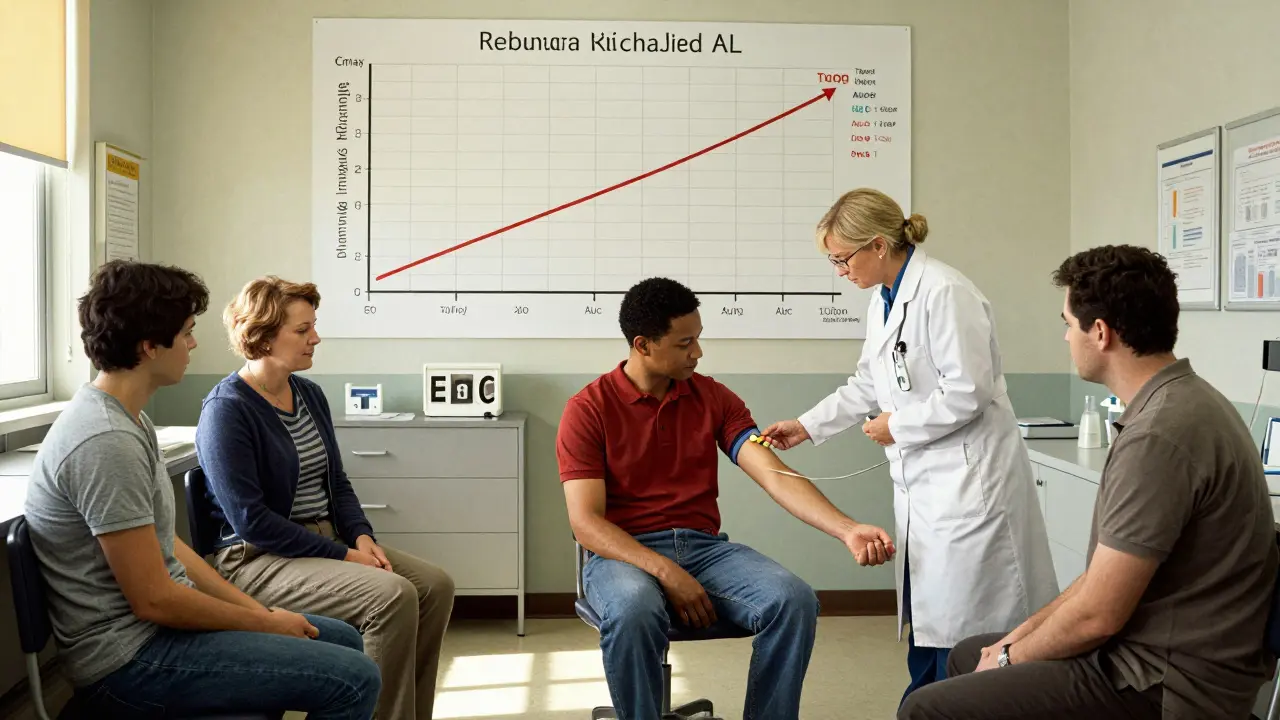
Bioequivalence isn’t about two drugs being chemically identical. Two pills can look completely different - one white and round, the other blue and oval - and still be bioequivalent. What matters is how much of the active ingredient gets into your bloodstream and how fast it gets there. The U.S. Food and Drug Administration (FDA) defines bioequivalence as: “the absence of a significant difference in the rate and extent to which the active ingredient becomes available at the site of drug action.” In plain terms, if you take a generic version of a drug and a brand-name version, your body should absorb nearly the same amount of the medicine at nearly the same speed. That’s it. This isn’t guesswork. It’s measured in real human studies. Typically, 24 to 36 healthy volunteers take both versions - one after the other - under controlled conditions. Blood samples are taken over hours to track how the drug moves through the body. Two key numbers are checked: Cmax (the highest concentration in the blood) and AUC (the total amount of drug absorbed over time). If the generic’s values fall within 80% to 125% of the brand-name drug’s, it’s considered bioequivalent. That 80-125% range might sound wide, but it’s not arbitrary. Decades of data show that a 20% difference in absorption rarely changes how well a drug works or how safe it is. For most medications, that small variation doesn’t affect outcomes. But for some, it does.Not all drugs are created equal
Some medicines have a narrow therapeutic index - meaning the difference between a helpful dose and a dangerous one is tiny. Think of drugs like warfarin (a blood thinner), levothyroxine (for thyroid conditions), or certain anti-seizure medications. Even a small shift in how much drug gets into the blood can cause problems. For these drugs, the FDA sometimes requires tighter standards - 90% to 111% instead of 80-125%. That’s because a 10% difference in absorption could mean a seizure or a blood clot. The FDA tracks these drugs closely and lists them in the Orange Book with special codes. If a generic is marked “AB,” it means it’s been proven bioequivalent and is considered interchangeable with the brand. But even with those tighter rules, some patients report differences. A 2021 study in JAMA Internal Medicine found that 0.8% of patients switching from brand to generic anti-seizure drugs had breakthrough seizures. That’s a small number, but it’s real. Pharmacists often recommend sticking with the same generic manufacturer once a patient is stable - especially for these sensitive drugs.Pharmaceutical equivalence vs. therapeutic equivalence
It’s easy to mix up these terms. Let’s break them down:- Pharmaceutical equivalence means two drugs have the same active ingredient, strength, dosage form, and route of administration. They might differ in fillers, dyes, or coatings - but the medicine itself is the same.
- Therapeutic equivalence goes further. It means the drugs are not only pharmaceutically equivalent, but also bioequivalent. That’s the gold standard. The FDA gives these drugs an “AB” rating in the Orange Book. You can safely swap them without expecting any change in how you feel or how well the drug works.
Why bioequivalence matters
Without bioequivalence, generic drugs wouldn’t exist in their current form. Before the 1984 Hatch-Waxman Act, companies had to run full clinical trials to prove a generic worked - a process that cost millions and took years. That made generics too expensive to produce. The law changed everything. It allowed generic makers to prove equivalence through bioequivalence studies instead of full clinical trials. That cut costs dramatically. Today, 90% of all prescriptions filled in the U.S. are for generic drugs. And they save patients an average of $313 per prescription. The savings add up. Over the past decade, generic drugs have saved the U.S. healthcare system an estimated $2.2 trillion. That’s money that goes back into people’s pockets, insurance premiums, and hospital budgets.Are generics really safe?
Critics point to rare cases where patients feel different on generics. Some report side effects, or that the drug “doesn’t work as well.” But the data tells a different story. A 2022 survey of over 1,200 independent pharmacists found that 87% saw no clinically meaningful differences between brand and generic versions for most drugs. Consumer Reports’ 2023 survey of 3,421 patients showed 78% were satisfied with generics - just 4 percentage points below satisfaction with brand-name drugs. Even more telling: the FDA’s adverse event database shows that reports of problems with generic drugs make up only 0.3% of all medication-related reports - which is proportional to their market share. If generics were unsafe, you’d see a spike in complaints. You don’t. That doesn’t mean we should ignore patient concerns. For drugs like levothyroxine, where small changes can cause big effects, many doctors and pharmacists recommend staying with the same manufacturer. It’s not because the generics aren’t bioequivalent - it’s because every batch of any drug can have tiny variations. Consistency matters.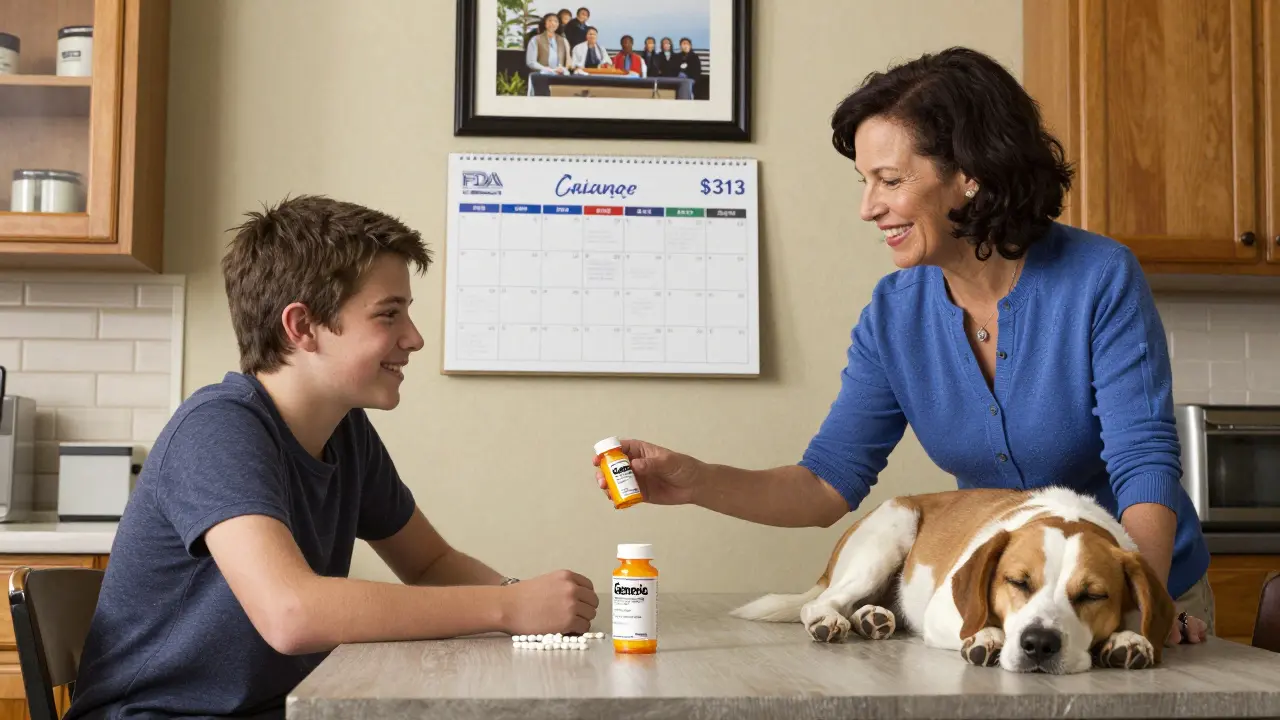
Global differences and future changes
The U.S. isn’t the only country with bioequivalence rules. The European Medicines Agency (EMA) allows wider ranges - up to 75-133% - for drugs that vary a lot between people. The FDA doesn’t do that, unless the drug is highly variable and the company can prove it won’t cause harm. Some experts are pushing for smarter rules. Instead of a one-size-fits-all 80-125% range, they suggest tailoring standards based on how a drug behaves in different people - using computer modeling to predict what’s safe. The FDA is exploring this, especially for complex drugs like inhalers or injectables. But for now, the current system works. As of 2023, the FDA has issued 27 guidance documents to help manufacturers prove bioequivalence for tricky products. They’ve also set aside $25 million through 2027 to research better methods. The goal? To keep generics affordable without sacrificing safety.What you should know
If you’re prescribed a generic drug:- It’s not a cheaper version - it’s the same medicine, proven to work the same way.
- For most drugs, switching between brands and generics won’t change how you feel.
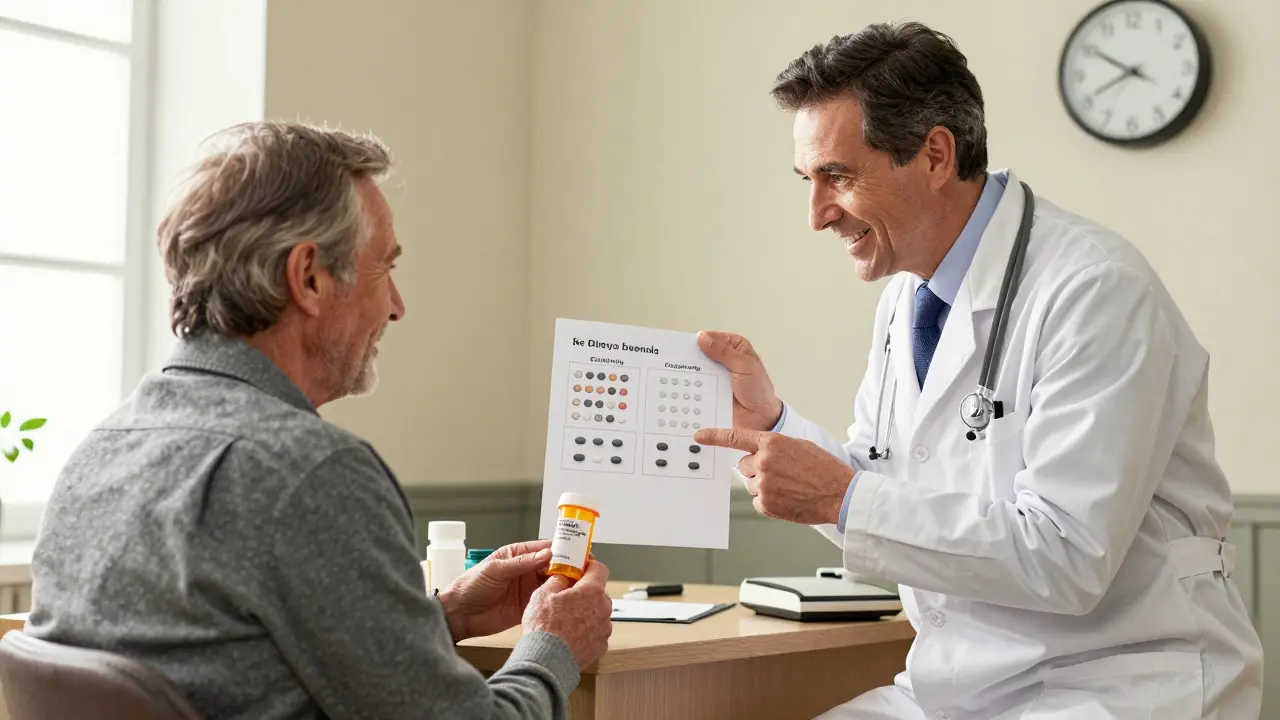
- For narrow therapeutic index drugs (like thyroid, seizure, or blood thinner meds), ask your doctor or pharmacist to stick with the same generic manufacturer.
- If you notice a change in how you feel after switching - fatigue, dizziness, or worsening symptoms - tell your provider. It’s rare, but it can happen.
- Don’t avoid generics because of fear. They’re safe, effective, and responsible for massive cost savings across the healthcare system.


jay patel
February 2, 2026 AT 09:54soooo i took my generic lisinopril for 3 years and never had an issue until last month when they switched me to a new maker and suddenly i felt like i was walking through molasses. not sure if it was the filler or what but my bp spiked and i had this weird metallic taste. i called my doc and they just said "it's bioequivalent" like that fixes everything. welp. now i'm back on brand and my energy's back. guess for me, 80-125% is too wide. 🤷♂️
Ansley Mayson
February 3, 2026 AT 17:30generic drugs are a scam. american pharma is weak. we used to make real medicine here. now we outsource to india and china and call it the same. if it works better in america it's because we have better standards. period.
phara don
February 5, 2026 AT 16:00so Cmax and AUC are the real MVPs here? 🤔 i always thought it was just about the pill looking the same. this actually makes sense now. thanks for breaking it down. i’m gonna check my Orange Book next time i refill.
Dan Pearson
February 7, 2026 AT 01:51oh wow so the FDA lets generics be 20% weaker or stronger? that’s insane. and you people wonder why healthcare is broken? we’re literally gambling with people’s lives because someone wants to save $5 on a pill. this isn’t science-it’s corporate greed dressed up as policy. and don’t even get me started on the indian manufacturers. they don’t even wash their hands before packaging.
Eli Kiseop
February 7, 2026 AT 15:27so if i switch from one generic to another and feel weird is that normal or should i say something? i switched my levothyroxine last month and now i’m tired all the time. my doctor says its fine but i dont feel fine
larry keenan
February 9, 2026 AT 09:30The regulatory framework governing bioequivalence is predicated on population pharmacokinetic parameters, which are statistically robust yet inherently non-individualized. Consequently, while the 80–125% confidence interval is statistically valid for population-level equivalence, it may not account for inter-individual variability in absorption kinetics, particularly in patients with comorbidities or altered gastrointestinal motility. This represents a critical gap in personalized medicine implementation.
Nick Flake
February 9, 2026 AT 12:54imagine if every time you bought a new pair of shoes they were "bioequivalent" to your old ones but sometimes they gave you blisters or felt like walking on rocks. you’d switch back, right? why should medicine be any different? we’re not widgets. we’re humans with different bodies, different metabolisms, different lives. the system needs to listen when people say "this doesn’t feel right"-not just point to a percentage.
also 🙏 thank you for writing this. people need to know this stuff.
Chinmoy Kumar
February 10, 2026 AT 02:13i live in india and we have a lot of generic meds here too. sometimes they are cheaper than the brand by 90%. but i noticed my cousin who took generic metformin kept getting stomach issues. switched back to brand and boom-no more problems. i think the issue isn't just bioequivalence-it's consistency in manufacturing. maybe we need better quality control in global supply chains. not everyone has access to the same standards.
Brett MacDonald
February 11, 2026 AT 15:17so like... if two pills are bioequivalent but one is made in a factory that uses tap water and the other uses filtered water... is that still the same? because i think the real question is not what’s in the pill but how it was made. capitalism turned medicine into a commodity and now we’re all just lab rats in a cost-cutting experiment
Sandeep Kumar
February 13, 2026 AT 06:06why do we even care about american standards? india makes better generics. cheaper better faster. america is just jealous because they cant compete. your drugs are overpriced because you let pharma monopolies run everything. we dont need your orange book. we have common sense
Bridget Molokomme
February 13, 2026 AT 15:36so you're telling me my 10-year-old daughter's seizure meds are "close enough" to the brand because math says so? that's hilarious. i'll be the one holding her when she seizes again and you can explain to her why the FDA's 80-125% rule is "science". 🙄
Brittany Marioni
February 14, 2026 AT 21:06Thank you for this incredibly thorough, well-researched, and compassionate breakdown. I’ve been a pharmacist for 22 years, and I’ve seen patients suffer needlessly because of blind adherence to "bioequivalent" labels. The Orange Book is a tool-not a gospel. Consistency matters. Patient feedback matters. And sometimes, the best medicine is listening.
Monica Slypig
February 14, 2026 AT 22:42the fact that you think this is a success story is why america is falling apart. you celebrate cutting corners and call it innovation. generics are a joke. they’re made in facilities with mold on the walls and no oversight. and you’re proud of saving $5? you’re not saving money-you’re sacrificing health. and don’t get me started on how the FDA is just a puppet for big pharma