
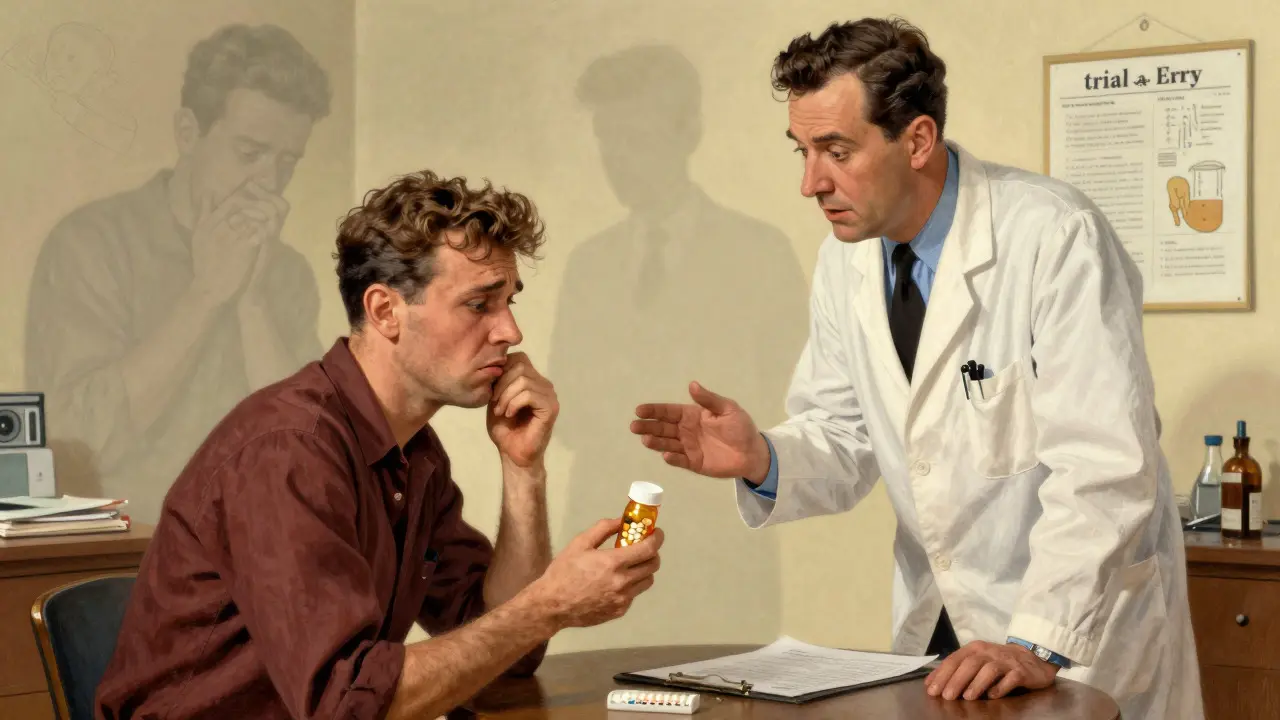
When a medication isn’t working, it’s not just frustrating-it can be dangerous. You might be taking a pill every day, hoping it’ll help, but nothing changes. Maybe your pain is still there, your anxiety is worse, or you’re feeling dizzy all the time. You start to wonder: Is this really the right drug for me? And if it’s not, how do you even bring it up without sounding like you’re questioning your doctor’s judgment?
The truth is, you’re not alone. About half of all people don’t take their medications as prescribed, and a quarter of them stop because they don’t feel any better. That’s not non-compliance-it’s a signal. Your body is telling you something, and your doctor needs to hear it.
Why You Need to Speak Up
Doctors aren’t mind readers. Even the best ones can’t guess how you’re feeling unless you tell them. A 2022 study from the University of Health found that patients who described their symptoms in detail-like "My joint pain is worse at 3 p.m. and doesn’t ease after the pill"-were 68% more likely to get a helpful change in treatment. It’s not about being difficult. It’s about giving your doctor the data they need to make a better decision.
And it’s not just about effectiveness. Some medications cause side effects that are worse than the original problem. For older adults, certain drugs can increase the risk of falls, memory issues, or confusion. The American Geriatrics Society lists 34 medications that should be reviewed carefully in people over 65. If you’re taking one of them and you’re feeling off, that’s not normal. That’s a red flag.
What to Do Before Your Appointment
Don’t wait until you’re in the exam room to think about what to say. Preparation turns a vague complaint into a clear request. Here’s how:
- Write down your symptoms. Not just "I don’t feel better." Be specific: "I still have chest tightness after 3 weeks," or "I can’t sleep more than 4 hours, even with the pill."
- Track timing. When do symptoms start? When do they peak? Do they happen right after you take the medicine? This helps your doctor spot patterns.
- Bring all your meds. Literally bring the bottles. This includes supplements, OTC painkillers, and herbal teas. A 2022 study showed this reduces medication errors by 22%.
- Check your portal. If your clinic uses an online health record, look up your last visit notes. You might spot a prescription you forgot about-or one that’s no longer needed.
One patient on Reddit shared how she brought a two-week log showing her pain levels before and after her medication. Her doctor switched her to a completely different class of drugs the same day. She didn’t ask for a miracle. She just gave facts.

What to Say in the Appointment
Here are the exact phrases that work best, backed by research and patient experience:
- "This medication isn’t helping. What are the alternatives?" This is direct, respectful, and opens the door to options.
- "Why am I taking this?" Sounds simple, but it’s powerful. Many patients are on medications they never fully understood in the first place.
- "What are the pros and cons of each option?" This invites comparison. You’re not rejecting the drug-you’re exploring.
- "Can I stop or reduce the dose?" Especially if you’re on multiple drugs, this question can lead to deprescribing, which reduces side effects and costs.
- "Is there a generic version?" Cost is a real barrier. If you’re skipping doses because of price, say so. 62% of patients find cheaper alternatives when they ask.
Harvard Health’s guide says: "Ask your doctor to explain why they chose this medication for you, how it works, and what side effects to expect." If they can’t answer clearly, that’s a clue you need more information.
What Alternatives Actually Exist
Just because one drug didn’t work doesn’t mean you’re out of options. Here’s what else might help:
- For sleep issues: Instead of sleeping pills like zolpidem, cognitive behavioral therapy for insomnia (CBT-I) works just as well after 8 weeks-with no risk of dependency.
- For type 2 diabetes: A 2022 study found that diet, weight loss, and regular walking matched metformin’s effectiveness in 68% of patients.
- For acid reflux: Cutting out spicy foods, eating earlier, and losing weight helped 55% of people avoid proton-pump inhibitors entirely.
- For anxiety: CBT and mindfulness practices were as effective as SSRIs in mild-to-moderate cases, according to a 2022 Lancet review.
- For back pain: Exercise, physical therapy, and acupuncture relieved pain just as well as NSAIDs-with no stomach risks.
And don’t forget pharmacogenomics. Some clinics now test your genes to see how your body processes drugs. If you’ve tried three meds and none worked, this test might explain why-and point you to one that will.

What to Do If Your Doctor Pushes Back
Not every doctor responds well. A 2023 Healthline survey found that 41% of patients felt dismissed when they asked for alternatives. Some doctors assume you’re refusing treatment. Others think you’re looking for a quick fix.
If that happens, try this:
- Reframe it. Instead of "I don’t want this," say "I’m looking for the best option for me."
- Ask for time. "Can we schedule a longer visit to review all my meds?" Many clinics now offer 30-minute medication reviews.
- Ask for a second opinion. "Would you be comfortable referring me to a specialist who focuses on medication management?"
- Use your portal. Send a message: "I’d like to discuss alternatives to [medication name]. I’ve attached my symptom log. Can we review this next time?"
Remember: your health is your responsibility. You’re not arguing-you’re collaborating. The best doctors welcome this kind of dialogue.
After the Appointment
Don’t leave without next steps:
- Get it in writing. If they suggest a new drug, ask for printed instructions. Patients who do this understand their regimen 40% better.
- Set a follow-up. "When should I come back to see if this new plan is working?" Don’t wait until you feel worse.
- Track results. Keep a simple log: "Day 1: Headache. Day 3: Less dizziness. Day 5: No more nausea." This helps you know if it’s working-or if you need to go back.
Medication changes aren’t magic. They take time. But if you’ve done your homework, you’ve already taken the hardest step: speaking up.
What if my doctor says there are no alternatives?
Ask for the reasoning behind that answer. Say: "Can you explain why no other options are suitable?" Sometimes, it’s about cost, insurance, or side effect risks. If you still feel unheard, ask for a referral to a pharmacist or a specialist in medication management. Many hospitals now have clinical pharmacists who specialize in reviewing complex drug regimens.
Can I stop the medication on my own if it’s not working?
Never stop a prescribed medication without talking to your doctor first. Some drugs-like antidepressants, blood pressure pills, or steroids-can cause serious withdrawal effects or rebound symptoms. Even if you think it’s not helping, stopping suddenly can be dangerous. Always ask for a safe tapering plan.
How long should I wait before asking for a change?
It depends on the drug. For antibiotics, you usually know within days. For antidepressants or blood pressure meds, it can take 4 to 8 weeks. But if you’re having bad side effects-dizziness, confusion, rash, swelling-don’t wait. Contact your provider immediately. You don’t need to wait for your next appointment.
Are non-drug treatments really as effective as pills?
Yes, for many conditions. Studies show that for chronic pain, anxiety, insomnia, and type 2 diabetes, lifestyle changes and therapy can match or even beat medication effectiveness-without the side effects. The key is consistency. A walking routine, better sleep habits, or stress management aren’t quick fixes, but they’re sustainable and safe.
Can my pharmacist help with this?
Absolutely. Pharmacists are trained to spot drug interactions, side effects, and duplication. Many offer free medication reviews. Bring your pill bottles in and say: "I’m not sure if all these are still necessary. Can you help me review them?" They often catch issues doctors miss.

Ian Kiplagat
March 7, 2026 AT 15:50Amina Aminkhuslen
March 9, 2026 AT 14:25amber carrillo
March 9, 2026 AT 17:30Tim Hnatko
March 10, 2026 AT 07:56Aaron Pace
March 11, 2026 AT 07:10Patrick Jackson
March 12, 2026 AT 22:36Adebayo Muhammad
March 13, 2026 AT 21:51Pranay Roy
March 15, 2026 AT 06:45