
Imagine this: you’re rushed into the emergency room after falling at home. You’re in pain, confused, and can’t remember exactly what pills you took this morning. The doctor asks, "What medications are you on?" You say, "I think I take something for blood pressure... and maybe a vitamin?" That moment-where memory fails and details get lost-is exactly where medication errors happen. And they’re not rare. In the U.S. alone, over 1.5 million people are harmed each year because someone didn’t know what medicines they were taking. The fix isn’t complicated: keep a complete, up-to-date medication list. It’s not just for doctors. It’s your lifeline.
Why Your Medication List Matters More Than You Think
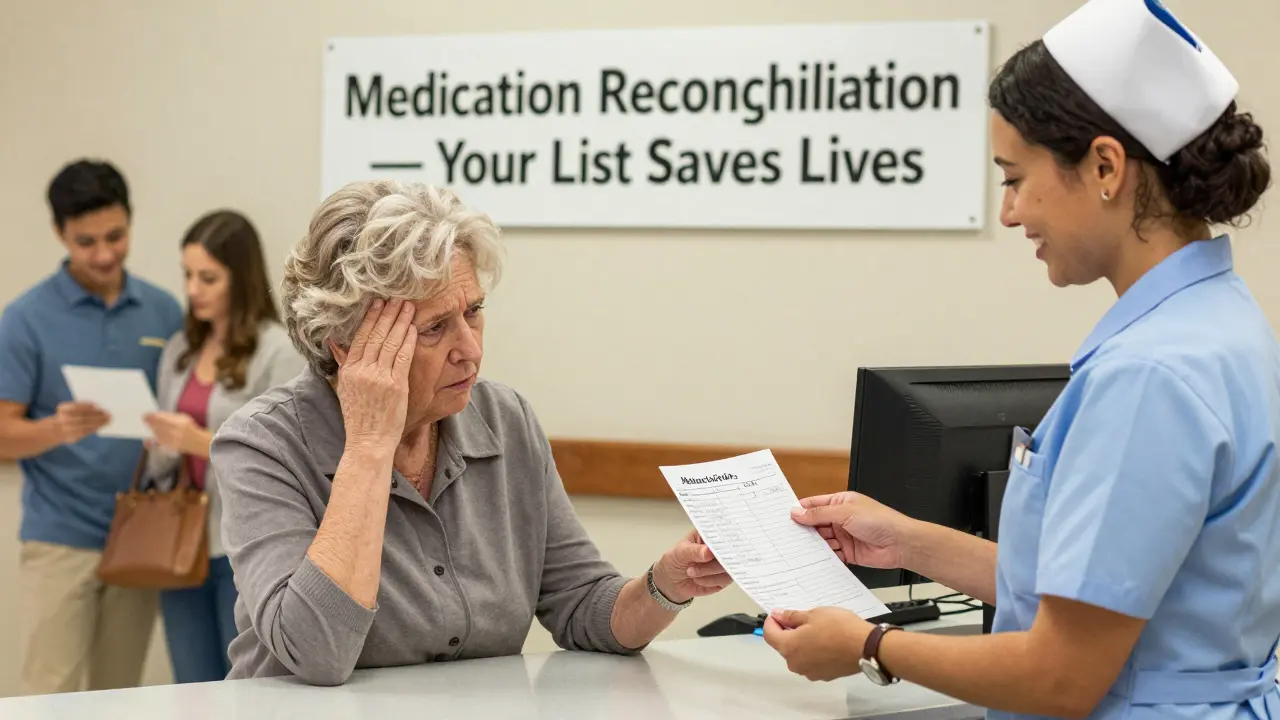
A medication list isn’t a suggestion. It’s a safety tool. When you switch doctors, get admitted to the hospital, or even visit a pharmacist for a new prescription, your list becomes the first thing they check. Without it, mistakes happen. A 2022 study from Harvard Medical School found that patients who kept a full medication list reduced their risk of harmful drug reactions by 43%. That’s not a small number. That’s life-changing. Here’s the reality: 73% of patient-reported medication lists miss at least one important drug. People forget their aspirin. They don’t count the herbal tea they drink for sleep. They don’t write down the eye drops they use once a week. But those missing pieces? They can cause dangerous interactions. One patient took St. John’s Wort for low mood-unaware it cancels out the effect of their blood thinner. Another mixed ibuprofen with a blood pressure pill and ended up in the hospital with kidney issues. These aren’t hypotheticals. They’re common. The Joint Commission made this a national safety goal back in 2006. Since then, hospitals and clinics have been required to reconcile medications-meaning they must compare what you say you take with what’s in your chart. But reconciliation only works if your list is accurate. If you’re giving outdated or incomplete info, the system fails. Your list is the bridge between you and your care team.What to Include in Your Medication List
A good medication list doesn’t just say “blood pressure pill.” It tells the full story. Here’s exactly what you need to write down for every medicine:- Medication name-both generic and brand (e.g., lisinopril, also sold as Zestril)
- Dosage-exactly how much you take (e.g., 10 mg, not just “one pill”)
- How often-daily? Twice a day? Every other day? Include timing (e.g., “with breakfast”)
- Why you take it-the reason matters. “For blood pressure” is better than “for heart.”
- When you started-this helps your doctor spot patterns or side effects
- Who prescribed it-name and clinic or hospital
- Refill status-do you have a refill? When’s the next one due?
Don’t forget the extras:
- Over-the-counter meds-ibuprofen, antacids, sleep aids, cold pills
- Vitamins and supplements-even if you think they’re “natural” and harmless
- Herbal remedies-turmeric, ginkgo, echinacea, garlic pills
- Topical, inhalers, eye drops-these count too. A steroid cream or asthma inhaler can interact with oral meds
- Allergies and reactions-not just “penicillin allergy,” but “rash and swelling after amoxicillin”
- Emergency contact-who to call if something goes wrong
- Pharmacy info-name and phone number of your main pharmacy
The FDA’s “My Medicines” guide, updated in 2023, says this is the minimum standard. If you’re missing any of these, your list isn’t complete. And incomplete means risky.
Paper or Digital? Which Works Best
There’s no one-size-fits-all. Some people swear by a handwritten list. Others rely on apps. Both can work-if used right.According to a 2022 survey by the National Council on Aging, 68% of patients still use paper. Why? It’s simple. No login. No tech skills needed. Just write it down, keep it in your wallet, and bring it to every appointment. Use a 12-point font or larger if you’re typing it. Handwriting? Make it big and clear. Fold it in half and put it in your purse or coat pocket. Don’t leave it on your kitchen counter.
Digital tools are growing fast. GoodRx, Medisafe, and MyTherapy now have over 150 million active users combined. Forty-two percent of GoodRx users use their built-in medication tracker. These apps can send reminders, sync with your pharmacy, and even alert you to potential interactions. Some connect directly to your doctor’s electronic health record, so your list updates automatically when a new prescription is filled.
But here’s the catch: only 42% of U.S. hospitals let patients access their official medication lists through patient portals. That means if your doctor updates your list, you might not see it unless you ask. That’s why having your own version-even if it’s digital-is still critical.
Best practice? Use both. Keep a paper copy in your wallet. Use an app for reminders and backups. Make sure your digital version is synced to the cloud (iCloud, Google Drive) so you don’t lose it if your phone dies.
How to Keep It Updated-Without Getting Overwhelmed
The biggest mistake people make? They make the list once… and forget it.Medications change. All the time. A new pill is added. An old one is stopped. A dose is changed. If your list doesn’t reflect that, it’s useless.
Here’s how to stay on top of it:
- Update immediately-the moment you start, stop, or change a medication. Don’t wait for your next appointment.
- Set a monthly reminder-use your phone calendar to check your list every 30 days. Did you get a new OTC cold medicine? Add it.
- Review with your pharmacist-every time you pick up a new prescription, ask: “Is this on my list? Should anything be removed?” Pharmacists are medication experts. Use them.
- Schedule a dedicated medication review-don’t squeeze it into a 10-minute check-up. Ask your doctor for a 20-30 minute appointment just to go over your list. A 2023 study found that 68% of medication discussions get cut short when they’re tacked onto other visits.
- Use color-coding for complex regimens-if you take 5+ meds, try color-coding: red for heart meds, blue for pain, green for vitamins. A 2023 study showed this improved adherence by 27%.
For people with chronic conditions like diabetes or heart disease, the American Medical Association recommends “synchronized renewals.” That means getting all your chronic meds on a 90-day supply, refilled every three months. It cuts down on refill requests, reduces mistakes, and improves adherence by 22%. Plus, your provider saves over 2.7 hours a day by not fielding endless renewal calls.
Common Mistakes and How to Avoid Them
Even people who try to keep lists mess up. Here are the top errors-and how to dodge them:- Forgetting OTC meds-58% of patients leave these out. That’s the #1 gap. If you take Tylenol every night for headaches, write it down.
- Not listing “as-needed” meds-things like painkillers or anxiety pills used only sometimes. These are easy to forget, but they can interact with daily meds. Use the ECRI Institute’s PRN Medication Tracker template to log these separately.
- Assuming your doctor knows-your cardiologist doesn’t know about the sleep aid your aunt recommended. Your dermatologist doesn’t know about the fish oil you take. You’re the only one who connects the dots.
- Relying on memory-Dr. Michael Cohen of ISMP says this creates a “false sense of security.” In a study of 500 hospital admissions, 73% of patient lists had major errors. Don’t trust your brain. Write it down.
- Not sharing it-what good is a perfect list if it’s locked in your drawer? Give a copy to your main caregiver, your spouse, your adult child. If you’re ever unable to speak, someone needs to hand it to the ER staff.

What’s Changing in 2025 and Beyond
The system is catching up. The 21st Century Cures Act now forces all certified electronic health records to give patients instant access to their medication lists. By 2027, the federal government wants everyone to have a single, unified record that follows them from clinic to hospital to pharmacy.Some places are already using blockchain to create tamper-proof medication histories. It sounds futuristic, but it’s coming. Meanwhile, Medicare now penalizes hospitals that don’t meet 85% accuracy on medication reconciliation-up to 1.25% of their payments. That’s real pressure to get it right.
But technology won’t fix everything. A 2024 report found that only 28% of adults over 75 can use digital tools without help. That’s why paper lists still matter. The best system is the one you’ll actually use. For many, that’s still a piece of paper in a wallet.
Your Next Steps
You don’t need to wait for your next doctor’s visit. Start today.- Grab a piece of paper or open your phone notes.
- Write down every medication you’ve taken in the last 30 days-even the ones you only use once in a while.
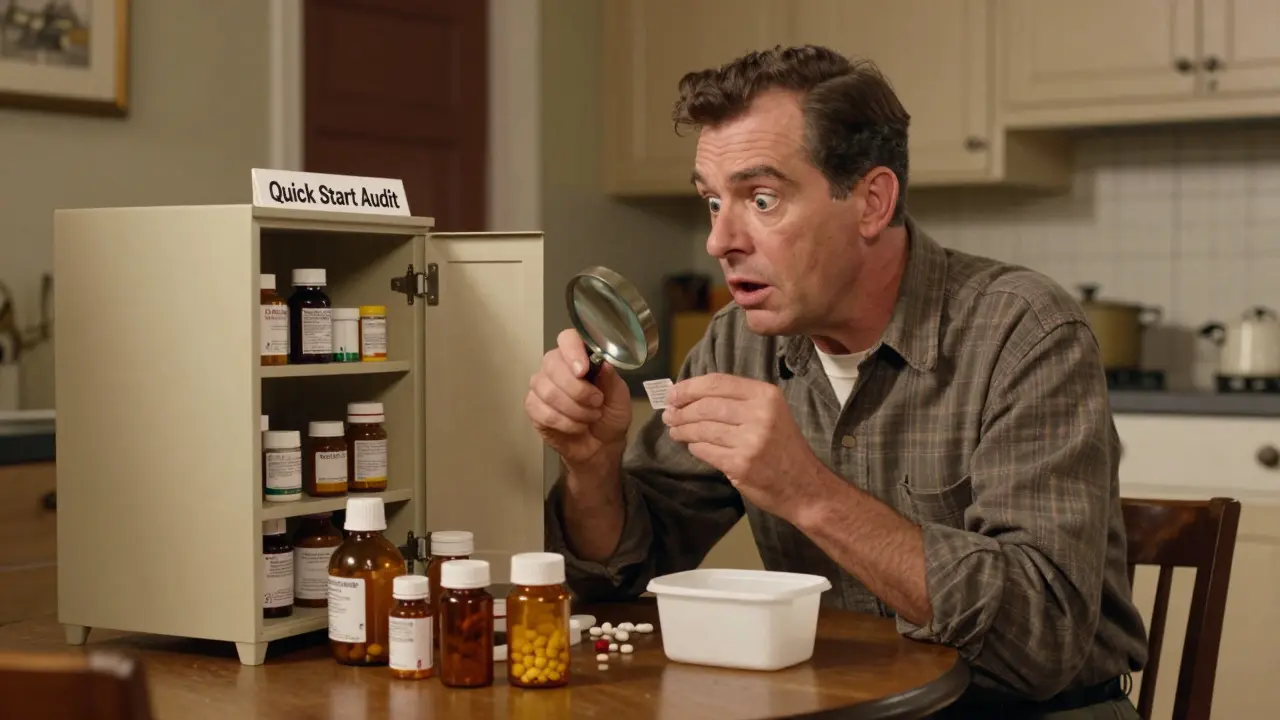
- Check your pill bottles, your pharmacy app, your medicine cabinet.
- Include OTC, supplements, and herbal products.
- Write down allergies and reactions with specifics.
- Give a copy to a trusted person.
- Set a calendar reminder: “Medication List Check” every 30 days.
This isn’t about being perfect. It’s about being prepared. One list, kept current, can prevent a hospital stay. It can save your life. And it costs nothing but a few minutes of your time.
What if I take over 10 different medications? How do I keep track?
If you take 10 or more meds, use color-coding or icons in your list. For example, use red for heart medications, blue for diabetes, green for pain relievers. Apps like Medisafe or MyTherapy can group meds by purpose and send alerts. You can also ask your pharmacist for a blister pack-pre-sorted pills by day and time. These are often free with insurance and eliminate guesswork.
Should I include vitamins and supplements?
Yes. Vitamins, herbal remedies, and supplements can interact with prescription drugs. For example, St. John’s Wort can make birth control or antidepressants less effective. Garlic pills can thin your blood and increase bleeding risk during surgery. Even fish oil and vitamin E can interfere with blood thinners. Always list them-no matter how “natural” they seem.
Can I just rely on my pharmacy’s list?
No. Pharmacies only track what they’ve dispensed. They don’t know about OTC meds, supplements, or drugs prescribed by other doctors. A 2023 study found that 56% of pharmacy lists miss at least one medication the patient is actually taking. Your list is your responsibility. Use the pharmacy’s list as a starting point, not the final version.
How often should I update my medication list?
Update it immediately whenever you start, stop, or change a medication. That includes new prescriptions, over-the-counter drugs, or supplements. In addition, do a full review every 30 days. Set a recurring calendar reminder. It takes 10 minutes-and could prevent a serious error.
What should I do if I’m admitted to the hospital?
Bring your current medication list with you-on paper or printed from your app. Hand it to the nurse or admissions staff as soon as you arrive. Don’t wait for them to ask. If you’re unable to speak, give a copy to a family member or caregiver to hand over. Hospitals are required to reconcile your list, but they can’t do it without your input.
Is it safe to share my medication list with family members?
Yes. In fact, it’s strongly recommended. If you’re ever unconscious, confused, or unable to communicate, someone else needs to know what you’re taking. Give a copy to your primary caregiver, spouse, or adult child. You can also store a digital copy in a secure cloud service and share access with them. Privacy is important, but safety comes first.



Nicola George
December 27, 2025 AT 00:54Raushan Richardson
December 27, 2025 AT 10:08Todd Scott
December 28, 2025 AT 00:48Will Neitzer
December 29, 2025 AT 17:59Olivia Goolsby
December 31, 2025 AT 08:36Elizabeth Ganak
December 31, 2025 AT 11:13Robyn Hays
January 1, 2026 AT 18:35Liz Tanner
January 2, 2026 AT 12:54Babe Addict
January 3, 2026 AT 17:50Satyakki Bhattacharjee
January 4, 2026 AT 17:23Kishor Raibole
January 6, 2026 AT 04:58Liz MENDOZA
January 7, 2026 AT 10:33Anna Weitz
January 8, 2026 AT 17:31Jane Lucas
January 9, 2026 AT 16:11