Antibiotic Side Effect Support Guide
Select the symptom you are experiencing to find the recommended management strategy based on clinical guidelines.
The "4 Ts" Checklist for Success
Dealing with Stomach Upsets and Nausea
Gastrointestinal issues are the most frequent complaints, affecting up to 30% of people. Whether it's bloating, nausea, or that "sour" feeling in your stomach, most of these can be handled with a few simple tweaks to how you take your meds. The key is knowing which pills like food and which hate it.
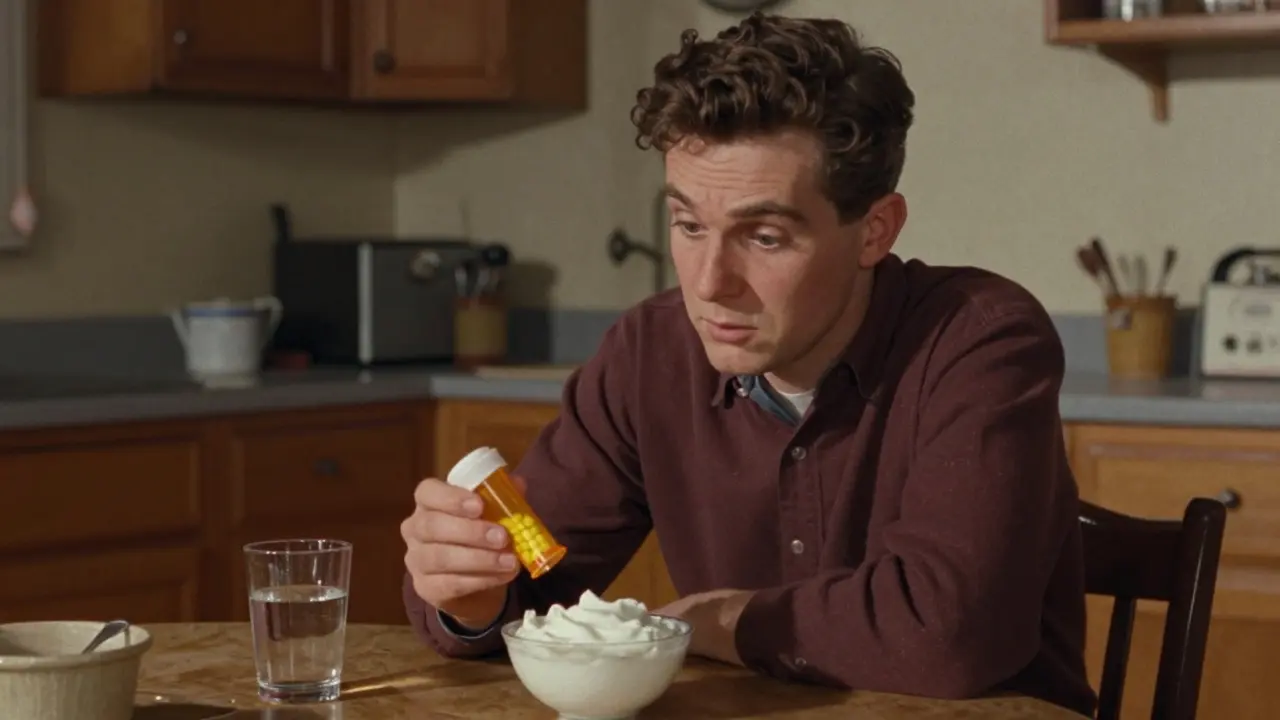
For medications like Amoxicillin or Doxycycline, taking them with a meal often settles the stomach. If a full meal feels too heavy while you're sick, try a small, protein-rich snack. Many people find that a bit of Greek yogurt helps buffer the stomach lining without causing the nausea that comes with heavy fats. However, be careful-some antibiotics, like Tetracycline, must be taken on an empty stomach because food can block the drug from getting into your system, making the treatment fail.
If you are taking oral Doxycycline, there is a specific trick to avoid a painful throat: swallow the pill with at least 8 ounces of water and stay upright. Do not take it within 30 minutes of lying down or going to bed, as the pill can irritate the esophagus if it doesn't go all the way down.
| Side Effect | Typical Cause | Management Strategy |
|---|---|---|
| Nausea / Bloating | Stomach irritation | Take with a light protein snack (e.g., yogurt) |
| Diarrhea | Microbiome disruption | Use probiotics (Lactobacillus rhamnosus GG) |
| Sun Sensitivity | Photosensitivity (Tetracyclines) | SPF 30+ sunscreen, reapply every 2 hours |
| Esophageal Burn | Pill sticking (Doxycycline) | Drink full glass of water; stay upright for 30 mins |
Stopping the 'Antibiotic Run'
Antibiotics are blunt instruments; they kill the bad bacteria, but they also wipe out the good ones in your gut. This imbalance often leads to antibiotic-associated diarrhea. While mild diarrhea is common for about 25% of patients, it doesn't have to be your reality for the whole course.
To keep your gut in check, look into Probiotics. Specifically, strains like Lactobacillus rhamnosus GG or Lactobacillus reuteri have shown a significant ability to reduce diarrhea risk by up to 50%. You can find these in high-quality supplements or unsweetened yogurt. The trick is to introduce these early and keep them going throughout the course to help your microbiome recover faster.
However, there is a line between "expected" side effects and a medical emergency. If you notice blood or mucus in your stool, experience severe abdominal pain, or develop a high fever, you might be dealing with a C. diff (Clostridioides difficile) infection. This isn't a standard side effect-it's a secondary infection that requires immediate medical attention.

Managing Skin and Allergic Reactions
Not all side effects happen in the gut. Some antibiotics make your skin hyper-reactive to sunlight. If you're on a course of tetracyclines, you might find yourself burning in minutes under the sun. This is called photosensitivity. The best defense is simple: wear protective clothing and use a broad-spectrum sunscreen with SPF 30 or higher that protects against both UVA and UVB rays. Don't forget to reapply every couple of hours if you're outdoors.
Then there are allergic reactions. These are rarer but much more serious. A mild rash might be something to mention to your doctor, but if you experience hives, wheezing, or a feeling that your throat is tightening, stop the medication immediately and seek emergency care. These are signs of anaphylaxis, and no single dose of medication is worth a closed airway.
The '4 Ts' for Treatment Success
To make the process easier, you can follow the "4 Ts" framework used by many medical centers to ensure you finish your meds without misery:
- Timing: Take your doses at the same time every day. This keeps a steady level of the drug in your blood and helps you build a habit so you don't miss a dose.
- Taking with food: Check your specific prescription. If it's safe to take with food, do it to minimize nausea. If it must be taken on an empty stomach, schedule it for 1 hour before or 2 hours after eating.
- Tolerating: Understand what is "normal." A bit of nausea or loose stools is often just the price of the cure. Knowing this helps you mentally push through the discomfort.
- Treatment completion: Finish every single pill, even if the symptoms vanished days ago. This is the only way to ensure the infection is fully eradicated.

When to Call the Doctor
It can be hard to tell if you're just having a rough time or if something is actually wrong. Most mild side effects can be managed at home, but a few red flags mean you should call your clinic immediately. Don't just stop the meds on your own; call for guidance so they can potentially switch your prescription to a different class of drug that your body handles better.
Immediate red flags include:
- Difficulty breathing or swelling of the face/lips.
- Severe, watery diarrhea that doesn't stop after 48 hours.
- Blood in the stool or severe cramping.
- A widespread, blistering skin rash.
Can I just take a probiotic pill and ignore the side effects?
Probiotics help significantly with digestive issues, but they aren't a cure-all. They can reduce the risk of diarrhea, but they won't stop nausea caused by direct stomach irritation or prevent allergic reactions. Use them as a support tool, but still follow the timing and food guidelines provided by your pharmacist.
Why can't I just stop the antibiotics once I feel better?
Feeling better doesn't mean the bacteria are gone. It just means the "weakest" bacteria have been killed. The tougher, more resistant bacteria are still there. If you stop early, these survivors multiply, and the infection often returns, but this time it's resistant to the drug you were using, making it much harder to treat.
Is it safe to take an over-the-counter anti-diarrheal med while on antibiotics?
You should always ask your doctor first. In some cases, anti-diarrheal medications can slow down the gut too much, which might actually trap a dangerous infection like C. diff inside your system longer than it should be. It's safer to use probiotics or dietary changes unless a doctor tells you otherwise.
What if I missed a dose because the side effects were too bad?
Don't double up on the next dose to "catch up." Instead, take the missed dose as soon as you remember, unless it's almost time for your next scheduled one. If you're struggling to keep the meds down, call your doctor to see if a liquid version or a different antibiotic would work better for you.
How long do the side effects usually last?
Most gastrointestinal side effects peak during the first few days of treatment and fade as your body adjusts. However, some effects-like diarrhea-can persist for a few days after the last pill. If symptoms last more than 48 hours after you finish the course, it's time to get checked for a secondary infection.
Next Steps for Different Scenarios
If you are currently mid-course: Start tracking your symptoms. If you're experiencing nausea, try the "Greek yogurt" trick. If you're spending too much time in the bathroom, start a high-quality probiotic supplement containing Lactobacillus rhamnosus GG.
If you are about to start a course: Ask your pharmacist specifically about the "4 Ts." Find out if your specific drug requires an empty stomach or if it's better with food. This prevents the "trial and error" phase that usually leads to people quitting their meds.
If you've already stopped your meds early: Don't panic, but do call your doctor. Tell them exactly when you stopped and why. They need to know if the infection is still present or if you need a different approach to ensure the bacteria are fully gone.

by Andy Regan
Nikki Grote
April 17, 2026 AT 08:18The focus on Lactobacillus rhamnosus GG is spot on for mitigating the dysbiosis that typically follows a broad-spectrum antibiotic regimen. Incorporating prebiotics like inulin or chicory root alongside these probiotics can further synergize the restoration of the gut microbiota, essentially providing the fuel for the beneficial strains to colonize more effectively.
Kim Hyunsoo
April 17, 2026 AT 16:27That esophageal burn part is actually terrifying 😱 just the thought of a pill getting stuck like that is a total nightmare!
Maggie Graziano
April 17, 2026 AT 17:10big pharma just wants you on these forever to keep the cycle going
Michael Lewis
April 18, 2026 AT 18:24Stay strong and push through that discomfort! Your health is the absolute priority here and finishing that course is the only way to win this fight against the infection. Get it done!
Anna BB
April 19, 2026 AT 16:53It's so interesting how we have to balance the chemistry of our bodies with these powerful medicines... it really makes you think about the delicate equilibrium of our inner ecosystem!!!
Randall Barker
April 20, 2026 AT 23:54Most people are simply too undisciplined to finish their meds, and then they act surprised when the bacteria come back stronger. It's a basic matter of personal responsibility and intellectual honesty; if you ignore the medical protocol, you deserve the relapse. The lack of fortitude in the modern patient is a symptom of a much larger societal decay where convenience is valued over fundamental health principles.
Anmol Garg
April 21, 2026 AT 03:18I've always felt that these physical struggles with medication are just reminders of how interconnected we are with the microscopic world, and being patient with our bodies while they heal is a form of mindfulness in itself.
ira fitriani
April 22, 2026 AT 11:20OMG yes!! The yogurt trick is a total lifesaver! 🍦✨ I used to feel so sick until I started doing this, now it's a breeze! Keep going everyone! 💪💖
Sophia Rice
April 23, 2026 AT 07:09I tried the yogert thing and it realy helped my tumy feel bettter during my last round of meds!
Ben Ferguson
April 24, 2026 AT 11:06Oh, the sheer tragedy of the 'antibiotic run' is something that transcends mere medical inconvenience and becomes a truly cinematic struggle of the human spirit against the invisible forces of nature, and while it may seem like a small thing to some, the dramatic arc of feeling a surge of hope on day three only to be cast back into the depths of nausea on day five is a narrative of resilience that we must all acknowledge as we navigate the complex landscape of modern pharmacology in our great society!
Theresa Griffin MEP
April 26, 2026 AT 06:48One must maintain strict adherence to the prescribed dosage. It is imperative.
Rock Stone
April 27, 2026 AT 07:14Just take it easy and let the meds do their thing. No need to stress, just follow the steps and you'll be golden.
Bonnie Piersall
April 27, 2026 AT 20:39Listen, just treat your gut like a garden. You're basically using a weed-whacker on your microbiome, so you've gotta plant some new seeds with those probiotics or you're just leaving a wasteland in there. It's a total no-brainer if you think about it as biological landscaping.
Heer Malhotra
April 28, 2026 AT 14:26The standards of medical adherence in this discussion are far too lax. It is a moral obligation to follow these guidelines to prevent the degradation of public health infrastructure, particularly in developing nations where resistance is a critical threat.