
Why Medication Waste Costs More Than You Think
Every year, U.S. healthcare facilities throw away billions of dollars worth of medications that haven’t expired. That’s not just money down the drain-it’s wasted care, unnecessary environmental harm, and avoidable risk to patients. According to A-SMEDS, the U.S. spends around $20 billion annually on medication waste, with small clinics losing $15,000 to $25,000 each year. Most of it isn’t because pills went bad. It’s because someone ordered too much, stored them wrong, or didn’t track when they’d expire.
Think about it: a patient gets a 30-day supply of blood pressure meds, but only takes half because they felt better. The rest sits in the cabinet until it’s too late to give away. Or a clinic orders 100 vials of insulin, but only uses 60 before the expiration date. The rest gets tossed-even though it’s still safe and effective. That’s not just wasteful. It’s irresponsible.
Storage Is Everything: Temperature and Environment Matter
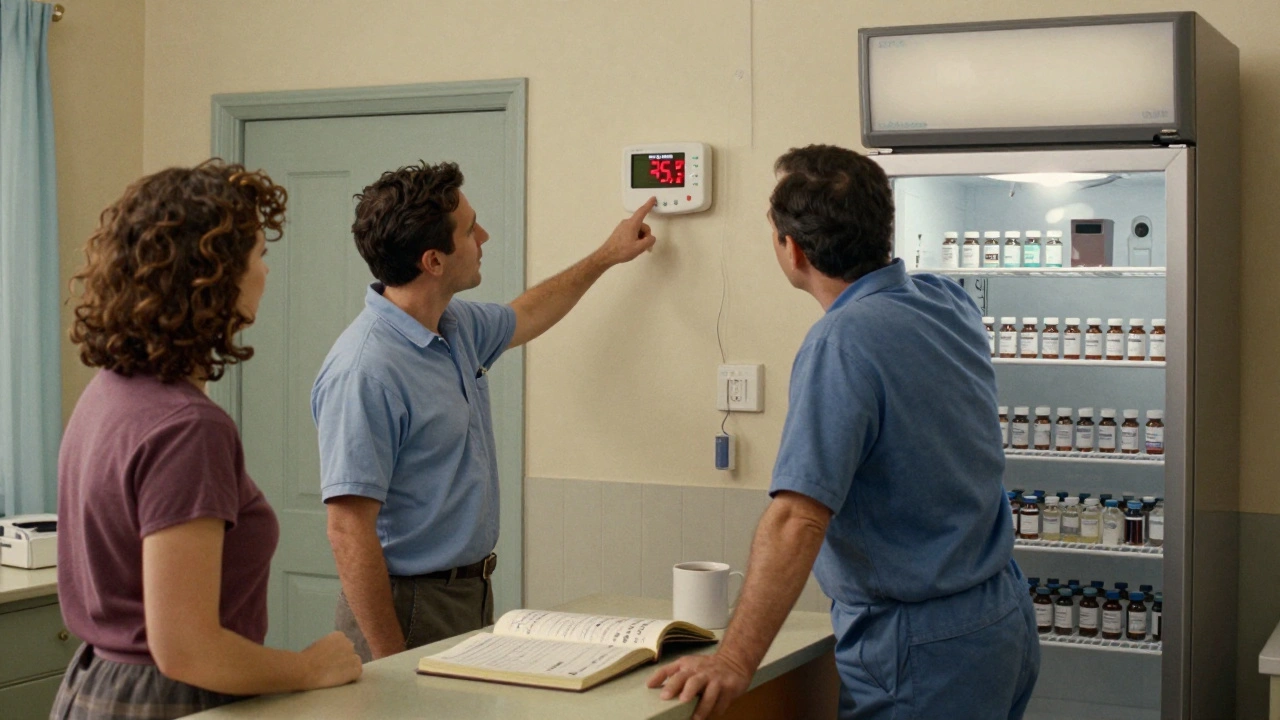
Medications aren’t like canned food. They’re sensitive. If you store insulin at room temperature when it needs refrigeration, it loses potency. If you leave antibiotics in a hot bathroom cabinet, they degrade faster. The USP Chapter <797> standards say refrigerated meds must stay between 36°F and 46°F (2°C-8°C). Room-temperature drugs? Keep them at 68°F-77°F (20°C-25°C). That’s not a suggestion. It’s a requirement for safety and effectiveness.
One rural clinic lost $8,200 in biologic medications after their refrigerator failed for three days. No one noticed because they weren’t checking. Temperature logs aren’t paperwork-they’re insurance. Use digital monitors with alerts. Even cheap USB loggers that sync to your phone can save you thousands. If you’re using a manual thermometer, check it every morning. Write it down. If the temp’s off, act fast. Don’t wait for someone else to notice.
Use FIFO: First In, First Out
Imagine a shelf of cough syrup. The oldest bottle is at the back. The new ones are in front. You keep grabbing the front ones. Eventually, the old ones get buried. And when they’re found? They’re expired. That’s how waste happens.
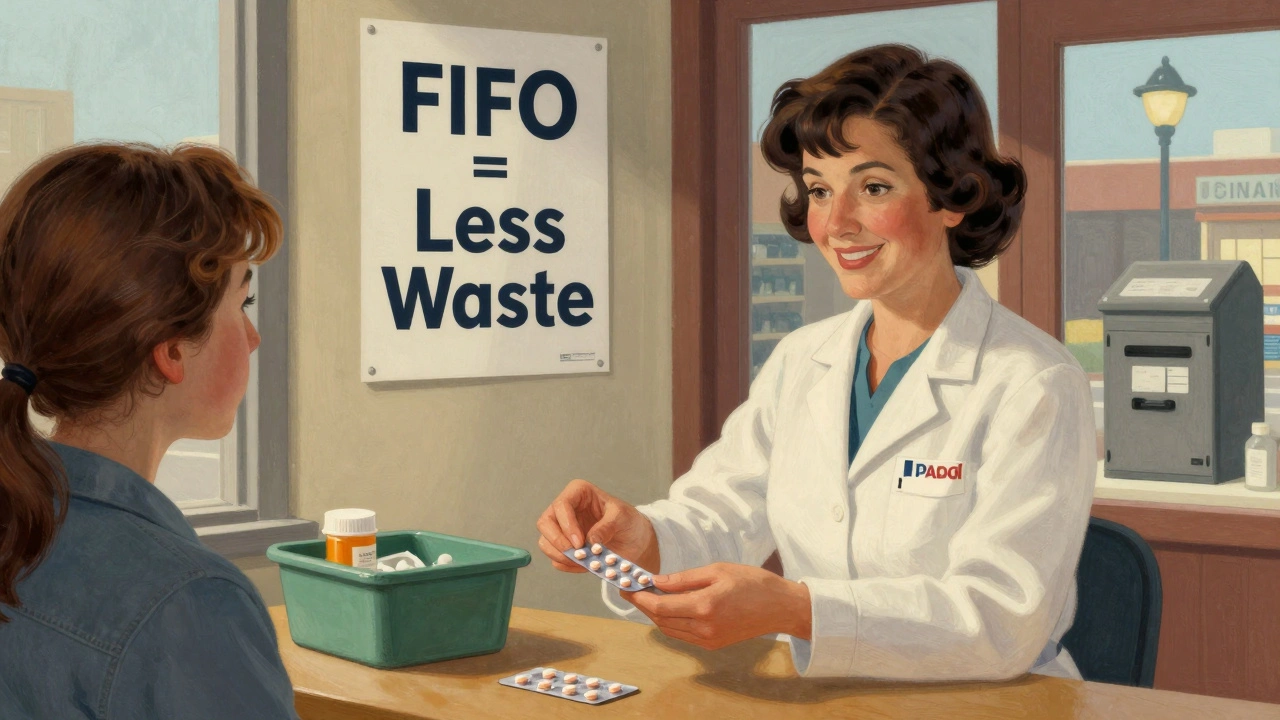
FIFO-First In, First Out-is the simplest fix. When new stock arrives, put it behind the old stock. Always take from the front. Make it a habit. Use color-coded labels: green for more than 90 days left, yellow for 30-90 days, red for under 30 days. Do this every Friday morning. Spend 15 minutes. You’ll catch what’s about to expire before it’s too late.
One nurse practitioner reduced her clinic’s waste by 29% just by doing this. No software. No budget increase. Just consistency. If your staff doesn’t know what FIFO means, teach them. Put a poster up. Make it part of the daily checklist.
Prescribe Smaller Quantities
Why do patients end up with leftover pills? Because doctors often prescribe full 30- or 90-day supplies-even when treatment lasts only a week or two.
Dr. Sarah Thompson at Mayo Clinic says the single biggest way to cut waste is to match the prescription length to the actual treatment time. For antibiotics? Prescribe a 5-day course, not 10. For pain meds after surgery? Give 10 tablets, not 30. For chronic conditions? Use split-fill prescriptions-give the patient half the supply, then refill only if needed.
This isn’t risky. It’s smarter. A 2022 Sermo survey found 65% of clinicians saw better patient adherence with split fills. Patients aren’t overwhelmed by too many pills. They’re more likely to take what they need-and less likely to hoard the rest.
Electronic prescribing systems like Epic’s Pharmacist Dashboard can help. They flag when a patient has unused meds from a previous fill. That’s how you avoid duplicate prescriptions. And duplicate prescriptions mean duplicate waste.
Technology Helps-But It’s Not the Only Way
Barcodes. Cloud systems. AI alerts. These tools sound fancy, and they work. A University of Michigan study found barcode scanning gives 99.8% inventory accuracy. Systems like Omnicell’s XT Series cut waste by 22% in larger clinics.
But here’s the truth: not every practice can afford $10,000 a year in software. If you’re a solo practitioner or a small clinic with under 10 providers, you don’t need fancy tech. You need a checklist. A calendar. A labeled shelf. A team that checks every week.
Manual systems still work. In fact, for small clinics under $5,000 annual budgets, they’re often cheaper and more reliable. The key isn’t the tool-it’s the habit. If you’re not tracking expiration dates, no system will save you.
Know When to Dispose-and How
Some meds can’t be thrown in the trash. Some can’t even go down the drain. The FDA’s 2023 guidelines list 15 specific opioids that must be flushed immediately because they’re dangerous if misused. But for most medications? Take-back programs are the gold standard.
There are over 11,000 registered collection sites across the U.S. as of January 2023. That’s 87% of zip codes. Check with your local pharmacy or police station. Many offer drop boxes. If you can’t find one, the EPA says you can mix pills with coffee grounds or cat litter, seal them in a container, and toss them in the trash. Never flush unless it’s on the FDA’s flush list.
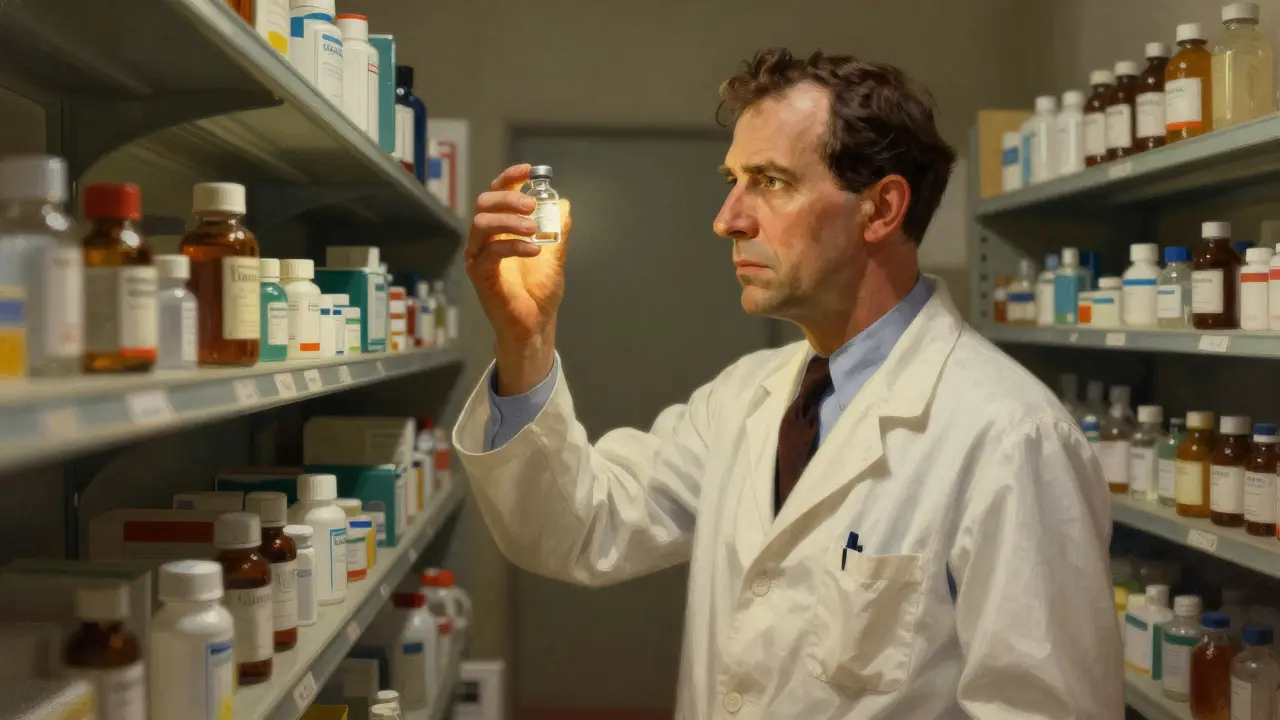
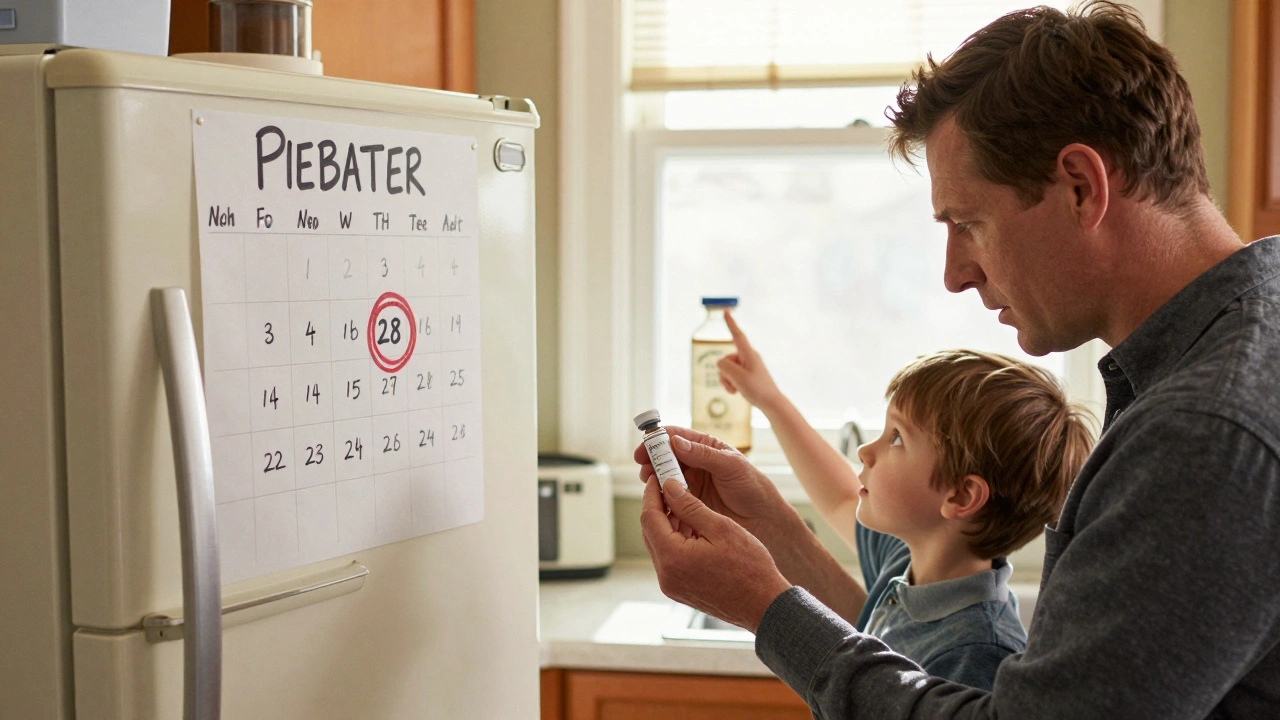
And here’s a hard truth: many medications stay effective past their expiration date. A 2021 JAMA commentary pointed out that stability data shows most pills don’t suddenly turn toxic after the printed date. But we still throw them out because we’re scared. That’s unnecessary waste. Talk to your pharmacist. Ask: “Is this still safe?” Don’t assume it’s bad just because the date passed.
Train Your Team-And Reward Them
Waste prevention isn’t a one-time training session. It’s culture. The WHO says staff training is the foundation of any successful program. Facilities with regular training see 28% less waste than those without.
Train your staff on:
- Proper storage temperatures
- FIFO inventory rotation
- How to read expiration labels
- When to call for a take-back
- How to document temperature checks
And don’t just train them-reward them. One clinic linked waste reduction to performance bonuses. Staff got a small bonus every quarter if they hit a 15% waste reduction goal. Pushback dropped. Engagement went up. Within 11 months, they saw a return on their investment.
What’s Next? The Future Is Predictive
AI is coming. By 2026, 45% of healthcare facilities will use predictive analytics to forecast medication needs. These systems will look at patient volume, seasonal trends, and refill patterns to auto-order just the right amount. No more overstocking. No more surprises.
But you don’t have to wait. Start now. Track your waste. Ask your team: “What’s the most common thing we throw away?” Then fix it. One clinic found they were throwing out 200 vials of vitamin D every year. Why? Because they ordered it in bulk for winter, but patients didn’t show up. So they switched to ordering monthly. Waste dropped to zero.
Small changes add up. One checklist. One temperature log. One conversation with a patient about taking less. That’s how you stop waste. Not with expensive tech. Not with rules. With attention.
Don’t Let Good Medicine Go to Waste
Medications are meant to heal. Not collect dust. Not rot in a fridge. Not get flushed because no one checked the date.
You don’t need a big budget. You don’t need a tech upgrade. You need awareness. You need a routine. You need to care enough to look.
Start today. Check your shelves. Talk to your team. Fix one thing. And keep going.

Benjamin Sedler
December 2, 2025 AT 16:52zac grant
December 3, 2025 AT 06:10michael booth
December 4, 2025 AT 04:48Heidi Thomas
December 5, 2025 AT 23:22Dematteo Lasonya
December 7, 2025 AT 08:07Rudy Van den Boogaert
December 7, 2025 AT 08:25Gillian Watson
December 8, 2025 AT 23:46Jordan Wall
December 9, 2025 AT 13:31Gareth Storer
December 10, 2025 AT 11:14Jessica Baydowicz
December 11, 2025 AT 00:42val kendra
December 11, 2025 AT 13:42Ashley Elliott
December 13, 2025 AT 04:48Chad Handy
December 14, 2025 AT 02:07Augusta Barlow
December 15, 2025 AT 21:22Joe Lam
December 15, 2025 AT 22:26Jenny Rogers
December 17, 2025 AT 20:50Rachel Bonaparte
December 18, 2025 AT 10:13