Thrush Treatment Decision Tool
Treatment Recommendations
This tool helps determine the most appropriate treatment for oral thrush based on your specific situation. Results are based on medical guidelines and data from the article.
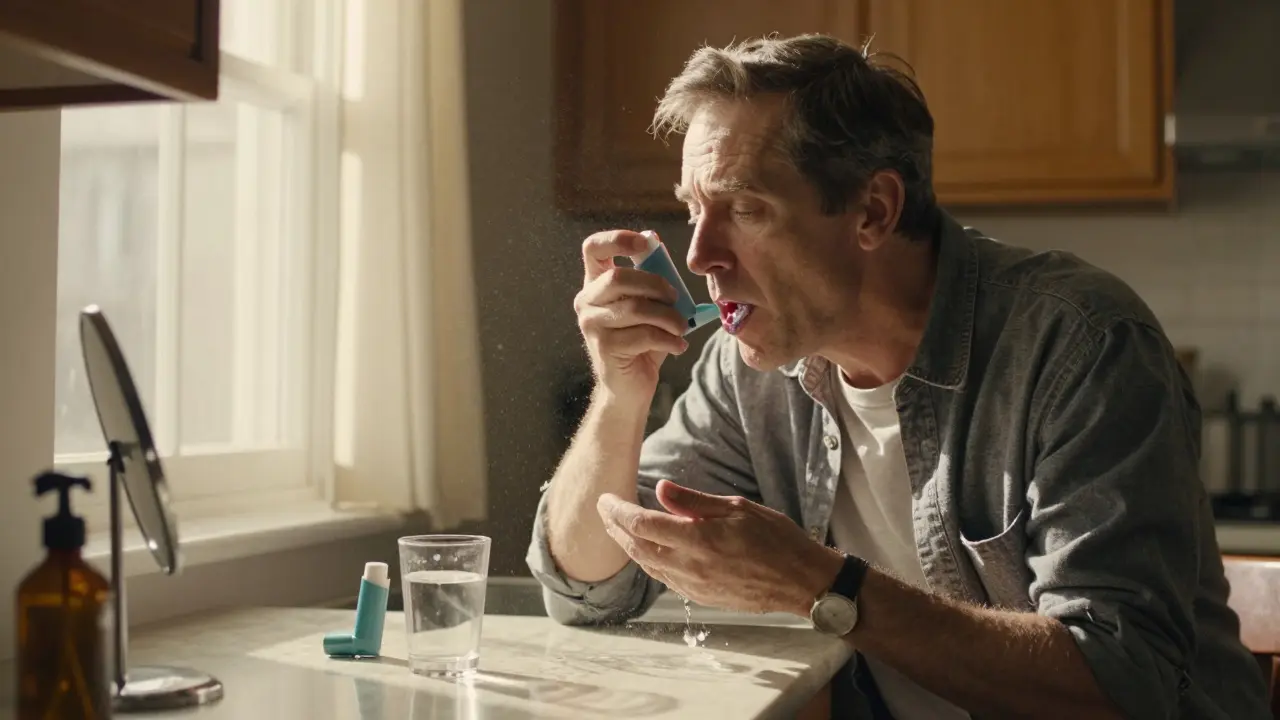
Have you ever woken up with a white coating on your tongue, or felt like swallowing feels like sandpaper? If you’re on medications like inhalers for asthma, antibiotics, or immunosuppressants, you might be dealing with oral thrush. It’s not just a nuisance-it’s a common side effect that affects up to 20% of people using inhaled steroids. The good news? It’s treatable. And better yet, you can often prevent it before it starts.
What Causes Oral Thrush from Medications?
Oral thrush is a fungal infection caused by Candida albicans, a yeast that lives naturally in your mouth. Normally, your immune system and good bacteria keep it in check. But certain medications throw that balance off. Antibiotics kill off helpful bacteria along with harmful ones, letting Candida take over. Inhaled corticosteroids-used for asthma and COPD-leave a residue in the mouth that creates a perfect breeding ground. Immunosuppressants, used after organ transplants or for autoimmune diseases, weaken your body’s ability to fight off fungi. Cancer treatments like chemotherapy also raise your risk.
According to the NHS, about 5% of people get oral thrush at some point. But if you’re on one of these meds, your odds jump sharply. The CDC reports over 12.9 million Americans use inhaled steroids yearly. That’s millions of people at higher risk.
What Does Oral Thrush Look and Feel Like?
You’ll usually notice white, creamy patches on your tongue, inner cheeks, or sometimes the roof of your mouth. These patches can look like cottage cheese. If you scrape them gently, they might bleed slightly underneath. Other signs include:
- Soreness or burning in the mouth
- Difficulty swallowing (especially if the infection spreads to the throat)
- Loss of taste or a bad, metallic taste
- Cracking or redness at the corners of your lips
If you’re using an inhaler and notice any of these symptoms, don’t ignore them. Left untreated, thrush can spread to your esophagus, making eating painful and increasing your risk of more serious infections.
How Is Oral Thrush Treated?
There are two main types of treatment: topical (applied in the mouth) and systemic (taken as a pill). The choice depends on how bad the infection is, your overall health, and what meds you’re already taking.
Nystatin: The First-Line Topical Treatment
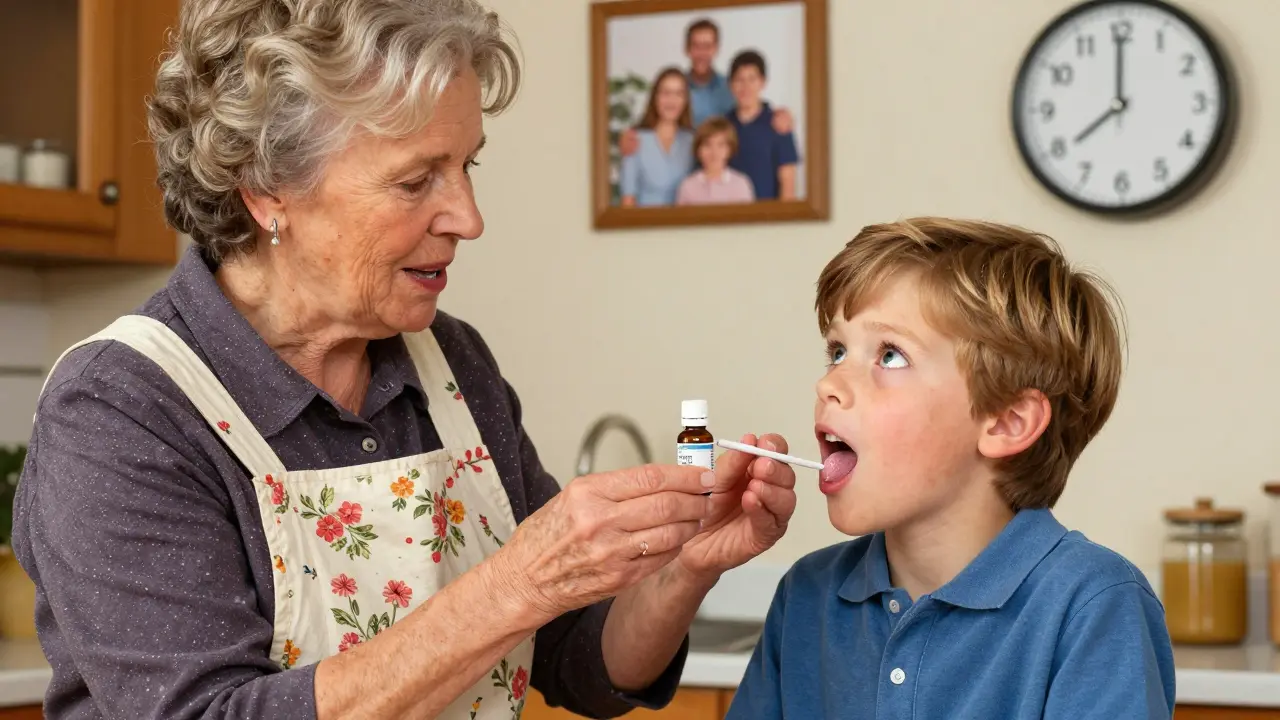
Nystatin, sold under brand names like Mycostatin and Nilstat, is the most common starting point. It’s been used since the 1950s and works by poking holes in the fungal cell wall, killing the yeast. It comes as a liquid suspension you swish in your mouth.
Here’s how to use it right:
- Use 4 to 6 mL (about a teaspoon) four times a day-after meals and before bed.
- Swish it around your mouth for at least 2 minutes. Don’t swallow it right away.
- Then spit it out. Don’t rinse your mouth after.
- Keep doing this for 7 to 14 days, even if symptoms improve.
Studies show nystatin cures 92% of mild to moderate cases when used correctly. But here’s the catch: 42% of people fail treatment because they swallow it too fast. The liquid needs time to coat the infected areas. If you treat it like mouthwash and spit immediately, you’re wasting it.
It’s safe for kids, pregnant women, and seniors because it doesn’t get absorbed into your bloodstream. Less than 5% of the dose enters your system. That’s why doctors often start here.
Fluconazole: When You Need Something Stronger
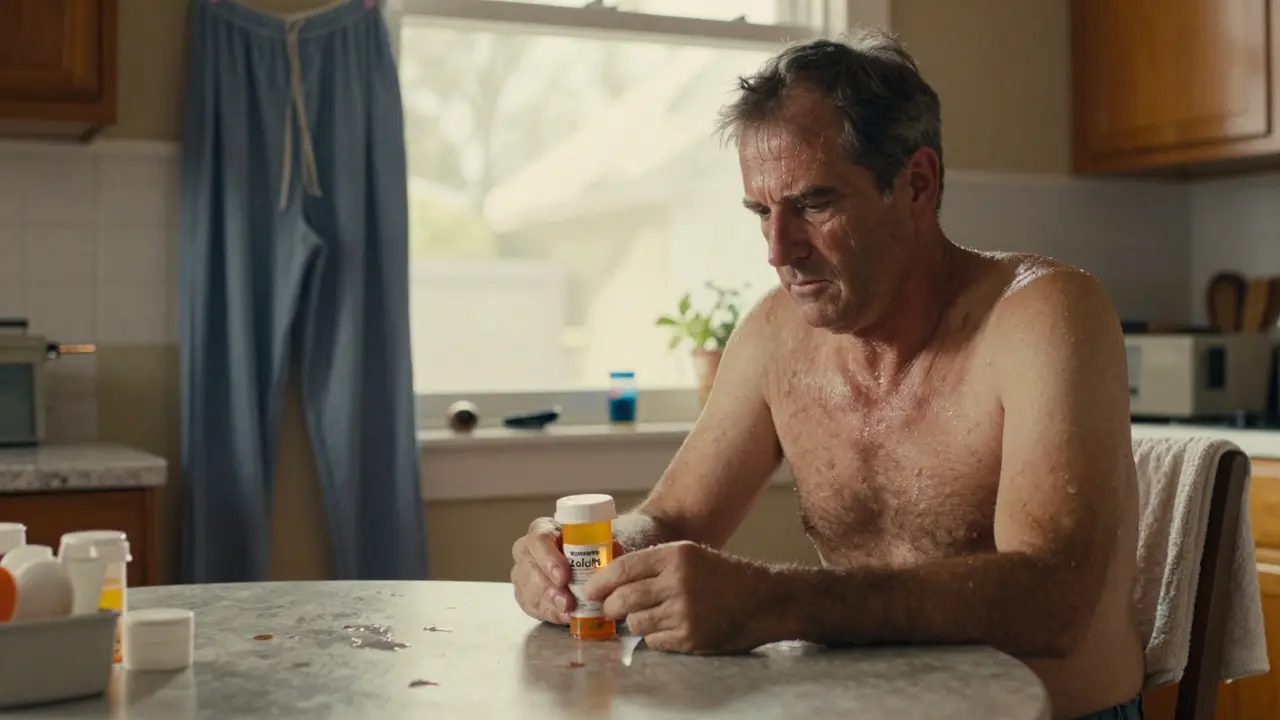
If nystatin doesn’t work-or if the infection is deeper, like in your throat-you’ll likely get fluconazole (Diflucan). It’s a pill taken once a day. It works systemically, meaning it circulates in your blood to reach fungi everywhere.
Standard dose: 100-200 mg daily for 7-14 days. It’s absorbed quickly, with peak levels in your blood within 1-2 hours. Studies show it clears up thrush in 95% of cases.
But it’s not without risks. Fluconazole can interact with 32 other common medications, including blood thinners like warfarin, seizure meds like phenytoin, and diabetes drugs like sulfonylureas. It can also affect liver function. The FDA has issued warnings about rare cases of liver damage. It’s also more expensive-generic fluconazole costs about $23 for a 30-day supply, while nystatin runs just $16.
Doctors usually reserve fluconazole for:
- Immunocompromised patients (like transplant recipients)
- Severe or recurrent infections
- When thrush spreads beyond the mouth
Comparing Nystatin and Fluconazole
| Feature | Nystatin | Fluconazole |
|---|---|---|
| Form | Oral suspension (liquid) | Oral tablet |
| Dosing Frequency | Four times daily | Once daily |
| Duration | 7-14 days | 7-14 days |
| Effectiveness | 89% | 95% |
| Systemic Absorption | <5% | 98% |
| Best For | Mild cases, children, pregnant women | Severe cases, immunocompromised patients |
| Common Side Effects | Unpleasant taste, chalky texture | Headache, nausea, stomach pain |
| Drug Interactions | Nearly none | 32+ common medications |
| Cost (Generic, 30-day) | $15.79 | $23.49 |
As Dr. Susan Whitley from Johns Hopkins says, "Start with nystatin unless the patient is severely immunocompromised." That’s the standard of care.
How to Prevent Oral Thrush
Treatment helps-but prevention is even better. If you’re on meds that trigger thrush, these steps cut your risk by over 60%.
For Inhaler Users
If you use an asthma or COPD inhaler (like Advair, Symbicort, or Flovent), rinse your mouth with water immediately after each use. Don’t just swish-spit it out. Some people even brush their teeth after using their inhaler. This simple habit reduces thrush risk by 65%, according to an NHS audit of over 1,200 patients.
Also consider using a spacer device. It helps the medicine go straight to your lungs instead of settling in your mouth.
General Prevention Tips
- Brush and floss twice daily. Remove plaque and food debris that feed Candida.
- Use xylitol gum or lozenges. A 2022 study in the Journal of Dental Research found xylitol reduces Candida colonization by 40%.
- Visit your dentist every 6 months. Dentists spot early signs of thrush before you even notice symptoms.
- Control blood sugar if you have diabetes. High glucose = food for yeast. Keep HbA1c below 7.0%.
- Avoid sugary foods and refined carbs. Candida thrives on sugar.
New Prevention Tools
In March 2023, the FDA approved a new product: Mycolog-II, a mucoadhesive nystatin tablet that sticks to your mouth lining for up to 4 hours. It’s a game-changer-no more swishing, no more taste complaints. Early trials show 94% effectiveness.
Also promising: probiotics. A 2023 study in Nature Microbiology found that taking Lactobacillus reuteri alongside antifungal treatment cut recurrence by 57%. You can find it in supplements or certain yogurts.

What If It Comes Back?
Recurrent thrush is frustrating. If it keeps coming back, there could be a deeper issue:
- Uncontrolled diabetes
- Undiagnosed HIV
- Chronic steroid use without mouth rinsing
- Fluconazole resistance
The European Society of Clinical Microbiology warns that fluconazole resistance has doubled since 2010-from 3% to 12%. If you’ve had multiple courses of fluconazole and it’s not working, your doctor may need to do a culture test to identify the exact strain of Candida.
And don’t forget: some cases aren’t thrush at all. Leukoplakia, lichen planus, or even early signs of oral cancer can mimic thrush. If a lesion doesn’t heal in 2 weeks, get it checked.
Real Stories, Real Challenges
One Reddit user, "AsthmaWarrior42," wrote: "My Advair gave me thrush so bad I couldn’t eat. Nystatin worked-but the taste was awful. I had to force myself to swish for two minutes every time. I almost quit."
On HealthUnlocked, 68% of users said the taste was their biggest hurdle. But 79% admitted it worked when they stuck with it.
Fluconazole users praise its convenience but report headaches (31%) and stomach pain (24%). One case on PatientsLikeMe involved liver toxicity from fluconazole-rare, but serious enough to remind us that even "safe" meds need monitoring.
The bottom line? Treatment works-but only if you do it right. And prevention? That’s where the real win is.
What’s Next?
The global antifungal market is growing fast, driven by rising antibiotic use and aging populations. In the U.S., 8.7 million nystatin prescriptions were filled in 2022-mostly for seniors and kids. But new drugs are coming. Three next-gen antifungals are in Phase II trials, aiming for fewer side effects and better resistance profiles.
For now, the best tools are simple: rinse after inhalers, take nystatin as directed, and don’t skip dental visits. You don’t need fancy solutions. Just consistency.


John Cena
February 20, 2026 AT 21:04Irish Council
February 22, 2026 AT 15:26Hariom Sharma
February 23, 2026 AT 01:09Oana Iordachescu
February 24, 2026 AT 01:04Davis teo
February 25, 2026 AT 11:22Michaela Jorstad
February 26, 2026 AT 03:09James Roberts
February 27, 2026 AT 14:06Danielle Gerrish
February 28, 2026 AT 07:43Liam Crean
February 28, 2026 AT 11:32Marie Crick
March 2, 2026 AT 09:15Philip Blankenship
March 3, 2026 AT 04:31Maddi Barnes
March 3, 2026 AT 14:53Jonathan Rutter
March 5, 2026 AT 02:59Jana Eiffel
March 6, 2026 AT 16:43Courtney Hain
March 8, 2026 AT 01:42