
Pediatric Excipient Safety Checker
Medication Safety Assessment
This tool helps you determine if your child's medication contains potentially dangerous excipients. According to medical research, certain ingredients like benzyl alcohol can cause severe toxicity in infants and young children.
Safety Assessment
Recommended Actions
When you give your child medicine, you trust it’s safe. You check the dose, read the label, and assume the inactive ingredients-those little bits that help the pill hold together or taste sweet-are harmless. But what if some of those so-called "inert" ingredients could cause seizures, organ failure, or even death in babies and young children? That’s not a hypothetical. It’s happening right now, in hospitals and at home, because many children’s medicines still contain dangerous excipients like alcohol, sorbitol, and benzyl alcohol.
What Are Excipients-and Why Should You Care?
Excipients are the non-active parts of medicine. They help dissolve the drug, make it easier to swallow, preserve it, or give it flavor. Think of them like the sugar in cough syrup or the gel in a topical cream. For adults, these ingredients usually don’t cause problems. But children, especially newborns and premature babies, don’t process them the same way. Their livers are underdeveloped. Their kidneys can’t flush out toxins efficiently. Their skin is thinner. And their bodies are tiny-so even a small amount of something harmless to an adult can be toxic to a baby. A 2020 study found that immature absorption, distribution, metabolism, and elimination systems make kids uniquely vulnerable. In one analysis of 2,095 pediatric medications, 31% contained at least one excipient with known risks. That means over one in three prescriptions for children include something that could harm them.Alcohol in Children’s Medicine: More Dangerous Than You Think
When people hear "alcohol" in medicine, they think of ethanol-the kind you drink. But in pediatric formulations, it’s often propylene glycol or benzyl alcohol, both of which act like alcohol in the body. These aren’t just "small amounts." Some liquid medications contain up to 80% propylene glycol. Lorazepam oral solution? 80%. Esmolol? 25%. Phenobarbital? 40% to 70%. Propylene glycol isn’t just a solvent. When it builds up in a baby’s bloodstream, it can cause:- CNS depression (drowsiness, lethargy, coma)
- Seizures
- Low blood pressure
- Heart rhythm problems
- Acute kidney injury
- Hemolysis (destruction of red blood cells)
Sorbitol: The Sweet Danger
Sorbitol is a sugar alcohol used to sweeten liquid medicines and make chewable tablets more palatable. It’s found in everything from liquid antibiotics to antacids. But in children, especially infants, it doesn’t just taste sweet-it can be toxic. While sorbitol itself isn’t as directly toxic as alcohol, it causes severe gastrointestinal distress. In kids with immature digestive systems, it leads to:- Severe bloating and gas
- Chronic diarrhea
- Dehydration
- Metabolic acidosis
- Electrolyte imbalances
Benzyl Alcohol: A Silent Killer in Neonates
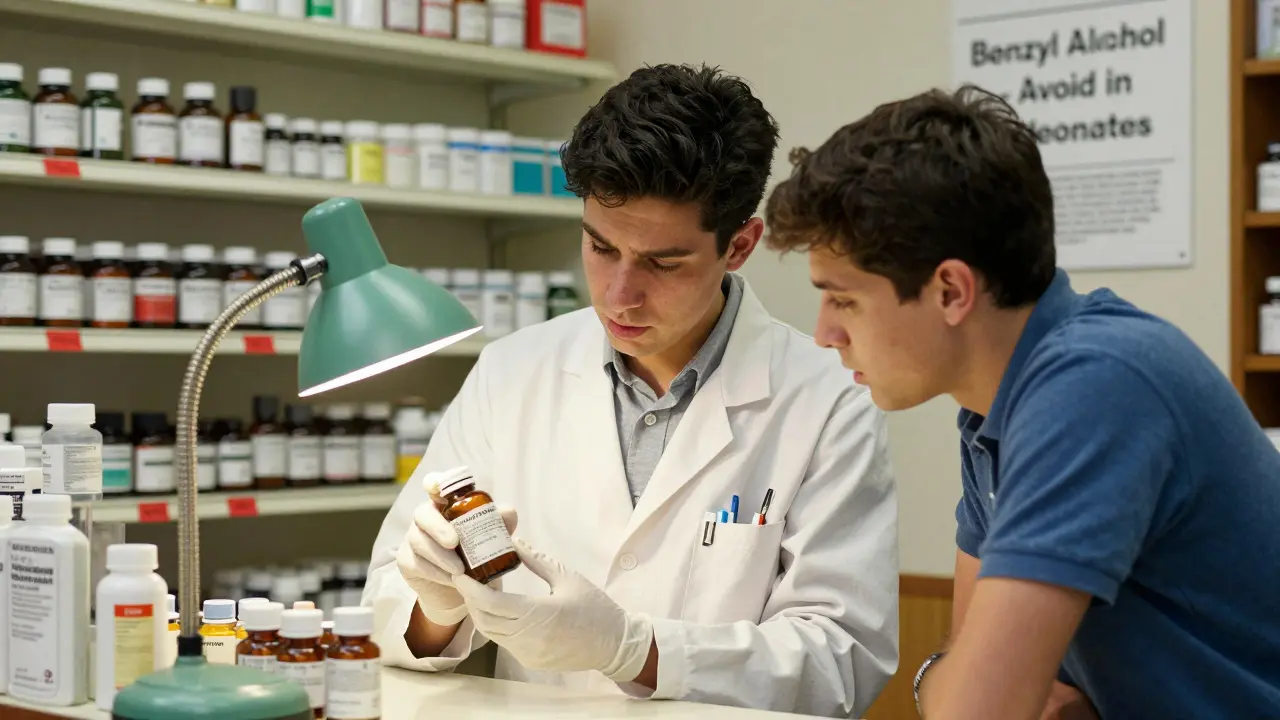
Benzyl alcohol is used as a preservative in injectable and some oral medications. It sounds harmless, but in newborns, especially those under 28 days old, it’s deadly. The FDA issued a black box warning in 2005 after multiple cases of "gasping syndrome" in premature infants. Symptoms included:- High acid levels in the blood
- Respiratory failure
- Low blood pressure
- Seizures
- Cardiac arrest
Why Are These Ingredients Still in Use?
You’d think after decades of documented harm, these excipients would be phased out. But they’re not. Here’s why:- Cost and convenience: Manufacturers use what’s cheap and easy. Propylene glycol and benzyl alcohol have been around for 50 years. Finding alternatives takes time and money.
- Lack of regulation: In the U.S. and Europe, excipients aren’t required to be tested for safety in children. The FDA and EMA require testing for the active drug-but not the filler.
- Off-label use: Most children’s medicines aren’t designed for kids. Doctors use adult formulations, diluting them with water or syrups that may contain harmful additives.
- Labeling gaps: Excipients aren’t always listed clearly. Parents and even some pharmacists don’t know what’s in the bottle.
What Can You Do?
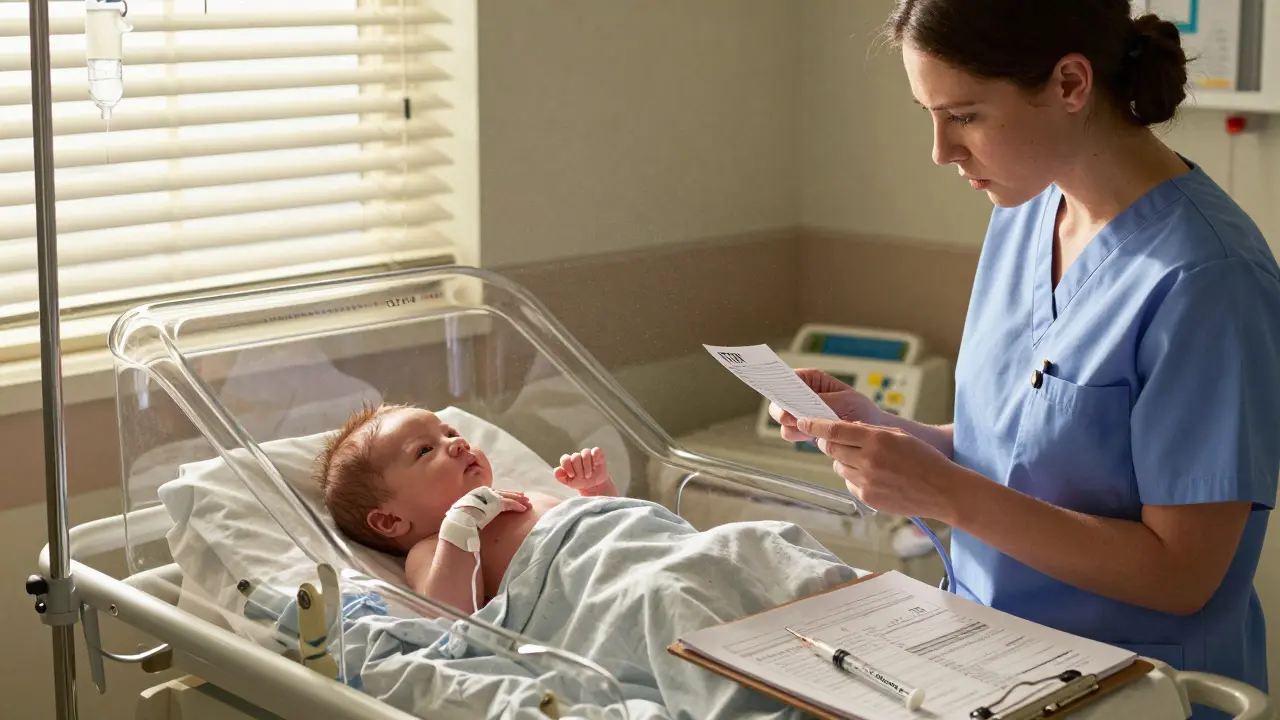
You can’t control what’s in the medicine. But you can protect your child.- Ask for the full ingredient list. Don’t just ask "Is this safe?" Ask: "Does this contain propylene glycol, sorbitol, or benzyl alcohol?"
- Check the KIDs List. The Pediatric Pharmacy Association’s 2025 KIDs List is the most reliable guide to dangerous excipients. It’s available online for free.
- Choose sugar-free, alcohol-free alternatives. Many brands now offer excipient-free or low-risk versions. Ask your pharmacist.
- Never assume "pediatric" means safe. A bottle labeled "for children" can still contain benzyl alcohol or propylene glycol.
- Report adverse reactions. If your child has a seizure, unusual drowsiness, or diarrhea after starting a new medicine, report it to your doctor and to your country’s drug safety agency.
The Bigger Picture: Change Is Coming-But Too Slow
There’s progress. The European Medicines Agency now requires excipient safety data in all pediatric drug applications. The STEP database tracks known toxicities. The PERAT tool helps companies assess risk. The FDA has approved more pediatric formulations in recent years than ever before. But the data gaps remain huge. The SEEN study found that 92% of neonates in one hospital received at least one medication with propylene glycol-exceeding safe limits. And in 2024, the STEP database still had no reliable data on long-term, low-dose exposure for babies under 6 months. The truth is: children aren’t small adults. Their bodies don’t handle the same chemicals the same way. Until every medication is tested for safety in infants-not just in adults-we’re playing Russian roulette with our kids’ health.What’s Being Done?
The European Commission is pushing for a revised Pediatric Regulation by 2026 that will force manufacturers to prove excipient safety for every age group. The U.S. FDA’s 2023 draft guidance acknowledges the problem-but doesn’t mandate change. Meanwhile, researchers are developing 17 new excipients designed specifically for children. Three of them target alcohol-related toxicity. But these won’t be available for years. And even then, they’ll only be used in new drugs-not in existing ones. Until then, the burden falls on parents and clinicians to be vigilant.Can alcohol in children’s medicine cause seizures?
Yes. Propylene glycol and benzyl alcohol, both alcohol-like compounds used in medications, can cause seizures in infants and young children. This happens because their immature livers and kidneys can’t break down or remove these substances quickly enough. High doses build up in the bloodstream, leading to neurological toxicity. Cases have been documented in neonates receiving IV medications containing these excipients, especially when given repeatedly over several days.
Is sorbitol safe for babies?
No, sorbitol is not safe for babies, especially under 1 year old. It’s poorly absorbed in young children and draws water into the intestines, causing severe diarrhea, bloating, and dehydration. In extreme cases, it can lead to metabolic acidosis and electrolyte imbalances. Even small amounts in liquid antibiotics or antacids can trigger these reactions. Sugar-free alternatives like cellulose powder or calcium hydrogen phosphate are safer.
What medications commonly contain benzyl alcohol?
Benzyl alcohol is commonly found in injectable medications like antibiotics, anticonvulsants, and sedatives. It’s also in some nasal sprays, eye drops, and topical anesthetics. Common examples include certain formulations of phenobarbital, lorazepam, and lidocaine. The FDA warns against using benzyl alcohol-preserved products in neonates under 28 days old. Always check the full ingredient list-even if the label says "for children."
How do I know if my child’s medicine has dangerous excipients?
Ask your pharmacist for the full ingredient list-not just the active drug. Look for propylene glycol, benzyl alcohol, sorbitol, glycerin, or polysorbate 80. The Pediatric Pharmacy Association’s 2025 KIDs List is the best resource for identifying risky excipients. You can also search the STEP database (Safety and Toxicity of Excipients for Paediatrics), which is publicly accessible and updated regularly.
Are there safer alternatives to these excipients?
Yes. For sweetening, starch, erythritol, and cellulose powder are safer than sorbitol. For solvents, water-based formulations or polysorbate 80 (in low doses) are preferred over propylene glycol. For preservatives, phenethyl alcohol and benzoic acid (in safe amounts) are being tested as alternatives to benzyl alcohol. Some newer pediatric formulations now use excipient-free or low-risk versions-ask your pharmacist if they’re available.
If you’re giving your child medicine, don’t assume it’s safe just because it’s labeled "pediatric." The real danger isn’t the active drug-it’s what’s hiding in the filler. Ask questions. Demand transparency. And if you’re unsure, don’t give it. Your child’s life may depend on it.

Lori Anne Franklin
December 26, 2025 AT 23:09My baby had a crazy reaction to amoxicillin last year-nonstop diarrhea for weeks. We thought it was a virus, but turns out it was the sorbitol in the liquid. Never checked the ingredients before. Lesson learned the hard way.
Jeanette Jeffrey
December 28, 2025 AT 18:20Of course the system’s broken. Big Pharma doesn’t care if your kid has a seizure as long as the profit margin stays high. They’ll keep using benzyl alcohol because it’s cheaper than actually testing for safety in babies. Welcome to capitalism, folks.
Jay Ara
December 30, 2025 AT 17:26my dr never told me about this stuff... i just trusted the bottle. now im scared to give my daughter anything. any tips on finding safe meds?
Ryan Cheng
December 31, 2025 AT 03:38Jay, you’re not alone. I spent hours last week digging through pharmacy databases just to find an alcohol-free amoxicillin for my 9-month-old. It’s exhausting, but it’s worth it. Ask for the KIDs List-it’s free, it’s real, and it’s saved my kid more than once. Also, call the manufacturer directly. Their customer service line often has the full ingredient list when the label doesn’t.
And don’t feel bad for not knowing. This stuff isn’t taught in med school, and pharmacists are overloaded. We’re all learning together.
There are brands now-like Mommy’s Bliss and Little Remedies-that label everything clearly. They’re pricier, sure, but when your kid’s liver is involved, you pay the extra $3.
And if your pharmacy says they don’t carry it? Ask them to order it. If enough people ask, they’ll stock it. Change starts with asking.
You’re already doing the right thing by paying attention. That’s more than most parents do.
Alex Ragen
December 31, 2025 AT 05:33Let us not mince words: the medical-industrial complex has weaponized negligence as a cost-saving metric. The ingestion of propylene glycol in neonates is not an oversight-it is a calculated risk, predicated upon the statistical irrelevance of infant mortality in actuarial models. The FDA’s passive regulatory posture is not incompetence-it is epistemic violence masked as bureaucracy.
When the EMA mandates excipient safety data, it is not altruism-it is the slow, reluctant creep of accountability, forced by public outrage and the occasional infant corpse. We are not discussing pharmacology here-we are discussing the commodification of vulnerability.
And yet, the most insidious element is not the chemical, but the silence. The silence of pediatricians who never learned this in residency. The silence of pharmacists who fear liability for questioning formulations. The silence of parents who trust the label because they have no other framework for safety.
Until we treat children as subjects of bioethics-not afterthoughts in drug development-we will continue to bury them in the margins of regulatory indifference. The KIDs List is not a tool. It is a monument. To what? To the fact that we knew. And we did nothing.
And now, as I type this, another neonate is being dosed with benzyl alcohol in a NICU somewhere, while a clerk in a corporate lab calculates the savings per vial. Do you feel the weight of that? Or are you too busy scrolling?
wendy parrales fong
January 1, 2026 AT 04:04I used to think ‘pediatric’ meant safe. Then my son had a seizure after a fever med. Turns out it had propylene glycol. I cried for hours. But I didn’t stop. I started asking. I started reading labels. I started sharing what I learned.
You don’t need to be a scientist. You just need to care enough to ask. And then ask again.
There are good people in pharma too. They’re just buried under layers of red tape. We can help them change things-if we speak up together.
Michael Bond
January 1, 2026 AT 19:21Just checked my kid’s last prescription. No alcohol. No sorbitol. Good.
Bryan Woods
January 3, 2026 AT 05:45Thank you for compiling this with such clarity. As a hospital pharmacist with 14 years in pediatrics, I’ve seen too many cases where excipient toxicity was missed because it wasn’t on the radar. We compound meds daily because the commercially available options are either unavailable or contain dangerous additives.
The real tragedy isn’t the presence of benzyl alcohol-it’s that we still don’t have a standardized, accessible database that all clinicians and parents can use in real time. The KIDs List is a start, but it’s not integrated into EHRs or pharmacy systems.
I’ve started printing the KIDs List and handing it out to parents during discharge. I’ve also begun flagging high-risk excipients in our internal formulary. Small steps, but they matter.
To those asking how to find safer options: call your local children’s hospital pharmacy. They often have access to compounding resources and can provide alcohol-free, sugar-free alternatives-even if they’re not on the shelf.
This isn’t just a parent’s fight. It’s a clinical imperative.