When a child gets sick, parents and caregivers want to help them feel better - fast. But giving a child the same medicine as an adult, even in a smaller dose, can be dangerous. Children aren’t just small adults. Their bodies process drugs differently. Their organs are still growing. Their metabolism is faster. Their weight changes rapidly. That’s why age-appropriate medications for pediatric conditions aren’t just a nice idea - they’re a medical necessity.
Why Kids Need Different Medicines
For decades, doctors prescribed adult drugs to children by simply cutting the dose in half or quartering it. That approach worked sometimes - but not often enough. Studies now show that up to 18% of hospitalized children experience an adverse drug reaction, and half of those cases happen in kids between 1 and 10 years old. About 4% of all pediatric hospital admissions are directly linked to medication errors.
The reason? Pharmacokinetics - how the body absorbs, distributes, metabolizes, and excretes drugs - changes dramatically with age. A newborn’s liver can’t break down medications the way an adult’s can. A toddler’s kidneys filter drugs slower than a teenager’s. And a child’s body weight can double in just a few years, making weight-based dosing far more accurate than age-based estimates.
The FDA and WHO now recognize six distinct pediatric age groups for drug development: preterm neonates, term neonates (0-27 days), infants (28 days-23 months), children (2-11 years), adolescents (12-16 years), and young adults (17-21 years). Each group has unique needs. For example, a term neonate might need a concentration 10 to 100 times lower than an adult for the same medication because their liver and kidneys aren’t mature enough to handle higher doses.
Common Conditions and Safe Medications
Let’s look at the most common pediatric illnesses and what medicines are actually safe and effective for each age group.
Pain and Fever
For fever and pain, acetaminophen and ibuprofen are the gold standards. Aspirin is strictly avoided in children under 18 due to the risk of Reye’s syndrome - a rare but deadly condition that causes liver and brain swelling.
Acetaminophen: For children, the dose is 10-15 mg per kilogram of body weight every 4-6 hours. The maximum daily dose is 75 mg/kg (but never more than 3,750 mg total per day). For a 15 kg toddler, that’s about 150-225 mg per dose, given up to five times a day.
Ibuprofen: Dosed at 5-10 mg/kg every 6-8 hours. Maximum single dose is 400 mg. For children under 12, the total daily dose should not exceed 40 mg/kg. Kids over 12 can take 200-400 mg every 4-6 hours, with a daily max of 3,200 mg.
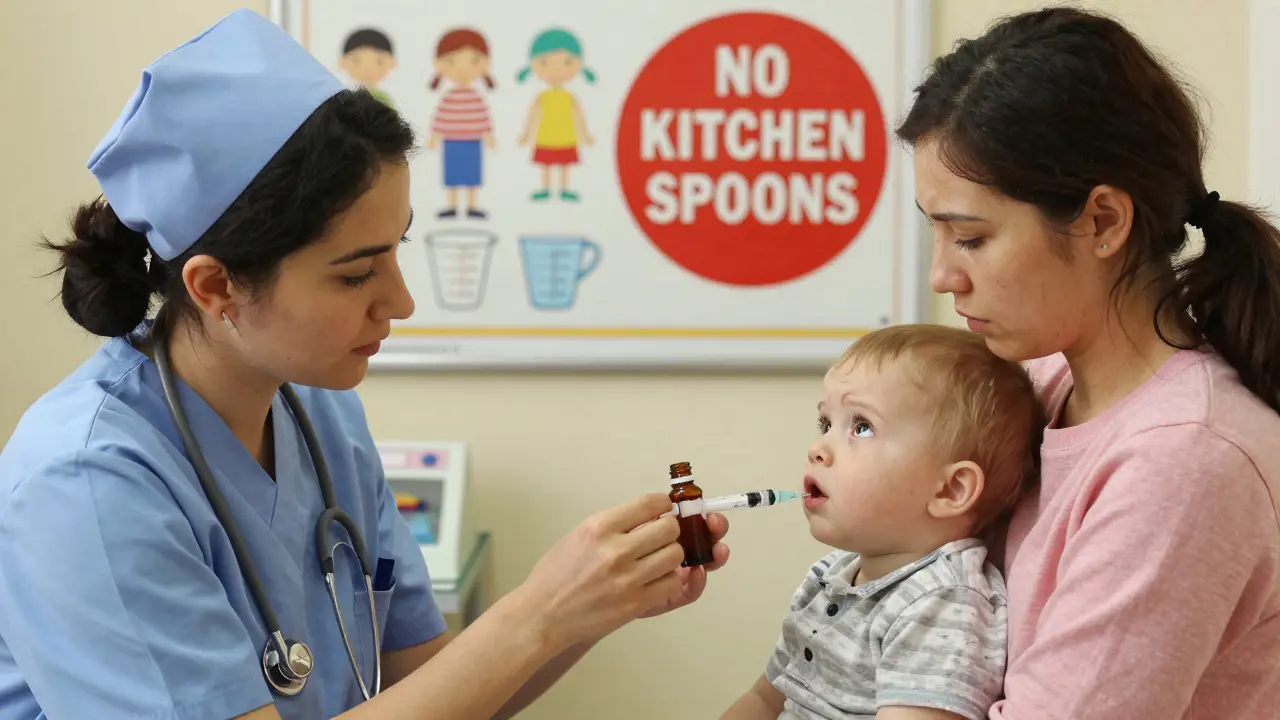
Both medications come in liquid form for young kids, chewable tablets for ages 2-6, and regular tablets for older children. The key is using the right measuring device - a dosing syringe or cup marked in milliliters - not a kitchen spoon.
Ear Infections and Antibiotics
Ear infections (otitis media) are the most common reason kids visit the doctor. Amoxicillin remains the first-line antibiotic. The standard dose is 25-35 mg/kg/day split into two or three doses. For a 12 kg child, that’s about 300-420 mg per day, given every 8 or 12 hours for 7-10 days.
Maximum single dose? 500 mg. Even if the child weighs more, you don’t exceed that per dose. Why? Because higher doses don’t improve outcomes - they just increase side effects like diarrhea and rash.
For kids allergic to penicillin, azithromycin is used. But it’s not first choice - resistance rates are high (25-40% in some areas), and it’s less effective than amoxicillin. Still, it’s given as a single daily dose for 5 days, which helps with adherence.
Cough and Cold
Over-the-counter cough and cold medicines? Avoid them in children under 6. The FDA warns they offer no real benefit and can cause serious side effects like rapid heart rate, seizures, and even death in very young children.
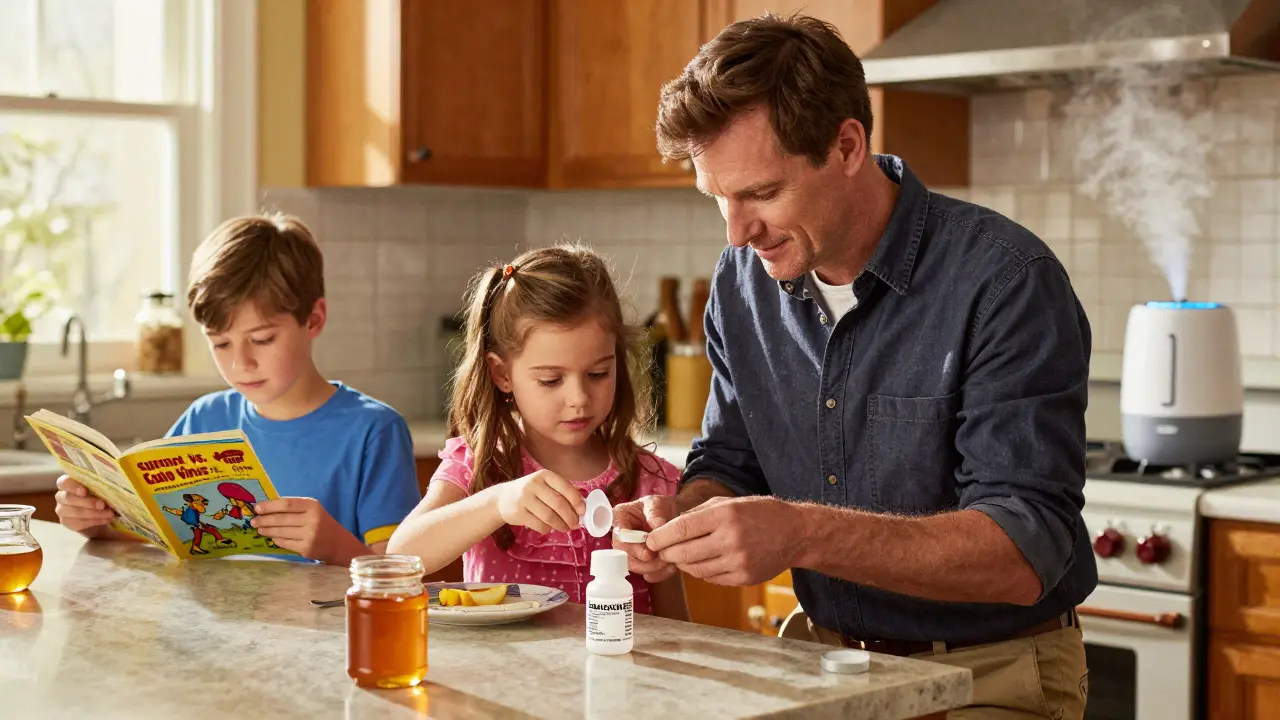
Instead, use saline drops and suction for nasal congestion. Honey (for kids over 1 year) can help with nighttime cough - studies show it’s as effective as some cough syrups. Humidifiers and fluids are just as important.
Antivirals for Flu
If a child under 5 gets the flu, oseltamivir (Tamiflu) can shorten the illness by 1-2 days if started within 48 hours. The dose is 20 mg/kg per day split into two doses. Maximum single dose is 1,000 mg. For a 10 kg child, that’s 100 mg per day - 50 mg twice a day.
Flavor matters. The old version tasted awful. The newer fruit-flavored suspension increased adherence by 58% during the 2022-2023 flu season. That’s not just a marketing win - it’s a public health win.
Medications to Avoid Completely
The Pediatric Pharmacy Association’s 2025 KIDs List (Key Potentially Inappropriate Drugs in Pediatrics) is the most trusted guide for what not to give kids. Here are the big ones:
- Codeine and tramadol: Never for children. These are converted to morphine in the liver - but some kids metabolize them too quickly, leading to fatal respiratory depression. Even one dose can be deadly.
- Fluoroquinolones (like ciprofloxacin): Avoid in children under 18. They can damage growing cartilage and tendons. Only used in rare, life-threatening infections when no other option exists.
- Angiotensin receptor blockers (like losartan): Use with extreme caution in infants under 1 month. Can cause severe kidney damage due to a condition called renal tubular dysgenesis.
- Montelukast (Singulair): Use with caution in all patients under 18. Linked to mood changes, sleep disturbances, and suicidal thoughts in some children.
- Mirabegron (for overactive bladder): Avoid in children under 3. Safety data is lacking, and side effects can be unpredictable.
These aren’t just "maybe" risks. These are "never" or "only if absolutely necessary" decisions backed by clinical evidence.
Formulation Matters More Than You Think
It’s not enough to get the dose right. The medicine has to be something the child can actually take.
Children under 5 need liquids, chewables, or orally disintegrating tablets. Tablets are too hard to swallow. Liquids are tricky - they’re often bitter, and parents frequently use kitchen spoons instead of proper measuring tools. One study found 42% of caregivers made dosing errors because they used teaspoons or tablespoons.
For a 15-month-old needing 2.5 mL of liquid antibiotic, that’s a tiny amount. One drop too much or too little can throw off the entire dose. That’s why standardized concentrations - like 125 mg/5 mL or 250 mg/5 mL - are critical. Pharmacies that use these standard strengths reduce dosing errors by 47%.
And taste? Huge factor. A 2022 survey of pediatricians found 68% struggled with kids refusing medicine because of bad taste. That’s why new formulations now include flavor testing during development. Fruit-flavored amoxicillin? It’s not a gimmick - it’s a lifesaver.
Off-Label Use Is Still Common - But Not Always Risky
Here’s a hard truth: about half of all medications given to children aren’t officially labeled for them. That’s not because doctors are careless - it’s because drug companies didn’t test them on kids.
The Pediatric Research Equity Act (PREA) of 2003 forced companies to study drugs in children. Since then, pediatric studies have jumped from 12% to 89% of new drug applications. But for older drugs - like many antibiotics and pain relievers - the data still comes from real-world use, not formal trials.
That doesn’t mean those drugs are unsafe. Amoxicillin, acetaminophen, and ibuprofen have been used safely in millions of children for decades. The key is sticking to evidence-based dosing - not guessing.

What Parents and Providers Can Do
Here’s how to make sure your child gets the right medicine:
- Always use weight, not age - even if the label says "for ages 2-4," weigh your child first. A 30 lb child and a 50 lb child both in the "2-4" group need very different doses.
- Use the right tool - a dosing syringe or cup with mL markings. No kitchen spoons.
- Check the concentration - liquid medications come in different strengths (e.g., 125 mg/5 mL vs. 250 mg/5 mL). Mixing them up is a common error.
- Ask if there’s a better formulation - if your child refuses a bitter liquid, ask if a chewable or flavored version exists.
- Keep a list - write down all medications your child takes, including doses and times. Bring it to every appointment.
Electronic health records with pediatric safety alerts have cut inappropriate dosing by 61% in children’s hospitals. If your provider doesn’t use a system like Epic’s pediatric module, ask why.
The Future of Pediatric Medicines
Things are improving. The global pediatric drug market is growing at 7.2% per year. New technologies are emerging:
- 3D-printed pills: Cincinnati Children’s Hospital is testing custom-dose tablets made for each child’s exact weight.
- Nanoparticle delivery: Tiny particles that help drugs absorb better in infants with immature digestive systems.
- Flavor-engineered formulations: Taste-masking tech that makes bitter drugs palatable without sugar.
And globally, the WHO aims for 90% availability of essential pediatric medicines in low-income countries by 2030. Right now, only 34% of needed drugs are available there - compared to 92% in high-income countries.
Children deserve medicines built for them - not scaled-down versions of adult drugs. Progress is real. But it’s still fragile. Every dose, every formulation, every warning matters.
Can I give my child adult medication if I cut the dose in half?
No. Adult medications aren’t just stronger - they often contain ingredients or inactive components that aren’t safe for children. Even if you cut the dose, the formulation may be inappropriate. For example, some adult tablets contain slow-release coatings that don’t break down properly in children’s stomachs. Always use a pediatric formulation.
Why is ibuprofen not recommended for babies under 6 months?
Ibuprofen is cleared by the kidneys, and a baby’s kidney function isn’t fully developed until around 6 months. Giving it earlier increases the risk of kidney injury, especially if the child is dehydrated. Acetaminophen is safer for infants under 6 months.
Are liquid antibiotics always better than pills for kids?
For children under 6, yes - swallowing pills is hard and risky. But for kids over 6 who can swallow tablets, chewables or regular tablets are often more accurate. Liquid doses can be spilled, diluted, or mis-measured. If your child can swallow a tablet, ask your provider if it’s an option.
What should I do if my child spits out or vomits their medicine?
Don’t automatically give another full dose. If they vomited right after taking it, wait 20-30 minutes, then give half the dose. If they vomited more than 30 minutes later, the medicine was likely absorbed - don’t repeat the dose. Always check with your doctor or pharmacist first.
How do I know if a medication is approved for my child’s age?
Check the FDA-approved label on the packaging or ask your pharmacist. If it says "for use in children 2 years and older," it hasn’t been tested or approved for younger kids. Off-label use is common and sometimes necessary, but it should be based on clinical guidelines - not guesswork.


Alex Arcilla
March 23, 2026 AT 02:29Darlene Gomez
March 24, 2026 AT 15:18Also, 3D-printed pills? That’s not sci-fi anymore. Cincinnati’s doing it. Imagine a pill made to your kid’s exact weight. No guesswork. No syringes. Just science that cares.
Zola Parker
March 25, 2026 AT 13:09also, why are we still using liquid antibiotics? why not just make them chewable? it’s 2025. we have drones. we have AI. but my 4yo still needs a syringe like he’s in a medical lab? lol.
Linda Foster
March 27, 2026 AT 09:12Furthermore, the emphasis on formulation precision, particularly the standardization of concentrations, significantly mitigates dosing errors - a leading cause of iatrogenic harm in pediatric populations.
Chris Farley
March 28, 2026 AT 14:02when I was a kid, we swallowed pills like soldiers. no questions. no flavors. just medicine. now we’re treating medicine like a birthday party.
Caroline Dennis
March 30, 2026 AT 05:05And montelukast? The neuropsychiatric signal is robust. We’ve ignored it for too long. Evidence > convenience.
peter vencken
March 30, 2026 AT 22:39also - flavor isn’t a gimmick. if the kid throws up the med, it’s useless. i’ve seen kids with ear infections go 3 days without meds because the liquid tasted like regret. fruit flavor? that’s a game changer.
Katie Putbrese
April 1, 2026 AT 04:19and why does the FDA allow off-label use at all? if it’s not approved, it shouldn’t be given. period. this is how kids die - because adults are too lazy to wait for proper trials.
Jefferson Moratin
April 2, 2026 AT 14:52Consequently, weight-based dosing, while superior to age-based estimation, remains a crude approximation. Precision dosing requires ontogeny-adjusted pharmacometric modeling - not merely multiplying mg/kg.
Chris Crosson
April 4, 2026 AT 03:54Also - no kitchen spoons. I bought a $5 dosing syringe and it’s the best $5 I ever spent. My kid doesn’t vomit anymore. I don’t panic anymore. It’s that simple.
Rama Rish
April 4, 2026 AT 08:39WHO’s 90% goal by 2030? we’re lucky if we get 10% in rural areas. this post is a luxury. but we need it.
florence matthews
April 5, 2026 AT 07:07My daughter used to scream every time we opened the bottle. Then we switched to cherry-flavored ibuprofen. Now she asks for it. Like a treat. That’s not magic. That’s design. That’s care.
Kevin Siewe
April 6, 2026 AT 20:32I keep a stack of dosing syringes in my bag. I give them out like candy. I’ve seen kids nearly die because someone used a teaspoon. Don’t judge. Just help. Always.
Jacob Hessler
April 7, 2026 AT 10:58