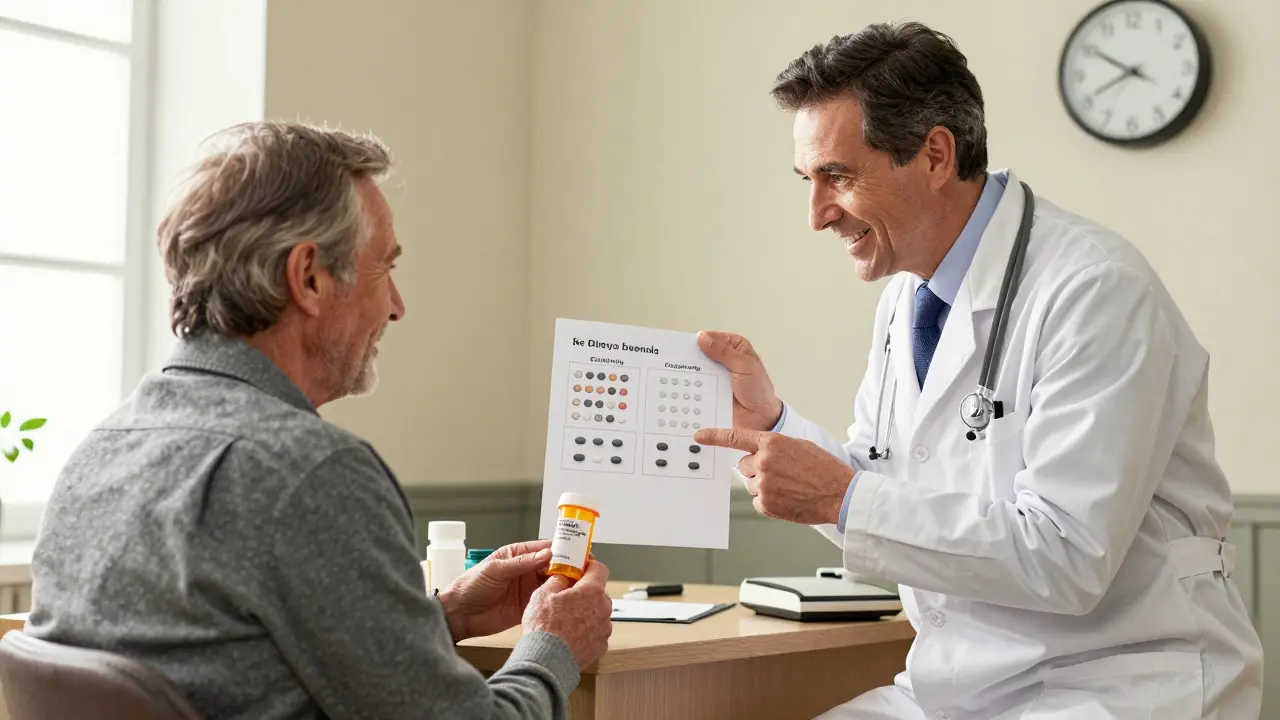
Most people don’t realize that the pill they’re taking might be cheaper, just as effective, and already used by millions of others-yet they’re still afraid to ask their doctor about it. If you’ve ever looked at your prescription and thought, “Is this really the same as the brand name?” or “Why does this one look different?”-you’re not alone. And you’re not wrong to wonder. But here’s the truth: generic medications aren’t second-rate. They’re the exact same medicine, approved by the FDA, and backed by science.
What Exactly Is a Generic Drug?
A generic drug contains the same active ingredient as its brand-name version, in the same strength, dosage form, and route of delivery. That means if you take a generic version of lisinopril, it works the same way in your body as the brand-name Zestril. The FDA requires generics to meet the same strict standards for quality, safety, and effectiveness. In fact, the same factories that make brand-name drugs often make generics too-just under different labels.
The only differences? The color, shape, or inactive ingredients like fillers or dyes. These don’t affect how the medicine works. They’re added for practical reasons-like making pills easier to swallow or easier to tell apart. But they’re not harmful. The FDA tracks every single generic drug through 36 quality checks, from how fast it dissolves to how stable it is over time. All of this happens under the same manufacturing rules (cGMP) as brand-name drugs.
Why Do People Worry About Generics?
It’s not about science. It’s about perception. Many people believe that if something costs less, it must be worse. A 2022 survey found that 68% of patients assumed cheaper meant lower quality. Others worry about where generics are made-often overseas. But here’s what the data says: 98.7% of generic manufacturing sites passed FDA inspections in 2023. The same inspections that catch problems in brand-name plants also catch them in generic ones.
Another big concern? Side effects. Some patients report feeling different after switching to a generic. That’s usually not because the medicine stopped working. It’s because their body noticed the change in pill size, color, or even the brand name on the bottle. That’s called the nocebo effect-when you expect something to go wrong, your brain starts to feel it, even if nothing changed medically.
There are rare exceptions. For drugs with a narrow therapeutic index-like warfarin, levothyroxine, or certain seizure medications-the body is super sensitive to tiny changes. Even then, the FDA requires stricter bioequivalence testing. If you’re on one of these, your doctor will monitor you closely. But for the vast majority of medications-blood pressure pills, cholesterol drugs, antidepressants, antibiotics-generics are just as safe and effective.
How Much Money Can You Save?
Let’s say you’re on a statin like atorvastatin. The brand-name version, Lipitor, costs around $675 per prescription. The generic? About $16. That’s a 98% drop in price. Across the U.S., generics save patients an average of $2,847 per year. For people on Medicare Part D, switching to generics could save $5,200 annually. And by 2025, thanks to the Inflation Reduction Act, many generics will cost $0 out-of-pocket.
It’s not just about your wallet. Lower costs mean fewer people skip doses or stop taking their meds because they can’t afford them. Studies show patients on generics are 8-12% more likely to stick with their treatment plan. That’s huge for chronic conditions like diabetes or high blood pressure. Missing doses isn’t just inconvenient-it can land you in the hospital.
How to Start the Conversation With Your Doctor
You don’t need to be an expert to ask. You just need to be honest. Here’s how to bring it up without sounding confrontational:
- Ask: “I’ve heard generics are cheaper. Are they safe for me?”
- Tell: “I’m trying to keep my costs down, and I want to make sure I’m getting the best option.”
- Ask again: “Can you explain how this generic compares to the brand?”
This simple “Ask-Tell-Ask” method works because it puts you in control without putting your doctor on the defensive. Most doctors appreciate it. A 2021 study in the New England Journal of Medicine found that when doctors used this approach, patients were 19% more likely to take their meds as prescribed.
Don’t be afraid to ask for a Medication Guide. By law, the FDA requires these guides for certain high-risk drugs. They’re written in plain language-no jargon-and explain what to expect, what side effects to watch for, and why the generic is safe.
What If Your Doctor Says No?
Sometimes, your doctor might say, “I prefer you stay on the brand.” That’s okay. But ask why. Is it because you’ve had trouble with generics before? Is it because your condition is very sensitive? Or is it just habit?
If you’ve never tried a generic before, ask for a trial. Say: “Can we try the generic for one refill? If I feel different, we can switch back.” Most doctors will agree. And if they don’t, ask if they can write “Dispense as Written” on the prescription. That tells the pharmacy not to substitute without your permission.
Remember: you have the right to choose. You’re not just a patient-you’re the person taking the pill every day. Your experience matters.
What About the Look of the Pill?
It’s normal to feel weird seeing a different pill. Maybe your brand-name pill was a big blue oval, and now it’s a small white circle. That’s because inactive ingredients changed. The active ingredient? Exactly the same. The FDA doesn’t require generics to look like the brand. In fact, they’re not allowed to copy the exact appearance-that’s a trademark issue.
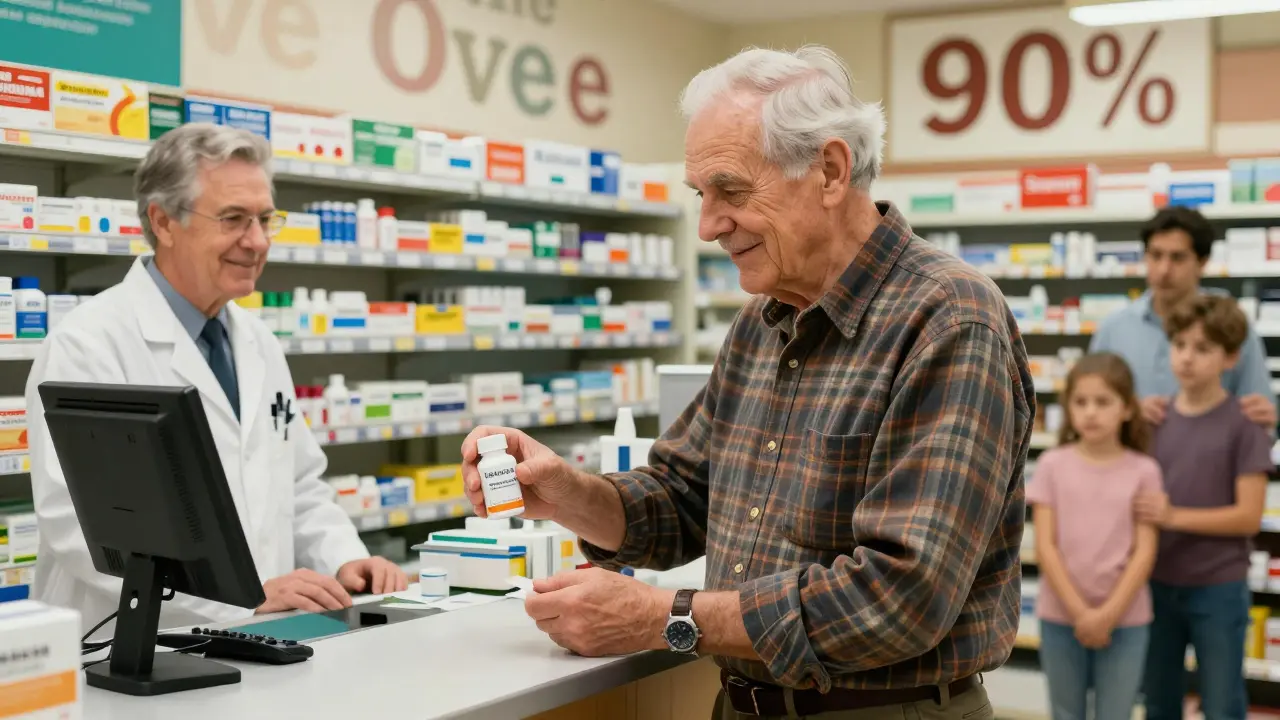
If you’re confused, take the pill to your pharmacist. They can tell you exactly what’s in it. Most pharmacists are trained to explain this in under a minute. And if you’re still unsure, call your doctor’s office. They can confirm the generic is appropriate for you.
What About Complex Drugs? Inhalers, Creams, Injectables?
Some drugs are harder to copy. Inhalers, topical creams, and certain injectables have complex delivery systems. For these, the FDA requires extra testing. Generics for these types of drugs are called “complex generics” or “biosimilars.” They’re still safe, but they take longer to develop and cost more.
Right now, only about 12% of patients on inhalers report noticing a difference after switching. But if you’re one of them-if you feel like it’s not working the same way-tell your doctor. Don’t assume it’s you. It might be the technique, not the drug.
Real Stories, Real Results
A 62-year-old woman in Ohio switched from brand-name levothyroxine to generic after her insurance changed. She was nervous. She checked her thyroid levels every month for three months. Nothing changed. Her energy came back. Her weight stabilized. She saved $400 a year.
A man in Texas with high blood pressure switched to generic lisinopril. He had been skipping doses because the brand cost $180. The generic cost $12. He started taking it every day. His BP dropped from 150/95 to 120/80 in six weeks.
These aren’t rare cases. A 2023 survey of 12,500 patients found that 79% said they noticed no difference in effectiveness after switching to generics. And 68% said they asked for generics specifically because they couldn’t afford the brand.
What’s Next?
The FDA is launching new tools to help patients understand generics. By 2025, you might see QR codes on your prescription bottle that link to a short video explaining your medicine. There are also chatbots in testing that answer questions like, “Is this generic safe?” in plain language.
Meanwhile, the best tool you already have is your voice. Don’t wait for your doctor to bring it up. Ask. Talk. Share your concerns. You’re not being difficult-you’re being smart.
Generics aren’t a compromise. They’re a smart, safe, proven choice. And you deserve to know that before you pick up your prescription.



Akshaya Gandra _ Student - EastCaryMS
January 4, 2026 AT 16:59Dee Humprey
January 4, 2026 AT 23:27Jacob Milano
January 6, 2026 AT 18:30en Max
January 8, 2026 AT 00:59Angie Rehe
January 10, 2026 AT 00:21Aaron Mercado
January 11, 2026 AT 17:58melissa cucic
January 13, 2026 AT 11:47Ashley Viñas
January 14, 2026 AT 19:18Enrique González
January 15, 2026 AT 10:09Brendan F. Cochran
January 17, 2026 AT 02:23