
Switching from a brand-name medication to a generic can save money-but for some people, it’s not just a cost issue. It’s a health issue. If you’ve ever felt off after switching to a generic version of your drug-maybe your symptoms came back, you felt worse, or you had a strange reaction-you’re not alone. And you don’t have to accept it as normal. Talking to your doctor about staying on your brand medication is not only okay, it’s necessary when your body responds differently.
Why Some People Can’t Switch to Generics
Generics are required by the FDA to have the same active ingredient as the brand name, and they must work the same way in the body. That’s the theory. In practice, for some medications, the difference matters. The FDA allows generics to vary by up to 20% in how quickly they’re absorbed into your bloodstream. That’s fine for most drugs-but for medications with a narrow therapeutic index, even small changes can cause big problems. Drugs like levothyroxine (for thyroid), warfarin (a blood thinner), and certain anti-seizure medications like phenytoin or lamotrigine fall into this category. Studies show that switching from brand to generic versions of these drugs can lead to higher rates of seizures, unstable blood levels, or even emergency room visits. One study found a 23% increase in seizure recurrence after switching from brand-name Keppra to its generic version. Another found a 17% spike in ER visits for people on warfarin after switching between different generic manufacturers. It’s not just about the active ingredient. Generics can use different fillers, dyes, or preservatives. If you’re allergic to lactose, gluten, or certain food dyes, you might react to the generic version-even though the medicine itself is the same. About 7% of patients report adverse reactions to inactive ingredients in generics, according to the Journal of Allergy and Clinical Immunology.How to Know If You’re One of Them
You don’t need to guess. Keep a simple log. Write down:- When you switched to the generic
- What symptoms started or got worse (fatigue, dizziness, mood swings, seizures, nausea, etc.)
- When they improved after switching back to the brand
- Any lab results that changed-like INR levels for warfarin or TSH for thyroid meds
What to Say to Your Doctor
Your doctor isn’t against you. They’re caught between cost pressures and your health. Use the SBAR method-it’s used in hospitals for a reason:- Situation: “I’m concerned about the generic version of my medication.”
- Background: “I’ve been on brand-name Lamictal for six years. I switched to the generic last month and had two panic attacks and a spike in my seizure frequency.”
- Assessment: “My neurologist said my blood levels were inconsistent. My last lab showed a 30% drop in concentration compared to when I was on the brand.”
- Recommendation: “Can we stay on the brand? Or try a different generic manufacturer?”
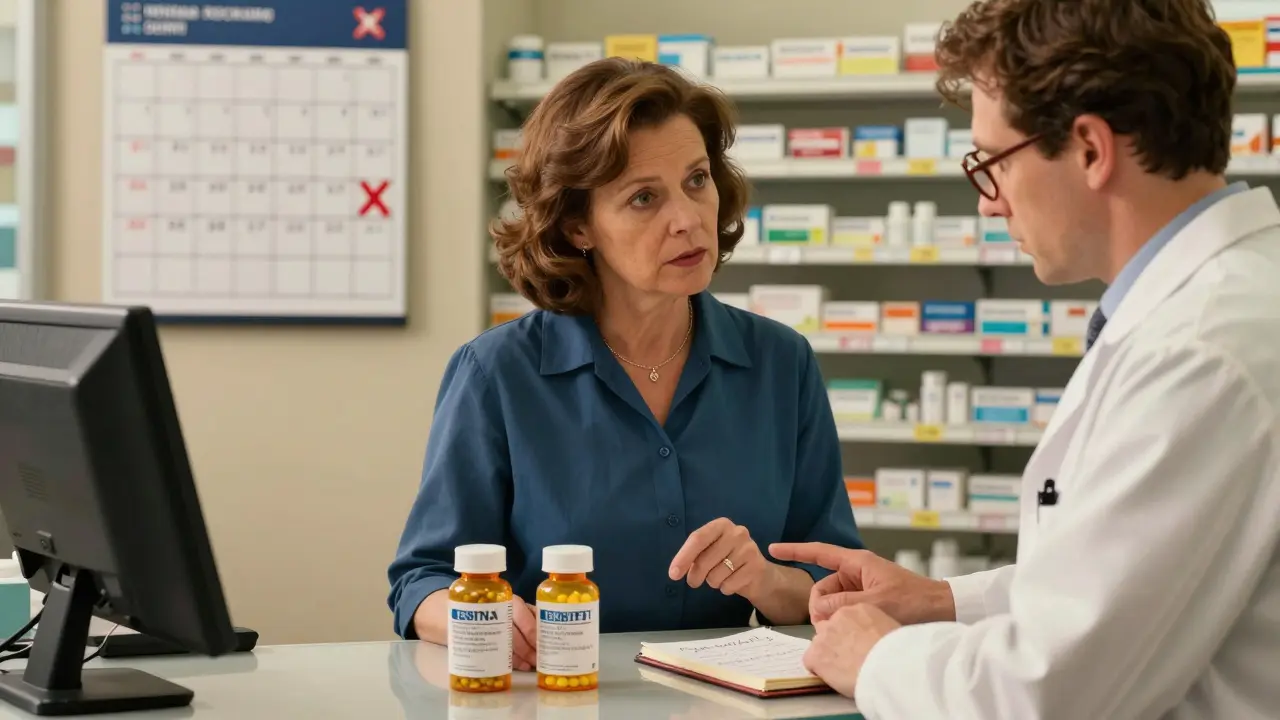
Insurance and Prior Authorization
Most insurance plans push generics because they’re cheaper. In fact, 82% of commercial plans require you to try the generic first. But you can appeal. Your doctor needs to write “Dispense as Written” (DAW-1) on the prescription. That tells the pharmacy: don’t substitute. If your plan denies it, you can file a prior authorization request. This is where your documentation becomes critical. You’ll need:- Lab results showing instability
- Doctor’s notes confirming therapeutic failure
- Proof of allergic reaction to inactive ingredients
What If Your Doctor Pushes Back?
Some doctors assume generics are always interchangeable. But experts like Dr. Aaron Kesselheim from Harvard say the FDA’s 80-125% bioequivalence range can still cause real differences for sensitive patients. If your doctor says, “It’s the same thing,” respond with: “I understand the theory. But my body doesn’t respond the same way. I’ve had documented failures with generics before. Can we look at the FDA’s Orange Book for my drug’s therapeutic equivalence rating?” The FDA’s Orange Book lists which generics are rated AB (bioequivalent) and which aren’t. For some drugs, even AB-rated generics vary in how they perform in real-world use. You can check this yourself at Drugs@FDA by searching your drug name. You’re not being difficult. You’re being informed.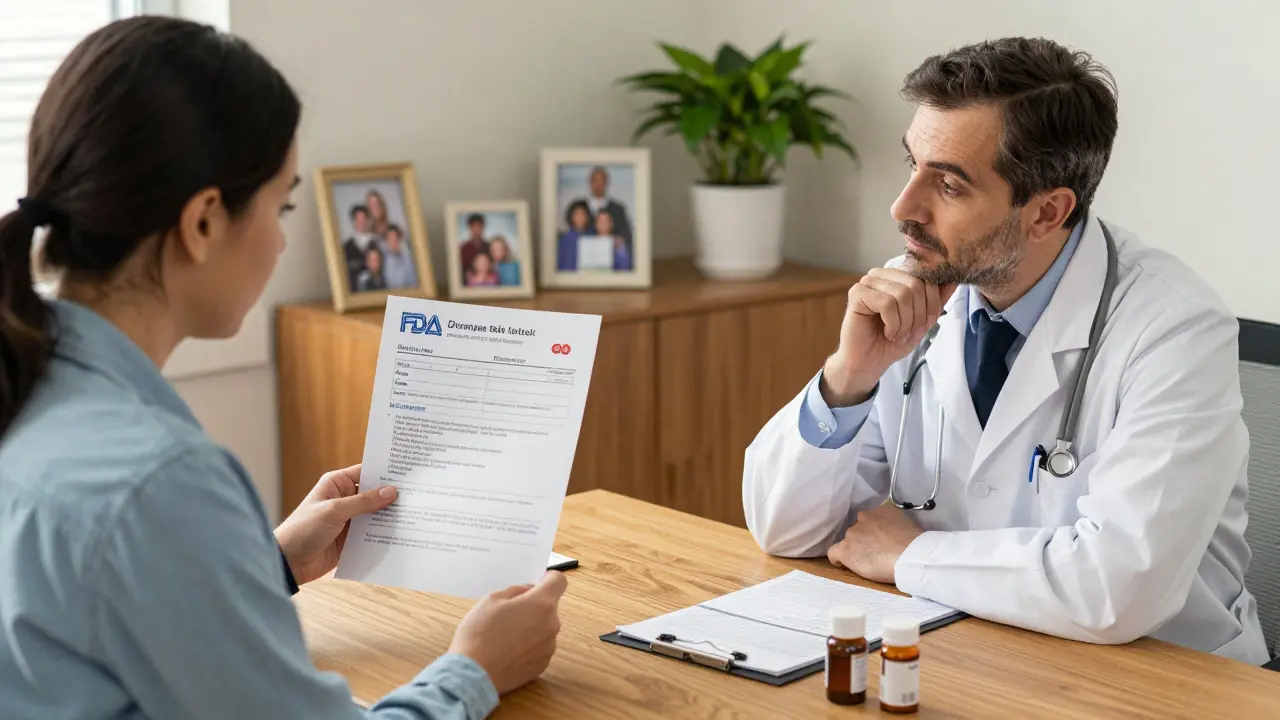




Ken Porter
January 7, 2026 AT 14:57My insurance switched me to generic warfarin last year. I ended up in the ER with a bleeding ulcer. Turned out the generic had a different filler that messed with my stomach lining. Docs act like it’s all the same, but your body ain’t a lab rat.
swati Thounaojam
January 8, 2026 AT 04:39i switched to generic levothyroxine and felt like a zombie for 3 weeks. my doctor laughed. i brought my log. he changed it back. thank god for paper.
Donny Airlangga
January 9, 2026 AT 15:14I’ve been on Lamictal for 12 years. Brand only. My neurologist told me to switch because my plan forced it. I had a seizure two weeks later. I showed him my seizure diary, my bloodwork, and the bottle differences. He wrote DAW-1 on the spot. Don’t let them gaslight you. Your symptoms are real.
Molly Silvernale
January 10, 2026 AT 11:31Generics aren’t just ‘the same drug’-they’re like ordering a pizza with the same toppings but a different crust, sauce, and oven temperature. Sometimes you get a soggy mess. Sometimes you get a perfect slice. And sometimes, when you’re epileptic or on warfarin? That soggy mess can kill you. The FDA’s 20% absorption variance? That’s not a technicality-it’s a gamble with your life. And we’re the ones rolling the dice.
christy lianto
January 10, 2026 AT 15:44My mom was on generic Keppra after her stroke. She started zoning out mid-sentence. We took her to the ER. Turns out her levels were half of what they should’ve been. We switched back to brand. Within 72 hours, she was herself again. Don’t wait for a crisis. Document everything. Even if your doctor rolls their eyes-write it down anyway.
Manish Kumar
January 11, 2026 AT 14:10Look, I get it-pharma companies make billions off brand names, and generics are supposed to be the great equalizer. But here’s the thing: biology isn’t capitalism. You can’t just swap out a car engine and expect the same ride if the spark plugs, fuel injectors, and ignition timing are all slightly off. The FDA’s bioequivalence standards were designed for average people, not for the 14% of us whose bodies are hypersensitive, whose neurons are like fine-tuned violins, whose thyroid glands scream when the pH of the filler changes. We’re not outliers-we’re the canaries in the coal mine. And yet, we’re told to shut up and take the cheaper pill. It’s not just unfair. It’s unethical. If your life depends on consistency, then consistency should be non-negotiable. The system isn’t broken-it was built this way to save money, not to save lives. And until we stop treating human biology like a spreadsheet, we’re going to keep burying people who didn’t need to die.
Evan Smith
January 11, 2026 AT 18:45So let me get this straight-my insurance forces me to take a generic that’s ‘close enough’… but if I die because it’s not close enough, they don’t pay for the funeral? Cool. Got it. Next time, just give me a coin toss and call it ‘shared decision-making.’
Dave Old-Wolf
January 13, 2026 AT 07:42I had no idea generics could have different dyes or lactose. I’m allergic to both. I just assumed ‘same active ingredient’ meant ‘safe for me.’ I checked my bottle last week-yep, FD&C Yellow No. 6. I went back to brand. My skin stopped breaking out. I wish I’d known this sooner.
Aubrey Mallory
January 15, 2026 AT 07:11If your doctor says ‘it’s the same,’ ask them if they’d take the generic version of their own blood pressure med. If they hesitate? That’s your answer. You’re not being difficult-you’re being the patient who actually reads the label. Keep fighting. You’re not alone.
Lois Li
January 16, 2026 AT 10:32My pharmacist told me the generic for my antidepressant had a different binder that slowed absorption. I didn’t even know binders existed. I brought the bottles to my doctor. He didn’t know either. We looked it up together. Now I’m on brand. I feel like a human again. Thank you for writing this. I didn’t know I had a right to ask.