
When older adults switch from brand-name drugs to generics, it’s not just a cost-saving move-it’s a decision that can make or break their health. For many seniors, the shift happens without much thought. But for others, especially those managing five, ten, or even more medications, the change triggers real anxiety. Is the generic pill really the same? Will it work? Could it make me sicker? These aren’t silly questions. They’re grounded in real physiological changes, real risks, and real experiences.
Why Generics Are Common for Seniors
Medicare Part D beneficiaries filled over 527 million generic prescriptions in 2022. That’s 89% of all prescriptions. The reason? Cost. A typical brand-name blood pressure pill might cost $120 a month. The generic? $15. For seniors on fixed incomes, that’s not a choice-it’s survival. The average Medicare beneficiary saves about $600 a year just by switching to generics. That money goes toward food, heating, or keeping up with other meds. But here’s the catch: while the savings are clear, the fears aren’t. A 2023 study of 315 older adults found fewer than half believed generics were as safe or effective as brand-name drugs. And that’s not just stubbornness. It’s a response to real-life experiences.What Makes Seniors Different
Your body changes as you age-and those changes affect how drugs work. Kidneys slow down. Liver blood flow drops. Muscle mass decreases. Fat increases. All of this alters how a drug is absorbed, processed, and cleared from your system. Take someone over 85. Nearly one in three has a body mass index low enough to affect how drugs distribute in the body. Their kidneys may only filter at half the rate of a 40-year-old. That means even tiny differences in how a generic is made-like how fast it dissolves-could matter more than it would in a younger person. And then there’s polypharmacy. Nearly half of all Medicare beneficiaries take five or more medications daily. That’s a recipe for interactions. A small change in how a drug behaves? It might throw off the whole balance. One wrong dose of a blood thinner or seizure medication could land someone in the ER.High-Risk Medications: When Generics Need Extra Care
Not all drugs are created equal when it comes to switching. Some have what’s called a narrow therapeutic index. That means the difference between a helpful dose and a dangerous one is tiny. Warfarin is the classic example. It’s used to prevent strokes and blood clots. Too little? Risk of clot. Too much? Risk of bleeding. A 2021 study of nearly 135,000 patients found that switching warfarin formulations-whether from brand to generic or between different generics-led to an 18.3% higher chance of an emergency visit within 30 days. That’s why the American Geriatrics Society says: don’t automatically swap warfarin without close monitoring. INR levels must be checked more often after the switch. Other high-risk drugs include levothyroxine (for thyroid), digoxin (for heart rhythm), phenytoin (for seizures), and lithium (for bipolar disorder). These aren’t just any pills. They need precision. Even small shifts in blood levels can cause symptoms to return-or worsen. Reddit threads from r/geriatrics in mid-2024 showed that 73% of 147 commenters who switched from Synthroid to generic levothyroxine reported fatigue, weight gain, or brain fog returning. Some went back to the brand. Others asked their doctors to prescribe the generic with a specific manufacturer’s name-because not all generics are made the same.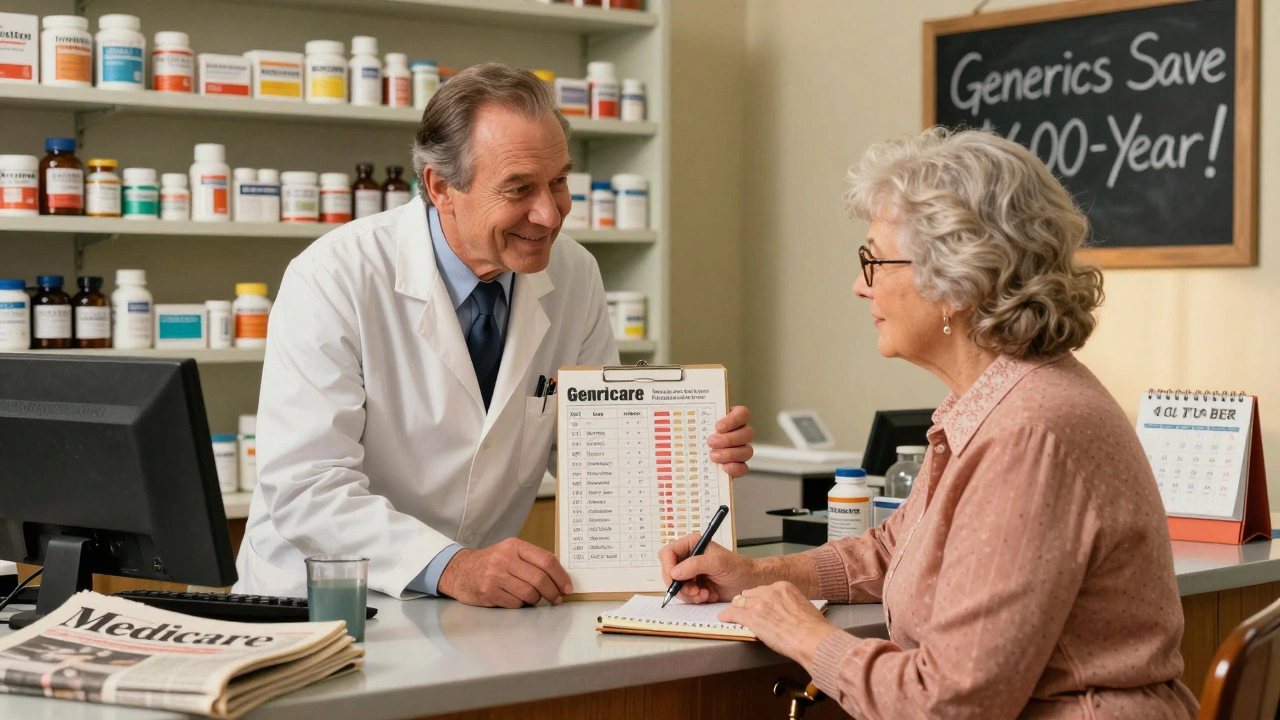
The Perception Problem
It’s not just about biology. It’s about belief. A 2017 NIH study found that one in four low-income seniors thought generics were less effective. One in five thought they were less safe. And 20 to 40% were unsure about key differences like how the drug was made, how fast it worked, or whether it lasted as long. Why? Because the pills look different. A brand-name pill might be a small white oval. The generic? A large blue capsule. Patients think, “This isn’t the same.” And when symptoms change after the switch, it’s easy to blame the pill. Health literacy plays a huge role. About 36% of adults over 65 have trouble understanding medical information. They might not know what “bioequivalent” means-or that the FDA requires generics to match brand drugs within 80-125% of the active ingredient’s absorption. They don’t know that the FDA tests these drugs just as rigorously as brand names.When Generics Work Just Fine
But here’s the other side: for most people, generics work perfectly. Medicare surveys show that 82% of seniors report no difference when switching to generics for common conditions like high blood pressure, high cholesterol, or type 2 diabetes. The science backs this up. Multiple large studies, including one from Harvard Health in 2023, found no evidence that generics are less effective or less safe than brand names. The difference? It’s often in the non-active ingredients. Fillers, dyes, coatings. These don’t affect how the drug works-but they can affect how easy it is to swallow. For seniors with dry mouth or swallowing problems, a large capsule might be harder than a small tablet. That’s not a safety issue-it’s a practical one. And cost matters. One woman in her 70s in Ohio told her pharmacist she couldn’t afford her brand-name statin. She switched to the generic. Her cholesterol dropped. Her out-of-pocket cost dropped from $90 to $12 a month. She said, “I didn’t feel any different. I just felt lighter.”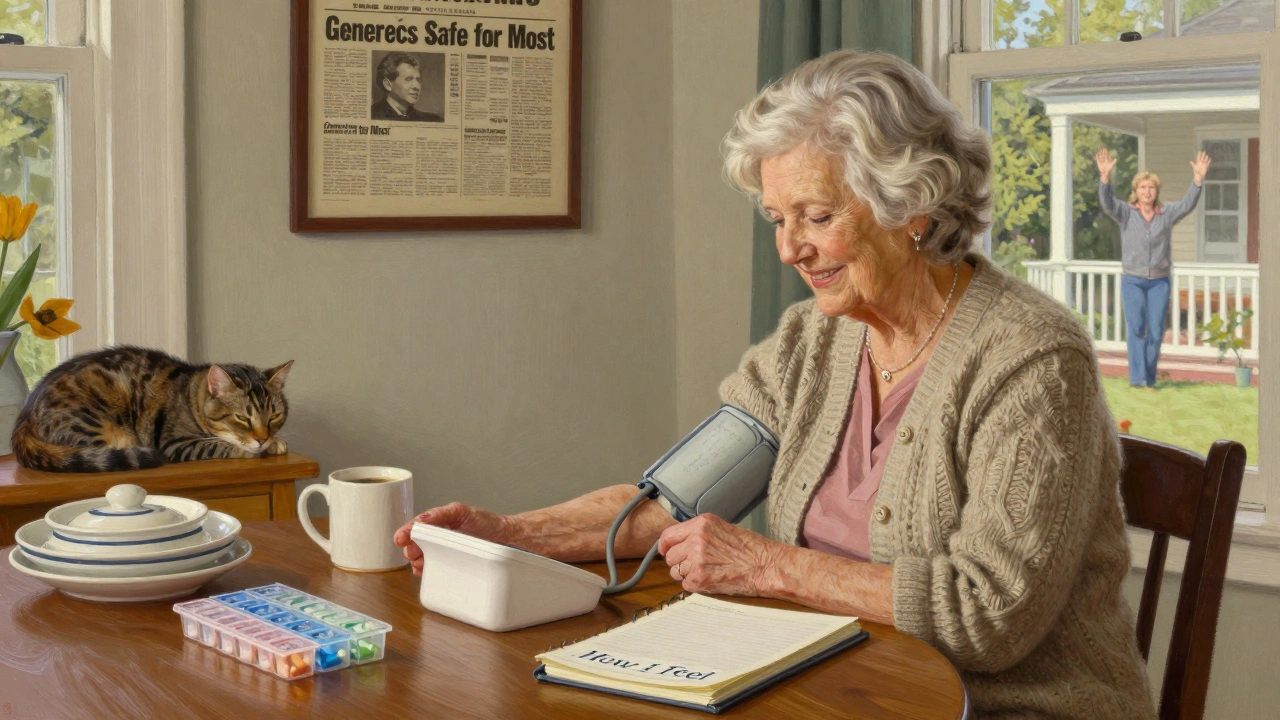
What Doctors and Pharmacists Should Do
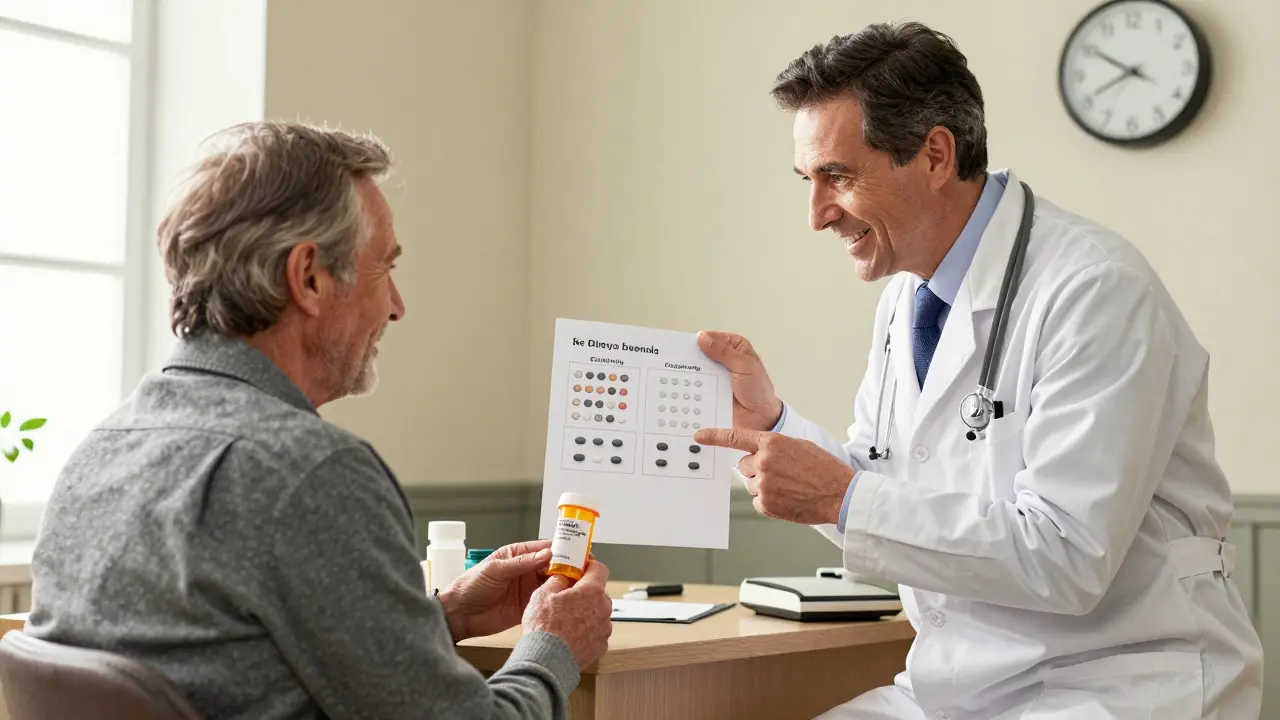
Switching seniors to generics isn’t a checkbox. It’s a conversation. The best approach? Use the “teach-back” method. Ask the patient: “Can you tell me in your own words why we’re switching this pill?” If they can’t, you haven’t explained it well enough. Studies show this simple technique improves adherence by 42%. Visual aids help too. Show the patient the brand pill and the generic side by side. Point out the active ingredient is the same. Say: “This blue one has the same medicine as that white one. It’s just made by a different company.” For high-risk drugs, involve a clinical pharmacist. A 2024 study showed that when pharmacists joined the care team, they cut inappropriate medications in elderly ED patients by nearly 40%. They caught interactions, adjusted doses, and explained switches clearly. Computerized alerts in electronic health records also help. If a doctor tries to prescribe a generic for warfarin without checking INR levels, the system should flag it.What Seniors and Families Can Do
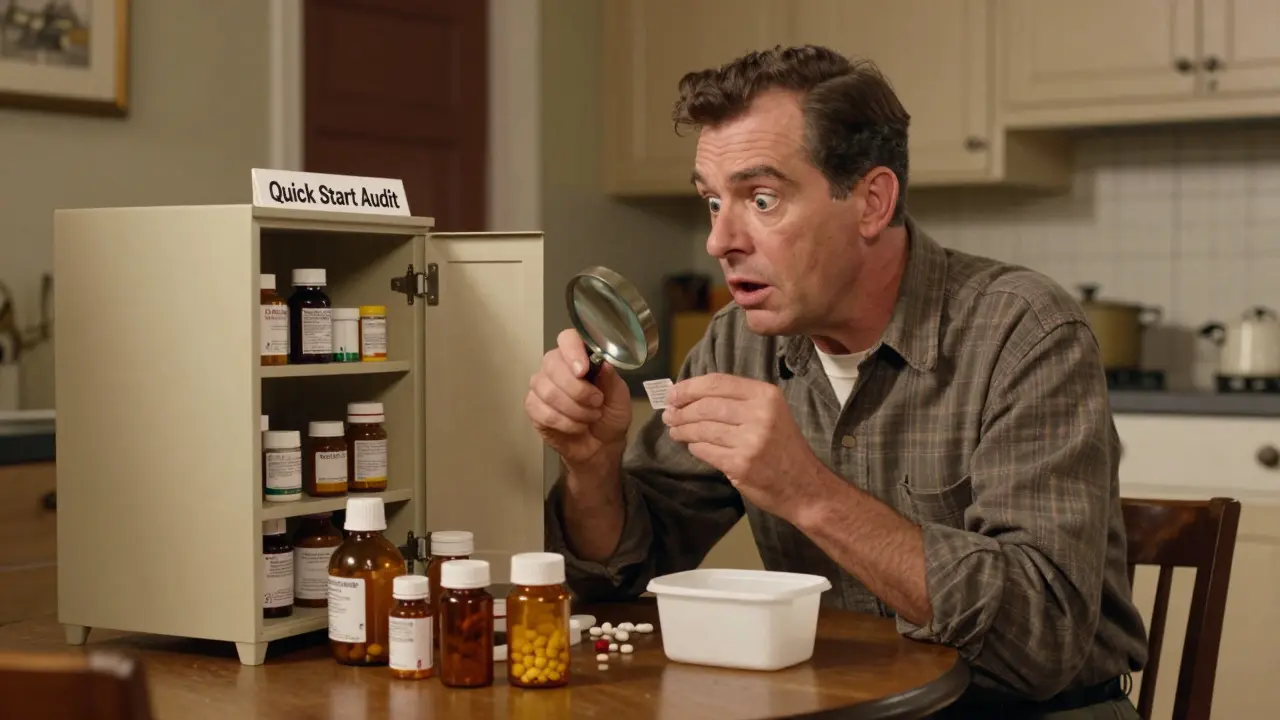
If you’re switching to a generic:- Ask your doctor or pharmacist: “Is this a high-risk drug?”
- Check if the generic has the same manufacturer name each time. Some people do better sticking with one brand of generic.
- Keep a symptom journal. Note how you feel before and after the switch-energy, sleep, mood, appetite.
- Don’t stop the pill if you feel different. Call your provider. You might need a blood test or a dose tweak.
- Use pill organizers with labels. Don’t rely on color or shape. Write the drug name on each compartment.
The Bigger Picture
By 2030, nearly 94% of Medicare prescriptions will be generic. That’s not a guess-it’s a projection from the Congressional Budget Office. The savings will keep growing. But so will the risks-if we don’t handle the switch right. The goal isn’t to stop generics. It’s to make the transition safe. For every dollar saved, we must invest in education, monitoring, and communication. Seniors aren’t resistant to change. They’re wary of being treated like numbers. The truth? Most generics are just as good. But for some, the difference isn’t in the pill-it’s in the care behind it.Are generic medications really as effective as brand-name drugs for elderly patients?
Yes, for most medications, generics are just as effective. The FDA requires them to contain the same active ingredient, strength, and dosage form as the brand-name version, and they must be absorbed into the body at the same rate and extent-within a 80-125% range. Large studies, including those reviewed by Harvard Health and JAMA, show no meaningful difference in outcomes for common conditions like high blood pressure or cholesterol. However, for drugs with a narrow therapeutic index-like warfarin, levothyroxine, or lithium-even small variations can matter, and close monitoring is needed after switching.
Why do some elderly patients feel worse after switching to generics?
Sometimes, it’s not the drug itself-it’s the change. Generics often look different: different color, shape, size, or coating. Seniors may confuse this with a change in effectiveness. Also, older bodies process drugs differently. Slower kidneys or lower body weight can make tiny differences in how a drug is absorbed more noticeable. For high-risk medications like thyroid or blood thinners, even small shifts in blood levels can cause symptoms like fatigue, dizziness, or heart palpitations. In some cases, switching between different generic manufacturers (not just brand to generic) can also trigger reactions, especially if the inactive ingredients affect absorption.
Which medications should seniors avoid switching to generics?
The American Geriatrics Society advises caution with drugs that have a narrow therapeutic index, where the difference between a safe and dangerous dose is small. These include warfarin (blood thinner), levothyroxine (thyroid hormone), digoxin (heart medication), phenytoin (seizure control), and lithium (mood stabilizer). For these, automatic substitution without close monitoring isn’t recommended. Always check with your doctor before switching. For most other medications-like statins, blood pressure pills, or diabetes drugs-generics are safe and effective.
How can seniors ensure they’re taking their generics safely?
First, ask your pharmacist or doctor if your medication is high-risk. Keep a list of all your drugs, including doses and why you take them. Use a pill organizer with labels-not just colors or shapes. If you notice new symptoms after switching, write them down and call your provider. Don’t stop the medication on your own. Ask if you can stick with one generic manufacturer if it works well. And use the “teach-back” method: repeat back what your provider tells you to make sure you understand. Many pharmacies offer free medication reviews for seniors.
Can insurance deny coverage for brand-name drugs if a generic is available?
Yes, most Medicare Part D plans require you to try the generic first before covering the brand-name version. But you can request an exception if your doctor says the brand is medically necessary-for example, if you had a bad reaction to a generic or if your condition worsened after switching. Your doctor can file a prior authorization form explaining why the brand is needed. Many seniors successfully get coverage for brand-name warfarin or levothyroxine this way, especially if they have documented symptoms or lab results showing instability.
Is there a way to know which generic manufacturer made my pill?
Yes. The label on your prescription bottle will list the manufacturer’s name. You can also ask your pharmacist. Some people find they respond better to one manufacturer’s version over another-even if both are generic. If you’re stable on a particular generic, ask your doctor to write the prescription as “Dispense as Written” or specify the manufacturer name. Some pharmacies will honor that request. Tracking which version you take can help identify if a symptom change is linked to a switch.


Justin Hampton
December 4, 2025 AT 01:31Generics are just big pharma’s way of screwing over old people under the guise of savings. I’ve seen grandmas get switched to generics and then end up in the ER because some cheap tablet dissolved too slow or too fast. The FDA doesn’t test for real-world variability - they test in labs with 25-year-olds. Seniors aren’t lab rats. And don’t even get me started on how pharmacies rotate manufacturers like it’s a game of musical pills.
Pooja Surnar
December 4, 2025 AT 16:19u r so naive fr. generics r 100% same as brand name. if u feel bad after switch its bcz u r old and ur body is just breakin down. stop blamein pills. my aunt took generic thyroxine for 10 yrs and lived longer than her brand-name neighbor. u just wanna complain. also why u even on reddit if u cant spell?
Sandridge Nelia
December 5, 2025 AT 21:44Thank you for writing this - it’s so important. I’m a geriatric pharmacist and I see this every day. The key is communication. When we sit down with patients, show them the pills side by side, and explain that the active ingredient is identical, their anxiety drops dramatically. And yes - for warfarin or levothyroxine, we always check labs 2 weeks after switching. It’s not about distrust, it’s about care. 💙
Wendy Chiridza
December 7, 2025 AT 09:31For most medications generics are bioequivalent and safe. The FDA’s requirements are strict. The perception gap stems from visual differences and lack of education. Seniors aren’t irrational - they’re responding to inconsistent experiences. The real issue is systemic: no coordinated follow-up after substitution. Pharmacies don’t track outcomes. Doctors don’t ask. Patients don’t know who to call. We need a national protocol for high-risk switches
Pamela Mae Ibabao
December 7, 2025 AT 16:33Oh honey, I love how you’re all so concerned about the elderly. But let’s be real - most of them are on 12 pills already and can’t tell which is which. The real solution? Simplify the regimen. Stop switching generics for no reason. If Grandma’s doing fine on Synthroid? Leave it alone. The $78/month she saves isn’t worth the panic attacks, the ER trips, or the sleepless nights her kids have. Sometimes the safest drug is the one she already knows.
Gerald Nauschnegg
December 9, 2025 AT 16:33Why are we even having this conversation? My mom switched from brand to generic lisinopril and her BP went from perfect to 180/105. She got dizzy and fell. The pharmacist said ‘it’s the same.’ But it wasn’t. The generic was made in India and tasted different. I called the manufacturer - they admitted their coating dissolves slower. So now we pay $90 a month for the brand. Screw the savings. Her life is worth more than a coffee.
Sara Larson
December 10, 2025 AT 18:53Y’all are doing such important work here 🌟 I just want to say - if you’re a senior or caring for one, YOU ARE NOT ALONE. Ask for a med review. Write down how you feel. Ask for the same generic manufacturer every time. And if you’re scared? Say it out loud. Your doctor wants to help - they just need you to speak up. You’re not being difficult. You’re being smart. 💪❤️
Josh Bilskemper
December 10, 2025 AT 19:40Stop romanticizing elderly patients. They’re not fragile victims. They’re adults who can read the FDA guidelines. If they don’t understand bioequivalence, that’s their problem, not the system’s. The real issue is lazy prescribing. Doctors don’t monitor. Pharmacists don’t educate. Stop blaming generics. Blame the healthcare workers who treat seniors like children. The pills are fine. The system isn’t.