
When a patient walks into your office asking why their new prescription looks different, or why they’re feeling off after switching meds, you’ve probably been there. It’s not just about cost anymore-it’s about trust, safety, and real clinical outcomes. Generic medications now make up 90% of all prescriptions filled in the U.S., yet many providers still hesitate. Why? Because behind every pill bottle is a story-sometimes smooth, sometimes messy.
What Providers Actually See in Practice
Most of the time, switching to a generic works perfectly. Statins like atorvastatin, blood pressure meds like lisinopril, even antidepressants like sertraline-these are the everyday workhorses of primary care. Providers report minimal issues. Patients save money. Adherence goes up. One study showed patients who started on generics were 13% more likely to keep taking their meds than those on brand-name versions, simply because they could afford them. But then there are the exceptions. A neurologist in Ohio saw three patients in six weeks with sudden breakthrough seizures after switching from brand lamotrigine to a generic version. All had been stable for years. All were on the same dose. All were told the generic was "equivalent." When switched back, seizures stopped. The FDA later flagged that specific generic version for inconsistent absorption. It got reclassified from "AB" to "BX"-meaning it’s not considered therapeutically equivalent. That’s not rare. In epilepsy, transplant care, and anticoagulation, providers are cautious. Why? Because these are narrow therapeutic index drugs. A tiny difference in absorption-say, 10% more or less-can mean the difference between control and crisis. For warfarin, even a small shift in INR can lead to bleeding or clotting. For tacrolimus in transplant patients, rejection can happen fast.The Regulatory Reality: AB vs BX Ratings
The FDA doesn’t just approve generics blindly. They use the Orange Book to rate them. "AB" means bioequivalent. "BX" means not equivalent. That’s not a technicality-it’s a clinical red flag. In 2016, the FDA reviewed over 1,200 complaints about generic Concerta. Patients reported reduced effectiveness. Lab tests showed the generic wasn’t releasing methylphenidate the same way. The result? Two versions lost their "AB" rating. Prescribers were told: don’t substitute these. This isn’t an isolated case. The FDA reviews about 1,000 generic applications a year. Most pass. But when problems arise, they act. Providers need to know how to check these ratings. Electronic health records now often flag therapeutic equivalence, but not all systems are updated. Always verify. Don’t assume.When Substitution Goes Wrong-and How to Prevent It
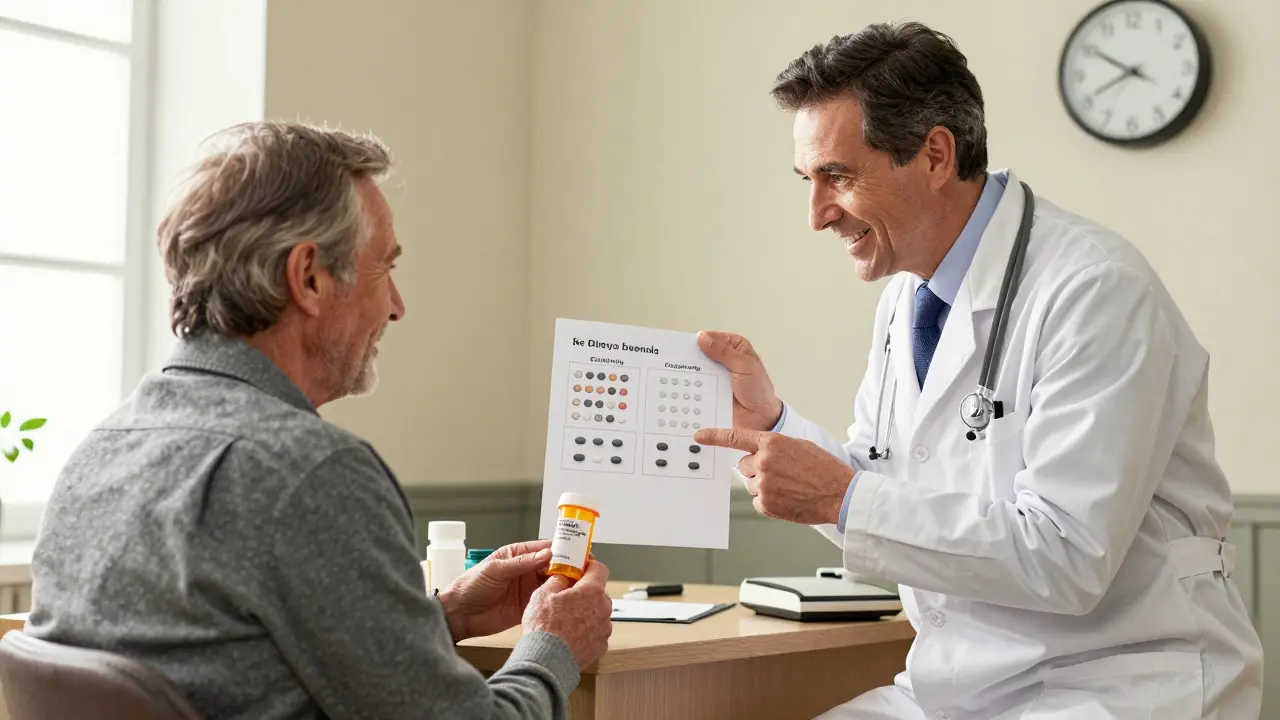
The biggest risk isn’t the generic itself. It’s the switch. Patients get a new bottle. Different color. Different shape. Different brand name on the label. They think something’s wrong. They stop taking it. Or worse-they start taking it inconsistently, doubting its power. A 2024 study in Greece found that patients who had a conversation with their provider about generics were far more likely to accept them. Not because they were convinced by data-but because they felt heard. Here’s what works in practice:- Don’t just write "dispense as written" unless you have a real clinical reason.
- Explain: "This is the same medicine, just cheaper. The FDA says it works the same way."
- If it’s a high-risk drug-epilepsy, transplant, warfarin-say: "I want to keep you on the version you’re stable on. Let’s stick with this one."
- If a patient reports a change in how they feel after switching, don’t dismiss it. Re-evaluate. Consider switching back.

Authorized Generics: The Hidden Middle Ground
There’s a version of generics most patients don’t know about: authorized generics. These are brand-name drugs sold without the brand name-made by the same company, same factory, same formula. They’re cheaper than the brand, but identical in every way. No reformulation. No supply chain shift. A 2019 JAMA study found no difference in hospitalization or discontinuation rates between authorized generics and regular generics. But here’s the kicker: patients on authorized generics were slightly more likely to visit the ER. Why? Because they knew it was the same as the brand. They expected it to work perfectly-and if it didn’t, they panicked. That’s a clue. Perception matters as much as pharmacology.State Laws and the Patchwork of Rules
In 19 states, pharmacists can switch your med without telling you. In 7 states and D.C., they must get your consent. In 24 states, pharmacists face no legal protection if something goes wrong after substitution. This creates chaos. A patient in New York gets a generic. They move to Texas. Their pharmacist switches again. Then they get a different generic from a different manufacturer. Suddenly, they’re cycling through four versions of the same drug in a year. Providers are caught in the middle. You can’t control what the pharmacist does. But you can document your concerns. Write "dispense as written" on the prescription when appropriate. Use therapeutic equivalence ratings to guide your decision. Educate your staff. Make sure front desk and nursing teams know when to flag a switch.
What the Data Really Shows
Let’s cut through the noise. For 95% of medications-antibiotics, statins, metformin, beta-blockers-generics are just as safe and effective. The evidence is overwhelming. A 2020 review across eight therapeutic areas found no meaningful difference in clinical outcomes for most drugs. But for the other 5%-the narrow therapeutic index drugs-the stakes are higher. And that’s where provider judgment matters most. The American College of Neurology doesn’t just recommend caution with antiepileptic drugs. They say mandatory substitution without consent is unethical. The American Society of Transplantation says the same for immunosuppressants. These aren’t opinions. They’re guidelines based on real patient harm.How to Build Trust-Not Just Save Money
The goal isn’t to push generics because they’re cheap. It’s to use them wisely. Patients trust their providers more than ads, pharmacists, or online forums. When you explain why you’re choosing a generic-or why you’re not-you build trust. A simple script works: "I’m switching you to this generic because it’s the same medicine, and it will save you $40 a month. If you notice any changes-better or worse-tell me right away. We’ll adjust if needed." That’s it. No jargon. No pressure. Just honesty. And when patients feel like partners in the decision, they stick with the treatment. Adherence improves. Hospital visits drop. Costs fall.What’s Next?
The Inflation Reduction Act is pushing Medicare to favor generics even more. By 2025, we’ll see another 5-7% rise in generic use. But supply chain issues still linger-80% of active ingredients come from overseas. That’s a vulnerability. The FDA is now using real-world data from millions of prescriptions to monitor how generics perform after approval. Machine learning models are being trained to predict which patients might react poorly to a switch. This isn’t science fiction. It’s happening now. For providers, the message is clear: generics are a tool. Not a mandate. Not a shortcut. A tool. Use them where they work. Protect patients where they don’t. And always, always listen when a patient says, "This doesn’t feel right."Are generic medications as effective as brand-name drugs?
For most medications-like statins, blood pressure pills, and antidepressants-yes. The FDA requires generics to deliver the same amount of active ingredient into the bloodstream at the same rate as the brand. Studies show no difference in clinical outcomes for these drugs. But for narrow therapeutic index drugs like warfarin, epilepsy meds, and immunosuppressants, even small differences can matter. Always check the FDA’s Orange Book for therapeutic equivalence ratings (AB = equivalent, BX = not equivalent).
Why do some patients feel worse after switching to a generic?
Sometimes, it’s because the generic isn’t bioequivalent-like the Concerta generics that were pulled from AB status in 2016. Other times, it’s psychological: patients associate the new pill’s appearance with lower quality. In epilepsy or transplant patients, even minor changes in drug absorption can trigger breakthrough seizures or organ rejection. If a patient reports a change, don’t dismiss it. Re-evaluate. Switch back if needed. Patient reports are valid data.
Should I always write "dispense as written" on prescriptions?
No. Only use "dispense as written" when there’s a clear clinical reason-like for antiepileptic drugs, immunosuppressants, or warfarin. For most other medications, letting pharmacists substitute generics saves patients money and improves adherence. The key is knowing which drugs are safe to substitute. Use your EHR’s therapeutic equivalence flag, check the Orange Book, and follow professional guidelines from groups like the American College of Neurology.
What’s the difference between a generic and an authorized generic?
A generic is made by a different company, using the same formula. An authorized generic is made by the original brand-name manufacturer but sold without the brand name. It’s identical in every way-same factory, same ingredients, same packaging. Authorized generics are cheaper than the brand but cost more than regular generics. Some patients prefer them because they know it’s the exact same product.
How do state laws affect generic substitution?
Rules vary widely. In 19 states, pharmacists can substitute generics without telling you. In 7 states and D.C., they must get your consent. In 24 states, pharmacists have no legal protection if something goes wrong after substitution. This creates confusion for patients who move between states or get prescriptions filled at different pharmacies. Always ask your pharmacist what version you’re getting-and document your preferences in the chart.
Can I trust the FDA’s therapeutic equivalence ratings?
Yes. The FDA’s Orange Book ratings are based on rigorous testing. AB means the generic meets strict bioequivalence standards. BX means it doesn’t. These ratings are updated when new data comes in-like when the FDA downgraded two Concerta generics after patient complaints. Providers should use these ratings as their primary guide for substitution decisions. If your EHR doesn’t show them, check the FDA website directly.
Why do some pharmacists say generics are lower quality?
Some pharmacists, especially those who’ve seen adverse reactions in high-risk patients, believe generics are less reliable. But research shows this is often based on anecdotal experience, not data. A 2020 study found that pharmacists with more education and patient interaction were more likely to support generics. The real issue isn’t quality-it’s communication. When patients understand why a switch is safe, they’re far less likely to report problems.


Andrew Rinaldi
January 22, 2026 AT 00:17It’s wild how much of this comes down to trust, not science. I’ve seen patients cry because their new pill looked different-even when it was perfectly equivalent. We’re treating pharmacology like it’s magic, but it’s just chemistry. The real issue is that we’ve trained people to fear change, not to understand it.
Maybe we need to start handing out little info cards with generics: ‘This is the same drug, just without the fancy label.’ Simple. Human. No jargon.
And honestly? If a patient says, ‘This doesn’t feel right,’ we should listen before we reach for the lab reports. Their body knows things our algorithms don’t.
Samuel Mendoza
January 22, 2026 AT 02:18Generics are just corporate greed disguised as healthcare reform. The FDA is corrupted. You think they test these things? Nah. They rubber-stamp whatever the big pharma lobby pays for.
Glenda Marínez Granados
January 23, 2026 AT 05:03So let me get this straight… we’re okay with people having seizures because we’re saving $40 a month? 🤡
Also, ‘authorized generics’-sounds like a Netflix documentary about a pharmaceutical ghostwriter.
Yuri Hyuga
January 23, 2026 AT 13:49This is such a vital conversation-and thank you for laying it out so clearly. 🙌
As a clinician in the UK, I’ve seen the same patterns. The real hero here isn’t the generic-it’s the provider who takes the time to explain. That human connection? That’s the real therapeutic agent.
Let’s stop treating patients like data points. When you say, ‘I’m switching you because it’s cheaper,’ they hear, ‘You’re not worth the brand.’ But when you say, ‘I want you to stay safe, and this works just as well,’ they hear, ‘I matter.’
Let’s make that the new standard.
MARILYN ONEILL
January 23, 2026 AT 20:07Ugh. I hate generics. They’re made in China. My cousin’s dog got sick from one. It’s all a scam. Brand names are the only real medicine. End of story.
Coral Bosley
January 24, 2026 AT 03:10I had a patient last month who swore her generic sertraline turned her into a zombie. We switched her back. She cried. Said she felt like herself again. I didn’t even check the FDA rating. I just believed her.
Turns out it was a BX-rated version. I didn’t know. She didn’t know. We both learned.
That’s the problem. We’re not teaching patients-or doctors-how to read the damn labels. It’s not about trust. It’s about access to information.
Steve Hesketh
January 25, 2026 AT 01:47Bro, this is beautiful. I’m from Nigeria, and here, generics are all we’ve got. No choice. But I’ve seen people live longer because they could afford them.
Still… I remember a lady with epilepsy. She switched generics. Had a seizure in the market. We had to carry her to the clinic.
So yeah. For most? Generics save lives. For some? They almost end them.
It’s not about right or wrong. It’s about knowing when to pause. When to listen. When to say, ‘Let’s go back.’
Thank you for saying this. We need more of this.
shubham rathee
January 25, 2026 AT 13:49MAHENDRA MEGHWAL
January 26, 2026 AT 01:13It is imperative to acknowledge the profound clinical implications of therapeutic equivalence ratings as delineated by the FDA’s Orange Book. The distinction between AB and BX classifications is not merely administrative but constitutes a critical determinant of patient safety, particularly in the context of pharmacokinetic variability in narrow therapeutic index medications. It is incumbent upon prescribing clinicians to routinely verify these designations, particularly when managing patients with complex comorbidities or polypharmacy regimens. Failure to do so may result in iatrogenic harm of significant magnitude.
Kevin Narvaes
January 27, 2026 AT 21:26ok so like… generics are just the brand name’s ugly cousin that got kicked out of the house and now lives in the basement and sometimes forgets to take its meds?
also why is everyone so mad? it’s just a pill. if you don’t like it don’t take it. i take generic adderall and i’m fine. also i think the FDA is run by aliens.
Dee Monroe
January 28, 2026 AT 20:25I’ve been thinking about this for weeks. It’s not just about the drugs. It’s about how we’ve turned healthcare into a transaction. We don’t talk to patients anymore-we just check boxes. We don’t say, ‘This might feel different,’ we say, ‘It’s the same.’
But it’s not the same. The pill looks different. The taste is different. The bottle is different. And for someone who’s been on the same medicine for ten years, that’s not just a change-it’s a rupture.
What if we started treating medicine like we treat relationships? You don’t just swap out your partner because they’re cheaper. You talk. You listen. You honor what’s been built.
Maybe the real generic we need is a more human system. One where a patient’s fear isn’t dismissed as ‘noncompliance’-but treated as data.
And maybe, just maybe, if we did that, we wouldn’t need to fight so hard to prove that generics are safe.
Because we’d already know they are.
Sangeeta Isaac
January 29, 2026 AT 05:33so i got switched to this generic omeprazole last month and i swear it gave me a migraine and i was like ‘wait did i just get haunted by a pill?’
then i checked the orange book and it was BX. so i went back to brand. felt like a million bucks.
also i’m pretty sure the pharmacy just grabbed the cheapest one off the shelf. like… why are we letting people play russian roulette with our brains?
also why is no one talking about how the pills look like they were designed by a 12-year-old on microsoft paint?
Alex Carletti Gouvea
January 30, 2026 AT 07:56USA makes the best medicine. Let’s stop letting foreign countries make our pills. This is a national security issue. Buy American. End of story.
Andrew Rinaldi
January 30, 2026 AT 15:23Yuri Hyuga hit it right-trust is the active ingredient. But I’d add this: the system doesn’t punish the pharmacy that switches blindly. It punishes the patient who gets sick.
What if we made it illegal to substitute without disclosure for high-risk meds? Not just ‘consent’-but a signed note. Like an informed consent form for a surgery.
Patients aren’t dumb. They just want to be treated like adults.