
Every year, thousands of people in the U.S. end up in the hospital-or worse-because of a simple mistake: someone didn’t know what medicines they were taking. It’s not always a doctor’s error. Often, it’s because the patient couldn’t remember what pills they were on, or forgot to tell their new doctor about that herbal supplement they started last month. Keeping a clear, up-to-date medication list isn’t just a good idea-it’s a lifesaver.
Why Your Medication List Matters
Medication errors are one of the leading causes of preventable harm in healthcare. The FDA estimates around 7,000 deaths happen each year in the U.S. because of mistakes involving drugs. Many of those errors happen during transitions-like when you leave the hospital, switch doctors, or get a new prescription. A 2020 study in the Journal of Patient Safety found that if medication lists were accurate and updated, up to 80% of those errors could be avoided. That’s over 1.5 million preventable adverse events every year. Think about it: if you’re on five or more medications-which 76% of adults over 65 are-you’re already at higher risk. One wrong dose, one missed interaction, one forgotten supplement, and you could end up with a dangerous reaction. A 2023 review in the Annals of Internal Medicine showed that when pharmacists reviewed medication lists before treatment, they cut adverse drug events by over 31%. Doctors? Only 18.5%. Why? Because pharmacists know how to spot hidden risks.What to Include on Your List
Don’t just write down your prescriptions. A full medication list includes everything you take, even if you think it doesn’t matter. Here’s what to list for each item:- Drug name-both brand and generic (e.g., “Lipitor” and “atorvastatin”)
- Strength and dose-like “10 mg” or “500 mg”
- How often-daily, twice a day, every other week
- How you take it-by mouth, injection, patch, inhaler
- Why you take it-“for high blood pressure,” “for joint pain,” “for sleep”
- When you last took it-helps if you miss a dose or get sick
- Who prescribed it-name and clinic or hospital
- Allergies and reactions-not just “penicillin allergy,” but “rash,” “swelling,” “trouble breathing”
Paper vs. Apps vs. EHRs: Which One Works Best?
There’s no single perfect way to keep your list. Each method has pros and cons.Paper Lists
The FDA’s “My Medicines” template is free, easy to print, and doesn’t need Wi-Fi. The UK’s “My Medication Passport” is another solid option. But here’s the catch: a 2022 study in JAMA Internal Medicine found that 43% of paper lists were outdated. People forget to update them. One man brought a list to his cardiologist that hadn’t been changed since 2019. He’d stopped three pills, started two new ones, and was taking a supplement he didn’t mention. The doctor almost prescribed him a drug that clashed with one he was still on.Smartphone Apps
Apps like Medisafe, MyTherapy, and CareZone let you scan pill bottles, set reminders, and even share your list with family or doctors. Medisafe has over 6 million users. A 2023 BMJ Open study showed users missed 28% fewer doses. But here’s the problem: only 35% of people over 65 use medication apps regularly, according to Pew Research. If you’re not tech-savvy, or if your phone dies, you’re stuck.Electronic Health Record (EHR) Integration
If your doctor uses Epic, Cerner, or another major EHR, they might have a patient portal where you can view and update your list. Kaiser Permanente’s system lets patients edit their lists online. In 2022, they cut medication-related readmissions by 22% just by making this easy. But here’s the catch: only 58% of U.S. primary care practices have this feature. And even if you can update it online, if your specialist doesn’t use the same system, your list might still be wrong.
How to Build and Keep Your List Updated
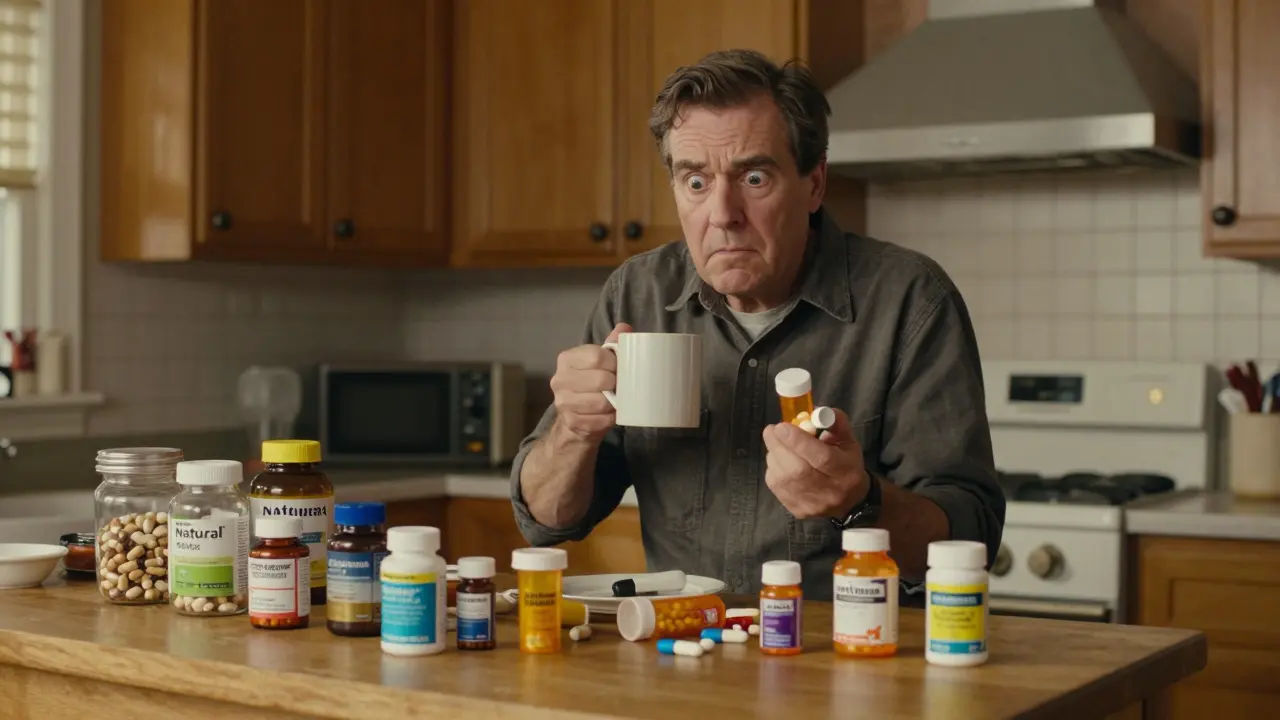
You don’t need to be perfect. You just need to be consistent.- Start now. Set aside 45 minutes. Gather all your pill bottles, supplements, and OTC boxes. Write down every single thing you take, even the ones you only use once in a while.
- Choose your format. Use paper if you’re comfortable with it. Use an app if you’re tech-savvy. If your doctor uses a portal, start there. The best system is the one you’ll actually use.
- Update after every change. If your doctor changes a dose, adds a new pill, or stops one, update your list the same day. Don’t wait.
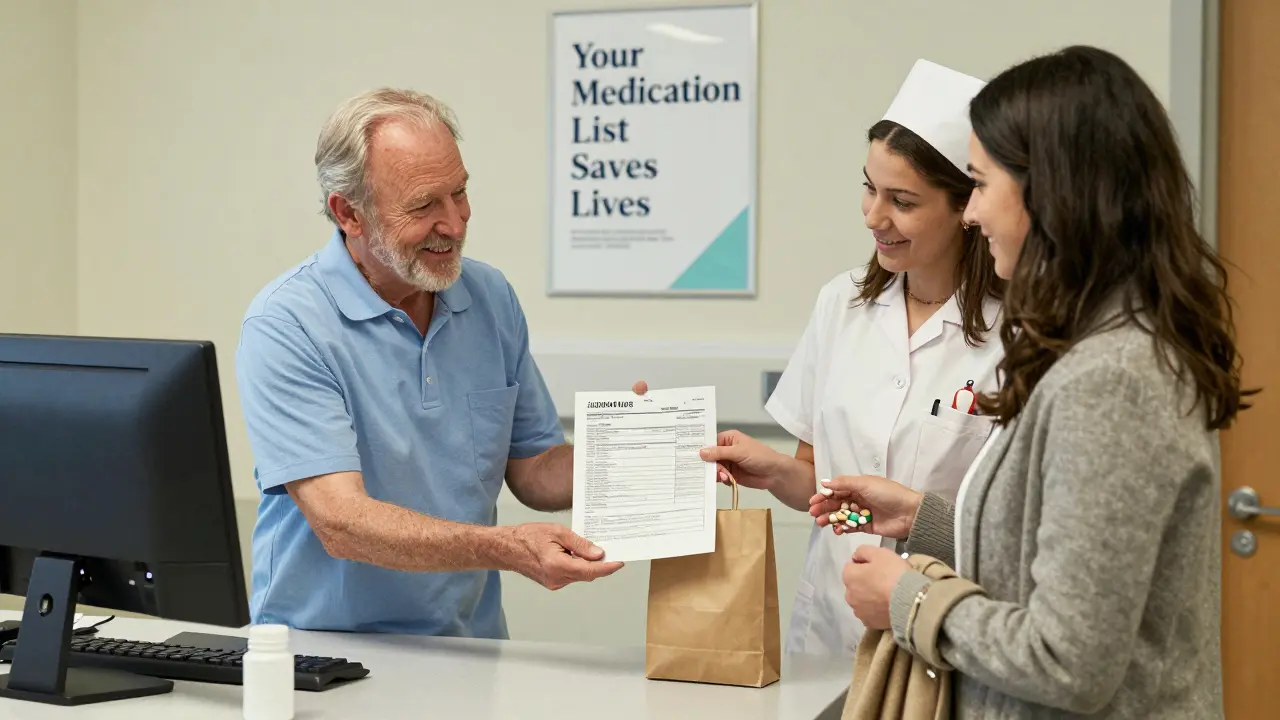
- Use the brown bag method. Once a month, put all your meds in a brown paper bag. Bring it to your appointments. Let your doctor or pharmacist check it against your list. This catches hidden errors.
- Set a reminder. Put a monthly calendar alert: “Check meds.” Even if nothing changed, review it. You might forget you stopped a pill six months ago.
- Share it. Give a copy to your main doctor, your pharmacist, and one family member. If you’re hospitalized, give it to the nurse on admission. Don’t assume they’ll ask.
What to Do When Things Get Complicated
If you see multiple doctors, get prescriptions from different pharmacies, or have a chronic condition like diabetes or heart disease, you’re at higher risk. Here’s how to handle it:- Ask your pharmacist. Most pharmacies offer free medication therapy management (MTM). In the U.S., Medicare Part D covers it. A pharmacist will sit with you, review everything, and give you a clean, updated list.
- Sync your refills. The AMA recommends asking your doctor to prescribe 90-day supplies for long-term meds. That means you refill four times a year instead of 12. Fewer trips, fewer chances for errors.
- Use photos. Take pictures of your pill bottles with your phone. Label them. If you forget a name or dose, you’ve got a backup. Eighty-two percent of geriatric pharmacists recommend this.
- Don’t trust memory. A 2021 study found 56% of patient-reported lists had at least one critical mistake. You think you’re taking “one pill a day,” but it’s actually two. Or you forgot you started a new supplement. Write it down.
What Happens When You Don’t Keep a List
The ECRI Institute documented a case in 2022 where an elderly woman was given warfarin after a hospital stay. She was already on it-but her list didn’t say so. The doctors didn’t know she’d been taking it at home. They doubled her dose. She bled internally and died. That’s not rare. Over 1,200 medication list-related incidents were reported to ECRI in 2022 alone. On the flip side, Kaiser Permanente’s success story shows what’s possible. By making patients update their lists online and training staff to verify them at every visit, they cut hospital readmissions by 22% in just 18 months. That’s not magic. That’s discipline.Final Thoughts
Your medication list isn’t paperwork. It’s your safety net. It’s the thing that tells your doctor, “This is what’s really in my body.” It’s the difference between a routine check-up and a trip to the ER. You don’t need to be perfect. But you do need to be consistent. Update it after every change. Review it every month. Bring it to every appointment. Share it with someone who cares. The system won’t fix itself. Technology helps, but it’s not enough. Only you can make sure your list is right. And that’s the most powerful tool you have.What if I can’t remember all the medicines I take?
Start with what you know. Look in your medicine cabinet, bathroom, or purse. Check your pill bottles. Use your pharmacy’s online portal to see what you’ve filled in the last six months. If you’re still unsure, bring all your bottles to your pharmacist-they can help you sort through them. You don’t need to remember everything on day one. Just start gathering.
Should I include vitamins and supplements?
Yes, absolutely. Many supplements interact with prescription drugs. For example, vitamin K can reduce the effect of blood thinners like warfarin. St. John’s Wort can interfere with antidepressants and birth control. Even fish oil and garlic supplements can thin your blood. Your doctor needs to know everything you’re taking-not just the pills they prescribed.
How often should I update my medication list?
Update it immediately after any change: a new prescription, a dose change, stopping a pill, or starting a supplement. Then, review it every month. Set a phone reminder or tie it to a weekly habit, like organizing your pillbox. A 2023 study found patients who got training spent just 12.7 minutes per month keeping their list updated-much less than those who didn’t.
Can I use my phone’s notes app to keep my list?
Yes, but make sure it’s easy to access. If your phone is locked, or if you don’t remember where you saved it, it won’t help in an emergency. Consider using a dedicated app like Medisafe or MyTherapy, or print a paper copy to keep in your wallet. Also, add your emergency contact info and allergies to the top.
What if my doctor doesn’t ask for my medication list?
Don’t wait for them to ask. Bring it with you. Say, “I’ve been keeping a list of everything I take. I’d like to go over it with you.” Most doctors appreciate it. A 2023 survey found that 67% of seniors who brought updated lists reported better communication with their doctors. You’re not being pushy-you’re being smart.
Are there free templates I can use?
Yes. The FDA offers a free “My Medicines” template you can download and print. The American Heart Association also has printable worksheets. Many pharmacies and hospitals have their own versions. You can also use a simple notebook or spreadsheet. The format doesn’t matter as much as the habit.



Kathy Leslie
March 13, 2026 AT 20:14Just started keeping a meds list after my grandma almost got hospitalized last year. Best decision ever. I keep it in my wallet and update it every Sunday with my pill organizer. Simple, but it works.
Serena Petrie
March 14, 2026 AT 08:43Same. Paper list. Wallet. Done.
Rosemary Chude-Sokei
March 15, 2026 AT 03:23I appreciate the thoroughness of this guide. As someone who manages care for elderly parents, I’ve seen how easily gaps in communication lead to real danger. The brown bag method is gold-pharmacists catch things doctors miss. I’ve also started printing two copies: one for the patient, one for the primary caregiver. No assumptions, no guesses.
Elsa Rodriguez
March 16, 2026 AT 13:58Ugh I hate this. My mom’s list is a mess. She’s on 17 things and won’t stop taking that ‘miracle’ turmeric pill. I told her it’s like putting duct tape on a leaking pipe. She cried. Now I’m the villain. Thanks for reminding me I’m not crazy.
Ali Hughey
March 18, 2026 AT 06:43THIS IS A GOVERNMENT PLOY TO TRACK US! 🚨
They want us to input ALL our meds so they can link it to our insurance, our social security, our smart fridge, our Fitbit… next thing you know, they’ll deny your heart meds if you ate sugar last week. 🤯
My cousin’s neighbor’s dog walker’s sister works at the FDA and says they’re building a database to ration meds by age, income, and political donations. 💀
Use paper. Burn it after. Don’t trust apps. Don’t trust EHRs. Don’t trust ANYTHING. 🛡️
Alex MC
March 18, 2026 AT 23:28Just wanted to say this is one of the clearest, most practical health guides I’ve read. No fluff. Just facts. I’ve been using Medisafe for a year now-set it up with my daughter since I’m not great with tech. She gets alerts if I miss a dose. It’s weirdly comforting. And yes, vitamins count. I thought gummy vitamins didn’t ‘count’ until my pharmacist nearly had a heart attack. 🙈
rakesh sabharwal
March 20, 2026 AT 08:19While the pragmatic utility of medication reconciliation is undeniable, one must interrogate the underlying epistemological framework of pharmaceutical hegemony. The commodification of therapeutic compliance via proprietary digital ecosystems (e.g., Medisafe) constitutes a neocolonial extension of biopolitical control. One wonders whether the ‘brown bag method’ is merely performative resistance within a system engineered to surveil rather than serve. The pharmacists’ 31% reduction statistic? Correlation ≠ causation. The data is sanitized. The placebo effect is unaccounted for. We are being herded into compliance.
Aaron Leib
March 21, 2026 AT 10:17Love this. Seriously. I’m a nurse and I tell every patient: your list is your lifeline. No one’s gonna ask. You gotta bring it. I’ve seen people show up with 12 bottles and no clue what half of them are for. Just write it down. Keep it simple. You’re not being difficult-you’re being smart. And yes, your fish oil counts. 😊
Amisha Patel
March 22, 2026 AT 03:59As someone from India where polypharmacy is common and doctors rarely ask about supplements, this is so needed. My aunt took ashwagandha with her blood pressure med and ended up in the ER. We didn’t even think it was a problem. Now I keep a Google Doc shared with all family members. Easy. Free. Updated weekly. No tech skills needed.
Buddy Nataatmadja
March 22, 2026 AT 06:47As a guy who’s lived in 5 countries, I’ve learned: every healthcare system is broken differently. In the US, it’s fragmentation. In the UK, it’s neglect. In India, it’s assumption. But the meds list? Universal. I carry a laminated card in my wallet. English, Spanish, Thai. One side: meds. Other side: emergency contact. Simple. Works. No app. No Wi-Fi. No drama.
Hugh Breen
March 22, 2026 AT 23:18OMG YES!! 🙌 I’ve been telling everyone this for years!! My mum’s meds list saved her life after a stroke last year. The ER nurse said ‘thank you’ like I’d given her a golden ticket. 🏥💖 I use a free printable from the AHA and stick it in her purse. She forgets her keys but never forgets her list. I’m crying happy tears. SHARE THIS. EVERYONE. 📋❤️
Rex Regum
March 24, 2026 AT 05:29Typical fear-mongering. 7,000 deaths? Where’s the source? Sounds like a CDC propaganda number. I’ve been on 15 meds for 10 years and never had a problem. I don’t need a list. I know my body. You’re making people paranoid about their own medicine. The real danger? Trusting doctors who don’t even read the labels.
Kelsey Vonk
March 24, 2026 AT 18:31It’s interesting how something so simple-writing down what you take-becomes radical in a system that treats bodies like data points. We’ve outsourced memory to apps, trust to algorithms, and care to time slots. But the body remembers what the chart forgets. Maybe the list isn’t about safety. Maybe it’s about reclaiming agency. One pill at a time.
Emma Nicolls
March 26, 2026 AT 00:46i just started doing this and its sooo much easier than i thought. i use my notes app on my phone. i took pics of all my bottles and wrote the names down. i even added the weird ones like the gummy vitamins. my dr was like ‘wow you’re the first one who actually brought this’ lol. i feel like a superhero now. 🦸♀️
Tim Schulz
March 26, 2026 AT 08:40Oh look, another ‘just write it down’ article. How novel. Did you also suggest brushing your teeth? Maybe next time, let’s talk about why pharmacies don’t print a 10-page summary of every script. Or why EHRs still can’t talk to each other. Or why we’re expected to be pharmacists on top of our 9-5s. The system’s broken. Your list won’t fix it. But hey, at least you’re doing your part. 🙃