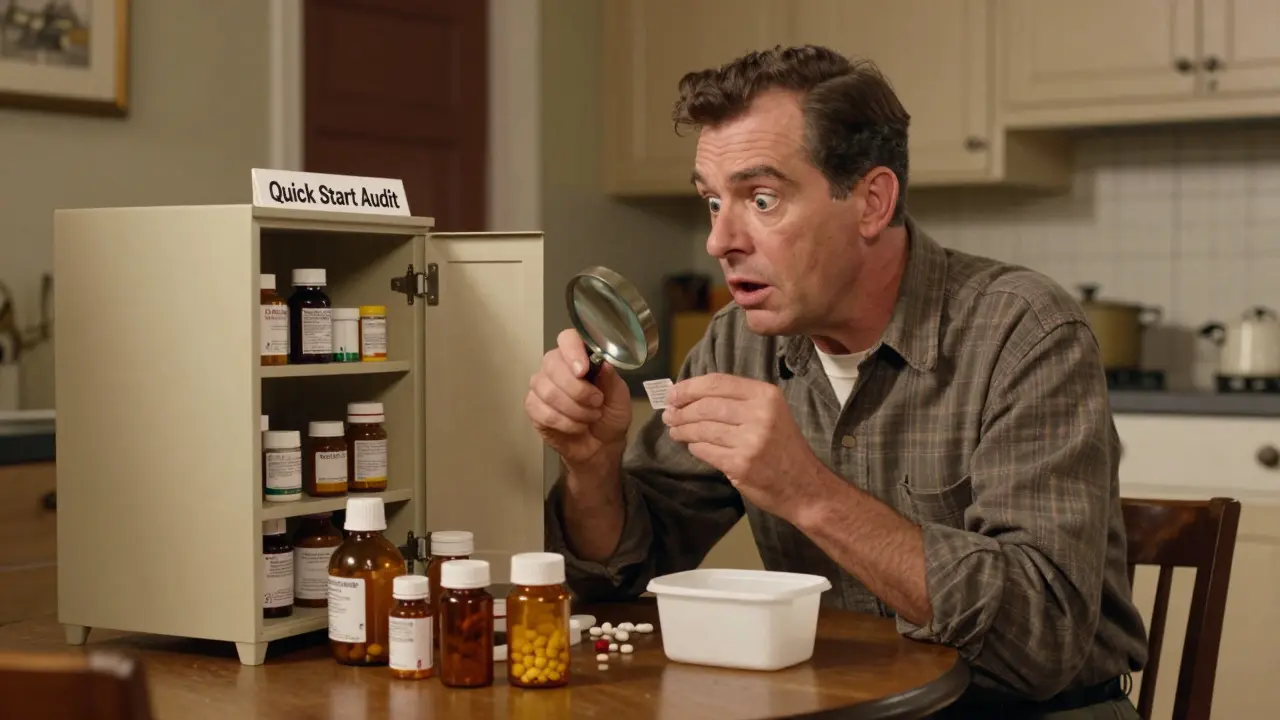
Finding a bottle of pills in the back of your cabinet only to realize it expired three years ago is a common, frustrating experience. But it's more than just a waste of money. Using outdated medicine can be dangerous-some drugs lose their potency and won't treat your symptoms, while others can actually become toxic as they break down. The real problem is that most of us treat our home medicine cabinets like a black hole: things go in, and we forget about them until we're desperate for a headache pill at 2 AM.
Getting your medications under control doesn't require a medical degree, but it does require a system. Whether you prefer a high-tech app or a simple piece of masking tape, the goal is to move from "guessing" to "knowing." Here is how to build a reliable tracking system that keeps your family safe and your cabinet clutter-free.
The Quick Start Audit
Before you can track your meds, you need to know what you actually have. Clear everything out of your cabinet and lay it on a table. This is the only way to find the hidden bottles lurking in the corners. As you go through them, check for three things: the printed expiration date, the physical condition of the pill (no crumbling or weird smells), and whether you still actually need the medication.
If you find a medication with no date or one that has clearly passed, don't just toss it in the trash. Some drugs can contaminate groundwater or be accidentally eaten by pets. Look for a Drug Take-Back Program a community service that allows people to safely dispose of prescription and over-the-counter medicines at your local pharmacy or police station. If that's not an option, mix the pills with unappealing substances like used coffee grounds or kitty litter in a sealed bag before throwing them away.
Low-Tech Tracking Methods
You don't need fancy software to stay organized. For many people, the simplest method is the most effective because it doesn't require opening an app while you're sick.
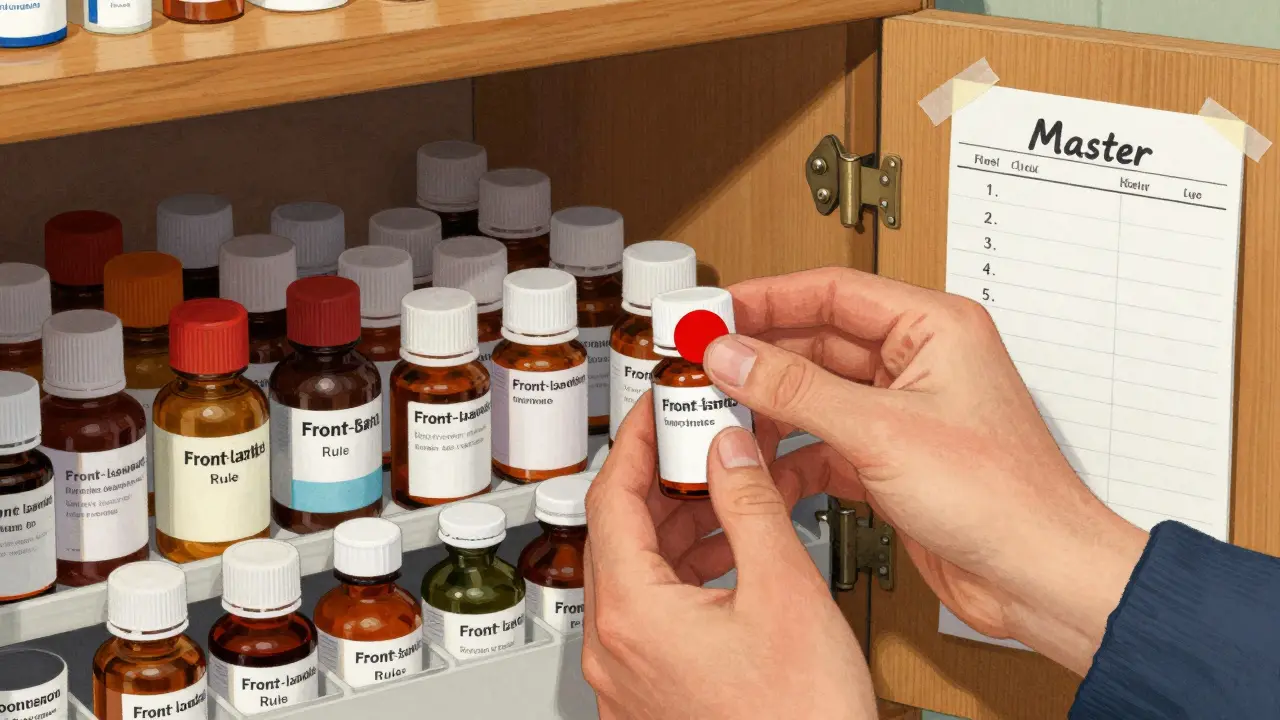
- The Bright Sticker System: Use small, colored circular stickers. Red for meds expiring this year, yellow for next year, and green for those with a long shelf life. Place the sticker right on the cap so you can see the status at a glance without reading fine print.
- The "Front-Loading" Rule: Just like grocery stores, always put the newest medications in the back and the ones expiring soonest in the front. This naturally encourages you to use the older stock first.
- The Master List: Tape a simple piece of paper to the inside of your cabinet door. List the medication name and the expiration date. When you add a new bottle, update the list. It's much faster to scan a list than to pick up ten different bottles.
Digital Solutions for Medication Management
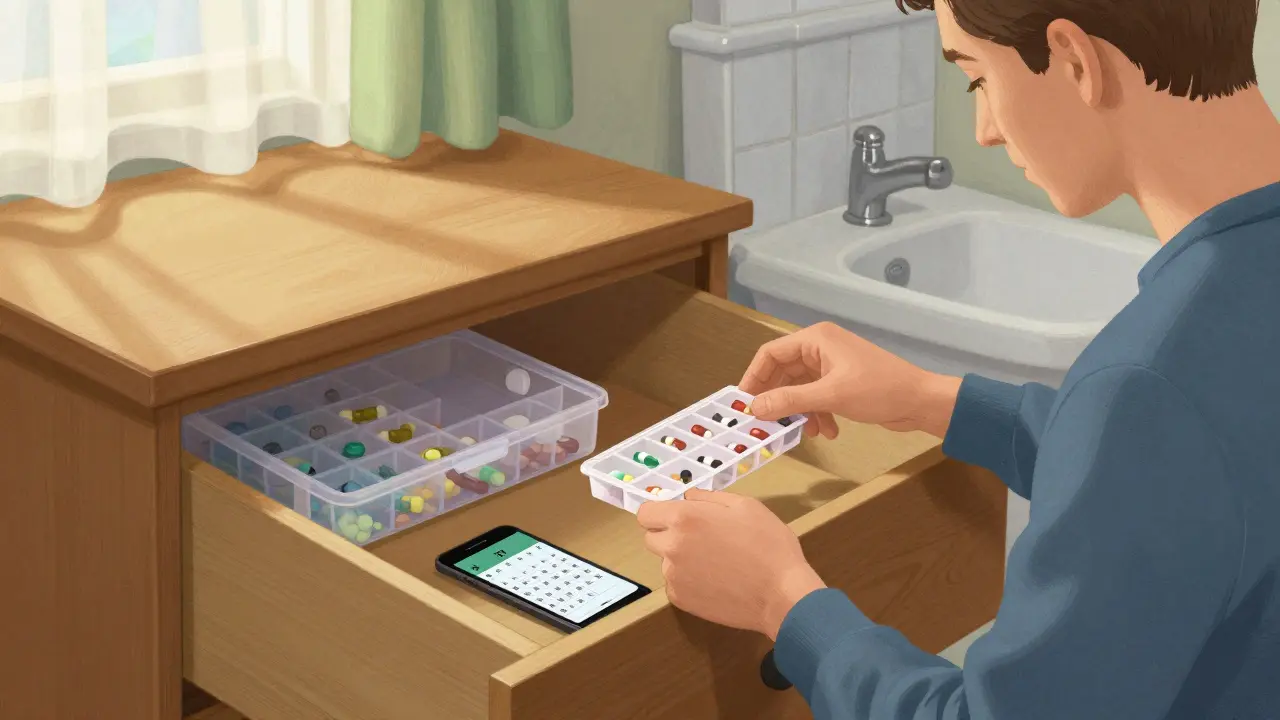
If you manage a complex regimen of several prescriptions, a digital approach is safer. Manual lists can be forgotten, but a phone notification is hard to ignore. You can use a dedicated Medication Reminder App software designed to help users track dosages and expiration dates for prescriptions or a simple shared family calendar.
Set a recurring "Cabinet Clean-out" alert every six months (e.g., the first day of Spring and Autumn). This forces you to do a quick visual sweep. For those who want more precision, some people use spreadsheet software to track batch numbers and dates, though this is usually overkill for a standard home setup. The key is to pick a tool you will actually use consistently.
Understanding Why Dates Matter
You might wonder, "Is an expired pill really that different?" The answer depends on the drug. Most medications are remarkably stable, but some are critical. For example, Nitroglycerin a potent vasodilator used to treat chest pain during heart attacks loses its effectiveness very quickly after the bottle is opened. Using an expired version during a cardiac event could be fatal.
Similarly, liquid medications, like cough syrups or reconstituted antibiotics, are far more prone to bacterial growth and chemical breakdown than tablets. If a liquid looks cloudy or has changed color, throw it out regardless of the date. High heat and humidity-like those found in a bathroom cabinet-can accelerate this breakdown. If your bathroom gets steamy, consider moving your medication expiration tracking efforts to a cool, dry bedroom closet instead.
| Medication Type | Stability Level | Best Storage Spot | Warning Signs |
|---|---|---|---|
| Dry Tablets/Capsules | High | Cool, dry closet | Crumbly texture, strong odor |
| Liquid Syrups | Medium | Refrigerator (if noted) | Cloudiness, separation |
| Insulins/Biologics | Low | Refrigerated | Change in color/clarity |
| Eye Drops/Ointments | Low | Cool, dark place | Particles floating in liquid |
Professional Grade Systems for Home Care
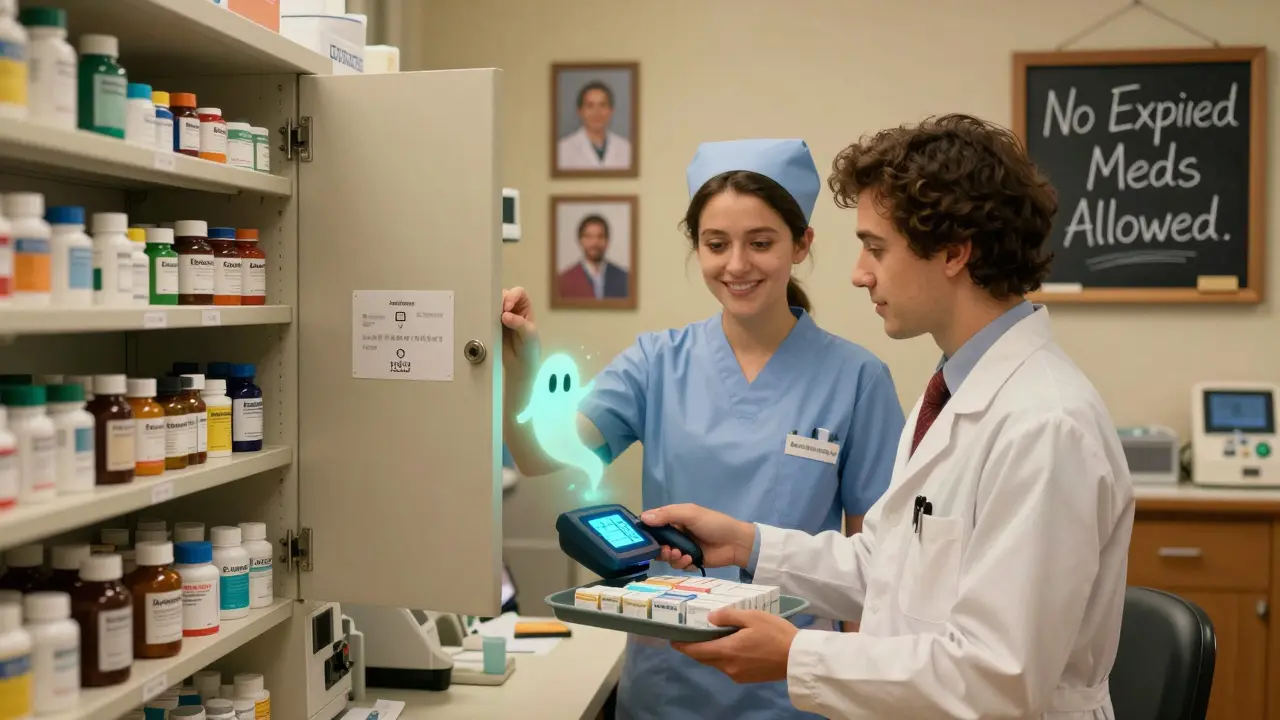
For those caring for elderly parents or patients with chronic illnesses, a basic cabinet might not be enough. In professional healthcare settings, hospitals use Automated Dispensing Cabinets high-tech storage units like BD Pyxis or Omnicell that use RFID and barcodes to track medication life cycles. While you can't put a $30,000 Pyxis unit in your hallway, you can adopt some of their logic.
Professional systems rely on "Closed-Loop" tracking. You can mimic this by creating a "Incoming" bin. Never put a new prescription directly into the cabinet. Instead, put it in the bin, log the date and expiration in your app or list, and then move it to the cabinet. This prevents the "accidental addition" of meds that you forgot to track.
Common Pitfalls to Avoid
One of the biggest mistakes people make is trusting the date on a bottle that has been stored in a bathroom. The heat and moisture from your shower act like a catalyst for chemical degradation. If the bottle has been sitting in a 90% humidity environment, that "2027" date might be optimistic.
Another trap is the "just in case" mentality. Keeping a bottle of strong antibiotics "just in case" you get a sinus infection is dangerous. Not only does the drug expire, but using the wrong antibiotic for a new infection can lead to antibiotic resistance. Only keep medications that are part of an active prescription or common, short-term over-the-counter needs like ibuprofen.
Is it safe to use medication a few days past the expiration date?
For most over-the-counter drugs, a few days won't make the drug toxic, but it may be slightly less potent. However, you should never gamble with life-saving medications (like insulin or heart meds) or liquid medications, as they degrade much faster and can harbor bacteria.
Where is the best place to store medicine to prevent early expiration?
The ideal spot is a cool, dry, and dark place. A bedroom dresser or a dedicated linen closet is far superior to a bathroom cabinet, where temperature swings and humidity can break down the active ingredients in your medication.
How do I dispose of medications that don't have a take-back program nearby?
Mix the meds with a non-edible substance like coffee grounds or cat litter, place the mixture in a sealable plastic bag, and throw it in the household trash. Scratch out your personal information on the prescription bottle before recycling it.
Do all medications have a printed expiration date?
Most do, but some pharmacy-filled prescriptions may have a "discard by" date based on when the pharmacist mixed the medication rather than the manufacturer's date. Always check the label provided by the pharmacy.
Can I freeze medications to make them last longer?
No, unless specifically instructed by a doctor or pharmacist. Freezing can actually destroy the molecular structure of many medications, rendering them useless or dangerous.
Next Steps for Your Cabinet
If you're feeling overwhelmed, don't try to do everything today. Start with a "Prescription-Only" sweep. These are the high-stakes meds where expiration dates matter most. Once those are tracked and dated, move on to your over-the-counter bottles.
If you are managing meds for a family member, consider a pill organizer. While these don't track expiration dates, they tell you immediately if a dose was missed, which is the other half of the medication safety puzzle. Set a calendar reminder for the first of every month to check your master list and toss anything that has crossed the finish line.



Mike Arrant
April 24, 2026 AT 17:50Most of you people probably just have a pile of random pills in a shoebox under the sink. It's honestly embarrassing how little people care about basic hygiene and safety until they're actually dying. I bet half of you don't even know what the labels say on your current prescriptions.
Divyanshu Giri
April 26, 2026 AT 15:40Total win! The sticker idea is pure gold mate... keep it simple and stay safe!! 🚀
Ajinkya Joshi
April 28, 2026 AT 03:40Imagine needing a "Closed-Loop" system for a bottle of Advil. The sheer level of over-engineering here is breathtaking. Some of us just have a brain and can remember if we bought something in 2021 or 2024 without needing a $30k hospital cabinet simulation.
Olayinka Ibukunoluwa Mercy
April 29, 2026 AT 15:22This is so wonderful and helpful!!! ❤️ I really appreciate the tip about mixing pills with coffee grounds to keep them away from pets... such a thoughtful addition!!! 🐾✨
Dan Wizard
May 1, 2026 AT 01:49I have always wondered if the humidity in our tropical climate accelerates the degradation of medication even faster than the guidelines suggest, especially since we often lack the air conditioning in every room that might be required for a truly "cool and dry" environment as mentioned here, which makes me think we should be even more vigilant with the liquid medications.
Odicha ude Somtochukwu
May 1, 2026 AT 23:39It is indeed a prudent practice to maintain such a rigorous standard of organization within the home;; the safety of the family unit must always remain the primary objective!!!
RAJESH MARAVI
May 2, 2026 AT 05:44Why follow dates?? My grandma lived to be 90 and took expired meds all the time lol. This whole post is just fear mongering for no reson... totaly fake news!!
Caroline Duvoe
May 3, 2026 AT 11:10stikers are too much work lol 🙄 just throw it all out once a year and buy new ones
Anastasios Kyriacou
May 4, 2026 AT 14:55who has time for a master list lol just check the date when u need it
Mayur Pankhi Saikia
May 5, 2026 AT 11:01The utter mediocrity of this advice is astounding... truly... one does not simply "front-load" a cabinet without understanding the chemical kinetics involved in storage temperatures!! Such an amateur approach to pharma-management... an absolute joke!!
Ally Warren
May 6, 2026 AT 10:30We spend our lives trying to control the uncontrollable, yet here we are obsessing over the date on a plastic bottle. It is a metaphor for our desire to stave off the inevitable decay of all things, whether it be a pill or our own bodies. The cabinet is just a microcosm of our fear of time itself.
Chidi Prosper
May 6, 2026 AT 21:45Exactly. Get rid of the useless junk and stick to a system that works. No point in overcomplicating it, just get the audit done and be done with it.