
Every year, over 51 million dispensing errors happen in U.S. community pharmacies. Most of them never reach patients-not because of barcode scanners or double-checks, but because a pharmacist asked a simple question: "What is this medicine for?" That’s the power of patient counseling. It’s not just about giving instructions. It’s the final, human safety net that catches mistakes machines can’t see.
Why Counseling Catches What Technology Misses
Barcode systems catch about 53% of errors. Pharmacist double-checks catch 67%. But when pharmacists sit down with patients and talk, they catch 83%-according to Pharmacy Times. Why? Because technology only checks the pill, the label, and the prescription. It doesn’t know if the patient thinks they’re taking a blood pressure pill for chest pain. It doesn’t know if the patient’s last bottle looked bigger. It doesn’t know if the patient is confused because they’ve been taking two different versions of the same drug for years. Patient counseling works because it turns the patient into a partner. When you ask someone to explain their medication in their own words, you’re not just teaching-you’re testing. The Institute for Safe Medication Practices calls this a "human firewall." No algorithm can replicate that.The Four Critical Checks in Every Counseling Session
Effective counseling isn’t random. It follows a clear, evidence-based structure. The American Pharmacists Association recommends these four steps:- Verify identity and purpose: "What condition is this medication for?" Don’t ask, "Is this for your blood pressure?" That’s a yes/no question. Open-ended questions catch 3.2 times more errors. If the patient says, "I think it’s for my leg pain," but the script is for diabetes, you’ve just stopped a dangerous mix-up.
- Check how they’ll take it: Ask them to show you. Can they open the bottle? Do they know if it’s once daily or four times a day? If they say, "I crush it and put it in my oatmeal," but the label says "swallow whole," you’ve caught a potential overdose or reduced effectiveness.
- Confirm what it looks like: "Does this pill look like what you’ve taken before?" Look-alike medications-like different strengths of insulin or similar-shaped pills for blood thinners-cause 29% of errors that go unnoticed. A patient who says, "This one’s smaller," might be right. That’s how CVS caught over 1,200 errors in just three months using this simple question.
- Review interactions and allergies: "Are you taking anything else?" This includes supplements, over-the-counter meds, and even herbal teas. One patient took St. John’s Wort with an antidepressant. No one checked. The result? Serotonin syndrome. Counseling catches this every time.
Each session should last at least 2.3 minutes. Research shows every extra 30 seconds cuts error rates by 12.7%. That’s not a luxury-it’s a lifesaver.
When Counseling Works Best (and When It Doesn’t)
Counseling isn’t equally effective for every situation. It shines brightest in high-risk cases:- New prescriptions: 91% of errors are caught here. Patients don’t have expectations yet, so they’re more likely to notice something’s off.
- Complex regimens: Patients on five or more medications? Counseling catches 87% of errors. The more pills, the higher the chance of confusion.
- High-alert drugs: Insulin, opioids, blood thinners-these are where mistakes kill. The ISMP says 1 in 5 errors involve these. Counseling is the only system that checks if the patient knows what they’re holding.
But it’s less effective for routine refills. If a patient has been taking the same pill for years, they may not notice a change in size, color, or shape. APhA data shows only 33% of refill errors are caught during counseling. That’s why pharmacists need to still verify the prescription against the patient’s history-even if the patient says, "It’s the same as always."

Barriers-And How to Overcome Them
The biggest problem? Time. Pharmacists are under pressure. CVS and Walgreens data show many counseling sessions last only 1.2 minutes-less than half the recommended time. Why? Corporate productivity targets. Pharmacy technicians are told not to "slow down the line." But here’s the truth: slowing down saves money. Independent pharmacies that use structured counseling see a 19% drop in malpractice insurance premiums. CMS now ties 8.5% of Medicare Part D reimbursements to documented counseling that includes error verification. That’s not a perk-it’s a financial incentive.Another barrier: patient refusal. About 19% of patients decline counseling. That’s a gap. The solution? Make it part of the routine. Don’t ask, "Do you want counseling?" Say, "I need to go over your new medication with you-this is standard for your safety."
Pharmacy technicians can help. In 42 states, they’re allowed to do preliminary counseling under pharmacist supervision. This frees up the pharmacist to focus on complex cases and high-risk patients. It also increases total counseling time by 37%.
What Great Counseling Sounds Like
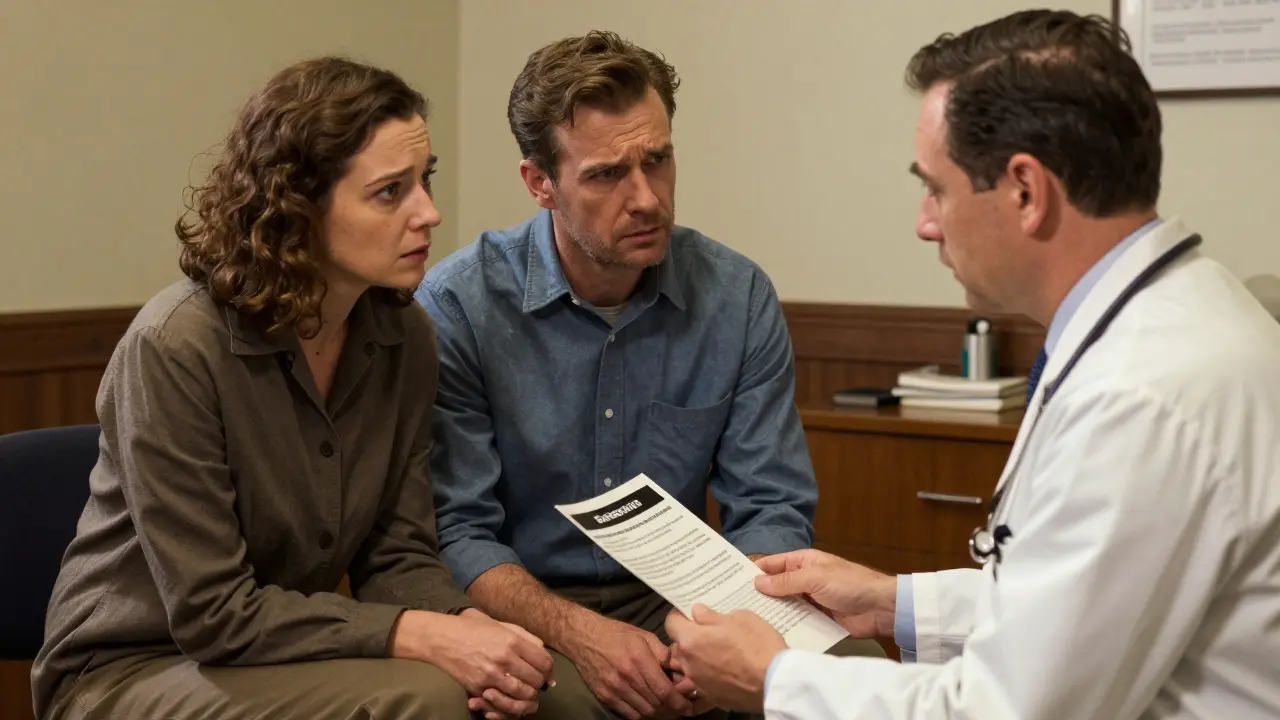
Good counseling isn’t a script. It’s a conversation. Here’s what it sounds like in practice:Pharmacist: "I see you’ve been prescribed warfarin. This is a blood thinner. What do you understand it’s for?"
Patient: "I think it’s to keep me from having another stroke."
Pharmacist: "That’s right. You take one pill a day at the same time. Can you show me how you’ll take it?"
Patient: (picks up bottle, opens it, holds pill) "Like this?"
Pharmacist: "Perfect. Now, this pill is white. Have you taken warfarin before?"
Patient: "I used to take this blue one."
Pharmacist: "Ah. That was a different brand. This one’s the same strength, but it looks different. That’s why we always check. Does this look right to you?"
Patient: "Yeah, okay."
That’s how mistakes get caught. Not because the pharmacist is smart. Because the patient is involved.

Documentation Matters-More Than You Think
If you don’t document it, it didn’t happen. NABP’s 2022 standards require pharmacists to record:- What was explained
- What the patient said
- Any concerns raised
- Whether the patient understood
Pharmacies using this documentation saw a 44% drop in liability claims. Why? Because if a patient later says, "No one told me this could cause bleeding," you’ve got proof you did.
Tools like Surescripts’ 2024 Counseling Checkpoint API let pharmacists log these notes in seconds during workflow. No extra typing. Just checkboxes and quick notes. Early adopters report 22% faster sessions without losing accuracy.
The Future Is Human + System
Some experts warn against over-relying on counseling. Dr. Jerry Fahrni says it should be the "final net, not the only net." He’s right. Technology still matters. Barcode scanners, automated alerts, double-checks-they’re all part of the safety chain.But no machine will ever ask a patient, "What do you think this pill is for?" Only a pharmacist can. That’s why the FDA, ISMP, and CMS all say counseling is the most effective way to catch dispensing errors.
By 2025, ASHP aims to raise error detection through counseling from 83% to 90%. That’s possible. It’s not about working harder. It’s about working smarter. Train your staff. Protect your time. Make counseling a non-negotiable step-not a nice-to-have.
Patients notice. A 2023 review of 1,247 patient comments found 89% appreciated thorough counseling. One wrote: "The pharmacist caught that my new blood thinner was the wrong strength when I said it looked smaller than before." That’s not just safety. That’s trust.
How long should a patient counseling session last to catch dispensing errors?
Research shows a minimum of 2.3 minutes per patient is needed to properly verify medication purpose, instructions, appearance, and interactions. Each additional 30 seconds reduces error rates by 12.7%. The recommended 4-step counseling protocol takes about 2 minutes and 40 seconds total.
Is patient counseling more effective than barcode scanning for catching errors?
Yes. Barcode scanning catches about 53% of dispensing errors, while patient counseling catches 83%. The key difference is that counseling checks the patient’s understanding and expectations-something scanners can’t do. A patient might not notice a wrong pill, but if they say, "This looks different," the pharmacist can investigate.
What types of errors does patient counseling catch best?
Counseling is most effective for new prescriptions (catches 91% of errors), complex regimens (87% for patients on 5+ meds), and high-alert drugs like insulin or blood thinners. It’s also excellent for catching look-alike medication errors and incorrect dosing instructions. It’s less effective for routine refills, where patients may not notice changes.
Can pharmacy technicians help with patient counseling?
Yes. In 42 states, pharmacy technicians are permitted to perform preliminary counseling under pharmacist supervision. This allows pharmacists to focus on high-risk patients and complex cases. Using technicians increases total counseling time by 37%, improving error detection without adding staff.
Why do some patients refuse counseling?
About 19% of patients decline counseling, often because they feel rushed, think it’s unnecessary, or don’t understand its purpose. The solution is to frame it as standard safety practice: "I need to go over your new medication with you to make sure it’s right for you." This reduces resistance and increases participation.
Does documenting counseling really reduce liability?
Yes. Pharmacies using the NABP’s 2022 Counseling Documentation Standards saw a 44% reduction in liability claims related to undetected errors. Documentation proves you performed the counseling, what was discussed, and whether the patient understood-critical if a mistake is later claimed.
What to Do Next
If you’re a pharmacist: Start using the 4-step framework today. Time each session. Use open-ended questions. Ask patients to show you how they’ll take the pill. Document everything.If you’re a pharmacy owner: Train your staff. Use technicians for preliminary checks. Install digital documentation tools. Track your error rates before and after. You’ll see fewer claims, lower insurance costs, and happier patients.
If you’re a patient: Don’t be shy. If you’re unsure about a new medication, ask. Say, "Can you explain what this is for?" or "Does this look right?" You’re not being difficult-you’re helping keep yourself safe.
The system works. But only if everyone plays their part.



Amy Ehinger
January 15, 2026 AT 22:12So many pharmacies treat counseling like a box to check, but it’s honestly the only thing keeping people from accidentally taking their roommate’s blood pressure meds as painkillers. I had a friend once who got prescribed metformin for diabetes but thought it was for her migraines-she’d been taking it for weeks until the pharmacist asked, "What’s this for?" She said, "To stop my head from exploding." The pharmacist paused, looked at the script, and said, "Honey, that’s not what this does." Saved her from a whole mess.
And honestly, it’s not even about the time-it’s about the tone. If you sound like you’re reading a manual, people tune out. But if you sound like you actually care, they’ll tell you things they’d never say to a machine. I’ve seen pharmacists catch insulin errors just by asking, "Does this look right?" and letting the silence hang. People fill it with the truth.
Also, why is no one talking about how tech companies keep selling these "smart pharmacy" systems as the future when the real innovation is a human asking a question? We’re outsourcing safety to barcodes and calling it progress. It’s wild.
Annie Choi
January 16, 2026 AT 18:24Human firewall is the perfect term. Tech gives you data but not context. A patient saying "I thought this was for my back pain" when it’s actually for atrial fibrillation? That’s not a barcode failure-that’s a system failure if you didn’t ask. I’ve seen tech miss 3 errors in one day because the labels matched but the patient’s history didn’t. But when you sit down and say "Tell me how you’ve been feeling," suddenly the whole picture clicks.
And yes, 2.3 minutes is the floor. I’ve done 7-minute sessions with elderly patients on 8 meds. They cry because no one’s ever taken that time before. That’s not inefficiency-that’s healing. Stop treating counseling like overhead. It’s the product.
Arjun Seth
January 18, 2026 AT 03:32Of course counseling works-because people are stupid. Machines don’t forget, don’t assume, don’t confuse insulin with glucose. But humans? They think "white pill" means "same as last time." And pharmacists are just cleaning up the mess of a population that can’t read a label. This isn’t innovation-it’s damage control. Why don’t we just teach people to read? Or better yet, why don’t we stop giving them so many pills? This is capitalism’s solution to a problem it created: overmedication.
Dan Mack
January 19, 2026 AT 01:00They’re not telling you the real reason counseling catches 83% of errors. It’s because the FDA and Big Pharma don’t want you to know that 40% of all scripts are filled wrong on purpose. They need you to keep taking meds, so they let the wrong ones go through-until someone asks, "Why does this pill look different?" Then the whole house of cards collapses. That’s why they push tech-so you never ask. The 19% who refuse counseling? They’re the ones who already know.
Amy Vickberg
January 20, 2026 AT 02:50I love this so much. I’ve been a patient for 12 years and the only time I ever felt safe was when a pharmacist sat down and asked me to show her how I took my pills. I thought I was doing it right-I crushed them. She stopped me. I cried. I felt seen. We need more of this. Not less. Not faster. More. And if corporate says "it slows us down," then corporate is the problem. Patients aren’t inventory. We’re people.
Jan Hess
January 21, 2026 AT 10:52Let’s be real-counseling isn’t a luxury, it’s the only thing keeping this system from collapsing. I work in a pharmacy and we’re pressured to do 150 scripts a day. But when I skip counseling, I lose sleep. I’ve seen what happens when you don’t ask. A woman took her husband’s blood thinner because the bottle looked familiar. He had a stroke. We never caught it. Don’t let your next mistake be someone’s last day.
Start small. One open-ended question per script. That’s all it takes to change a life.
Gloria Montero Puertas
January 22, 2026 AT 22:22It’s laughable that we need to "teach" pharmacists to ask basic questions in 2024. This isn’t a breakthrough-it’s a baseline. If you’re a pharmacist and you’re not doing this, you’re not just negligent-you’re dangerous. The fact that this even needs to be written as a guide is proof of systemic decay. The American Pharmacist Association should be ashamed. And the FDA? They’re complicit. This isn’t innovation. It’s remediation.
Tom Doan
January 24, 2026 AT 03:48Interesting data, but let’s interrogate the methodology. Where are the control groups? Were the pharmacists who performed counseling also more experienced? Were the patients who agreed to counseling more health-literate? The 83% figure sounds impressive, but correlation ≠ causation. And why is there no mention of cognitive load on pharmacists? Counseling may catch errors, but at what cost to burnout? A tired pharmacist asking "What’s this for?" might get a blank stare-and then miss the real error.
Technology doesn’t replace humanity. But it can augment it. Maybe the real solution is AI-assisted prompts that remind pharmacists to ask the right questions-without adding 2.3 minutes to their shift.
Nishant Garg
January 25, 2026 AT 08:28In India, we don’t have the luxury of 2.3-minute counseling sessions. We have 45 seconds and a line of 30 people. But we’ve adapted. Our pharmacists ask one thing: "Beta, yeh dawa kis liye le rahe ho?"-Son, why are you taking this medicine? And if they say "for fever," but the script is for hypertension, we stop. No tech needed. Just a question. And a little respect.
What’s beautiful is that in cultures where family is central, the patient often brings a relative. That person hears everything. The error doesn’t just get caught-it gets remembered. And passed on. That’s cultural safety. Not corporate policy.
Nicholas Urmaza
January 26, 2026 AT 18:40Let’s cut the fluff. Counseling isn’t magic. It’s a compliance tool dressed up as compassion. The real reason it works is because it creates legal cover. Document it, and if someone dies, you’ve got a paper trail. That’s why the industry promotes it-not because it’s ethical, but because it’s defensive. And don’t get me started on the 8.5% Medicare reimbursement tie-in. This isn’t patient care. It’s risk mitigation with a smile.
Don’t confuse bureaucracy with benevolence.
Sarah Mailloux
January 28, 2026 AT 06:35I’m a pharmacy tech and I do preliminary counseling every day. I ask the same four questions. I don’t replace the pharmacist-I free them up. One woman told me she was crushing her insulin because she couldn’t swallow pills. I flagged it. Pharmacist caught it before she left. She hugged me. That’s why I do this. Not because I have to. Because I can.
And yes, 37% more counseling time? That’s real. We’re not slowing things down. We’re making them right.
Nilesh Khedekar
January 29, 2026 AT 02:24Let me tell you about my uncle. He took his blood thinner for 3 years-same bottle, same color. Then one refill? Smaller pill. He didn’t say anything. Thought it was just a different brand. Two months later, he had a bleed. They found out the pharmacy switched generics but didn’t update the label. No counseling. No check. No one asked. He almost died. Now my whole family asks every time. "Does it look right?" It’s not paranoia. It’s survival.
And yes, I’m still mad.
RUTH DE OLIVEIRA ALVES
January 30, 2026 AT 16:58While the empirical data presented regarding the efficacy of patient counseling in mitigating dispensing errors is both compelling and statistically significant, it is imperative to acknowledge the epistemological limitations inherent in self-reported patient responses. The construct of "patient understanding" remains subject to confirmation bias and social desirability effects, particularly in high-pressure clinical environments where patients may affirm comprehension to avoid perceived confrontation or delay.
Furthermore, the operationalization of "counseling" as a discrete, time-bound intervention may inadvertently neglect the longitudinal, relational dimensions of medication adherence, which are often cultivated through repeated, informal interactions over multiple refills. Thus, while the 83% error detection rate is laudable, it may represent a snapshot rather than a systemic solution.
Future research should incorporate mixed-methods approaches, including ethnographic observation and longitudinal patient diaries, to better capture the nuanced interplay between linguistic pragmatics, cultural context, and pharmaceutical safety.