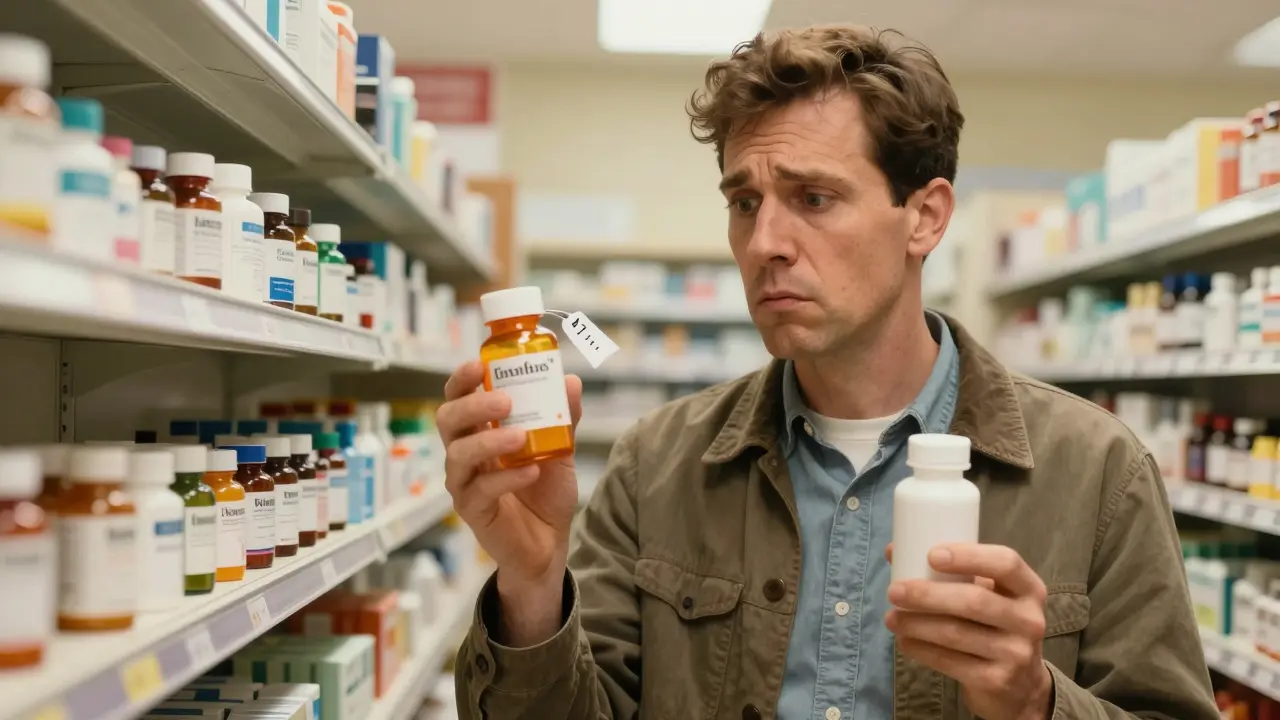
Imagine standing in a pharmacy aisle, holding two identical bottles. One costs $27.10. The other costs $7.05. They contain the exact same active ingredient, work the same way in your body, and meet the same safety standards. Yet, millions of people still choose-or are forced to pay for-the more expensive option due to confusing insurance structures and opaque pricing systems.
This isn't just about saving a few dollars on your next refill. It is about understanding a massive disconnect in how we pay for medicine. In the United States, generic drugs are medications that have equivalent dosage, safety, strength, and performance as their brand-name counterparts but are sold at a significantly lower price. Despite making up 90% of all prescriptions filled, they account for only a tiny fraction of total drug spending. So why does the financial burden feel so heavy for so many patients? Let’s break down the real numbers behind your out-of-pocket costs.
The Staggering Price Gap Between Generics and Brands
The difference between paying for a brand-name drug versus its generic counterpart is not marginal; it is drastic. According to the Association for Accessible Medicines (AAM) 2024 Savings Report, the average out-of-pocket cost for a generic prescription in 2023 was just $7.05. Compare that to the average copay for brand-name drugs, which hit $27.10. That means you are paying nearly four times more for the branded version.
But here is where it gets even more striking. For the vast majority of people, generics are incredibly cheap. Data from JAMA Internal Medicine shows that 93% of all generic prescriptions are filled for $20 or less out-of-pocket. In fact, 82.4% cost under $20, and 98.8% cost under $50. When you look at brand-name drugs, however, the story changes completely. Brand copays reached $56.12 in 2022 alone. If you are managing chronic conditions like hypertension or diabetes, this difference adds up to hundreds, if not thousands, of dollars every year.
Consider the case of Sildenafil Citrate. After patent protection expired, the price per prescription dropped from $49.90 to just $3.07-a 94% reduction. Emtricitabine/Tenofovir Disoproxil Fumarate saw a similar drop, falling from $20.46 to $2.13, a 90% cut. These aren't anomalies; they are the rule when competition enters the market.
Why You Might Still Be Overpaying for Generics
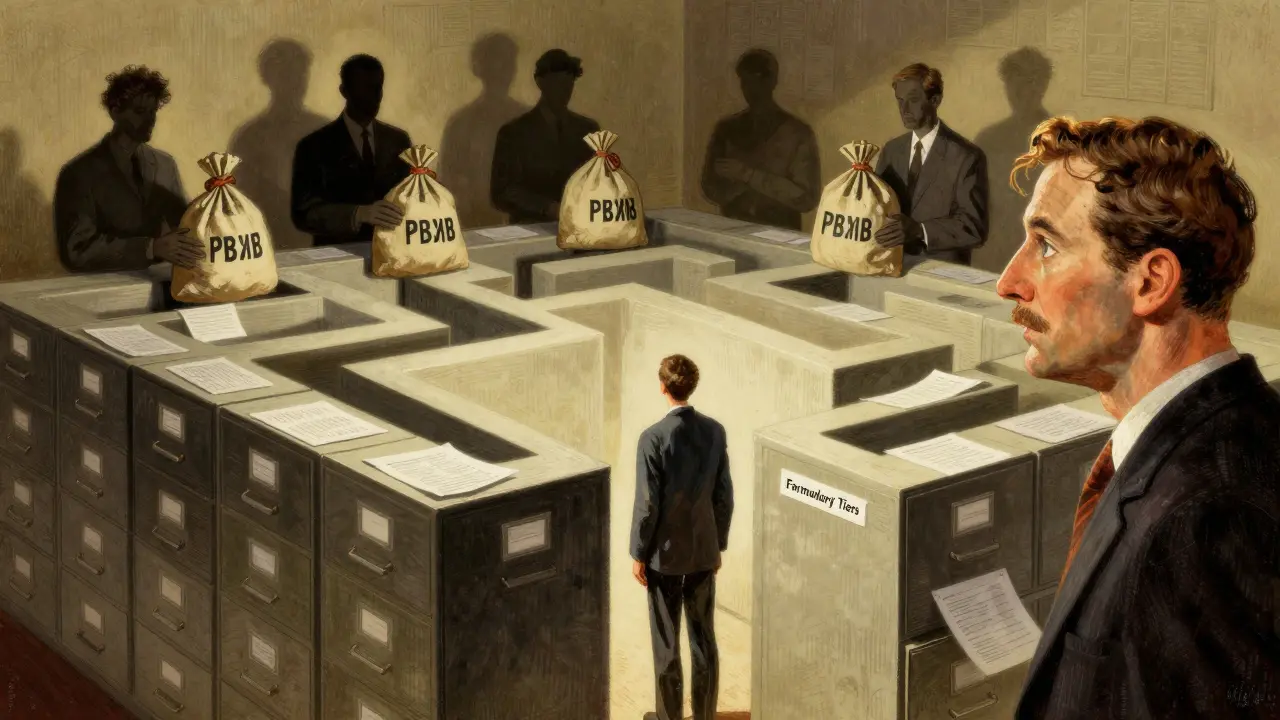
If generics are so cheap, why do some patients still report high out-of-pocket costs? The answer lies in how insurance plans are designed. Many health insurers use tiered formularies, placing certain generics on higher-cost tiers than others. This practice forces patients to pay more for specific generic brands, even though cheaper alternatives exist.
An analysis of drugs covered between 2011 and 2019 revealed that shifting generics to non-generic tiers increased annual patient spending by 135%, even as the actual price of the medicine fell by 38%. Essentially, insurance companies are creating artificial barriers that prevent you from accessing the lowest possible price. You might think you are getting a deal because you have coverage, but you could be subsidizing middlemen rather than paying for the drug itself.
Furthermore, there is a paradox in how we share costs. Consumers actually pay a higher percentage of the total cost for generics (41.8%) compared to brand-name drugs (32.1%). This suggests that while generics are cheaper overall, the structure of co-pays often leaves patients bearing a disproportionate share of the expense relative to the drug's value.
The Hidden Cost of Middlemen and Opaque Pricing
You might wonder who benefits when you overpay. The USC Schaeffer Center found that while direct out-of-pocket payments for generics have declined, total prices (including what insurers pay) have fallen even more sharply. This indicates that intermediaries-such as Pharmacy Benefit Managers (PBMs)-are capturing significant value. Patients effectively overpay by 13-20% due to a lack of price transparency and supply chain inefficiencies.
A shocking example of this inefficiency comes from Medicare Part D. In 2018, Medicare overspent by 20.6% compared to Costco prices, totaling $2.6 billion in unnecessary costs across 1.4 billion claims. For 90-day fills, Medicare overspent by 29.4%. In some cases, uninsured individuals buying directly from wholesale clubs paid less than insured seniors using their Medicare benefits. This system distortion highlights how complex rebate structures and administrative fees inflate costs for everyone involved.
| Metric | Generic Drugs | Brand-Name Drugs |
|---|---|---|
| Average Copay (2023) | $7.05 | $27.10 |
| Share of Prescriptions | 90% | 10% |
| Share of Total Spending | 13.1% | 86.9% |
| Price Below $20 | 82.4% | <10% |
How Direct-to-Consumer Pharmacies Cut Costs
One way to bypass these inflated costs is through direct-to-consumer (DTC) pharmacies. Studies show that DTC pharmacies offer median cost reductions of 76% for expensive generics and 75% for common generics compared to traditional retail pharmacies. For example, Pantoprazole 20mg tablets cost $9.20 from a DTC provider like MCCPDC, whereas Albertsons charged $44-a 79% savings. Rosuvastatin 5mg was available for $7.50 from Health Warehouse versus $110 at Walgreens, representing a 93% reduction.
These savings are not theoretical. They represent real money staying in your pocket. By cutting out the traditional retail markup and negotiating directly with manufacturers, DTC models expose the true market price of generic medications. However, access remains limited, and many patients are unaware these options exist until they dig deeper into their billing statements.
International Context: Is the U.S. Really an Anomaly?
When looking globally, the U.S. stands out as an outlier. HHS data from 2022 shows that U.S. drug prices across all categories were nearly three times higher than in 33 OECD countries. While industry groups argue that generics are often cheaper in the U.S. than elsewhere, the overall system remains inefficient. The sheer volume of generic usage (90% of prescriptions) has helped keep aggregate spending down, but individual patients still face higher baseline costs than their international counterparts due to fragmented pricing and regulatory complexities.
The Future of Generic Savings
Looking ahead, the expiration of patents on blockbuster drugs promises even greater savings. Generic and biosimilar medicines generated $445 billion in savings during the decade ending in 2023, up from $373 billion previously. As more treatments lose exclusivity, the potential for cost reduction grows. However, realizing this potential requires systemic reform. We need clearer pricing, reduced intermediary profits, and insurance designs that prioritize patient affordability over corporate margins.
Until then, being informed is your best defense. Know the difference between brand and generic, question your formulary tiers, and explore alternative purchasing channels. Your wallet-and your health-will thank you.
What is the average out-of-pocket cost for a generic drug?
As of 2023, the average out-of-pocket cost for a generic prescription was $7.05. This is significantly lower than the $27.10 average for brand-name drugs.
Are generic drugs as effective as brand-name drugs?
Yes. Generic drugs must have the same active ingredient, dosage, safety, strength, and performance as brand-name drugs. They are regulated by the FDA to ensure equivalence.
Why do I still pay high copays for generic medications?
Insurance plans often place generics on higher cost tiers, increasing patient spending by up to 135% annually despite falling drug prices. Additionally, lack of price transparency allows middlemen to capture value, leading to overpayment.
Can I save more by using direct-to-consumer pharmacies?
Yes. Direct-to-consumer pharmacies can reduce costs by 75-76% compared to retail pharmacies. For example, Rosuvastatin 5mg can cost $7.50 via DTC versus $110 at major chains.
How much do generics save the healthcare system?
Generics and biosimilars generated $445 billion in savings during the decade ending in 2023. They account for 90% of prescriptions but only 13.1% of total drug spending.