Nocebo Effect Estimator
Adjust Your Expectations
Slide to simulate different levels of negative anticipation regarding treatment.
Estimated Impact
Total Nocebo Risk Factor
Physiological Changes
Dominant Pathway:
Adjust sliders to see how specific factors drive your physiological response.
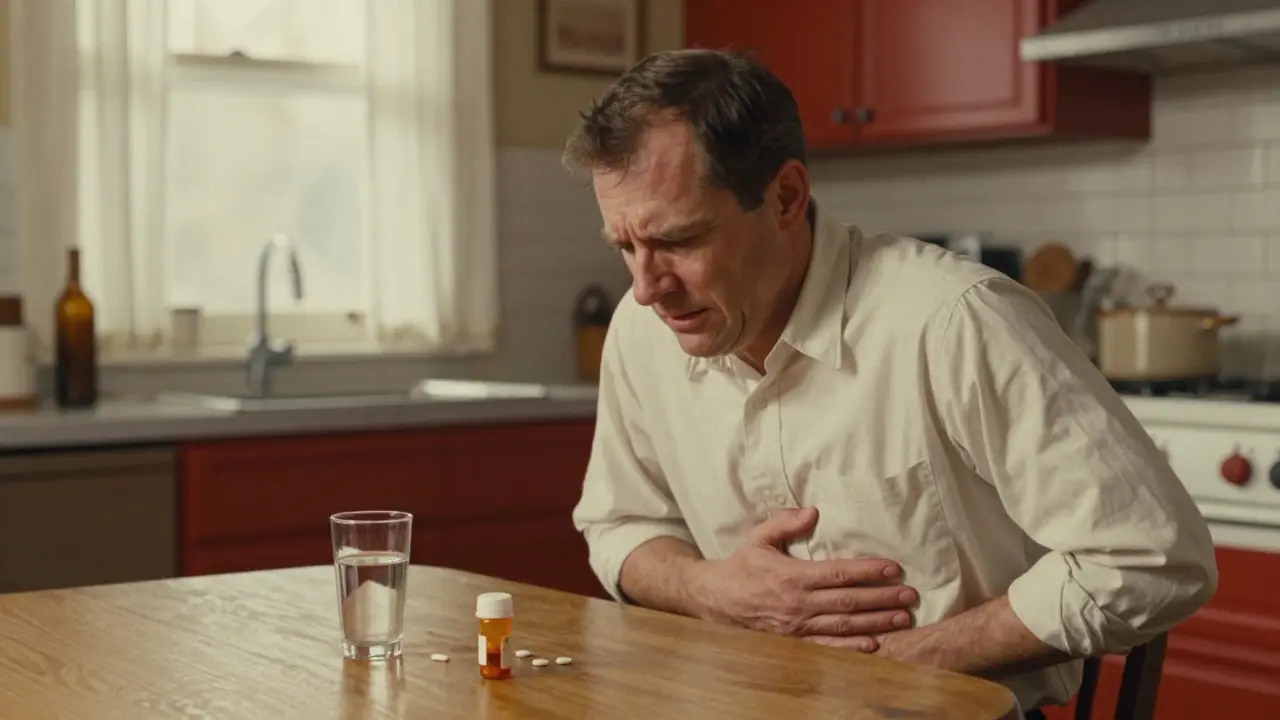
Have you ever taken a pill for a headache, felt anxious about potential side effects, and then suddenly experienced nausea or dizziness? You might blame the drug. But what if those symptoms weren't caused by the chemical ingredients at all? What if they were created entirely by your own brain's expectation of harm?
This phenomenon is known as the nocebo effect, defined as negative health outcomes resulting from negative expectations about a treatment. It is the dark twin of the placebo effect, where positive expectations lead to genuine healing. While we often hear about placebos curing conditions in movies and news stories, the nocebo effect is far more common in daily medical practice-and it is significantly stronger.
The Science Behind Expectation-Driven Symptoms
To understand why this happens, we need to look at how our brains process information. The terms 'placebo' (Latin for "I shall please") and 'nocebo' (Latin for "I shall harm") were formally distinguished by Walter Kennedy in 1961. However, the biological mechanisms behind them are complex and involve real neurobiological changes.
When you expect a negative outcome, your brain activates specific regions like the anterior cingulate cortex and the insula. These areas modulate pain perception and autonomic responses. According to research by Dr. Karin Meissner at Ludwig-Maximilians-University Munich, these expectations can trigger measurable physiological changes. We aren't just imagining things; our bodies react physically. Studies show that nocebo responses can elevate cortisol levels by 15-25%, increase heart rate by 5-10 beats per minute, and even alter immune system function.
The pathways through which these effects operate are distinct:
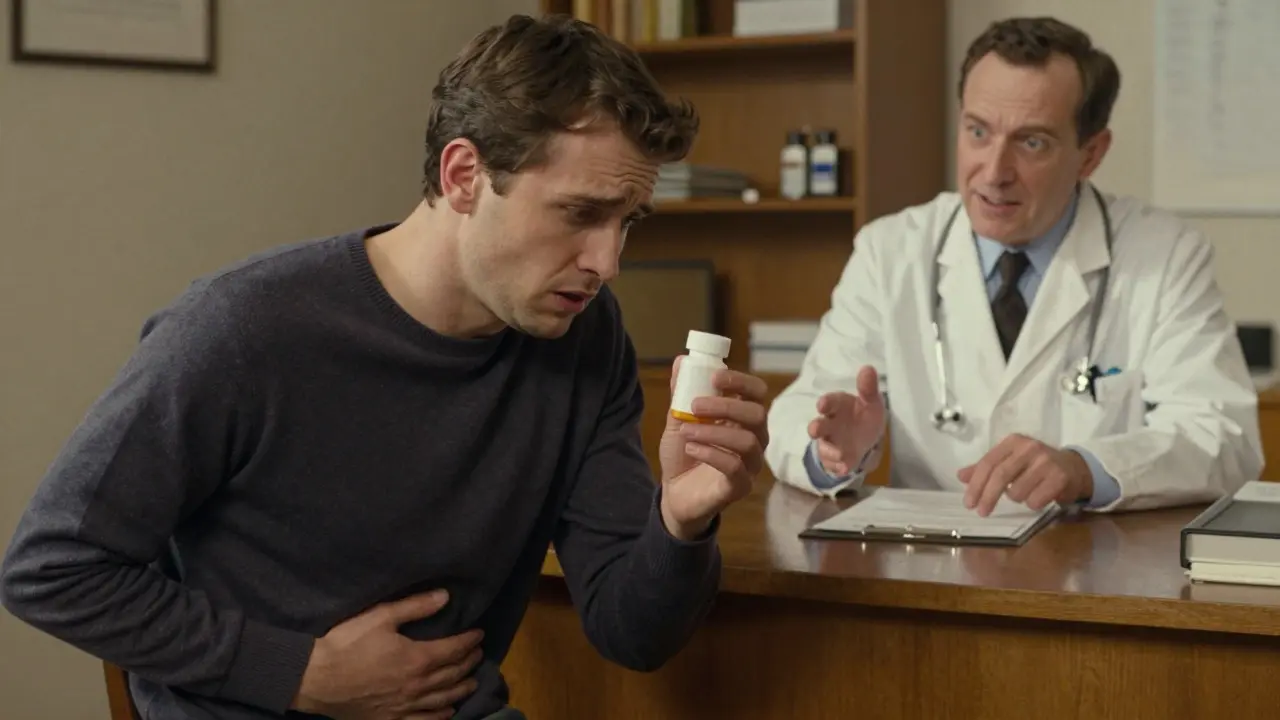
- Verbal Suggestions (70-80%): This is the most powerful driver. If a doctor says, "You might feel dizzy," your brain prepares for dizziness.
- Observational Learning (15-20%): Seeing others suffer side effects primes your brain to expect the same.
- Prior Negative Experiences (10-15%): Past bad reactions create a template for future anxiety.
What Recent Studies Reveal About Strength and Persistence
For years, scientists assumed that placebo and nocebo effects were roughly equal in strength but opposite in direction. New data suggests otherwise. A pivotal 2025 preprint study by Kunkel published in eLife Sciences demonstrated that nocebo effects are not only consistently stronger than placebo effects but also more persistent over time.
In this study, researchers tracked participants over eight days. They found that while placebo benefits remained stable, nocebo-induced symptoms decreased only marginally. The statistical difference was significant (F(1,97)=53.93, p<.001). This means that once a negative expectation takes root, it is harder to shake off than a positive one. This persistence explains why patients often stop taking effective medications-they remember the side effects vividly, even if those side effects were largely driven by expectation rather than pharmacology.
Nocebo Effects in Clinical Trials: The Hidden Numbers
If you've ever read a drug label, you've seen a long list of side effects. Many of these come from clinical trials. But here is a striking fact: between 50% and 76% of systemic adverse events reported in clinical trials occur in the placebo groups. These people took sugar pills or saline injections, yet they reported headaches, fatigue, nausea, and dizziness.
A systematic review by Colloca (2011) analyzed 69 anti-migraine trials and found that placebo groups experienced side effects matching the active drug profiles. For example, in anticonvulsant trials, placebos produced anorexia (12.3% incidence), memory difficulties (8.7%), and paresthesia (6.2%). These are not imaginary complaints; they are genuine physical sensations triggered by the informed consent process itself. When patients sign forms listing dozens of potential risks, they essentially program their brains to look for those specific symptoms.
| Feature | Placebo Effect | Nocebo Effect |
|---|---|---|
| Definition | Beneficial improvement due to positive expectation | Negative symptoms due to negative expectation |
| Typical Impact Range | 30-60% symptom improvement | 20-45% symptom worsening or new adverse events |
| Persistence | Often diminishes over time | Highly persistent; decreases only marginally |
| Primary Trigger | Hope, trust in provider, ritual of care | Fear, risk disclosure, prior bad experiences |
| Clinical Consequence | Enhances treatment efficacy | Causes non-compliance, unnecessary visits |

Real-World Examples Across Medical Conditions
Nocebo effects are not limited to one type of disease. They manifest across diverse medical fields, often mirroring the expected side effect profile of the treatments being studied. Here is how they appear in different contexts:
- Migraine Treatments: Studies show a 20-30% nocebo response rate for symptoms like dizziness and dry mouth, which are commonly associated with triptans and other migraine drugs.
- Cancer Therapy: In chemotherapy trials, 25-40% of nausea reported in placebo groups is attributed to nocebo effects. The fear of vomiting creates the sensation of nausea.
- Vaccinations: During COVID-19 vaccine trials, 76% of systemic side effects after the first dose-such as headache and fatigue-appeared in placebo groups as well. This highlights how powerful public discourse and individual anxiety can be.
- Chronic Pain: A 2023 survey by the International Association for the Study of Pain found that 68% of chronic pain patients reported side effects that resolved when they learned they were on a placebo.
Even injection site pain is heavily influenced by expectation. Patients receiving placebo injections report pain at rates of 45-55%, compared to lower rates in those who are unaware they are receiving a shot. The needle itself, combined with the anticipation of pain, triggers the nervous system to produce discomfort.
The Cost of Fear: Economic and Clinical Impacts
The consequences of the nocebo effect extend beyond individual suffering. They have massive economic and systemic implications. According to analysis by Dr. Yiheng Tu at Harvard Medical School, nocebo effects contribute to approximately $1.2 billion annually in unnecessary healthcare utilization in the United States alone. This includes extra doctor visits, additional tests, and prescription of secondary medications to treat side effects that were never chemically induced.
Perhaps the most damaging impact is on medication adherence. Patients discontinue effective treatments at rates of 25-35% due to perceived side effects. If a patient stops taking blood pressure medication because they fear dizziness-a dizziness caused by the fear itself-their health deteriorates, leading to further medical interventions. It is a vicious cycle driven by miscommunication and anxiety.

How Doctors Can Minimize Nocebo Responses
The good news is that healthcare providers can reduce nocebo effects without hiding necessary information. The key lies in how risks are communicated. The American Medical Association’s 2022 guidelines recommend using absolute numbers rather than relative percentages. Saying "3 in 100 patients experience this" is less alarming than saying "a 300% increased risk" or even just "3%." This simple shift has been shown to decrease reported side effects by 15-25%.
Another technique is "expectation reframing." Developed by Dr. Meissner, this method involves emphasizing positive treatment outcomes while acknowledging potential side effects neutrally. Instead of saying, "This will make you nauseous," a doctor might say, "Most people tolerate this well, though some may feel mild stomach upset initially." This approach reduces nocebo responses by 30-40%.
Emerging technologies are also helping. Electronic health records now include modules that assess nocebo risk based on patient history. Factors like anxiety disorders (which increase susceptibility by 2.3x) and catastrophizing tendencies (2.8x increased risk) flag patients who may need more careful communication strategies. Additionally, AI-powered tools currently in beta testing at Massachusetts General Hospital analyze speech patterns during consultations to predict nocebo risk with 82% accuracy.
The Future of Nocebo Research
As we move into 2026, the understanding of nocebo effects is reshaping medical education and pharmaceutical development. The NIH allocated $8.7 million in 2024 specifically for nocebo mechanism research, focusing on identifying biomarkers that predict susceptibility. Genetic studies are already pointing to polymorphisms in the COMT gene, which correlate with a 2.5x increased risk of nocebo responses.
Regulatory bodies are catching up too. The FDA’s 2023 draft guidance recommends separating true drug side effects from nocebo responses using statistical modeling. The International Council for Harmonisation’s 2025 draft guidelines will likely require pharmaceutical companies to report nocebo response rates alongside efficacy data. This transparency will help doctors and patients distinguish between chemical toxicity and psychological expectation.
Integrating nocebo science into standard medical practice could save hundreds of millions of dollars and, more importantly, improve quality of life for millions of patients. By recognizing that our minds play a critical role in how we experience medicine, we can take control of our health narratives-not just as passive recipients of treatment, but as active participants in our healing process.
Is the nocebo effect just "all in your head"?
No. While the trigger is psychological (expectation), the result is physiological. Brain imaging shows activation in pain-processing centers, and bodily metrics like heart rate, cortisol levels, and immune response change measurably. The symptoms are real, even if the cause is not the drug's chemical composition.
How does the nocebo effect differ from actual side effects?
Actual side effects are caused by the pharmacological action of the drug on the body. Nocebo effects are caused by the brain's interpretation of risk and expectation. In clinical trials, distinguishing between the two is difficult because both produce similar symptoms. However, nocebo effects often resolve quickly once the negative expectation is removed or corrected.
Can positive thinking cure diseases via the placebo effect?
Positive thinking alone rarely cures serious diseases like cancer or infections. However, the placebo effect can significantly enhance the efficacy of treatments by reducing pain, improving mood, and boosting immune response. It works best as an adjunct to conventional medicine, not a replacement.
Why do doctors still list so many side effects if it causes nocebo reactions?
Doctors are legally and ethically required to provide informed consent, which includes disclosing all potential risks. The challenge is balancing transparency with minimizing harm. New communication guidelines aim to present this information in a way that informs without inducing unnecessary anxiety.
Are some people more susceptible to nocebo effects than others?
Yes. Individuals with anxiety disorders, a history of negative medical experiences, or high catastrophizing tendencies are significantly more susceptible. Genetic factors, such as variations in the COMT gene, also play a role in determining how strongly a person reacts to negative suggestions.
What is an "open-label placebo"?
An open-label placebo is a treatment where the patient knows they are receiving an inert substance (like a sugar pill) but is told it can still help through conditioning and expectation. Surprisingly, studies show this can still provide 25-35% symptom improvement in conditions like irritable bowel syndrome, proving that deception is not always necessary for placebo effects.