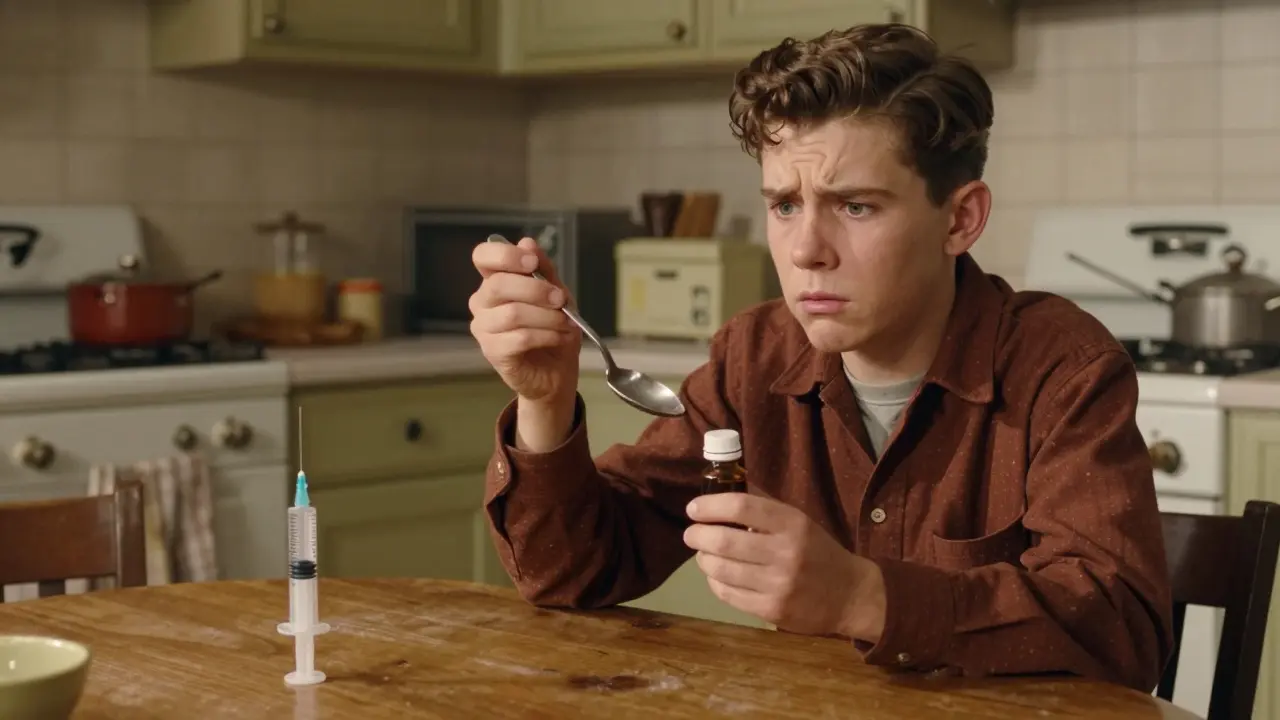
Imagine a parent giving a child 5 mL of liquid medicine instead of 0.5 mL because they used a household teaspoon instead of an oral syringe. This isn't a hypothetical scenario; it's a real-world error that has led to liver toxicity and emergency hospitalizations. When a pharmacy mistake happens, it usually isn't because the staff doesn't know the medicine, but because a simple decimal point was missed or a quantity was miscounted during a rush. Ensuring the dispensing errors are caught before the bag leaves the counter is the only way to stop a pharmacy mistake from becoming a medical tragedy.
| Method | Error Reduction Rate | Key Weakness |
|---|---|---|
| Visual Check Only | ~38% | Easily missed decimal errors |
| Independent Recalculation | ~92% | Takes more time (avg. 47s/script) |
| Barcode Scanning (BCMA) | ~83% | High initial hardware cost |
| Combined Protocol | Up to 94% | Requires strict workflow discipline |
Why a Simple Visual Check Isn't Enough
Many people assume that if a pharmacist looks at a bottle and sees "10mg" on the label and "10mg" on the stock bottle, the job is done. But the brain is surprisingly good at seeing what it expects to see rather than what is actually there. This is why a visual verification is only effective in catching about 38% of strength discrepancies.
The real danger lies in "ten-fold errors." This happens when a decimal point is misplaced, turning a 0.1mg dose into a 1mg dose. According to the FDA, about 64% of drug listing strength errors involve these misplaced decimals. If you are only glancing at the label, you might miss that a leading zero is missing (writing ".5mg" instead of "0.5mg"), which is a primary cause of pediatric dosing disasters.
The Golden Rule: Independent Recalculation
To truly stop a mistake, you need a process where the second person doesn't just "agree" with the first person. They have to do the math from scratch. This is called independent recalculation. Instead of looking at the filled bottle and asking "Is this 20mg?", the verifier looks at the original prescription and calculates exactly how many tablets or how much liquid should be in the container based on the strength.
For example, if a patient needs 30 tablets of 5mg, but the stock bottle is 10mg, the verifier should independently confirm that only 15 tablets were dispensed. This method is incredibly powerful, preventing roughly 92% of decimal-related errors. While it takes an average of 47 seconds per prescription, that is a small price to pay compared to the cost of a sentinel event.
Handling High-Alert Medications
Not all medications carry the same risk. While a mistake in a vitamin supplement is unfortunate, an error with high-alert medications-such as insulin, opioids, and anticoagulants-can be fatal. These drugs account for 63% of fatal medication errors documented in the FDA Adverse Event Reporting System.
For these drugs, the double-check must be rigid. The Institute for Safe Medication Practices (ISMP) recommends a "hard stop" in the workflow. This means the medication cannot move to the "will-call" area until a second qualified person has signed off on the strength and quantity. In many hospitals, this is now mandated by The Joint Commission standards to ensure that no single point of failure leads to patient harm.
The Danger of Liquid Medications and Dosing Devices
Liquid medications are a nightmare for accuracy. A common error occurs when the "strength per mL" is mistaken for the "total amount in the container." For instance, a label might say "5mg/mL," and a clinician might accidentally dispense a total of 5mg instead of the required 5mL.
To fight this, the United States Pharmacopeia (USP) requires that the total drug amount be more prominent on the label-specifically, at least 50% larger than the concentration information. But the label is only half the battle. Providing a household teaspoon is a recipe for disaster. Pharmacies using metric-only dosing devices, like oral syringes, see 41% fewer pediatric dosing errors because it removes the guesswork between a "teaspoon" and a "milliliter."
Overcoming the "Corporate Rush"
If you work in a pharmacy, you know the pressure. Some corporate metrics expect technicians to process 35+ scripts per hour. When the line is out the door and staffing is short, the temptation to skip the double-check is huge. This is often referred to as a "code brown" scenario, where safety protocols are abandoned for speed.
However, the data shows that structured protocols actually save time in the long run by reducing the need for costly recalls and corrective actions. Pharmacies that follow ISMP’s 2023 best practices report only 6.2 errors per 10,000 prescriptions, compared to 28.7 errors in pharmacies that use informal, "whenever-we-have-time" checks. The solution isn't to work faster, but to build the check into the physical movement of the drug-making it impossible to bag the medication without the verification step.
Verification Checklist for Pharmacy Staff
To ensure nothing slips through, use this concrete checklist for every prescription, especially during peak hours (7-10 AM and 4-7 PM):
- Zero Check: Does every decimal have a leading zero (0.5 instead of .5)? Are there any trailing zeros (5.0) that could be misread as 50?
- Strength Cross-Reference: Does the stock bottle strength match the prescription? If they differ, was the quantity adjusted correctly?
- Quantity Count: Is the physical count of tablets/capsules exactly what is listed on the label?
- Device Match: For liquids, is the provided syringe or cup the most accurate size for the prescribed dose?
- Label Prominence: Is the total drug amount the most visible piece of information on the label?
What is the most common cause of strength errors in liquids?
The most frequent cause is the confusion between metric units (mL) and household units (teaspoons/tablespoons). This often leads to ten-fold errors where a patient receives ten times the intended dose because of the tool used for administration.
Does barcode scanning replace the need for a second person?
While Barcode-Assisted Medication Verification reduces errors by 83%, it is not a total replacement. A human check is still needed to ensure the correct device was chosen and that the label is clear and legible for the patient.
What are "high-alert" medications?
High-alert medications are drugs that bear a heightened risk of causing significant patient harm when used in error. Examples include insulin, anticoagulants (blood thinners), and opioids. Because of the risk, they require more stringent double-check protocols.
How should decimals be written on medication labels to prevent errors?
Always use a leading zero before a decimal point (e.g., 0.5 mg) and never use a trailing zero after a decimal point (e.g., write 5 mg instead of 5.0 mg). This prevents the dose from being misread as 50 mg.
How long should a proper verification process take?
According to ISMP best practices, a complete verification-including strength confirmation, quantity check, and device selection-should take between 45 and 60 seconds per prescription.
Next Steps for Pharmacy Improvement
If you are managing a pharmacy and notice inconsistent application of these checks, start by auditing your peak hour workflows. If 63% of pharmacies report bypassing checks between 4 PM and 7 PM, you likely have a staffing gap rather than a training gap. Consider implementing a dedicated "final check" station where the verifier is physically separated from the filling process to reduce distractions.
For technicians, the best defense is a culture of "stop-and-verify." If a script looks odd or the math doesn't add up instantly, stop the process. It is far easier to explain a 60-second delay to a patient than it is to explain a medication error to a regulatory board.



Christopher Cooper
April 7, 2026 AT 07:27Independent recalculation is honestly the only way to be sure. I've seen so many people just nod along with whatever the first person did without actually checking the math. It's a dangerous habit that needs to be broken across the board.
Danielle Kelley
April 7, 2026 AT 11:18Sure, they call it "corporate rush" but maybe the mistakes are built in on purpose to keep us dependent on their "corrective actions" and expensive hardware. It's all a racket to push these BCMA systems onto every small clinic and pharmacy in the country!
Michael Flückiger
April 9, 2026 AT 03:16This is such an important reminder!!! We really need to push for these protocols in every single pharmacy... no matter how busy they are!!! Safety first, always!!!
Jitesh Mohun
April 9, 2026 AT 08:07stop blaming the techs for the corporate rush. the owners want speed over safety and then act surprised when things go wrong. if you dont have enough staff to do a proper check you are just gambling with lives and its pathetic
Alexander Idle
April 10, 2026 AT 23:03Oh my god, the absolute tragedy of a misplaced decimal! I can practically feel the chaos of a code brown from here. It's just so devastatingly dramatic that a little dot can cause such a catastrophe. Truly a nightmare scenario.
Sarabjeet Singh
April 11, 2026 AT 14:00Keep pushing for these standards. Every small step toward accuracy helps everyone.
Ruth Swansburg
April 11, 2026 AT 22:52We must prioritize patient safety. Training is essential. Let's support our staff.
charles mcbride
April 12, 2026 AT 07:11I believe that implementing these combined protocols will eventually become the industry standard. It is the most logical path forward for improving healthcare outcomes globally. I am quite optimistic that we will see a significant drop in these types of errors as the technology and discipline improve. While the initial cost of barcode scanning is high, the long-term benefit to human life is immeasurable. We should encourage management to view this as an investment in safety rather than a mere expense. The data provided regarding the error reduction rate is quite compelling and should be used to lobby for better staffing ratios. When a pharmacy is understaffed, even the best protocols fail. Therefore, we must address the root cause of the rush. By combining strict verification with adequate personnel, we can create a fail-safe environment. I am hopeful that the pharmaceutical industry will move toward this model rapidly. It is simply the right thing to do for the patients. Let us all strive for a zero-error future in dispensing. It is entirely possible if we commit to the discipline. The transition might be difficult, but the result will be a safer world for every patient receiving medication. I look forward to seeing these changes implemented in more local pharmacies soon.