Nocebo Effect Calculator
This calculator demonstrates how different communication styles and risk factors affect medication outcomes based on the nocebo effect.
The nocebo effect means that negative expectations can create real physical symptoms, reducing treatment effectiveness and increasing perceived side effects.
Expected Treatment Success
75%
Positive framing could increase this by up to 25% for your profile.
Nocebo Effect Likelihood
45%
This is the probability of experiencing negative side effects due to expectations.
What This Means For You
With your current profile, you have a high likelihood of experiencing nocebo effects due to anxiety level, pessimistic outlook, and negative communication style. When doctors use positive framing, treatment success rates can increase by 20-30% for people with similar risk factors.
To reduce nocebo effects:
- Ask your doctor about positive framing when discussing side effects
- Focus on treatment benefits rather than potential problems
- Remember that many reported side effects are actually nocebo responses
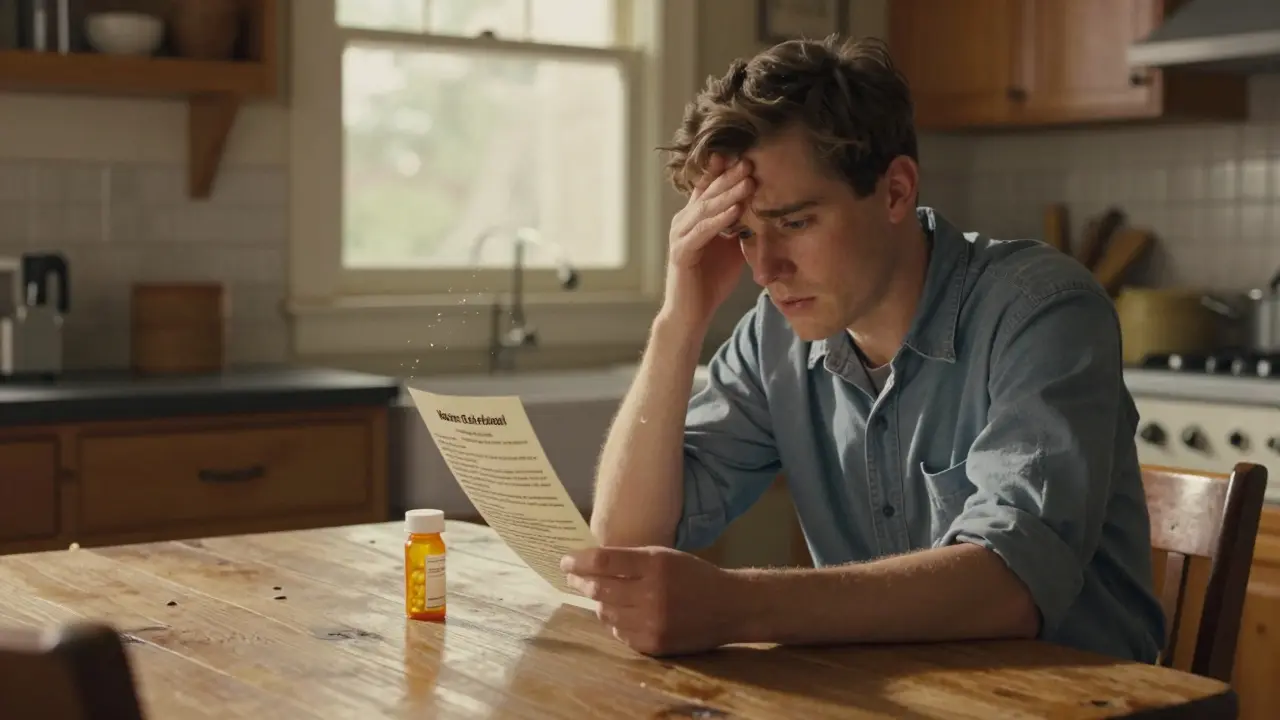
Have you ever started a new pill and immediately felt nauseous, only to realize you hadn't even swallowed it yet? You read the long list of warnings on the leaflet, and suddenly your body starts matching the symptoms. It sounds like magic, but it is actually biology. This phenomenon is known as the Nocebo Effect, which is a psychobiological response where negative expectations about a treatment cause harmful symptoms or worsen existing conditions. It is the dark twin of the placebo effect, and it happens more often than you might think.
When you take a medication, you expect it to work. But you also expect it to hurt you a little bit, based on what you have heard from friends, doctors, or the internet. These expectations are not just in your head; they trigger real chemical changes in your brain. Understanding this can save you from unnecessary suffering and keep you on the treatment plan that actually helps you.
Understanding the Nocebo Effect vs. Placebo
To get a grip on why this happens, you first need to understand the difference between the two sides of the same coin. The placebo effect is when a fake treatment makes you feel better because you believe it will work. The nocebo effect is the opposite. It is when a fake treatment, or even a real one, makes you feel worse because you expect bad things to happen.
Researchers have found that in clinical drug trials, about 20% of people taking a sugar pill still report side effects. That is a huge number. It means that one in five people will experience nausea, headaches, or fatigue simply because they think they are taking a drug that causes those things. Nearly 10% of these people even quit the trial because the side effects felt too real to handle.
| Feature | Placebo Effect | Nocebo Effect |
|---|---|---|
| Expectation | Positive (Hope for healing) | Negative (Fear of harm) |
| Outcome | Improved symptoms or pain relief | Worsened symptoms or new side effects |
| Brain Activity | Activates reward pathways (dopamine) | Activates pain pathways (anterior cingulate cortex) |
| Clinical Impact | Boosts treatment efficacy | Reduces treatment efficacy and adherence |
The science behind this is fascinating. Neuroimaging studies show that when you expect pain, specific areas of your brain light up. The anterior cingulate cortex and the insula are involved in processing pain and symptom perception. When you believe a drug will hurt you, these areas become more active. It is not that you are imagining the pain; your brain is actually generating the signal.
How Expectations Change Your Biology
It is easy to dismiss this as "all in your head," but that phrase minimizes the reality of the situation. Your head is the control center for your body. If the control center thinks there is danger, it releases stress hormones. This is where the biosemiotic model comes in. Experts like Goli (2022) suggest that harm expectations create images in your mind that form real feelings inside your body. These are called interoceptive feelings.
Consider the case of pain medication. In a landmark study involving the opioid analgesic remifentanil, researchers found that positive expectations doubled the pain-relieving effect of the drug. However, when patients were told the drug might increase pain sensitivity later, the pain relief completely vanished. The drug was the same, but the expectation changed the outcome entirely.
This mechanism works through a few specific pathways:
- Heightened Awareness: You start noticing normal aches and pains that you usually ignore and blame them on the medication.
- Misattribution: You have a headache from stress, but you take a pill and decide the pill caused the headache.
- Amplification: Small natural fluctuations in your condition get magnified because you are watching for them closely.
This is why the nocebo effect is so tricky in medicine. It creates a cycle where the patient feels worse, stops the medication, and then the underlying condition worsens, confirming their original fear.

Real-World Examples and Impact
This is not just a lab curiosity; it happens in real clinics every day. A striking example occurred in New Zealand in 2017. The country switched the brand of the antidepressant venlafaxine. The active ingredient was identical, but the packaging and name changed. Initially, reports of side effects stayed the same. However, after media coverage highlighted the change, reports to the Centre for Adverse Reactions Monitoring (CARM) spiked considerably. Patients were experiencing the same chemical compound but reacting to the change in branding and the news stories about it.
Generic medications face this issue constantly. Many people report that a generic version of a drug makes them feel sick, while the brand-name version does not. On forums like Reddit, patients describe switching from brand-name sertraline to a generic and immediately developing insomnia and nausea. When they switch back, the symptoms vanish. The active ingredient is legally required to be the same, so the difference lies in the expectation of the change.
Patient information leaflets are another major trigger. These documents are required to list every possible side effect, even rare ones. Studies confirm that the more adverse effects listed in a leaflet, the more patients report experiencing them. If you read a list of 50 potential problems, your brain starts looking for those 50 problems. It is a self-fulfilling prophecy.
Who is Most at Risk?
Not everyone experiences the nocebo effect to the same degree. Research identifies specific groups that are more vulnerable. Women, for example, report 23% more medication side effects than men in placebo-controlled trials. This does not mean women are more sensitive to drugs chemically, but that they may be more attuned to bodily sensations or more likely to report them.
Other risk factors include:
- Anxiety and Depression: Patients with these conditions are 1.7 times more likely to experience nocebo effects.
- Pessimism: People who generally expect the worst in life are more prone to negative treatment outcomes.
- Environmental Influence: People who are highly influenced by what others say or what they read online.
It is also worth noting that the way a doctor talks matters. If a doctor says, "This might make you feel sick," you are more likely to feel sick. If they say, "Most people feel fine, but a few might notice a slight change," the outcome is often better.

Strategies to Reduce Negative Expectations
So, how do we fix this? We cannot hide the risks, because informed consent is vital. But we can change how we communicate those risks. This is called positive framing. Instead of listing every scary possibility, doctors can focus on the likelihood of success while acknowledging risks gently.
For example, instead of saying, "Some patients find this generic brand is not as effective," a better approach is, "Most people notice no difference, but a small number may feel a change." This shifts the focus to the norm rather than the exception.
Training for healthcare providers is becoming more common. In New Zealand, pilot programs showed that just 4 to 6 hours of specialized communication training could help doctors recognize and address nocebo triggers. In the UK, the NHS has implemented similar communication training programs in pilot regions, which reduced medication-related adverse event reports by 14%.
For patients, being aware is the first step. If you know about the nocebo effect, you can catch yourself when you start feeling symptoms after reading a warning label. Ask your doctor about the most common side effects versus the rare ones. Focus on the benefits you hope to gain rather than the problems you fear.
The Economic and Systemic Cost
This phenomenon costs the healthcare system billions. Pharmaceutical companies lose revenue when patients stop effective medications due to perceived side effects. Studies show that 15 to 20% of patients discontinue effective drugs because of side effects that may actually be nocebo-mediated. This leads to unnecessary doctor visits, new prescriptions, and wasted resources.
Regulatory bodies are starting to take notice. The European Medicines Agency and Medsafe in New Zealand are developing guidelines for balanced risk communication. They want to ensure patient safety without triggering unnecessary fear. The goal is to keep the information transparent but presented in a way that does not harm the patient psychologically.
By 2030, experts predict that routine clinical practice will include standardized nocebo risk assessments for high-impact medications. This means before you start a strong drug, your doctor might screen you for anxiety or pessimism to tailor their communication style. It is a shift towards treating the patient as a whole person, not just a set of symptoms.
Is the nocebo effect just imagination?
No, it is not imagination. It is a real physiological response driven by the brain. Neuroimaging shows that negative expectations activate pain pathways and stress responses in the body, leading to genuine physical symptoms.
Can I stop taking my medication if I feel side effects?
You should never stop medication without consulting your doctor. Some side effects are real and require medical management, while others may be nocebo-related. Your doctor can help you distinguish between the two and adjust your treatment safely.
Why do generic drugs seem to cause more side effects?
Generic drugs contain the same active ingredients as brand-name drugs. Perceived side effects often stem from the nocebo effect, where patients expect the cheaper version to work differently or be of lower quality, triggering negative symptoms.
How can doctors reduce the nocebo effect?
Doctors can use positive framing when discussing risks. Instead of listing every possible side effect, they can emphasize that most patients tolerate the medication well. Training in communication skills also helps providers avoid triggering negative expectations.
Does the nocebo effect affect pain relief?
Yes, it can significantly reduce pain relief. Studies show that negative expectations can eliminate the analgesic effect of opioids. Conversely, positive expectations can double the effectiveness of pain medication.

Caroline Bonner
March 27, 2026 AT 06:29This article really highlights how much our minds control our bodies, and it is absolutely fascinating to read about! I have always believed that mindset plays a huge role in healing, and seeing the science back it up is wonderful. It makes me think about all the times I felt sick just because I was worried about a pill, and now I know why that happened. The section about generic medications is particularly important because so many people switch brands without understanding the psychological impact. We really need to talk more about this in our communities so everyone feels empowered. Doctors should definitely be trained better on how to explain risks without scaring patients unnecessarily. It is so frustrating when a treatment works but the fear stops people from taking it. I hope more research comes out to help us understand these brain pathways better. The statistics about twenty percent of people reporting side effects from sugar pills are shocking to me. We need to shift the narrative from fear to hope when discussing medication. Positive framing is such a simple concept but it could save so many people from unnecessary suffering. I am going to share this with my family because they often worry too much about their prescriptions. It is great to see that New Zealand and the UK are already trying to implement training programs. This kind of systemic change is exactly what we need to improve healthcare outcomes globally. Thank you for sharing this information because it really opens up a new perspective on medicine!
peter vencken
March 29, 2026 AT 00:26Yeah thats for sure i took some meds once and felt weird just reading the label. Doctors need to chill out with the warnings sometimes because it makes people scared. I think the generic stuff is fine but people just expect it to be worse. Its all in the head but the head controls the body so it feels real. Hope this helps more folks understand what is going on.
Chris Crosson
March 29, 2026 AT 23:03I agree that communication is key here but we cannot ignore actual side effects either. Patients need to know the truth even if it is uncomfortable sometimes. The balance between safety and fear is hard to strike but it must be done right. We should not dismiss symptoms just because they might be nocebo related. Every person deserves respect and honest information from their healthcare provider.
Linda Foster
March 31, 2026 AT 22:32It is indeed a compelling study of human psychology within a medical context. The implications for clinical practice are substantial and require careful consideration by practitioners. We must ensure that informed consent remains intact while mitigating unnecessary psychological distress. The data presented regarding the anterior cingulate cortex is particularly noteworthy. Formal training for physicians in this regard would be highly beneficial for patient outcomes.
Chris Farley
April 1, 2026 AT 23:02People are getting too soft and blaming their brains for everything instead of taking responsibility. This is just another way to make excuses for weakness in the modern world. Real men and women do not let a piece of paper scare them into feeling sick. We need to stop coddling patients and let them deal with the reality of medicine. This psychological mumbo jumbo is just a distraction from actual health issues.
Katie Putbrese
April 2, 2026 AT 06:42It is morally wrong for doctors to scare patients with long lists of side effects that might never happen. We need to hold the medical industry accountable for how they present information to the public. People are suffering because of fear tactics used in pharmaceutical marketing and leaflets. This is a failure of the system to protect the mental well being of the patient. Everyone deserves to feel safe when they go to the hospital for help.
Jacob Hessler
April 3, 2026 AT 18:37people should just toughen up and stop feeling bad all the time. its not the pills its your mind messing with you. doctors are trying to help but you make it hard for them. we need strong people not weak ones who cry about sugar pills. stop blaming the system and look at yourself.
Amber Gray
April 5, 2026 AT 09:59so true this happens all the time with generics 😤 doctors need to stop listing every bad thing ever 🙄 its all in your head but your head is real 💊 stop being scared and trust the meds 💪
J. Murphy
April 6, 2026 AT 05:01Most of this is just nonsense people making up to feel special.